

Paris is the second most filmed city in the world. Every year, nearly 1,000 productions take place in the capital’s streets. Certain locations come back time and again, becoming characters in their own right in French and international cinema.
The Pont de Bir-Hakeim: the graphic star
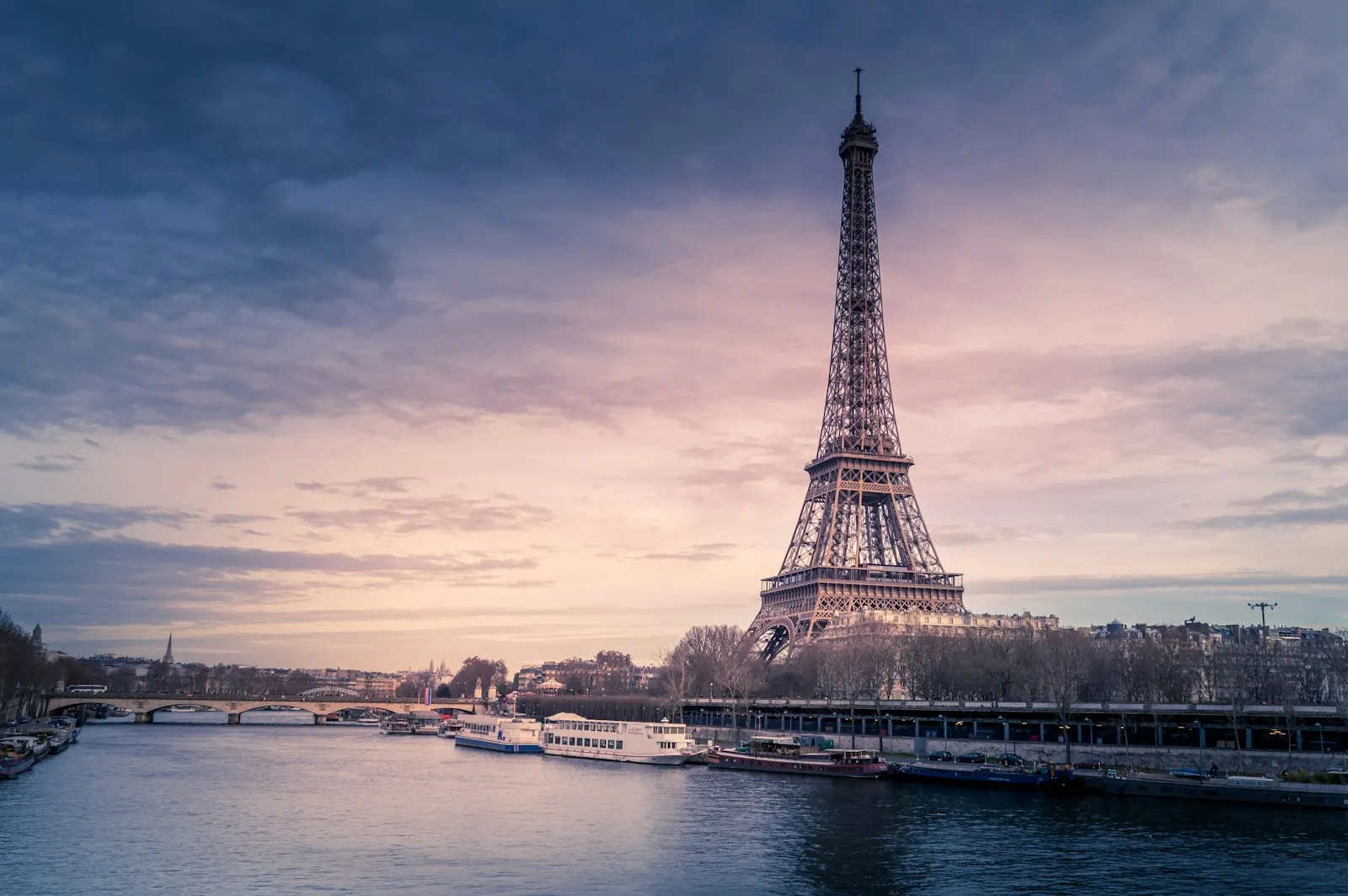
This two-level metal bridge spanning the Seine in the 15th arrondissement has become one of the most filmed backdrops in Paris. Its colonnade of pillars creates a striking depth effect. It appears in Inception (Christopher Nolan), Last Tango in Paris (Bernardo Bertolucci) and Zazie dans le metro (Louis Malle). The view of the Eiffel Tower from the bridge is one of the most photographed in the capital.
The Champs-Elysees: the boulevard of cinema
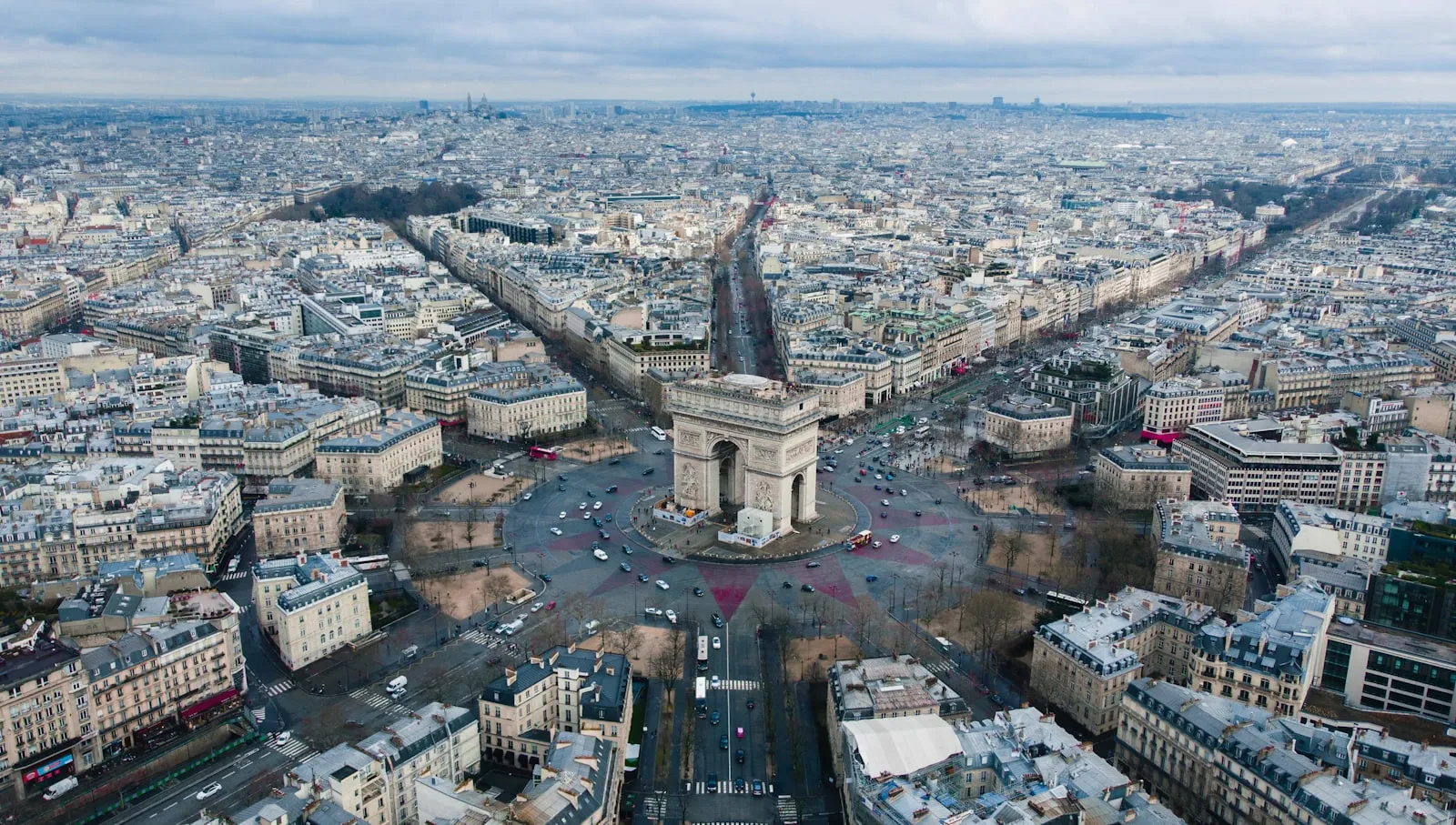
The Avenue des Champs-Elysees appears in hundreds of films, from New Wave classics to Hollywood blockbusters. Its width, its perspectives toward the Arc de Triomphe and its constant bustle make it a natural backdrop. Car chases here are a classic of the genre.
The Sacre-Coeur and Montmartre
The Sacre-Coeur provides an instantly recognizable backdrop. The cobbled lanes of Montmartre, the steps up the hill and the tree-lined squares create an atmosphere that cinema has exploited since its origins. The film Amelie Poulain established Montmartre as an international romantic setting, but the neighborhood also appears in Midnight in Paris (Woody Allen) and La Vie en Rose (Olivier Dahan).
Place Vendome: luxury on screen
Place Vendome, with its symmetrical arcades and the Vendome column, embodies luxurious Paris on screen. The Ritz Paris, overlooking the square, has served as a backdrop for numerous films. The square appears in Armageddon, The Tourist and several James Bond films.
The Jardin du Luxembourg: romantic Paris
This garden in the 6th arrondissement provides the setting for romantic scenes in dozens of films. Its iconic green chairs, central basin and shaded paths create a timeless backdrop. It appears in Midnight in Paris, Les Miserables and Julie & Julia.
The Seine riverbanks: the universal setting
The Seine riverbanks, a UNESCO World Heritage site, offer a backdrop that renews itself at every bridge. From the Pont-Neuf (Les Amants du Pont-Neuf) to the Pont Alexandre III (Midnight in Paris), each stretch has its own cinematic personality. The pedestrian riverbanks on the Left Bank, between the Musee d’Orsay and the Eiffel Tower, have become a favored location for strolling scenes.
The Hotel de Soubise: the historic Marais
This mansion in the 3rd arrondissement, home to the National Archives, offers a courtyard and rococo salons that regularly serve as backdrops for period films. Sofia Coppola’s Marie-Antoinette filmed several scenes here.
The Promenade plantee: the 12th arrondissement’s secret
This elevated green walkway built on a former railway line between Bastille and the Bois de Vincennes inspired New York’s High Line. Richard Linklater used it in Before Sunset, turning it into a pilgrimage site for independent cinema lovers.
The Eglise Saint-Sulpice: The Da Vinci Code
The Eglise Saint-Sulpice in the 6th arrondissement gained worldwide fame thanks to The Da Vinci Code (2006). The church’s astronomical gnomon (an obelisk and a copper line on the floor) plays a key role in the plot. The church has since attracted hundreds of thousands of additional visitors per year.
The Gare du Nord: the cinematic hub
The Gare du Nord, the busiest train station in Europe, regularly appears in thrillers and action films. Its Beaux-Arts architecture and constant flow of travelers create a natural cinematic atmosphere. The film The Bourne Identity shot a memorable scene here.
Paris: a city of film sets and a city to live in
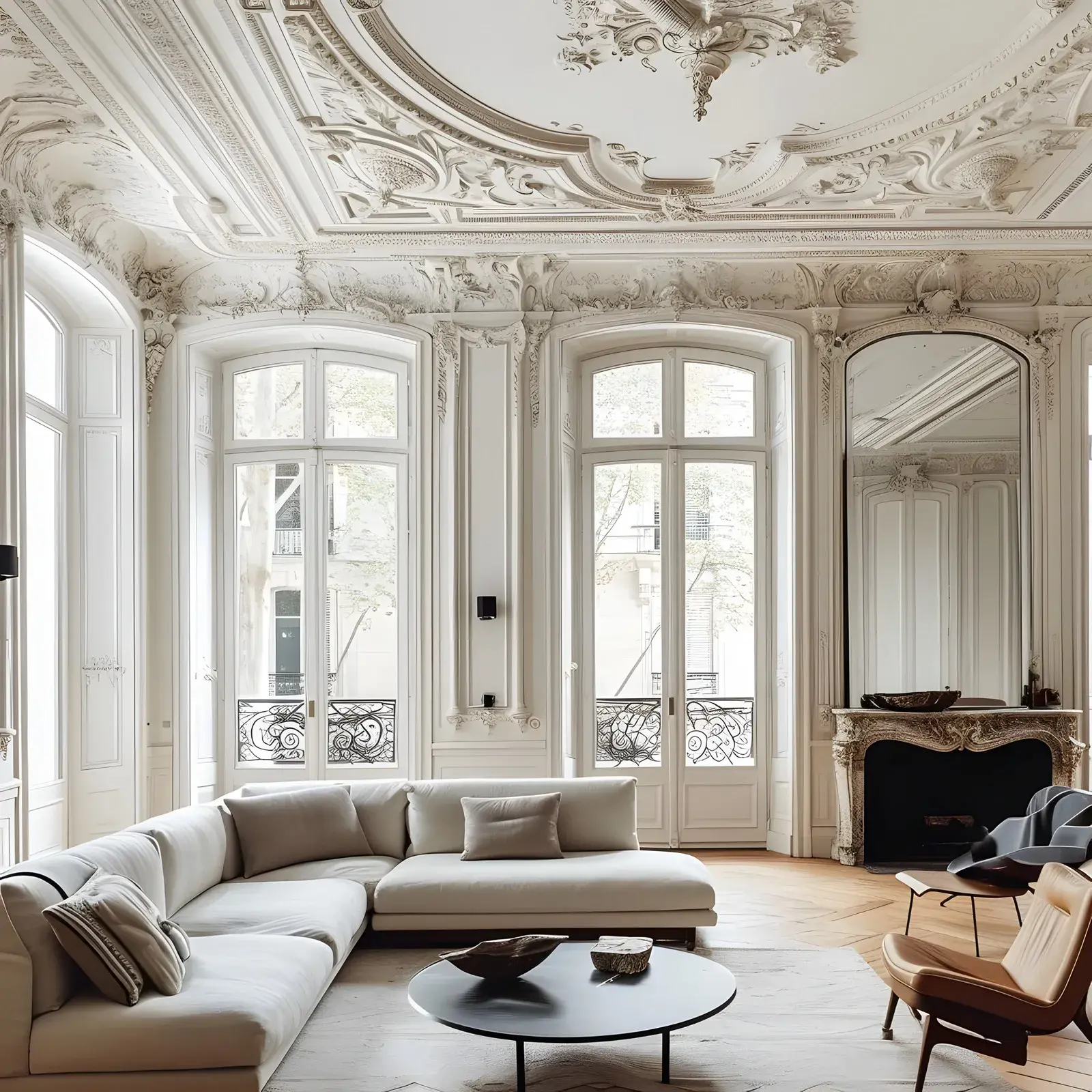
What makes Paris so photogenic in cinema is precisely what makes it a pleasant city to live in: architectural consistency, neighborhood diversity, and light that changes with the seasons. Living in a building that has served as a film set is a Parisian reality more common than one might think.
For those who want to live in these neighborhoods of character, a property hunter knows the addresses, the buildings and the micro-neighborhoods that combine cinematic charm with residential quality of life.
Dreaming of an apartment in a cinematic neighborhood? Contact our team.
Frequently asked questions
How many films are shot in Paris each year?
Around 900 to 1,000 productions take place in Paris each year (films, series, commercials), according to the Ile-de-France Film Commission. Paris is the second most filmed city in the world after New York. Shoots are concentrated in the 1st, 4th, 5th, 6th and 18th arrondissements.
What is the most filmed location in Paris?
The Eiffel Tower is the most filmed Parisian monument, appearing in more than 200 films. Next come the Champs-Elysees, the Pont de Bir-Hakeim, the Sacre-Coeur and the Seine riverbanks. The Pont de Bir-Hakeim is especially prized for its graphic perspectives.
Do film shoots disturb local residents?
Shoots are regulated by the City of Paris with strict permits (hours, perimeter, compensation). In practice, residents of frequently filmed neighborhoods (Montmartre, Marais, Saint-Germain) are used to it. It can even enhance the neighborhood's image.