|
|
Home Select
The Sunday
Notebook
No. 1 · Sunday 24 May 2026
|
|||||
|
|||||
|
01 · The editorial
This week, a date that will not go unnoticed among owners and buyers alike: since 20 May, every furnished short-term rental let in France must display a thirteen-character national registration number. What might look like an administrative formality closes a decade of grey areas. In Paris, where the change-of-use requirement has long been in force and where the annual ceiling was lowered to ninety days on 1 January 2025, this new seal layers onto a framework that tightens the screws on three fronts: administrative, fiscal, judicial. This notebook passes no judgement on the political merits of the reform: it describes, with figures to hand, what it changes for an acquisition project in Paris in 2026. For anyone looking for a main residence or a family flat, it changes above all the life of the building. |
|||||
|
|||||
|
|
|||||
|
02 · Article of the week
Paris short-term rentals: what the Le Meur law changes
Regulation · Reform · 6 min read
|
|||||
|
|||||
|
|||||
|
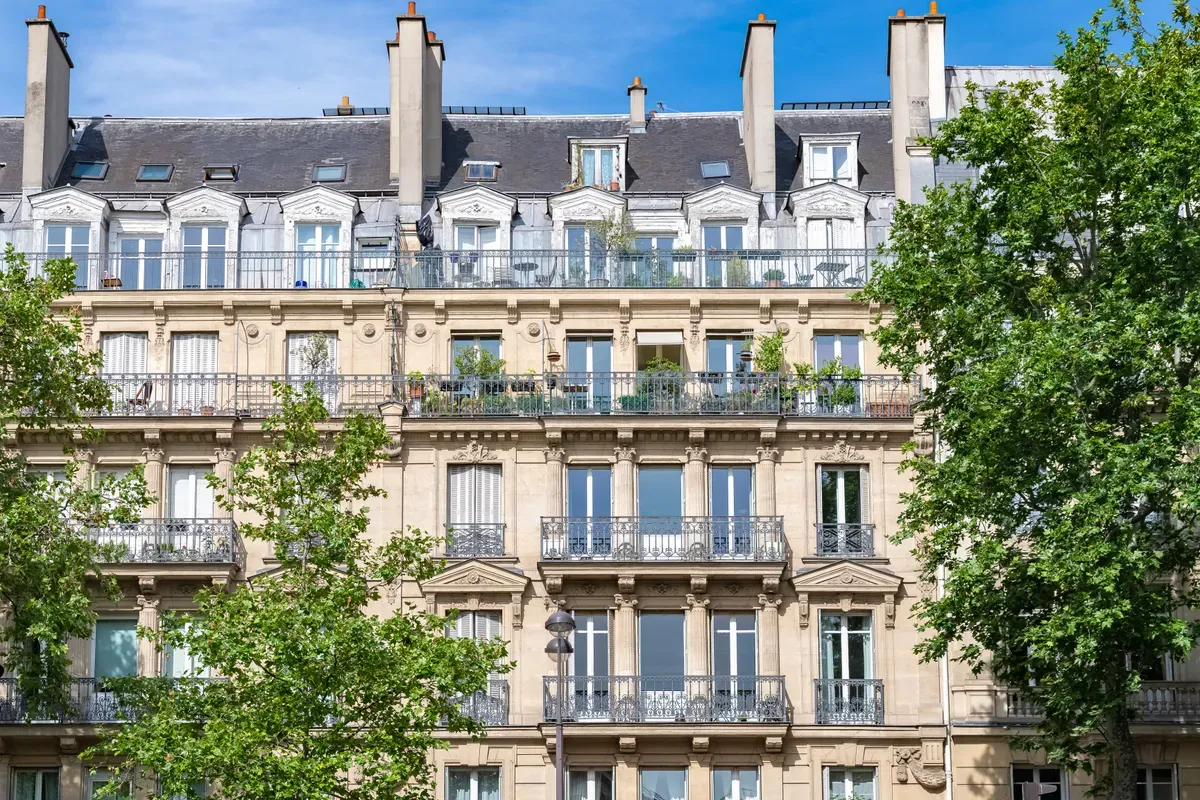
Since 20 May 2026, every furnished short-term rental let in France must carry a thirteen-character registration number. In Paris, this administrative seal compounds an already dense framework. For anyone buying a home to live in, what matters now lies in the building and its co-ownership rules. The facts first. The law of 19 November 2024, known as the loi Le Meur, makes registration of furnished tourist lets a general requirement. Since 20 May, every short-term let must be declared and obtain a thirteen-character national identification number, which appears on every listing published online. The penalties are designed to deter: up to €10,000 in administrative fines for failure to register, €20,000 for false declaration, and removal of listings from Airbnb, Booking and Abritel. Platforms now transmit to the authorities, every month, the data attached to each listing: address, number, number of nights, number of guests. Enforcement, until now reliant on tip-offs or manual cross-checking, becomes near-automatic. In Paris, this national framework sits on top of two distinct local regimes. For a principal residence, the ceiling on short-term letting, historically set at 120 days, was reduced to ninety days by a Conseil de Paris resolution effective 1 January 2025, in the wake of the loi Le Meur which opened that power to municipalities. Exceeding it exposes the owner to a fine of up to €15,000. For a secondary residence, the operation requires a change-of-use authorisation with compensation, that is, the purchase of commercial-use rights (titres de commercialité) from owners carrying out the reverse operation. In the central arrondissements, classified as reinforced compensation zones, the so-called two-for-one rule requires two square metres compensated for every square metre let. At observed market prices in Paris, between €1,500 and €3,000 per square metre depending on location, the compensation for a 30 sq m studio works out at around €150,000. Without that authorisation, short-term letting is illegal and exposes the owner to a fine of up to €50,000 per identified property. The judicial arsenal has followed. The Paris municipal regulation of 13 February 2025 raised the fine ceiling for unlawful conversion to short-term let from €50,000 to €100,000 per unit, and the City has deployed a brigade of sworn enforcement officers. The early 2026 rulings give the measure of the risk. On 26 January and 4 February, the tribunal judiciaire de Paris handed down two notable convictions: €81,500 against an SCI owning a two-room flat in the 9th arrondissement, and €75,000 each against a couple owning a property in Montmartre, in both cases for platform letting without change-of-use authorisation. A further judgment, on 21 January, fined a landlady €8,000 and then €10,000 in civil penalties for two years of breaching the ninety-day ceiling, after analysis of the nights produced by the platform. The tax framework has hardened in parallel. The loi Le Meur lowered the micro-BIC allowance to 30% for unclassified furnished tourist lets, with a turnover threshold cut to €15,000, against 50% and €77,700 previously. For classified lets, the allowance falls from 71% to 50%, with the threshold likewise reduced to €77,700. The final lock is the copropriété. On 19 March 2026, the Conseil constitutionnel upheld article 26 of the loi Le Meur, which allows co-ownerships with a clause d'habitation bourgeoise (a residential-use covenant) to ban short-term letting by a two-thirds majority, rather than the unanimity previously required. In the Haussmannien buildings of central Paris, where the bourgeois clause is common, authorisation for seasonal activity can fall from one vote to the next. For an owner-occupier, the rule works the other way: it gives the building the means to preserve its residential character. For the buyer of a main residence, a family flat or an expatriate's pied-à-terre, the reform reads differently. The presence of a bourgeois clause, an explicit regulation and co-owners who can now ban seasonal letting by a two-thirds majority say a great deal about how calm a building is. This information is checked before the offer, and reading it calls for upstream filtering work that cannot be improvised. Before buying in Paris in 2026, the wiser course is to know which building you are moving into as well as which flat. |
|||||
|
|||||
|
|||||
|
|||||
|
|||||
|
03 · Buyer's advice
Read the co-ownership rules before signingThe presence of a clause d'habitation bourgeoise says a great deal about the life of a building. Since 19 March 2026, two-thirds of co-owners are enough to ban seasonal letting, where unanimity previously prevailed. Reading the regulation before the preliminary contract avoids discovering too late that a building does not suit the life you plan to lead there. |
|||||
|
|||||
|
|||||
|
See you next Sunday.
In the meantime, if a project is taking shape, Home Select remains at your disposal for an initial conversation: its hunters assess your brief against the market and deliver an unvarnished reading.
|

|
Home Select
Property hunters since 2011
|
|||||
|
|||||
|
60 rue François 1er, 75008 Paris · 01 78 76 78 10 Member of the Federation of Property Hunters (FCI) |
|||||
|
|
|||||
|
You are receiving this email because you shared your contact details with Home Select as part of a property project or an information request. Under the General Data Protection Regulation (GDPR), you have rights of access, rectification, erasure, objection, portability and restriction over the data concerning you. To exercise these rights, write to contact@homeselect.paris.
Data controller: Jean Mascla, Home Select, 60 rue François 1er, 75008 Paris. Your data is kept for three years after our last contact, then deleted. In case of disagreement, you may lodge a complaint with the CNIL (www.cnil.fr). |
|||||
|
© 2026 Home Select. All rights reserved.
|