

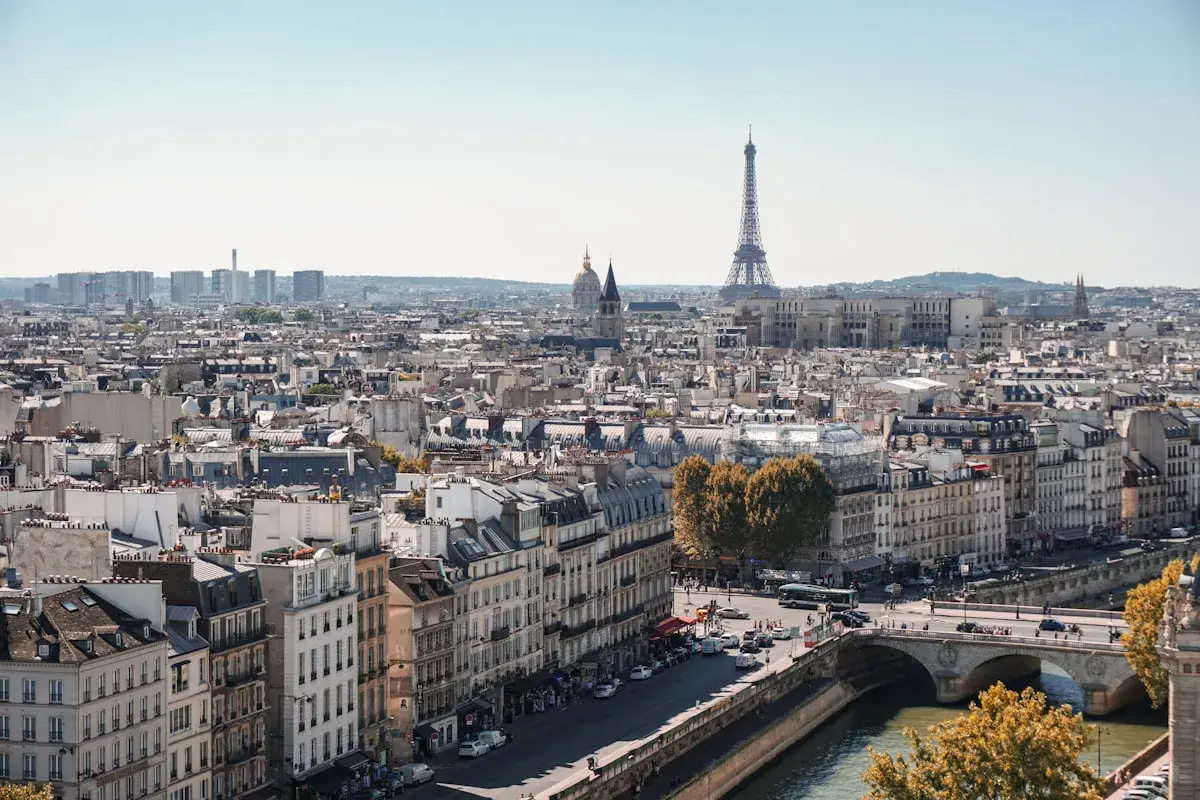
Boulevard Haussmann is one of the most iconic thoroughfares in Paris. Built between 1857 and 1926, it runs through the 8th and 9th arrondissements over 2.5 km and concentrates a remarkable density of architectural heritage, shops and museums. For Parisians, it is also a sought-after residential neighbourhood, particularly in its upper section near Parc Monceau.
The history of the boulevard
Boulevard Haussmann takes its name from Baron Georges-Eugene Haussmann, although it was not completed in his lifetime. The first sections were built from 1857, as part of the great modernisation works of Paris under Napoleon III. The boulevard was not finished until 1926, with the connection to Boulevard Montmartre. Its route links the Madeleine quarter to the eastern end of the Grands Boulevards, creating a major commercial and residential axis.
The boulevard’s history is inseparable from that of Haussmann’s great works that transformed Paris between 1853 and 1870.
The department stores: Galeries Lafayette and Printemps
The central section of the boulevard, around the Chaussee-d’Antin station, is dominated by two Parisian retail institutions. Galeries Lafayette, opened in 1912, is famous for its Art Nouveau glass and steel dome. Printemps, founded in 1865, offers from its 9th-floor terrace one of the finest panoramic views of Paris, free and open to the public.
These two retailers attract millions of visitors each year, including a large proportion of international tourists. The area is served by four metro stations (Havre-Caumartin, Chaussee-d’Antin-La Fayette, Opera, Richelieu-Drouot) and the RER A (Auber).
The museums: Jacquemart-Andre and Cernuschi
The boulevard is home to two remarkable museums. The Musee Jacquemart-Andre (no. 158), housed in a Second Empire mansion, displays a collection of Italian and Flemish paintings in a preserved period setting. The Musee Cernuschi (no. 7 avenue Velasquez, accessible from the boulevard), specialising in Asian arts, adjoins Parc Monceau.
These museums bear witness to the wealth of the collectors who settled on the boulevard in the 19th century. Their mansions, converted into museums, preserve interiors that offer a glimpse into the lifestyle of the Parisian elite of the era.
The architecture of the boulevard
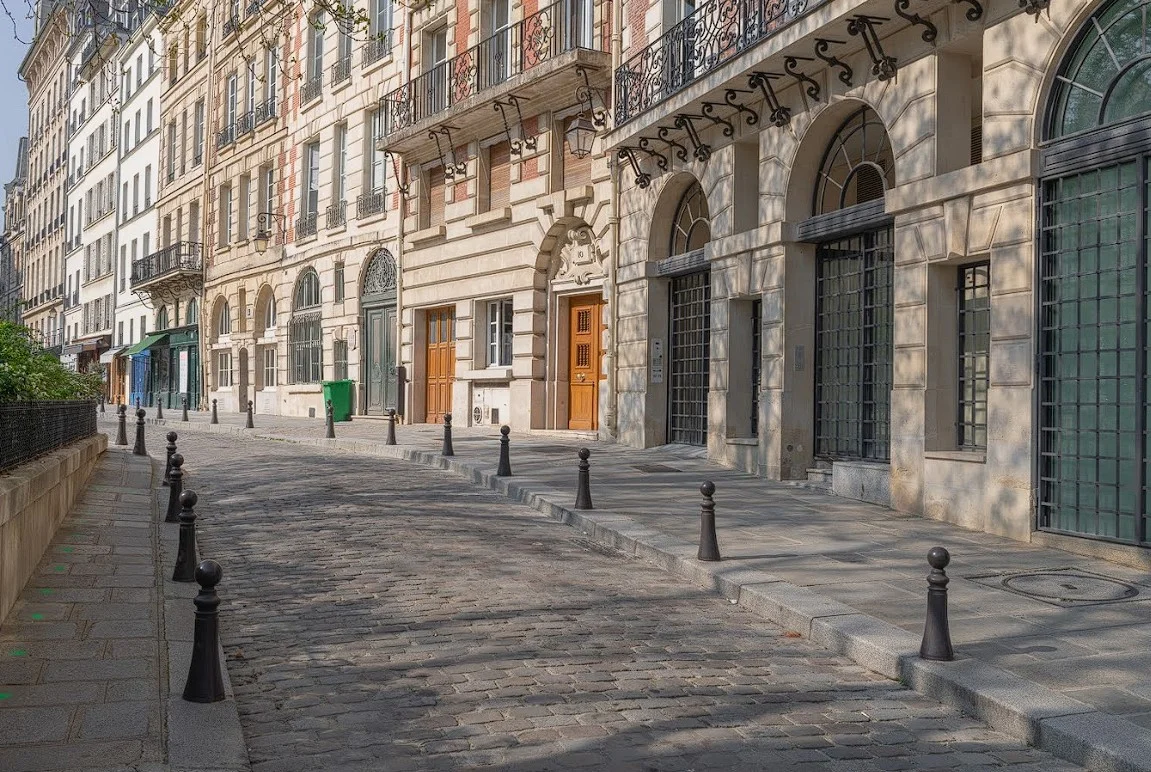
Boulevard Haussmann offers a comprehensive panorama of 19th-century Parisian architecture. The oldest buildings (eastern section, towards Richelieu-Drouot) are strictly Haussmannian: cut stone, continuous balconies, geometric restraint. The buildings in the upper section (towards Parc Monceau) are post-Haussmannian, with bow windows, ceramics and more decorative ironwork.
The department store facades are notable architectural exceptions: their glass canopies, domes and metallic ornaments introduce a commercial aesthetic that contrasts with the residential rigour of the boulevard.
The Monceau quarter: the residential side
The upper section of the boulevard, between Boulevard Malesherbes and rue de Courcelles, changes atmosphere radically. Parc Monceau, with its gilded gates and Corinthian columns, creates an upscale residential environment. The adjacent streets (rue de Lisbonne, rue de Monceau, rue Rembrandt) are lined with mansions and bourgeois apartment buildings of exceptional quality.
It is one of the most sought-after neighbourhoods in the 8th arrondissement, with prices exceeding 13,000 euros/sqm for properties in good condition. Buyers are often French families or international executives working in the neighbourhood’s businesses (banks, insurance companies, consulting firms).
Daily life on the boulevard
Boulevard Haussmann offers contrasting quality of life depending on the section. The department store zone is commercial and heavily frequented, poorly suited to residential living. The Monceau side, however, combines calm, greenery, quality shops (the Batignolles covered market nearby) and quick access to transport.
For buyers, the advice is to favour the streets perpendicular to the boulevard rather than the boulevard itself: you benefit from the proximity to shops and transport without the noise of a major traffic axis.
Our property hunters know the buildings, co-ownerships and micro-addresses that make the difference in this neighbourhood.
Looking to buy in the Haussmann-Monceau neighbourhood? Contact our team for a targeted search.
Frequently asked questions
How long is Boulevard Haussmann?
Boulevard Haussmann stretches 2.53 km, from the Richelieu-Drouot crossroads (9th) to rue de Courcelles (8th). It crosses two arrondissements and is home to the department stores (Galeries Lafayette, Printemps), museums (Jacquemart-Andre, Cernuschi) and some of the finest Haussmann-era buildings in Paris.
What is the average price per sqm on Boulevard Haussmann?
The average price ranges between 11,000 and 14,000 euros/sqm depending on the section. The upper portion (near Parc Monceau, 8th) is more expensive than the lower portion (near Richelieu-Drouot, 9th). Apartments with clear views over the boulevard on high floors trade above 15,000 euros/sqm.
Is Boulevard Haussmann a pleasant place to live?
The boulevard is busy and noisy along the department store section (between Chaussee-d'Antin and Havre-Caumartin). However, the upper section towards Parc Monceau is residential and quiet. The side streets (rue de Lisbonne, rue de Monceau, rue de Teheran) offer a very pleasant living environment just metres from the boulevard.