

Georges-Eugene Haussmann, Prefect of the Seine from 1853 to 1870, transformed Paris from an unsanitary medieval city into the modern capital we know today. In 17 years, he redesigned the streets, imposed an architectural style, created parks and modernised infrastructure. Here is how this transformation still shapes today’s Paris and the Parisian property market.
Paris Before Haussmann
In 1850, Paris was a dense, dark and insanitary city. Medieval streets were narrow (often less than 3 metres wide), buildings were dilapidated, and cholera epidemics were regular. The population had grown from 500,000 to one million inhabitants in fifty years, without any adaptation of urban planning. Napoleon III, who had lived in London and admired its wide avenues and parks, decided to transform the capital. He appointed Haussmann to execute this project.
The Grand Boulevards: A Geometric Vision
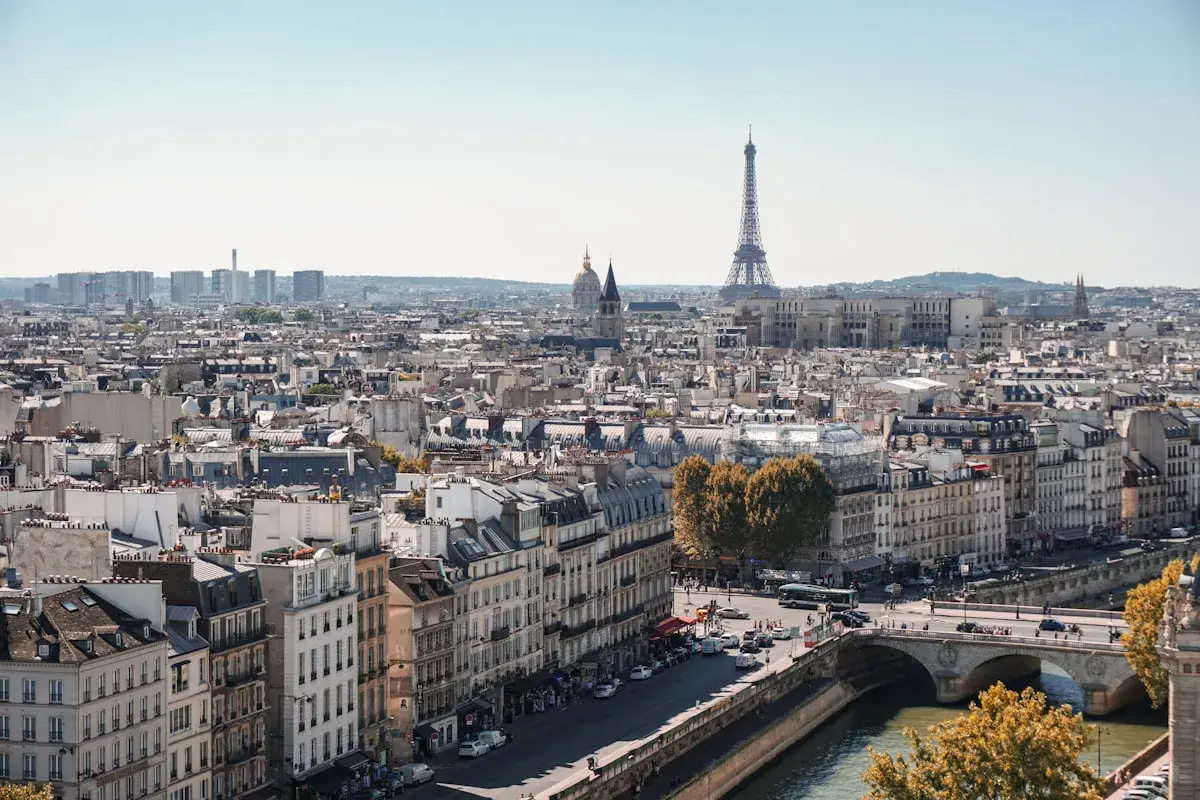
Haussmann’s plan was based on a network of wide, straight axes cutting through Paris from east to west and north to south. Boulevard de Sebastopol, the extended rue de Rivoli, Boulevard Saint-Michel, Boulevard Malesherbes: these thoroughfares created urban perspectives that had not previously existed.
The objective was threefold: improve traffic flow, clean up neighbourhoods by letting in air and light, and enable the deployment of underground networks (water, sewers, gas). The boulevards also became commercial axes, with the first department stores (Bon Marche, Printemps, Galeries Lafayette).
The Haussmannian Building: A Standardised Model
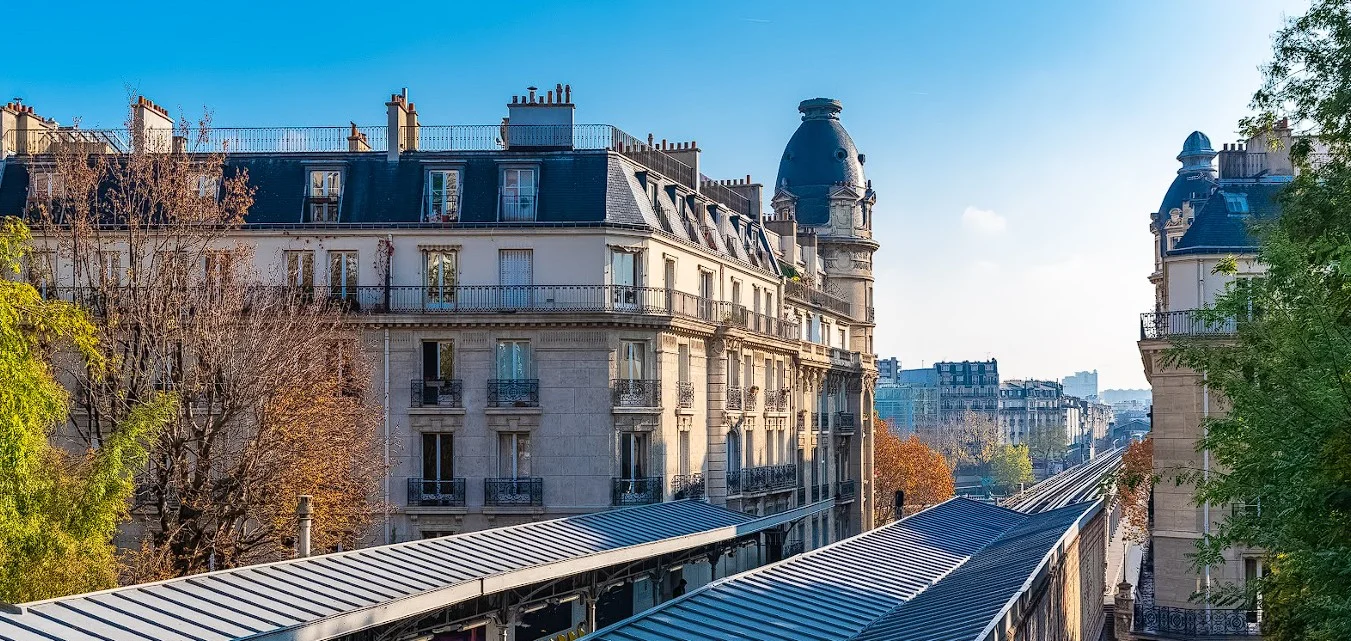
Haussmann imposed strict regulations that standardised facades: cut stone, capped height (generally six storeys), street alignment, continuous balconies on the 2nd and 5th floors, zinc-clad mansard roofs. This model created the visual identity of Paris that the whole world recognises.
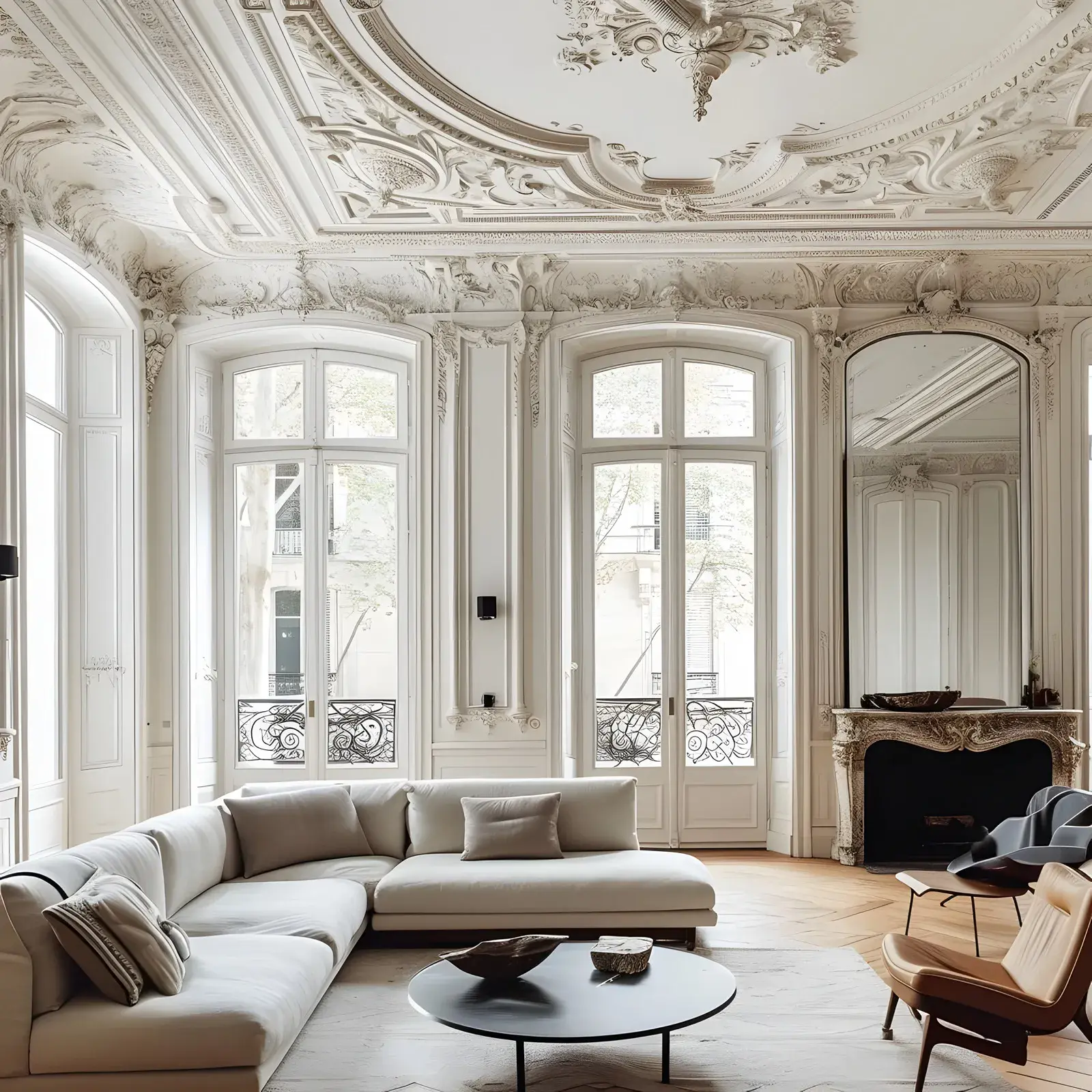
The interiors also followed a code: the 2nd floor (the noble floor) offered the highest ceilings and the finest ornamentation. Higher floors, progressively more modest, housed less affluent residents. The top floor, under the roof, contained servants’ quarters. Today, these same chambre de bonne rooms, combined and redesigned, are the subject of specific searches by buyers. Our article on Haussmannian apartments details these characteristics.
Parks and Gardens: Green in the City
Haussmann created or redesigned the great Parisian parks: the Bois de Boulogne (846 hectares) to the west, the Bois de Vincennes (995 hectares) to the east, Parc des Buttes-Chaumont to the north and Parc Montsouris to the south. Engineer Jean-Charles Alphand designed these spaces with artificial lakes, waterfalls and landscapes that imitate nature.
These parks were not just leisure spaces: they contributed to air quality and urban balance. Today, proximity to these green spaces is one of the most frequent search criteria among family buyers.
Underground Networks: The Essential Invisible
Beneath the boulevards, Haussmann had 600 km of sewers built (the network today extends to 2,600 km), a water supply system with reservoirs and aqueducts, and a gas network for street lighting. This was the invisible but fundamental part of the transformation: Paris went from an insanitary city to a modern one within a single generation.
The Social Consequences
The Haussmann transformation came at a considerable social cost. The demolition of 20,000 buildings displaced tens of thousands of residents, often the poorest. The new, more expensive buildings pushed the working classes towards the peripheral arrondissements (18th, 19th, 20th) and the suburbs. This gentrification of central Paris, begun under Haussmann, continues to this day.
The Financing: Boldness and Debt
The works cost approximately 2.5 billion gold francs, financed through borrowing and land sales. The financing method, deemed opaque by parliamentarians, caused Haussmann’s downfall in 1870. But the essential work was done: Paris was transformed.
Haussmann’s Property Legacy
Today, approximately 60% of Parisian buildings date from the Haussmannian period (1850-1914). These properties form the core of the Parisian real estate market. Buyers seek Haussmannian features: ceiling height, light, mouldings, parquet flooring, which translate into a premium of 10 to 20% compared to properties without these attributes.
For a property hunter in Paris, knowing the differences between a true Haussmannian (1850-1870), a post-Haussmannian (1870-1914) and a later pastiche is essential to advising a buyer correctly.
Looking for an authentic Haussmannian apartment? Contact our team. We know the buildings, the floors and the addresses that matter.
Frequently asked questions
When did Baron Haussmann transform Paris?
Georges-Eugene Haussmann served as Prefect of the Seine from 1853 to 1870, under Napoleon III. In 17 years, he carved out the grand boulevards, created parks (Bois de Boulogne, Buttes-Chaumont), modernised the water and sewer networks, and imposed a uniform architectural style that still defines the face of Paris.
How many buildings were constructed under Haussmann?
Approximately 40,000 buildings were demolished and 34,000 new ones were built between 1853 and 1870. These figures represent the largest urban transformation ever carried out in a European capital. The population of Paris grew from 1 to 2 million inhabitants during this period.
Why are Haussmannian apartments more expensive?
Haussmannian apartments combine several sought-after qualities: ceiling heights of 2.80 to 3.20 metres, oak parquet floors, mouldings, fireplaces, large windows and natural light. Like for like, a Haussmannian apartment sells for 10 to 20% more than a property of the same era without these characteristics.