






The perfect neighbourhood does not exist. Yours does.
Every week, Home Select's property hunters meet buyers who ask the same question: "Where should I buy in Paris?" The answer is never universal. It depends on what you are really after: space for a growing family, walking distance to an office in the Golden Triangle, the quiet of a tree-lined street, or the pleasure of strolling down to the market on a Sunday morning.
This guide does not rank neighbourhoods from "best" to "worst". It looks at Paris and its inner suburbs through the lens of five buyer profiles Home Select meets day after day. You will probably recognise yourself in one of them, and you may discover areas you had not considered.
Recommended areas
15th · Commerce-Dupleix
Space, schools, squares
10 400 €/m²
12th · Bercy-Daumesnil
Coulée Verte, moderate prices
9 500 €/m²
17th · Batignolles
Village, park, market
11 300 €/m²
Boulogne-Billancourt (92)
Space, direct métro
8 400 €/m²
Saint-Cloud (92)
Park, schools, prestige
6 500 €/m²
Versailles (78)
Historic setting, space
6 500 €/m²
For a family: space, schools, quality of life
Buying in Paris as a family means accepting a constant trade-off between space, location and budget. The families Home Select works with usually look for a minimum of a three-bedroom flat, ideally with some outside space: a balcony, a terrace or access to a shared garden. The school catchment matters as much as the address: closeness to good schools, parks and local shops.
The 15th arrondissement remains the quintessential family arrondissement in Paris. It is the largest in the city, with plenty of generous flats, prices more accessible than the historic Left Bank and a dense network of nurseries, schools and squares. The Commerce-Dupleix area offers an ideal compromise between centrality and residential calm.
The 12th, around the Coulée Verte and Bercy Village, is drawing more and more families thanks to its green spaces and moderate prices. The 17th, on the Batignolles side, combines an authentic Parisian village feel with Martin Luther King Park and a much-loved covered market.
In the wider Paris region, Boulogne-Billancourt remains a safe bet for Parisian families wanting more space without losing the link to Paris (métro lines 9 and 10, 15 minutes from the centre). Saint-Cloud draws families in with its exceptional setting (the state park, one of the best school catchments in the region), though it does demand a substantial budget. Versailles appeals to families set on a historic setting and an uncompromising quality of life.
Recommended areas
For an active couple: a central address, energy, art de vivre
Couples without children, or whose children have left home, put one criterion above all others: location. Walking distance to restaurants, galleries and cinemas. Able to walk to work or be there in 20 minutes. Living in the heart of the city, not beside it.
The Marais (3rd and 4th) remains the most coveted address for this profile. The area combines an extraordinary architectural heritage with a dense cultural life and an unmatched street energy. Prices are high, but demand never softens, which also makes it a sound long-term purchase. Character flats (exposed beams, stone walls, courtyard views) sell quickly, often off-market.
The 9th arrondissement (South Pigalle, Martyrs) has undergone a remarkable transformation. It is now one of the most sought-after addresses for active thirty- and forty-somethings. Prices sit about 20% below the Marais, for a daily quality of life that is often superior: less touristy, more food shops, a real sense of neighbourhood.
The 11th, between Oberkampf and Bastille, offers a more affordable alternative, with nightlife and dining among the best in Paris. For those after outright prestige, the 6th (Saint-Germain-des-Prés, Odéon) remains in a class of its own.
Recommended areas
For a pied-à-terre: prestige, address, long-term value
Buying a pied-à-terre in Paris follows a different logic. It is not about daily life but about pleasure, long-term value and the prestige of an address. Home Select's pied-à-terre clients, often based elsewhere in France, abroad or splitting their time between several cities, look for a flat with character in a neighbourhood whose name alone says Paris.
The 7th arrondissement (Eiffel Tower, Invalides, rue de l'Université) remains the leading destination for high-end pieds-à-terre. The views, the address, the quiet residential streets: everything converges. Prices are among the highest in Paris, but the long-term value is outstanding. Flats here resell with no trouble at all.
The 8th (Golden Triangle, Monceau) draws an international clientele used to the standards of luxury hotels. The Haussmannian buildings are impeccably kept, and the co-ownerships often have a full-time concierge. The 16th (Trocadéro, Passy) offers more generous floor areas in quiet residential surroundings with open views.
The 1st arrondissement (Palais-Royal, Tuileries) is a connoisseur's choice: confidential addresses in the historic heart of Paris, provided you accept limited stock and top-end prices. In the wider Paris region, Neuilly-sur-Seine is the only town that holds its own against the premium arrondissements of Paris for a pied-à-terre.
Recommended areas
For the returning expat: settling in quickly and well
Buying in Paris from abroad is its own kind of challenge. The time difference, an unfamiliarity with recent market shifts, the stress of logistics: everything is amplified. The expats Home Select works with usually have a comfortable budget but limited time: they want to identify the right area quickly, without making mistakes.
For British, American or Nordic expats used to generous floor areas, the 16th arrondissement is often the natural starting point. Close to the international schools (Janson de Sailly, the international lycée), the embassies, and well served by transport. The tree-lined streets between Trocadéro and La Muette call to mind the residential streets of London or New York.
The 7th draws diplomatic families and senior executives on international assignments. The 15th and the 14th are smart alternatives: more moderate prices, genuine neighbourhood life, and easy métro access to the La Défense and 8th-arrondissement business districts.
In the wider Paris region, Saint-Germain-en-Laye has long been a destination for expats, thanks to the International Lycée and a town centre that combines heritage and convenience. Maisons-Laffitte and Le Vésinet offer an Anglo-Saxon way of life (houses with gardens) 20 minutes from La Défense via the RER A. Home Select's expat service covers video viewings, the running of formalities from a distance and specific tax guidance.
Recommended areas
For the long-term buyer: security, lasting value, succession
The long-term buyers Home Select works with in Paris are looking for a lasting asset: a property that holds and gains value over time and passes down under sensible tax conditions.
On that basis, location comes first. A Haussmannian flat in the 6th or the 7th stands out for its long-run capital growth and constant demand, which make it a first-class long-term purchase. Character flats (mouldings, fireplaces, high ceilings) attract a growing scarcity premium.
The 8th and 16th bring together the qualities of an address to pass down: impeccably kept Haussmannian buildings, co-ownerships often with a full-time concierge, generous floor areas in quiet residential surroundings, popular with executives on international assignments.
The 5th (Latin Quarter, Luxembourg) is an underrated long-term choice: a historic neighbourhood at the heart of university and academic life, prices slightly below the Left Bank's prestige addresses, and interesting capital-growth potential. In the wider Paris region, Boulogne-Billancourt and Issy-les-Moulineaux combine economic dynamism (media hubs, corporate headquarters) with immediate proximity to Paris, at prices per square metre 30 to 40% below central Paris.
And for a prestige purchase?
The profiles above cover the Paris market as a whole. The luxury segment follows a different logic: you do not pick an area for its character but for what it actually holds, and for the share of property there that never reaches a public listing.
The luxury entry threshold is measured arrondissement by arrondissement, at the top decile of transactions: €25,500 per sqm in the 6th, €25,000 in the 7th, €23,600 in the 8th, €16,300 in the 16th (2025 DVF).
"Across fifteen years of property hunting in Paris, I have noticed one constant: the buyers who get it right are those who clearly define how they want to live before going looking for an address. The neighbourhood comes second. That is precisely what Home Select's hunters do with every client at the start of a search: understand how you live, before looking for where you will settle."
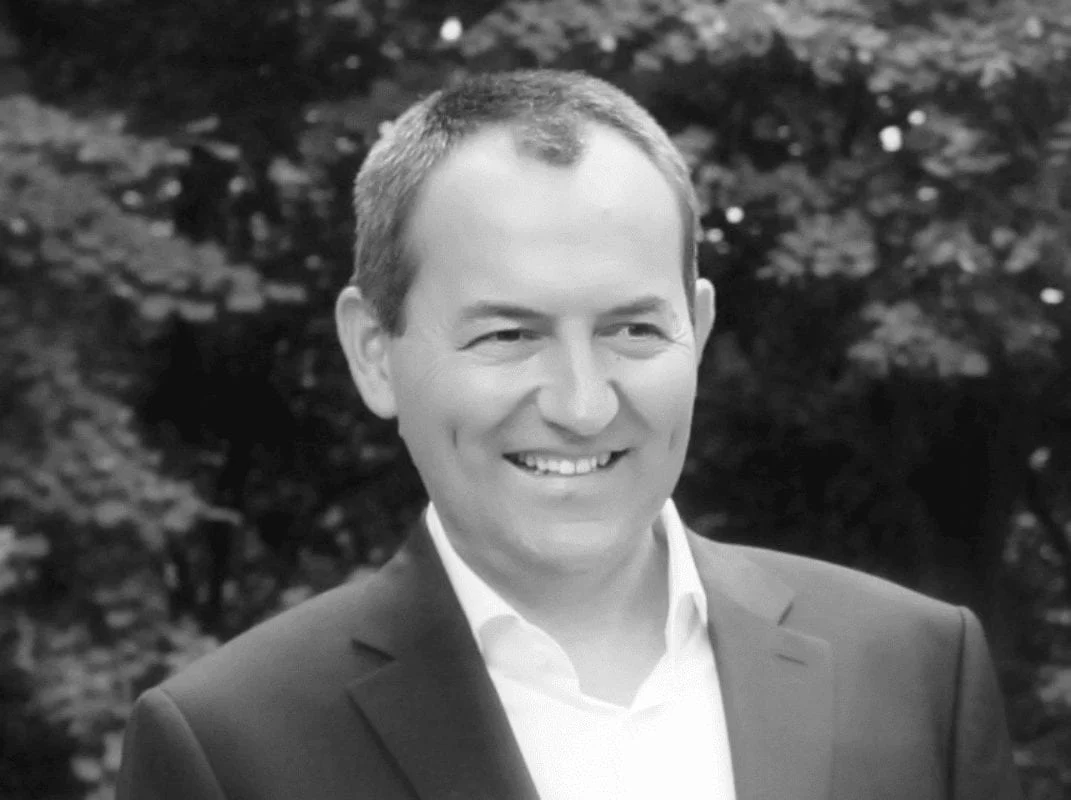
Jean Mascla
Founder of Home Select, property hunter since 2011
Further reading
The most beautiful neighbourhoods in Paris
The Home Select ranking of the most pleasant neighbourhoods to live in Paris.
The best neighbourhoods for expats
Where to settle in Paris depending on your profile and your priorities.
Buying in Saint-Germain-des-Prés
A buyer's guide to the most expensive and sought-after neighbourhood in Paris.
Choosing your neighbourhood in Paris
Which is the best Paris neighbourhood for a family with children?
Left Bank or Right Bank: what does it mean for a buyer?
Which Paris neighbourhoods suit a buyer coming from abroad?
Should I choose central Paris or the inner suburbs?
How does a property hunter help you pick the right neighbourhood?
Need help choosing?
Home Select's property hunters know Paris and the wider region street by street. Get in touch with the team to work out together the area that fits your project.
Contact Home SelectRead more to choose your neighborhood
Sources and methodology
Neighbourhood profiles built from the public French DVF database (DGFiP), Notaires du Grand Paris indices and the field experience of Home Select's 16 hunters (1,200+ transactions since 2011). Data vintage: April 2026. Last editorial review: August 15, 2026.