Key takeaways
- Paris is a capital-preservation market, not a yield market: gross yields sit between 2 and 4% while some French regional markets exceed 6%.
- What Paris offers instead: structural scarcity, with only 3% of the housing stock changing hands each year, and resale liquidity that exists nowhere else in France.
- The median Paris price stands at 9,900 euros/sqm at the April 2026 DVF vintage, from around 8,200 euros/sqm in the 19th to around 14,500 euros/sqm in the 6th.
- The IFI wealth tax applies above 1.3 million euros of net taxable property: in Paris, a single family flat can be enough to cross the threshold.
- Capital gains are exempt from income tax after 22 years of ownership, and from social levies after 30 years.
One question comes up at every first meeting with an investor: what does it return? In Paris the honest answer is disappointing, and it is exactly what you need to understand before buying. Gross yields sit between 2 and 4% depending on the arrondissement, while several French regional markets exceed 6%. An investor who looks only at that figure should not buy in Paris.
Capital keeps arriving anyway, French and foreign alike. Because yield is not what people come here for.
Why Paris is not a yield market, and why that is not a flaw
The arithmetic is simple. The median Paris price stands at 9,900 euros/sqm at the April 2026 DVF vintage, for a mean of 11,100 euros/sqm. Rents, meanwhile, are capped. When prices rise faster than a capped rent, the yield compresses. That is arithmetic rather than a phase of the cycle, and no clever structure reverses it for long.
An investor looking for cash flow will do better elsewhere. We say so to clients who come to us with that plan, even when it means turning down the mandate.
What Paris offers instead rests on three things few markets combine.
Scarcity is structural. Paris has roughly 1.1 million homes for 2.1 million residents, inside boundaries that have not moved in over a century. Each year only 3% of the stock changes hands. Nobody is building another 6th arrondissement.
Liquidity is real. A well-located, sensibly priced property sells in Paris, including through corrections. It is a quality you never measure until you need it, and it makes all the difference on the day of a succession, a divorce or a cash requirement.
Value holds. The 2023-2024 correction was real, and the market has stabilised since. Over the long horizons on which wealth is judged, Paris property has done its job of preserving capital.
What to buy when you invest for wealth rather than income
The income investor hunts the best rent-to-price ratio. The wealth investor looks for something else: what cannot be reproduced.
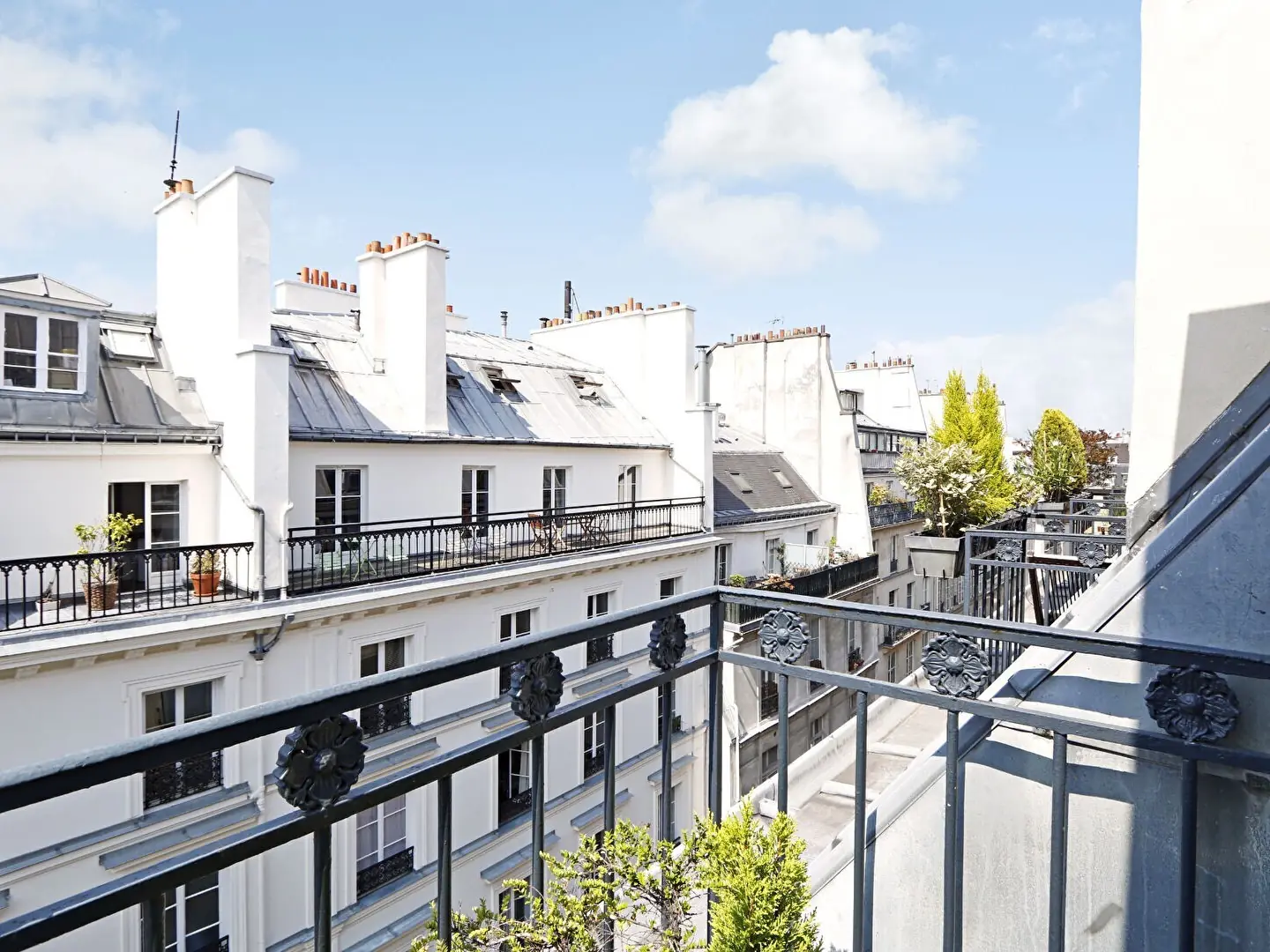
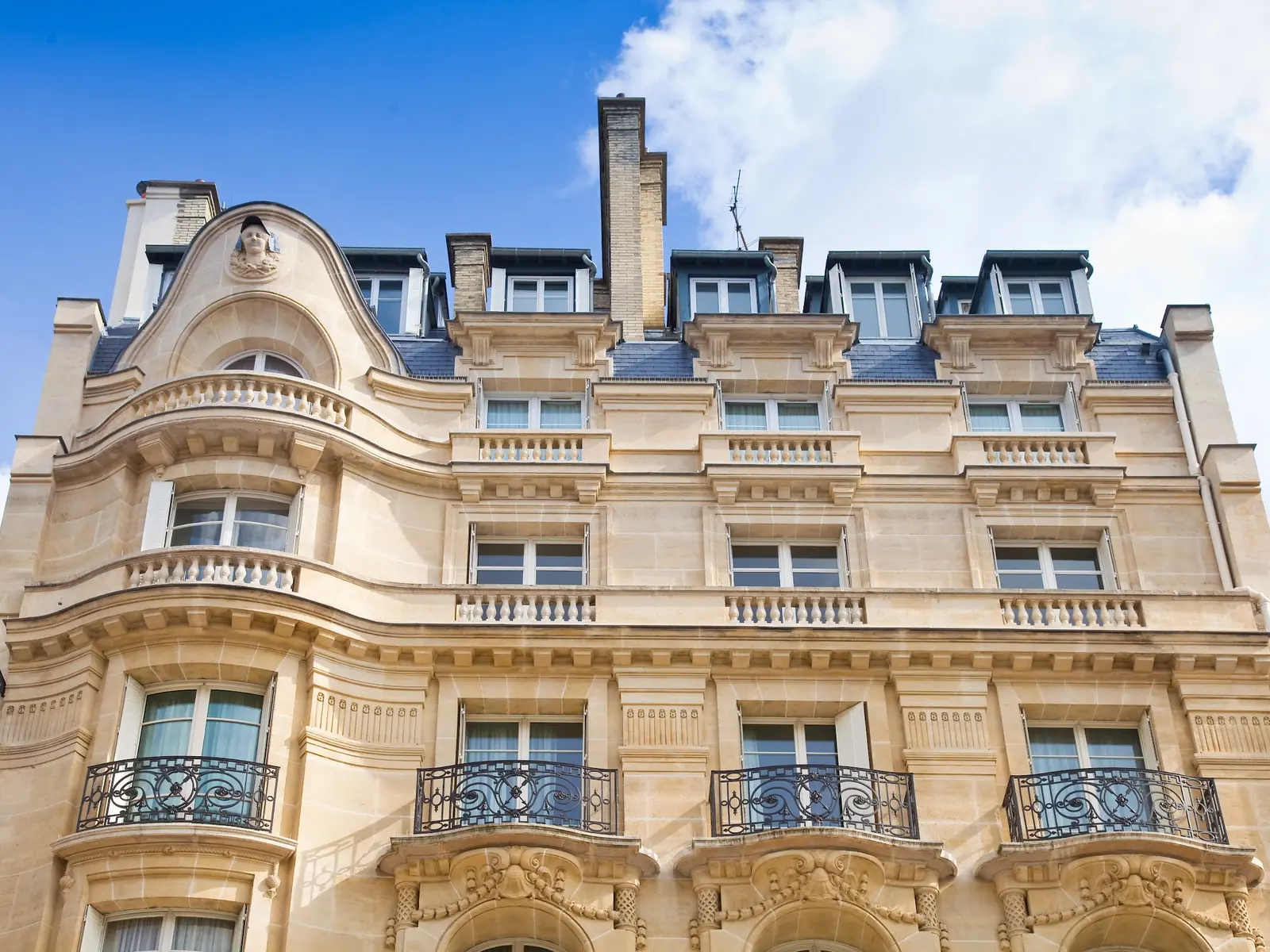
In practice that means the characteristics no renovation creates. A high floor with a lift. An open view, all the more so onto a monument. Dual aspect. Quiet in a central district. A top floor. A terrace, which remains the absolute exception in the Paris building stock. A well-maintained cut-stone building whose service charges hold no surprises.
Conversely, anything that can be fixed is negotiable and should not put you off: a dated kitchen, an awkward layout, tired parquet. They are levers, in fact, because they lower the entry price without touching long-term value.
This hierarchy explains something counter-intuitive. For wealth purposes, paying more per square metre in the right place is usually safer than paying less in the wrong one. The median runs from around 8,200 euros/sqm in the 19th to around 14,500 euros/sqm in the 6th: that 1 to 1.8 gap is not a gap in build quality, it is a gap in scarcity.
How to hold: personal name, SCI, or split ownership
The ownership structure matters as much as the property, and it is decided before signing, not after.
Personal ownership is the simplest route and suits a first purchase. It preserves the full capital gains exemption if the flat becomes your main residence.
An SCI (société civile immobilière) makes sense when the goal is succession or joint ownership. Its real value is not tax, contrary to what is often written: it is legal. A flat cannot be cut into three, shares can. It lets you gift progressively, using renewable allowances, without ever creating an unmanageable joint ownership. In return it imposes real accounting and formalities.
Split ownership (démembrement) separates the bare ownership from the usufruct. A parent buying the bare ownership and leaving the usufruct to a child, or the reverse, prepares a transfer at reduced tax cost. It is a demanding structure that needs a notaire from the outset.
None of the three is inherently better. The choice depends on your horizon, your family situation and your tax exposure.
The taxes that actually shape a Paris holding
Three taxes structure long-term ownership, and none of them concerns rent.
The IFI applies above 1.3 million euros of net taxable property held on 1 January. In Paris that threshold arrives faster than people expect: at the median price, a 100 sqm family flat owned outright is enough. A main residence benefits from a 30% allowance on its market value, and acquisition debt remains deductible. It is often the first surprise for a buyer arriving from abroad.
Capital gains follow a long calendar. Income tax exemption is complete after 22 years of ownership, social levies after 30 years. A main residence is exempt from year one. This is the underlying reason why a Paris purchase designed for resale within five years almost always hits the wall of fees and tax.
Transfer duty makes up most of the notaire fees, around 5.81% of the price, within a total of 7 to 8% on an existing property and 2 to 3% on new build. On a 900,000 euro property, that means roughly 67,500 euros to budget on top of the asking price.
The pied-à-terre, the most Parisian form of investment
A large share of wealth-driven purchases in Paris is neither a main residence nor a pure investment. They are pieds-à-terre: a property used a few weeks a year, kept available for children, and eventually passed on.
The formula is consistent with everything above. It does not chase yield; it combines real use with a store of value. It calls for small but faultless properties, in well-run buildings, in locations that do not depreciate. Our dedicated guide covers this case: buying a pied-à-terre in Paris.
One point worth making for foreign buyers: letting that property as a short-term furnished rental for a few weeks a year is far from automatic in Paris. Change-of-use consent, compensation and registration with the town hall govern the practice strictly. The applicable rules are set out in our guide to short-term rental regulation.
The four mistakes we see most often
Thinking in yield on a wealth market. This is the parent error, the one the others follow from. It pushes buyers towards peripheral, poorly located properties because the rental ratio looks better there, and sacrifices precisely what creates Parisian value.
Underestimating the building. A voted facade renovation, a lift to replace or a roof at the end of its life run to tens of thousands of euros. The last three years of general meeting minutes say everything, and almost nobody reads them closely enough.
Confusing Carrez surface with habitable surface. The gap can reach 10% on a property with sloping ceilings. It is paid at the Paris price per square metre.
Buying without seeing the street on a weekday. A road that is quiet on Sunday can be a delivery route at 7am on Tuesday. On a property meant to be held for twenty years, that check is not a detail.
What a property hunter brings to a wealth-driven purchase
In this segment the difficulty is not the budget, it is access. Between 15 and 25% of sales in the premium arrondissements (6th, 7th, 8th, 16th) close without a public listing. They circulate between professionals, notaires, building managers and caretakers, often because the seller does not want the property displayed on portals. A buyer relying on listings therefore sees part of the market, and the least rare part.
Home Select searches for these properties on behalf of the buyer, never the seller. Since 2011 our 16 hunters have assisted more than 1,200 buyers, over 100 transactions a year. Negotiation averages 6% off the seller’s price, which is 54,000 euros on a 900,000 euro property. The average search takes 45 days with 3 viewings on the client’s side, where an independent search runs past 40 viewings and six months.
Home Select has two offers. The Exclusive offer, an exclusive mandate at 2.5% of the purchase price with a 10,000 euro minimum including VAT. The Confidential offer, a simple mandate at 1.5% of the purchase price, reserved for projects of 2 million euros and above, on a selection made up exclusively of off-market property. In both cases fees are payable on success only, nothing upfront.
We are members of the FCI (Federation of Property Hunters) and rated 4.8/5 on Google (130+ reviews), with 96% of clients satisfied.
Key takeaways
Paris is not a yield market and will not become one again: prices rise faster than a capped rent. Investing there makes sense for three reasons, and only three: the scarcity of a closed stock of which 3% changes hands each year, resale liquidity that exists nowhere else in France, and a long-ownership tax regime that rewards a wealth horizon.
The rest follows. You buy what cannot be reproduced, you choose your ownership structure before signing, and you think in decades rather than years.
Planning a wealth-driven purchase in Paris? Let’s talk about your project. The first conversation is free and without obligation. We will also tell you when we are not the right people for it.
Sources
Frequently asked questions
01 Is it worth investing in Paris property in 2026?
Not in yield terms: Paris caps out between 2 and 4% gross, where some French regional markets exceed 6%. If your decision rests on rent divided by price, Paris is the wrong market and that should be said plainly. Paris justifies itself elsewhere: preserving value, resale liquidity and passing assets on. It is a wealth market, not an income market.
02 What budget do you need to invest in Paris in 2026?
At the median price of 9,900 euros/sqm (DVF, April 2026 vintage), a 25 sqm studio is around 250,000 euros and a 45 sqm one-bedroom around 445,000 euros. Add 7 to 8% notaire fees on an existing property, of which around 5.81% is transfer duty. Differences between arrondissements are wide: around 8,200 euros/sqm in the 19th, around 14,500 euros/sqm in the 6th.
03 Should you buy in your own name or through an SCI in Paris?
Personal ownership is simplest for a first property and keeps the capital gains exemption if it becomes your main home. An SCI makes sense when the goal is succession or shared ownership: it lets you gift shares progressively rather than carve up an indivisible flat. The choice depends on your tax position and time horizon, not on a general rule.
04 At what level do you pay the IFI wealth tax in Paris?
The IFI applies above 1.3 million euros of net taxable property held on 1 January. In Paris that threshold arrives quickly: at the median price of 9,900 euros/sqm, a 100 sqm family flat owned outright is enough. A main residence benefits from a 30% allowance on its market value.
05 How long must you hold a Paris property to avoid capital gains tax?
Income tax exemption is complete after 22 years of ownership, and social levies after 30 years. A main residence is exempt from year one. This mechanism explains why Paris property is a long-horizon asset, and why a purchase designed to be resold within five years usually runs into fees and tax.