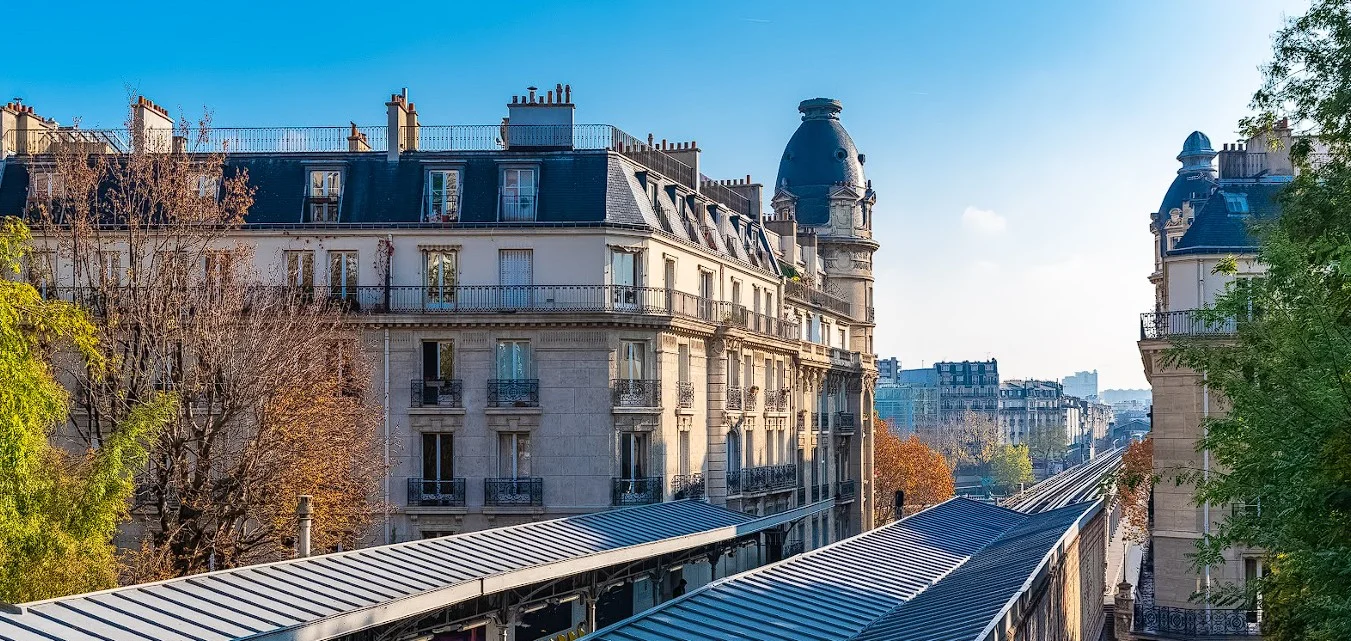


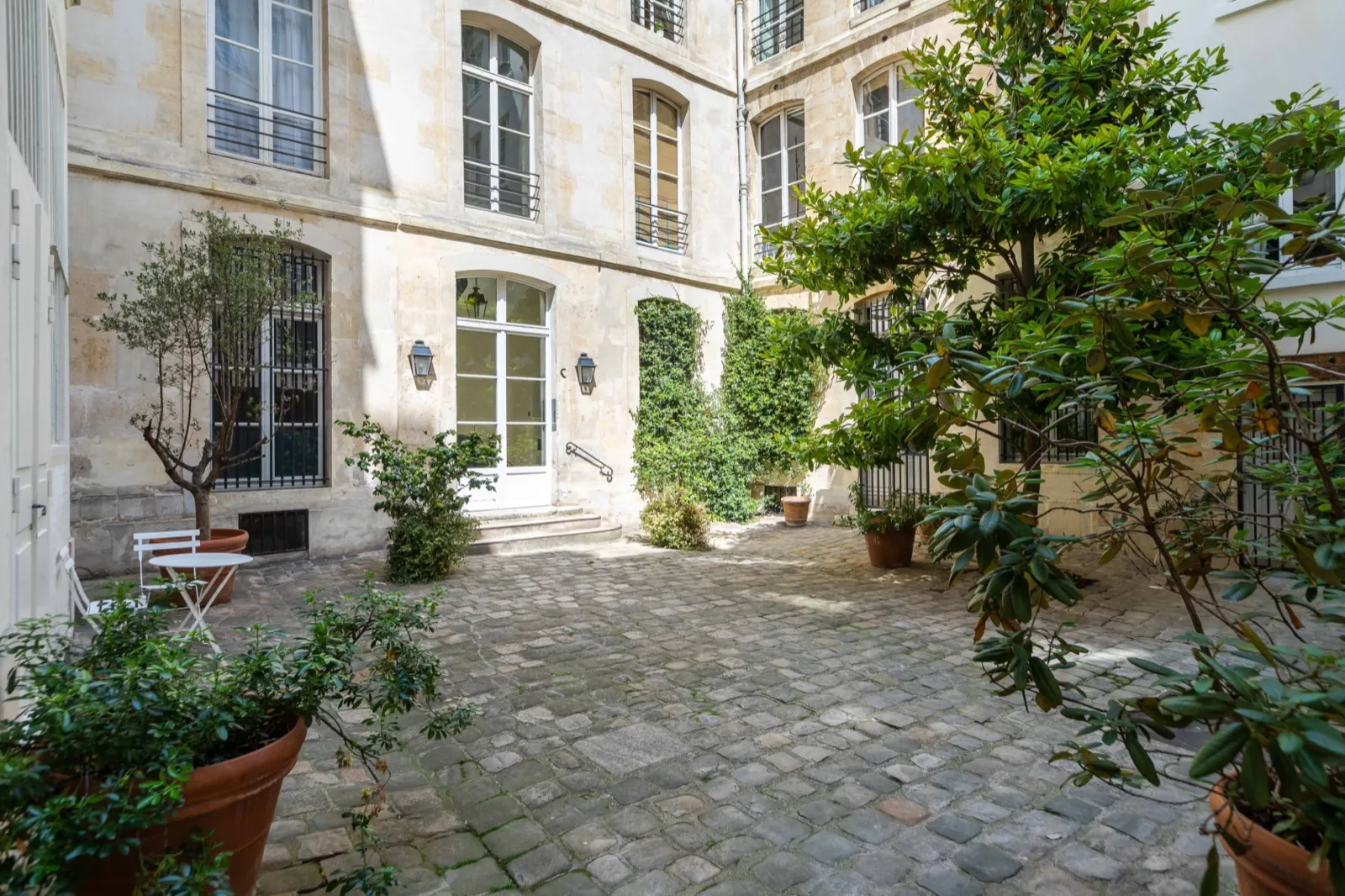
In Paris, 95% of apartments are in co-ownerships. Buying an apartment therefore means buying a unit in a collective building, with its rules, charges, collective decisions and potential surprises. The condition of the co-ownership can turn a good deal into a financial sinkhole, or conversely confirm that a property is a solid opportunity.
In fourteen years of property hunting and over 1,200 transactions in Paris, I have learned one thing: you can visit an apartment in thirty minutes, but reading the co-ownership documents takes three hours. And it is in those three hours that the information truly worth money is hidden. This guide teaches you to read a Parisian co-ownership like a professional.
The documents to request before signing anything
The seller is legally required to provide a certain number of co-ownership documents. But “provide” does not mean “explain.” Most buyers receive a 200-page bundle that they skim through absentmindedly before signing the preliminary contract. This is a mistake that can cost tens of thousands of euros.
The general meeting minutes
This is THE document to read first, and in detail. The minutes from the last three general meetings tell the recent history of the building: approved works (and their amounts), rejected works (and why), disputes between co-owners, the state of the accounts, unpaid charges, changes in property management.
What to look for in the minutes. Works that have been approved but not yet carried out: a facade renovation approved 18 months ago but not yet started means that payment calls are coming soon. Exact amounts: each works resolution states the total cost and the breakdown by shares. Unpaid charges: if several co-owners are behind on their payments, the co-ownership may be in financial difficulty, and solvent co-owners end up paying for the others. Ongoing litigation: disputes with contractors, co-owners or neighbors, each of which represents a financial risk.
I have seen buyers discover in the minutes a facade renovation approved for 280,000 euros, meaning 22,000 euros for their unit, three months before their purchase. The information was right there, in black and white, in the February general meeting minutes. Nobody had flagged it, and they had not read the document.
The co-ownership regulations
The co-ownership regulations are the fundamental contract governing life in the building. They define common and private areas, shares for each unit, usage rules (whether commercial activity is allowed, pets, noise), and how charges are divided.
Two points deserve particular attention. The distribution of charges: check that your unit does not bear an abnormally high share relative to its floor area. Some older regulations (pre-1965 law) contain absurd distributions that were never corrected. The right to build upward: in some Parisian buildings, the top floor benefits from a right to build additional floors, which can hold considerable value, or conversely, this right belongs to the co-ownership and a vertical extension project could change your living environment.
Restrictive clauses also deserve to be read: prohibition on modifying the facade (impacting window replacement and therefore the EPC), obligation to keep the original parquet flooring, restrictions on layout changes. These clauses are not always respected in practice, but they exist, and a meticulous co-owner can enforce them.
The statement of accounts
The statement of accounts is a document prepared by the property manager that summarizes the financial situation of the unit you are buying: routine charges unpaid by the seller, provisions for approved works, cash advances. It is the accounting snapshot of the unit at the time of sale.
Check that the seller is up to date with their charges. If they are not, the arrears will normally be settled at the time of sale (deducted from the price by the notaire), but it is better to know in advance. Also check the amount of provisions already called for approved works: if a facade renovation was approved and the seller has already paid two out of four installments, the remaining two will be your responsibility after the purchase.
The maintenance log
The building maintenance log records the history of works carried out on common areas: date of the last facade renovation, elevator replacement, roof repair, electrical upgrades. It is a valuable document for assessing the general condition of the building and anticipating future works.
Facade renovations take place on average every 10 years in Paris (municipal requirement). If the last one was in 2015, the next one is likely before 2025-2026. A zinc roof lasts 30 to 50 years. An elevator has a lifespan of 20 to 30 years before full replacement. These maintenance cycles are predictable, provided you know the dates of the last interventions.
Co-ownership charges: decoding the real cost
Co-ownership charges are the “owner’s rent,” a recurring cost that many buyers underestimate or neglect to check in detail.
Routine charges
They cover the day-to-day running of the building and break down into two categories.
General charges are distributed among all co-owners based on ownership shares. They cover maintenance of common areas (cleaning, green spaces), building insurance, property manager fees, and routine management costs. Budget 15 to 30 euros per sqm per year for this item.
Special charges are distributed according to objective usefulness for each unit. The elevator is paid based on the floor (the ground floor pays little or nothing, the 6th floor pays the most). Collective heating is distributed by surface area and orientation. Caretaker services are generally distributed by shares.
In Paris, the total range of routine charges goes from 25 euros per sqm per year (small building without a caretaker, elevator or collective heating) to 80 euros per sqm per year (large building with caretaker, elevator, collective heating, swimming pool in upscale residences). The Parisian average is around 45 to 55 euros per sqm per year.
Collective heating: the variable item
In older buildings with collective gas or oil heating, heating often represents 30 to 45% of total charges, and this is an item whose amount fluctuates from year to year depending on energy prices and the severity of the winter.
Ask for the heating charge history over three years. A 30% gap between a mild year and a cold year is not uncommon. Build the worst-case scenario into your monthly budget, not the best case.
Buildings that have converted their collective oil or gas heating to a collective heat pump or a connection to the urban heating network (CPCU in Paris) generally benefit from more stable and decreasing heating charges. This is a positive sign to look for in general meeting minutes.
Exceptional charges: the real risk
Routine charges are predictable. Exceptional charges are the major risk of co-ownership. A facade renovation costs between 150,000 and 500,000 euros for a Haussmann-style Parisian building, meaning 10,000 to 25,000 euros per unit depending on shares. Full elevator replacement: 80,000 to 150,000 euros, meaning 3,000 to 8,000 euros per unit. Zinc roof repair: 100,000 to 250,000 euros, meaning 5,000 to 15,000 euros per unit.
These works are voted at general meetings and payment calls are spread over 12 to 36 months generally. But the sum remains considerable, and it is added to routine charges and your mortgage payment.
The ALUR works fund (mandatory since 2017, minimum 5% of the annual budget) is supposed to build a reserve to absorb these shocks. In practice, the accumulated amount is often insufficient to cover a facade renovation or elevator replacement. The works fund is a cushion, not a blanket.
Jean Mascla’s advice: Before each viewing, I ask my apartment hunters to obtain and analyze three documents: the last three general meeting minutes, the maintenance log and the preliminary statement of accounts. This has been our standard protocol since 2011, and it has spared our clients dozens of unpleasant surprises. A facade renovation costing 20,000 euros that is not budgeted by the buyer means a consumer loan at 6% to fill the gap, or a forced sale within 3 years. At Home Select, we prefer to know in advance.
Red flags: when to walk away
Certain warning signs should trigger maximum vigilance, or even a complete abandonment of the project.
Massive unpaid charges
When more than 25% of co-owners are behind on payments, the co-ownership is in trouble. Necessary works are no longer approved (due to lack of majority or cash), routine maintenance deteriorates, and the property manager threatens to resign. The spiral is well known: the building deteriorates, prices drop, good co-owners leave, and unpaid charges increase.
The law allows for the appointment of a court-appointed administrator in co-ownerships in serious difficulty, but the process is lengthy and recovery uncertain. My advice: if the rate of unpaid charges exceeds 20%, move on. Paris has no shortage of well-managed buildings.
A dysfunctional volunteer property manager
A volunteer property manager (a co-owner who manages the building for free) can work in a small building of 5-6 units with involved and well-meaning co-owners. In a building of 20 units or more, it is almost always a source of problems: approximate accounting, poorly organized general meetings, works postponed indefinitely, unmanaged neighbor disputes.
Check who the property manager is and how long they have been in the role. A professional property manager who has been in place for several terms, with clear accounts and well-documented general meetings, is a sign of good management. A property manager who changes every year signals instability.
Ongoing legal proceedings
Litigation with a co-owner, a supplier, a neighbor, or worse, proceedings for a building in peril (threatening to collapse) or insalubrity, represents a direct legal and financial risk for every co-owner. Legal fees are distributed among all units, and the outcome of a lawsuit is by nature uncertain.
No multi-year works plan
Since the Climate Act of 2021, co-ownerships must establish a 10-year multi-year works plan (PPT), preceded by a comprehensive technical assessment (DTG). In 2026, this requirement is being progressively applied depending on the size of the co-ownership.
A co-ownership that has not yet launched this process (when it is required to do so) is a co-ownership that puts off problems. Unplanned works always end up becoming urgent, done in a panic, at a higher cost.
What the viewing tells you
Documents tell the accounting and legal history of the building. The viewing tells its physical history. The two complement each other.
The stairwell
This is the building’s thermometer. A clean, well-lit stairwell with recent paintwork and mailboxes in good condition signals a well-maintained co-ownership. A dirty, poorly lit stairwell with graffiti and broken mailboxes signals the opposite. The correlation between the condition of the stairwell and the general condition of the building is remarkably reliable.
The common areas
Observe the entrance hall, corridors, cellar, bin storage, and bike storage if it exists. Check the condition of the elevator (year of installation, last inspection displayed in the cabin). Look at the walls for signs of dampness, cracks or damage.
The facade
From the street, assess the condition of the facade: blackened stone, cracked balconies, rusted ironwork, peeling render. Every visible defect is a future works item. A building with an immaculate facade has been recently renovated, so check the date in the maintenance log.
The caretaker
If the building has a caretaker, talk to them. They are the living memory of the building. They know which apartments have damp problems, which neighbors are noisy, what condition the plumbing is in, and when the last water damage occurred. Caretakers generally do not lie, especially when asked specific questions.
The roof and basement
If you are buying on the top floor, ask to access the attic or roof terrace. Signs of water infiltration are visible there long before they reach your ceiling. Warped zinc, detached flashings, a pierced gutter: all signs that a repair is on the horizon.
If you are buying on the ground floor or with a cellar, check the condition of the basement. Rising damp is a plague in Parisian buildings constructed over former quarries or near the water table. Seeping cellar walls, a musty smell, saltpeter marks: all of this rises, inevitably.
Small co-ownership vs large co-ownership: two different worlds
The operation of a 6-unit co-ownership has nothing in common with that of an 80-unit co-ownership. Each format has its advantages and risks.
Small co-ownerships (fewer than 10 units) offer more flexible management, faster decisions and often lower property management fees. In return, each co-owner carries significant weight in the budget: if one of them does not pay their charges, the impact is immediate. Heavy works (facade renovation, roof) represent higher individual shares. And volunteer property management, common in this format, can lack accounting rigor.
Large co-ownerships (more than 50 units) benefit from economies of scale on routine charges, systematic professional management and dilution of unpaid charge risks. However, decisions are slow (achieving a majority at general meetings is sometimes a battle), works take years to be voted and then carried out, and anonymity encourages incivilities.
The sweet spot, in my experience, lies between 15 and 40 units. Large enough to have a professional property manager and shared charges. Small enough for co-owners to know each other and stay involved.
Jean Mascla’s advice: The number of units is not a sufficient criterion. What really matters is the quality of management. I have seen 8-unit co-ownerships impeccably managed by a rigorous volunteer property manager, and 60-unit co-ownerships on the brink despite having a professional property manager. The general meeting minutes tell everything: clear accounts, works voted and completed, comfortable majorities: this is the portrait of a healthy co-ownership, regardless of its size.
The co-ownership as an investment criterion
A good apartment in a bad building is a bad investment. A decent apartment in an excellent building is often a very good deal. This truth, simple on the surface, is one that experienced buyers have internalized and that beginners learn at their expense.
The condition of the co-ownership determines three essential things: your daily comfort (cleanliness, quiet, functioning equipment), your recurring expenses (charges, exceptional works) and the resale value of your property (a well-maintained building sells better and faster than a deteriorating one).
At Home Select, co-ownership analysis is an integral part of our search process. Our 16 property hunters never present a property to a client without having gone through the general meeting minutes, checked the state of the accounts and visited the common areas. Over 1,200+ transactions supported since 2011, this rigor has protected our clients from hundreds of unpleasant surprises and directed them toward buildings whose good management protects their investment over the long term.
If you have a purchase project in Paris and the co-ownership worries you (or should worry you), our apartment hunters are here to decode what the documents do not say clearly. Tell us about your project
Frequently asked questions
What documents should you request before buying in a co-ownership in Paris?
The essential documents are: the last three general meeting minutes, the co-ownership regulations, the statement of accounts (current charges, approved works, any debts), the building maintenance log, the collective EPC if available, and the comprehensive technical assessment (DTG) if completed. These documents reveal 80% of potential unpleasant surprises.
What is a normal amount for co-ownership charges in Paris?
In Paris, routine charges range from 25 to 80 euros per sqm per year depending on the building's amenities. A 60 sqm apartment in a building with a caretaker, elevator and collective heating generates an average of 250 to 400 euros in monthly charges. Above 6 euros per sqm per month, charges should be justified by tangible services. Below 2 euros per sqm per month, be cautious: the building may be poorly maintained.
How can you find out if major works are planned in a co-ownership?
Read the general meeting minutes from the last three years: all approved works are listed with their amounts and payment schedules. Also ask for the multi-year works plan (PPT), mandatory since 2023 for co-ownerships with more than 200 units. A facade renovation in Paris costs 10,000 to 25,000 euros per unit. Better to know before buying.