


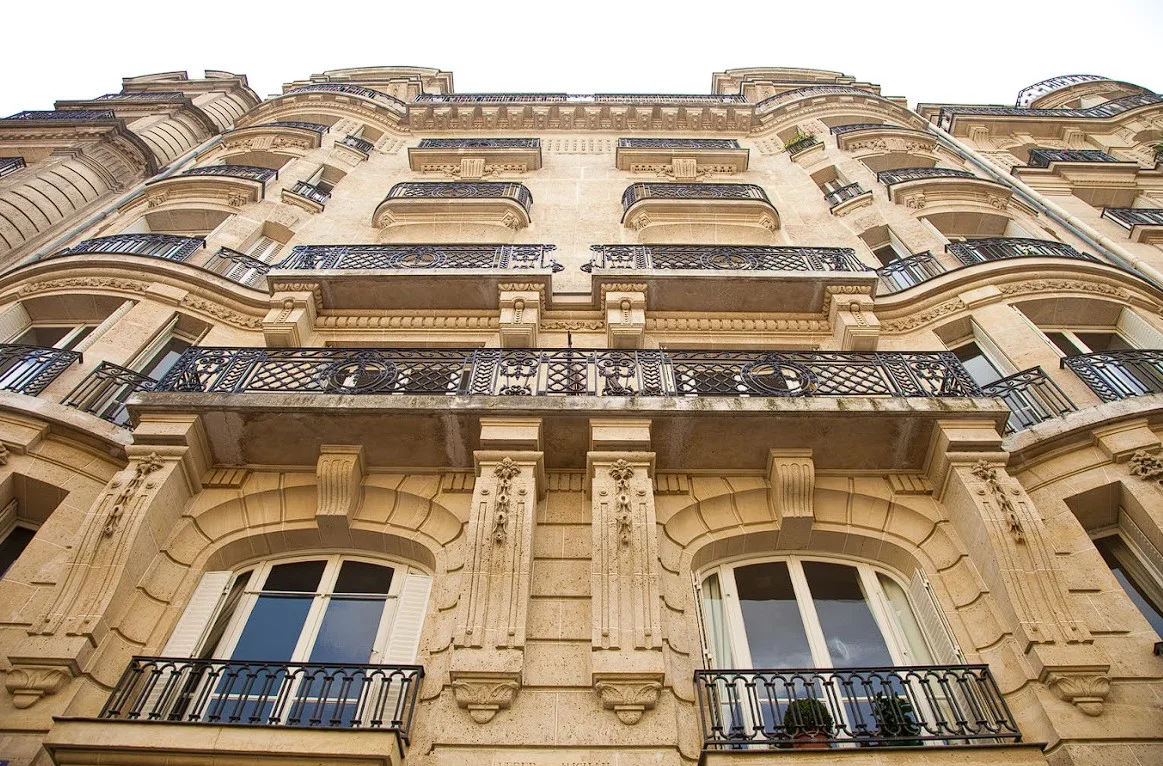
Buying an apartment in Paris to rent it out while living abroad is a project we regularly support at Home Select. The concept is appealing: you invest in one of the most solid real estate markets in Europe, you receive rental income in euros, and you build wealth in a city where rental demand never weakens. But between theory and execution, there is an ocean of practical details to master.
This guide covers everything: the choice of legal structure, remote property management, the specific taxation for non-resident investors, the type of property to target, and the realistic yield once all costs are laid on the table.
Why Paris remains a solid investment
Before getting into the mechanics, let us recall why Paris attracts international investors, and why it is not just a question of prestige.
Rental tension is structural. Paris lacks housing. The city has 1.1 million primary residences for a demand that far exceeds this. The vacancy rate is among the lowest in Europe: a well-located and correctly priced property rents within days, sometimes hours. For an investor, this is the best insurance against vacancy risk.
Market liquidity. Paris is one of the most liquid property markets in the world. A property resells in 2 to 4 months on average. If you need to exit your investment, you will not be stuck.
Legal stability. Property rights in France are robust, the land registry is reliable, and the notarial system guarantees transaction security. For a foreign investor accustomed to less predictable markets, this is a considerable advantage.
The currency effect. If you earn in dollars, pounds, or Swiss francs and the euro is temporarily weak, your Parisian purchasing power increases. Some international investors deliberately play this timing.
Limitations also exist: gross yield is modest compared to other French or European cities, taxation is heavy for non-residents, and rent control limits revenue potential. But for an investor thinking in terms of long-term wealth rather than immediate cash flow, Paris remains a safe haven.
Legal structure: own name or SCI?
This is the first decision to make, and it conditions everything else: taxation, financing, management, inheritance.
Buying in your own name + LMNP status
LMNP (Loueur en Meuble Non Professionnel, or Non-Professional Furnished Rental) is the most tax-efficient regime for furnished rental investment, and it is accessible to non-residents.
The principle: you rent out a furnished apartment (with sufficient furniture for the tenant to live in immediately), and you declare your income under BIC (Industrial and Commercial Profits), not as property income. The major advantage: under the real regime, you can deduct the depreciation of the property (excluding land), furniture, and works. This depreciation reduces your taxable result, often to zero for the first 10 to 15 years.
In practice for a non-resident: you must obtain a SIRET number (registration as a landlord), file a business start-up declaration, and produce annual accounts under the real regime. A specialist LMNP accountant is essential, at a cost of 500 to 1,200 euros per year.
Taxation: even with depreciation, the minimum 20% rate applies to non-residents on the net taxable result. But if depreciation brings the result to zero, there is nothing to pay. That is the whole point of LMNP.
On resale: the capital gain is calculated under the private individuals’ regime (no clawback of depreciation), with allowances for length of ownership. This is a significant advantage of LMNP over the SCI subject to corporate tax.
The SCI subject to corporate tax (IS)
The SCI subject to IS is the main alternative for non-resident investors.
Advantages: property depreciation (as with LMNP), deduction of all actual expenses (loan interest, management, works, accounting), IS rate of 15% on the first 42,500 euros of profit then 25% above. Remote management is facilitated by the SCI’s formal structure (general meetings, decision minutes).
Disadvantages: structural costs (set-up 1,500 to 3,000 euros, annual accounting 1,500 to 2,500 euros), more difficult financing (banks lend less readily to an SCI), and above all an unfavourable taxation on resale. The capital gain is calculated under the professional regime, meaning the difference between the sale price and the net book value (purchase price minus depreciation deducted). In practice, the more you have depreciated, the higher the taxable capital gain on resale. And there is no length-of-ownership allowance.
When to choose an SCI? If you are buying with others (couple, family, partners), if you have an inheritance planning objective, or if you plan to never resell (the tax cost of resale is then irrelevant).
The SCI subject to income tax (transparent)
By default, the SCI is subject to income tax: income is taxed directly in the hands of the shareholders. For a non-resident, this is rarely advantageous: no depreciation possible, and property income is taxed at the minimum 20% rate plus social contributions. The SCI subject to income tax is only justified in specific wealth-structuring cases. Consult your tax adviser.
Jean Mascla’s advice: For a first rental investment in Paris from abroad, LMNP in your own name is almost always the best option. It is the simplest, the most flexible, and the most tax-efficient, both during the holding period and on resale. Only create an SCI if you have a specific reason to do so (co-investment, inheritance, overall wealth strategy).
Property management: essential when remote
When you live 6,000 km from your apartment, you cannot handle the tenant’s 2am calls, water damage, inventories, and unpaid rent reminders. Professional property management is not an option; it is a necessity.
What a property manager does
The property manager (or administrateur de biens) handles the entire tenant relationship: listing publication, candidate selection, lease drafting, check-in and check-out inventories, rent collection and transfer, repair and maintenance management, unpaid rent management (reminders, legal proceedings if necessary), and representation at co-ownership general meetings.
The cost
Property management fees in Paris range from 6% to 8% including VAT of rents collected. On a rent of 1,500 euros/month, that is 90 to 120 euros per month. Add the letting fee at each tenant change (often equivalent to one month’s rent, shared between landlord and tenant under the Alur law).
Some managers offer premium packages (10-12%) that include a rent guarantee insurance (GLI) and vacancy insurance. For a remote investor, this peace of mind may be worth the extra cost.
Choosing the right manager
Not all managers are equal, especially for a non-resident owner. Here are the selection criteria.
English-speaking communication: if your French is limited, make sure the manager can communicate effectively in your language.
Digital reporting: the best managers offer an online owner portal with management statements, receipts, and tax documents. Essential when you are remote.
Responsiveness: a water leak on Friday evening cannot wait until Monday. Check intervention times and manager availability.
Specialisation: some managers specialise in non-resident clientele and master the specific tax and administrative requirements. Prefer them.
At Home Select, we systematically connect our investor clients with Parisian property managers we have tested and validated. This is an essential link in the ecosystem.
The type of property to target
Not all properties are equal for a remote rental investment. Here is what works best.
The furnished two-bedroom: the sweet spot
The furnished two-bedroom (30 to 45 sqm) is the king format for Parisian rental investment. Demand is at its peak (young professionals, couples, master’s students), turnover is reasonable (one-year furnished lease, renewable; 9 months for students), and the rent per sqm is higher than for unfurnished properties.
In 2026, a furnished 35 sqm two-bedroom in a mid-range arrondissement (10th, 11th, 12th, 14th, 15th, 17th, quiet 18th) rents for 1,100 to 1,500 euros/month depending on condition, floor, and precise location. The purchase price for this type of property sits between 300,000 and 450,000 euros.
Arrondissements to target
To maximise rental yield, avoid the most expensive arrondissements (6th, 7th, 8th, 16th) where the high purchase price crushes the yield. Favour arrondissements with strong rental demand and reasonable purchase prices:
The 10th (Canal Saint-Martin, Republique): very strong demand from young professionals. Gross yield: 3.5-4%.
The 11th (Oberkampf, Bastille, Charonne): vibrant neighbourhood, strong appeal. Gross yield: 3.5-4%.
The 14th (Alesia, Denfert): stable residential neighbourhood, good yield. Gross yield: 3.5-4.2%.
The 15th (Convention, Commerce): the largest rental stock in Paris, constant demand. Gross yield: 3.2-3.8%.
The 17th (Batignolles, Epinettes): undergoing transformation, attractive. Gross yield: 3.5-4%.
The 18th (Jules Joffrin, Abbesses, not Barbes): among the best yields in Paris. Gross yield: 4-4.5%.
DPE: a now essential criterion
Do not buy a property rated F or G on the DPE for rental purposes. G-rated homes have been banned from rental since 2025, and F-rated ones will follow in 2028. A poorly rated property will require energy renovation works, often complex and costly in Parisian co-ownerships, before it can be rented.
Target a DPE rating from A to D. An E-rated property may be acceptable if the necessary works are modest and costed before purchase.
The realistic net yield
Let us be transparent about the numbers. Here is the full calculation for a furnished two-bedroom bought for 380,000 euros in the 11th arrondissement.
Income: rent 1,300 euros/month x 11.5 months (2 weeks/year vacancy) = 14,950 euros/year.
Deductible expenses: non-recoverable co-ownership charges (~1,200 euros/year), property tax (~1,000 euros), PNO insurance for non-occupant owner (~200 euros), property management 7% (~1,050 euros), maintenance and minor repairs (~500 euros/year averaged), LMNP accountant (~800 euros), CFE business property tax (~300 euros).
Total expenses: ~5,050 euros/year.
Net income before tax: ~9,900 euros/year, a net yield before tax of 2.6%.
LMNP taxation: if depreciation covers the taxable result (which is the case in the early years), tax is 0 euros. Net yield after tax = net yield before tax = 2.6%.
Net yield after tax without LMNP (standard property income for a non-resident): taxation at 20% + 17.2% social contributions (outside EEA) = 37.2% on net result. Net yield: approximately 1.6%.
The difference between LMNP and unfurnished rental is dramatic. This is why furnished rental is almost systematically recommended for non-resident rental investment.
Jean Mascla’s advice: Never look solely at the gross yield quoted by sellers or agents. The yield that matters is the net-net, after all charges, taxation, management, and vacancy. In Paris, a net yield of 2.5 to 3% is excellent. If someone promises you 5% net in central Paris, ask questions.
The role of the property hunter for remote investment
Investing remotely means delegating, and delegating well. The property hunter is not just the person who finds the property. They are the one who structures the entire ecosystem around your investment.
Sourcing: identifying properties that meet your yield criteria, in the right arrondissements, with the right DPE and the right rental potential. Eliminating problematic properties (fragile co-ownership, major works voted, nuisances).
Negotiation: obtaining the best price. Every percentage point of negotiation directly improves your yield. At Home Select, we achieve an average of 6% negotiation.
Connecting: specialist non-resident broker for financing, notary experienced with international cases, LMNP accountant, reliable property manager, furnishing contractor if needed.
Follow-through: right up to the signing of the final deed and the start of the rental. Some hunters even assist with the furnishing and letting phase, a service we offer for our remote investor clients.
Do you live abroad and want to invest in Paris? We put the entire ecosystem in place around your investment: from sourcing to letting, including financing and tax structuring. Our 16 property hunters have been supporting non-resident investors since 2011. Invest in Paris from home
Key takeaways
Rental investment in Paris from abroad is entirely viable, provided it is well structured. LMNP in your own name is the most advantageous regime for most profiles. Professional property management is non-negotiable when remote (6-8% of rents). The furnished two-bedroom in a mid-range arrondissement (10th, 11th, 14th, 15th, 17th, 18th) is the format that optimises the yield-to-management ratio. And the realistic net yield sits between 2.5% and 3%: modest in appearance, but backed by a solid asset in one of the most liquid cities in the world.
To go further: our complete guide to investing in Paris in 2026 and our LMNP tax guide explore each aspect in depth.
Frequently asked questions
Can a non-resident invest in a rental property in Paris?
Yes, with no restrictions whatsoever. A foreigner or a French expatriate can buy an apartment in Paris and rent it out under exactly the same conditions as a resident. The specificities concern taxation (minimum 20% rate on rental income), the need for an on-site property manager, and financing (higher deposit required for non-residents). Rental investment in Paris remains attractive thanks to the permanent rental tension: demand far exceeds supply.
What rental yield can you expect from a Paris investment?
Gross rental yield in Paris ranges from 2.5% to 4.5% depending on the arrondissement, property type, and rental mode. A furnished two-bedroom in a mid-range arrondissement (10th, 11th, 12th, 14th, 15th) typically generates 3 to 4% gross. Net yield, after charges, taxation, property management, and vacancy, drops to 1.5 to 3%. This is lower than other French cities, but Paris offers unmatched asset security and market liquidity.
Should you buy in your own name or through an SCI for rental investment from abroad?
Both are possible. Buying in your own name is simpler and provides access to LMNP status (Non-Professional Furnished Rental), which is tax-efficient thanks to depreciation. An SCI subject to corporate tax also allows depreciation and facilitates remote management, but with higher structural costs and different taxation on resale. The choice depends on your overall wealth situation. Consult an international tax specialist before deciding.