

In brief
In Paris, contemporary architecture clusters in the ZAC Clichy-Batignolles (17th, 54 hectares around Renzo Piano's courthouse), Paris Rive Gauche (13th, 130 hectares along the Seine) and Ile Seguin in Boulogne-Billancourt. In 2026, these new-build apartments sell on average 10 to 15% above the neighbourhood price: 12,000 to 13,000 euros/sqm at Batignolles, 10,000 to 10,800 euros/sqm at Paris Rive Gauche, where a 65 sqm two-bedroom with balcony and parking costs around 650,000 to 700,000 euros. Home Select has supported buyers in both old and new stock since 2011.
Key takeaways
- Contemporary architectural developments in Paris sell at a 10 to 15% premium over neighbourhood averages, driven by recent thermal standards (RT 2012, RE 2020), terraces and parking.
- Key neighbourhoods for contemporary architecture include ZAC Clichy-Batignolles (17th, 12,000-13,000 euros/sqm), Paris Rive Gauche (13th, 10,000-10,800 euros/sqm) and Ile Seguin in Boulogne-Billancourt (8,500-10,000 euros/sqm).
- New-build apartments offer excellent EPC ratings (A or B) and outdoor spaces but have lower ceiling heights (2.50-2.70 m vs 3.00-3.20 m in Haussmann buildings).
- Developing neighbourhoods may take 5 to 10 years to reach full maturity, offering capital gain potential but requiring patience.
Facing the Paris courthouse designed by Renzo Piano, glass facades rise in tiers above the boulevard des Marechaux. Light bounces off the walls, changing intensity with every hour, every season. A few hundred metres away, Jean Nouvel’s Philharmonie unfurls its aluminium scales like a sleeping animal on the edge of Parc de la Villette. Paris has never stopped building, and contemporary architecture has gained, in thirty years, a place that many European capitals envy.
Is Paris frozen in Haussmann style?
No: the idea that Paris is frozen in Haussmann style is a comfortable cliche, but a false one. Two major urban projects launched since 2000, ZAC Clichy-Batignolles (17th) and Paris Rive Gauche (13th), have on their own delivered thousands of contemporary homes across 184 hectares of former wasteland.
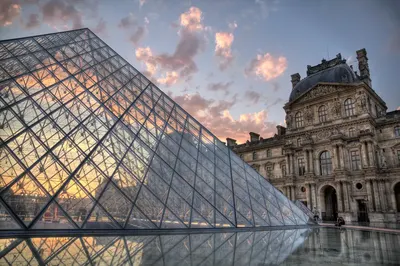
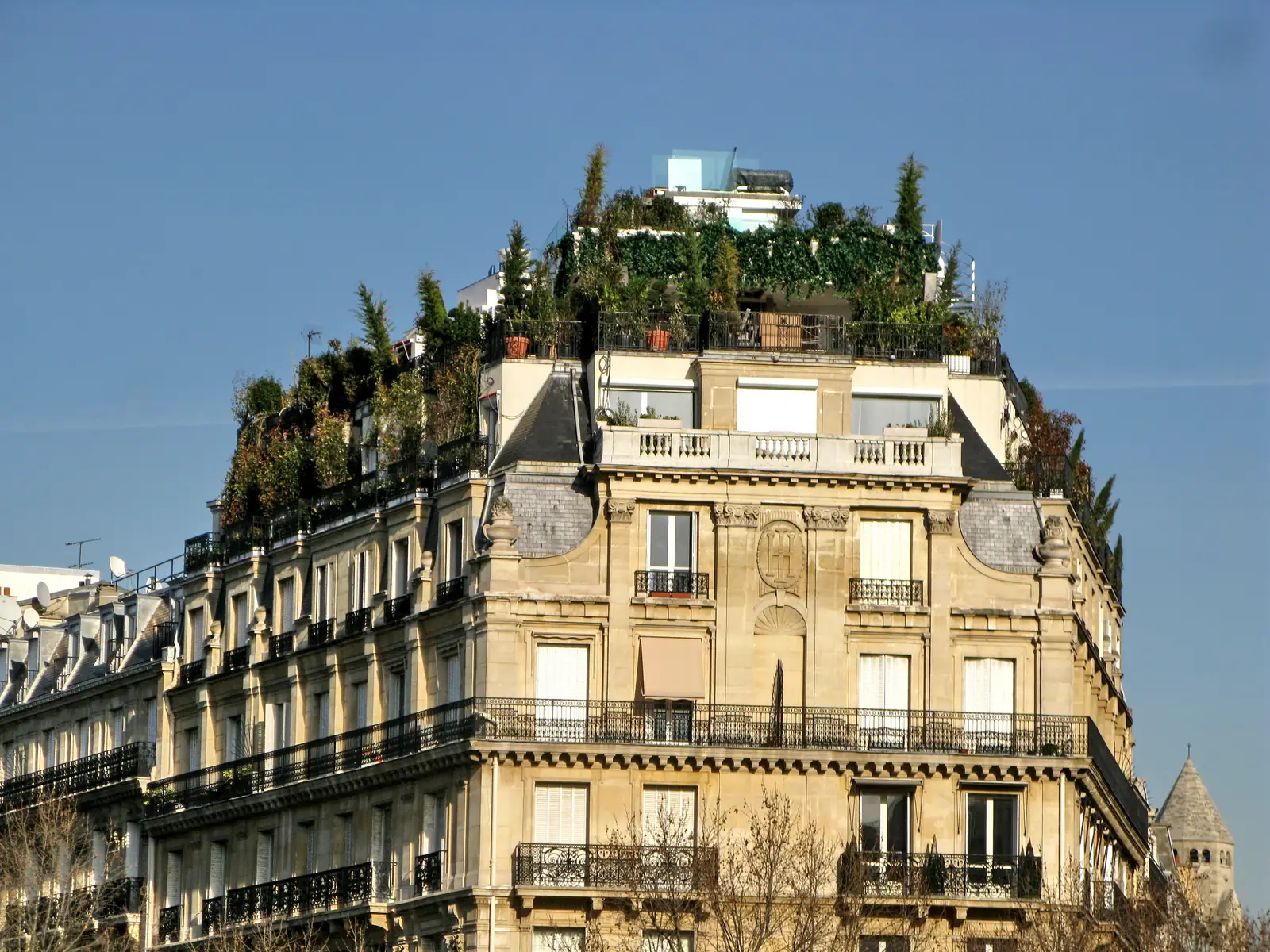
The city has always absorbed the architectural daring of its era: the covered passages of the 19th century, the metal railway stations of Eiffel and Baltard, the Art Nouveau buildings of Guimard and Lavirotte, the concrete tower blocks of the post-war boom, the postmodern provocations of the Centre Pompidou and the Louvre Pyramid.
The 21st century continues this tradition. Major urban projects launched since the 2000s have allowed a new generation of architects, French and international, to leave their mark on the Parisian landscape. And these projects are not just public facilities: they include thousands of homes whose architectural quality, features, and prices deserve the attention of any serious buyer.
Which contemporary buildings changed the face of Paris?
Three buildings redefined the Parisian skyline in four years: the Fondation Louis Vuitton (Frank Gehry, 2014), the Philharmonie de Paris (Jean Nouvel, 2015) and the Paris courthouse (Renzo Piano, 2018). None is a residential block, yet each has pulled up the housing market around it, starting with the 16th, where apartments with views of the Foundation have gained 5 to 8% since 2014.
The Fondation Louis Vuitton, designed by Frank Gehry, opened in 2014 in the Bois de Boulogne. Its glass sails are not housing, but their effect on the neighbouring property market is measurable: apartments in the 16th arrondissement on the Neuilly side, with views of the Foundation and the park, have gained between 5 and 8% since its inauguration. Spectacular architecture creates value at a distance.
The Philharmonie de Paris (Jean Nouvel, 2015) transformed the La Villette neighbourhood. The 19th arrondissement, long considered peripheral, now attracts buyers drawn to cultural life and green spaces: Parc de la Villette, the Canal de l’Ourcq, the Cite des Sciences. Prices remain among the lowest in Paris (an average 9,000 euros/sqm, a median 8,200 euros), but the trend is upward.
The Paris courthouse (Renzo Piano, 2018) gave an anchor point to the new Batignolles neighbourhood. Its translucent silhouette has become a visual landmark for all of northwest Paris. New residential developments in the area, designed by firms such as MVRDV, Chartier-Dalix, and Kengo Kuma, offer bold architecture in a neighbourhood that did not exist fifteen years ago.
Which neighbourhoods does contemporary architecture add value to?
Three areas concentrate contemporary schemes: Clichy-Batignolles in the 17th, Paris Rive Gauche in the 13th, and Ile Seguin with Le Trapeze in Boulogne-Billancourt. Prices run from 8,500 to 13,000 euros/sqm, always above the going rate in the surrounding area.
Clichy-Batignolles (17th arrondissement)
The ZAC Clichy-Batignolles is the most spectacular urban project in Paris since the ZAC Paris Rive Gauche. On 54 hectares of former railway wasteland, an entire neighbourhood has emerged around Parc Martin-Luther-King: housing, offices, shops, the Paris courthouse, a school of magistrates.
The residential developments are designed by recognised architects. Facades play with wood, metal, brick, and tinted concrete, a diversity that contrasts with the perceived monotony of Haussmann neighbourhoods. Apartments almost always feature balconies or terraces, sometimes private gardens at ground level, an extraordinary luxury in Paris.
Prices in recent developments in the Batignolles-Epinettes area range from 12,000 to 13,000 euros/sqm, above the 17th arrondissement average (11,300 euros/sqm mean, 10,300 euros/sqm median, DVF April 2026 vintage). The premium is explained by the features (RT 2012 or even RE 2020 standards, triple glazing, dual-flow ventilation) and the appeal of the park, within walking distance.
Paris Rive Gauche (13th arrondissement)
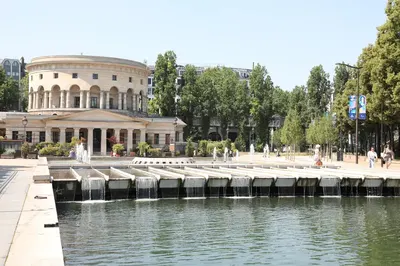
The 13th arrondissement has been profoundly reshaped by the ZAC Paris Rive Gauche, the largest Parisian development project by surface area (130 hectares along the Seine, between Gare d’Austerlitz and the boulevard peripherique).
The architecture is resolutely contemporary: residential buildings designed by Herzog & de Meuron, Rudy Ricciotti, Christian de Portzamparc, and Anne Demians offer original volumes, varied materials, and plays of transparency. The Bibliotheque nationale de France (Dominique Perrault) serves as its cultural anchor.
Prices in this area hover around 10,000 to 10,800 euros/sqm, above the 13th arrondissement average (9,400 euros/sqm mean, 8,800 euros/sqm median, DVF April 2026 vintage) but well below central neighbourhoods for often superior features. A 65 sqm 3-room apartment with a balcony and parking, in a recent architect-designed building, can be found for around 650,000 to 700,000 euros, a proposition unmatched anywhere in Haussmann-era Paris at this price.
Ile Seguin and Le Trapeze (Boulogne-Billancourt)
Just beyond the peripherique, Ile Seguin and the Trapeze neighbourhood in Boulogne-Billancourt form one of the most ambitious architectural projects in Ile-de-France. On the former Renault factories, Jean Nouvel, Shigeru Ban, and others have designed residential complexes that rival the best Parisian developments.
Prices are more accessible than within Paris, around 8,500 to 10,000 euros/sqm against a median of 8,400 euros/sqm for apartments across the town (DVF April 2026 vintage), and for often superior features: generous terraces, systematic parking, shared green spaces. The buyer profile is international: executives, architects, and lovers of contemporary design.
Which buyer profile is contemporary architecture for?
Contemporary architecture in Paris attracts a buyer profile distinct from those seeking classic Haussmann style. Three profiles dominate: international executives, architecture enthusiasts and long-term buyers.
International executives are overrepresented. Accustomed to Anglo-Saxon or Northern European construction standards (high-performance insulation, outdoor spaces, home automation), they find in new Parisian developments a comfort that a 19th-century Haussmann building cannot offer without considerable works. The EPC and its impact on prices clearly favours the contemporary: a new apartment rated A or B will never suffer from the discount that threatens the thermal sieves of the old housing stock.
Architecture enthusiasts form a second group. For them, living in a building designed by a recognised architect is an aesthetic as much as a heritage choice. They are willing to pay the 10 to 15% premium to live in a building that “tells a story.”
Long-term buyers make up the third profile. They bet on the appreciation of developing neighbourhoods: an older apartment bought at around the 17th arrondissement median (10,300 euros/sqm) in a maturing Batignolles neighbourhood could, within five to ten years, converge on the 12,000 to 13,000 euros/sqm that the area’s new-build schemes already command, when shops, transport, and public facilities are fully operational.
Discover how Home Select can assist you
What are the advantages of a contemporary apartment?
Three structural advantages separate contemporary from period stock: an EPC rating of A or B, near-systematic outdoor space, and almost no major-works provisions for ten to fifteen years. New and near-new buildings offer assets that older stock simply cannot match, at least not without major investment.
The EPC is the most obvious. Buildings constructed after 2012 (RT 2012) and especially after 2022 (RE 2020) deliver excellent energy performance. In 2026, as thermal sieves rated F and G are progressively banned from the rental market, a new apartment rated A or B is a risk-free asset from a regulatory standpoint.
Outdoor spaces are the second advantage. Contemporary developments systematically include balconies, terraces, and sometimes private gardens. In a city where an apartment with outdoor space commands a 15 to 20% premium, this is a major asset.
Controlled charges, at least in the medium term, are a third argument. A new building does not require facade renovation, roof replacement, or common area upgrades for ten to fifteen years. Provisions for works are low in the early years.
What are the limitations of a contemporary apartment?
Four limitations weigh on contemporary stock: ceiling heights of 2.50 to 2.70 m against 3.00 to 3.20 m in Haussmann buildings, high co-ownership charges in the early years, uneven ageing of materials, and the gamble of a neighbourhood still under construction. Contemporary buildings do have their weaknesses, and it would be dishonest to ignore them.
Ceiling height is the first. Where a Haussmann building offers 3.00 to 3.20 m, a new apartment tops out at 2.50 to 2.70 m. The difference is noticeable: it affects the perception of space, the quality of light, the sense of breathing room. This is one of the reasons Haussmann architecture retains its prestige: there is something irreplaceable about those generous proportions.
Co-ownership charges in the early years are often high. Modern facilities (lifts, dual-flow ventilation, landscaped green spaces, concierge service, digital entry, video surveillance) cost more in maintenance. A buyer comparing the charges of an 1880s Haussmann building, with no lift and no communal spaces, to those of a new building may be surprised.
Material ageing is a concern worth monitoring. Architectural concrete, zinc cladding, and aluminium joinery stand up well over time. Wood cladding, coloured renders, and certain composite panels less so. In twenty years, some contemporary buildings will have aged poorly, while Haussmann-era cut stone will still be standing, imperturbable, as it has been for a hundred and fifty years.
Developing neighbourhoods are a gamble. Buying in the ZAC Clichy-Batignolles in 2026 means betting on a neighbourhood that will be fully mature by 2030 or 2035. Local shops are still sparse, transport links still being finalised, the neighbourhood atmosphere still under construction. This maturation period is the price to pay for capital gain potential, but it is also a risk that every buyer should measure.
Should you choose renovated period property or contemporary?
Both are equally sound investments, provided you buy well: the decision turns on lifestyle, not on returns. The choice between a renovated Haussmann apartment and a contemporary one is therefore not merely aesthetic, it is a choice of lifestyle, budget, and wealth strategy.
Investing in renovated period property offers charm, central location, and proven heritage value. Contemporary offers comfort, energy efficiency, and outdoor spaces. Both are equally sound investments, provided you buy well.
Home Select has 16 property hunters who assist buyers looking for mouldings and marble fireplaces as well as those dreaming of terraces and floor-to-ceiling windows. Since 2011, Home Select has completed over 1,200 mandates across the Parisian market: period, new-build and prestige. What matters is not the architectural style: it is the relevance of the property to the buyer’s life project.
Paris continues to reinvent itself. The buildings emerging today will be tomorrow’s heritage. The question is not whether to choose between yesterday and today. It is finding, in this city that never stops building, the address that will be yours.
Sources
Frequently asked questions
01 Are apartments in contemporary buildings in Paris more expensive?
Yes, contemporary architectural developments sell on average 10 to 15% above the neighbourhood's average price. This premium is explained by the features (recent thermal standards, terraces, parking) and the architectural signature of the building.
02 Which neighbourhoods in Paris have the most remarkable contemporary buildings?
The ZAC Clichy-Batignolles (17th), Paris Rive Gauche (13th), the Bercy-Charenton area (12th), and Ile Seguin in Boulogne-Billancourt are the main areas where contemporary architecture is shaping the Parisian urban landscape.
03 Is a new-build apartment in Paris a good long-term investment?
New builds offer structural advantages: excellent EPC rating, controlled charges, outdoor spaces, all of which appreciate over time. However, neighbourhoods still in development may take 5 to 10 years before reaching their full value potential.
04 What are the disadvantages of a contemporary apartment compared to a Haussmann one?
Ceiling heights are lower (2.50 to 2.70 m versus 3.00 to 3.20 m), co-ownership charges are often high in the early years, and some materials do not age as well as century-old cut stone.