


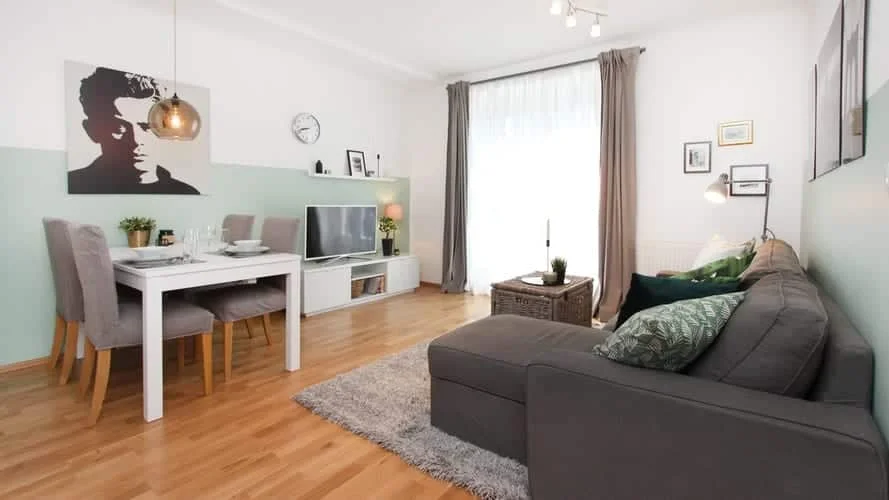
A four-room flat of 70 square metres in the 19th arrondissement let conventionally brings in around 1,350 euros per month. The same apartment let as furnished shared housing, three bedrooms at 650 euros each, brings in 1,950 euros per month. That is 7,200 euros in additional annual income, for the same property. This is the shared housing equation: more yield, more management.
Shared housing is not a passive investment. It is an active investment that rewards those who choose the right property, structure the leases correctly and accept a higher turnover rate than standard letting. After 15 years of supporting investors in Paris, I can say that shared housing is the most profitable strategy on paper, and the one that disappoints the most when it is poorly executed.
This guide gives you the keys to decide whether shared housing is right for you, and how to structure it so it delivers on its promises.
Why shared housing boosts yield
The mechanism is arithmetic. A single tenant pays one rent for the whole property. Housemates each pay a rent for a room, and the sum of room rents always exceeds the global rent.
This per-room premium is driven by demand. In Paris, finding individual accommodation under 800 euros per month is an ordeal for a young professional or student. A room in a shared flat at 600 to 700 euros in a pleasant, well-located apartment is an attractive proposition. Demand is massive and structural: students, young professionals, interns, workers on short-term assignments, expats in transition.
The yield premium sits between 30 and 40% compared to a standard let of the same property. In the high-yield arrondissements (10th, 11th, 13th, 17th, 18th, 19th, 20th), this pushes shared housing gross yield to between 4.5 and 6%, levels rarely achieved otherwise in Paris.
The ideal property profile for shared housing
Not all apartments lend themselves to shared housing. The ideal property ticks several boxes.
Size and layout
A minimum of three true bedrooms, ideally 10 square metres or more each (below this, letting a room as independent accommodation raises decency issues). A living/kitchen area large enough for the common spaces to remain pleasant: this is what differentiates a shared let that attracts quality candidates from a dwelling endured for lack of better options.
Three-room flats (two bedrooms plus a convertible living room) and four-room flats (three bedrooms) are the most common formats. Five-room and larger offer even higher yields but management becomes more complex, and the purchase ticket rises proportionally.
In practice, Haussmann apartments with their succession of rooms and generous volumes lend themselves remarkably well to shared housing after a reconfiguration. Creating partitions to obtain three independent bedrooms with a good common living area typically costs 15,000 to 30,000 euros in works, generating 30 to 40% additional annual yield.
Location
Shared housing works where demand for affordable housing is strongest, meaning in the arrondissements that combine neighbourhood life, transport and reasonable price per square metre.
Top arrondissements for shared housing:
The 10th and 11th are the shared housing demand champions. Young professionals, creatives, startup workers: the profile is dynamic and solvent. A three-room flat of 55 square metres in the Oberkampf or Canal Saint-Martin area lets as furnished shared housing at around 1,250 euros per bedroom for two rooms, totalling 2,500 euros per month.
The 17th (Batignolles) attracts young executives working in La Defense or north-west Paris. Good transport links, an up-and-coming neighbourhood, reliable tenant profile.
The 18th (Jules Joffrin, Abbesses) offers an excellent purchase price to shared housing rent ratio, with demand sustained by neighbourhood life and proximity to Montmartre.
The 13th is driven by student demand (universities, grandes ecoles). Student shared housing has annual turnover but near-zero vacancy in September-October.
The 19th and 20th offer the best gross shared housing yields thanks to still-accessible purchase prices. Buttes-Chaumont, Jourdain and Gambetta are the micro-neighbourhoods to prioritise for tenant quality.
The building and co-ownership
A crucial and often overlooked point: the co-ownership rules. Some rules explicitly prohibit shared housing or subletting, others impose restrictions on the number of occupants. Check the co-ownership rules before purchase without exception. A 400,000-euro investment blocked by restrictive rules is an avoidable nightmare.
Favour buildings with tolerant co-ownership and good sound insulation (thick walls, double glazing). Shared housing generates more activity, and potentially more noise, than a single tenant. It is better to anticipate.
Single lease or individual leases: which to choose?
The legal framework for shared housing offers two options, with very different implications for the investor.
Single lease with joint liability clause
One contract signed by all housemates. The joint liability clause holds each housemate responsible for the full rent: if one does not pay, the others must compensate. This is a safeguard for the owner.
The downside: when a housemate leaves, all must agree on the replacement. The lease must be amended. If two out of three housemates leave simultaneously, you are left with an almost empty flat and a single tenant liable for the entire rent. In practice, turnover is more complicated to manage with a single lease.
Since the ALUR law, the joint liability clause expires no later than 6 months after the departing housemate’s exit (or on the date the replacement moves in, if earlier). This is an important limitation.
Individual leases per room
Each housemate signs an independent lease for their room, with shared use of common areas. Each lease is autonomous: one housemate’s departure does not affect the others. You re-let a single room, not the entire flat.
This is the option I recommend for investment. Individual leases offer several advantages: vacancy risk is diluted (one room empty out of three, not the entire flat), turnover is smoother (you only re-let one room), and each room can have its rent adjusted to its size and features.
The downside: no joint liability between housemates. If one tenant does not pay, you cannot turn to the others. Rigorous tenant selection and unpaid rent insurance become essential.
Rent control in shared housing
With a single lease, the total rent is compared to the reference rent for the entire dwelling. With individual leases, each room is treated as an independent dwelling: the reference rent is that for a dwelling of the room’s area plus a pro-rata share of common areas.
In practice, the sum of per-room rents under individual leases almost systematically exceeds the reference rent for the whole dwelling under a single lease. This is an additional reason to prefer individual leases for the investor.
Full simulation: four-room flat in the 19th, shared housing vs standard letting
Let us look at the numbers. Here is a comparative simulation on the same property, with both strategies.
Simulation: four-room flat, 70 square metres, 19th arrondissement
Purchase data:
- Purchase price: 420,000 euros
- Notary fees (8%): 33,600 euros
- Reconfiguration and refurbishment works: 25,000 euros
- Shared housing furniture (3 bedrooms + common areas): 12,000 euros
- Total cost: 490,600 euros
Scenario A: standard unfurnished let:
- Rent excluding charges: 1,350 euros/month
- Annual rent: 16,200 euros
- Vacancy (2 weeks/year): -675 euros
- Gross yield: 16,200 / 490,600 = 3.30%
- Vacancy-adjusted gross yield: 3.17%
Scenario B: furnished shared housing (3 rooms, individual leases):
- Rent per room: 650 euros/month
- Total rent: 1,950 euros/month
- Annual rent: 23,400 euros
- Vacancy (1 month cumulative across 3 rooms): -650 euros
- Turnover (cleaning/minor repairs, 3 rotations/year): -600 euros
- Gross yield: 23,400 / 490,600 = 4.77%
- Adjusted gross yield: 4.51%
Annual charge comparison:
| Item | Standard let | Shared housing |
|---|---|---|
| Non-recoverable co-ownership charges | 1,440 euros | 1,440 euros |
| Property tax | 1,600 euros | 1,600 euros |
| Non-occupier owner insurance | 250 euros | 320 euros |
| Routine maintenance | 400 euros | 900 euros |
| Furniture renewal | n/a | 800 euros |
| LMNP accountant | n/a | 650 euros |
| Unpaid rent insurance | n/a | 700 euros |
| Total | 3,690 euros | 6,410 euros |
Net yield after charges:
- Standard let: (15,525 - 3,690) / 490,600 = 2.41%
- Shared housing: (22,150 - 6,410) / 490,600 = 3.21%
The net gap is 0.8 percentage points, or around 3,900 euros in additional annual income. Over 10 years, that is 39,000 euros in extra net income. And under the LMNP actual expense regime, this income is virtually tax-free thanks to depreciation of the property and furniture.
The trade-off: higher charges, more active management (approximately 3 hours per month of routine management: messages, inventories, minor issues) and a higher initial investment (furniture plus reconfiguration works).
Furnished shared housing taxation
Furnished shared housing falls under the same regime as any furnished let: LMNP status applies automatically if you meet the conditions (income under 23,000 euros, under 50% of total income).
Under the actual expense regime, depreciation of the property and furniture generally covers the entire taxable result for 15 to 20 years. This is even more true in shared housing because the furniture is more substantial (three bedrooms to equip, common areas) and deductible charges are higher.
The furniture for a shared flat (12,000 to 15,000 euros for a four-room) is depreciated over 5 to 7 years, meaning 1,700 to 3,000 euros in additional annual deduction compared to a studio. Combined with property depreciation and deductible charges, the taxable result is nil for a very long time.
For a deeper dive into the LMNP actual expense mechanism, see our complete LMNP tax guide.
Jean Mascla’s advice: In shared housing, furniture renewal is more frequent than in a standard let (shared wear, turnover). Budget 800 to 1,000 euros per year for gradual equipment replacement. It is a real expense, but also a deductible one under the LMNP actual expense regime. And furniture in good condition attracts better tenants, reduces vacancy and justifies the rent.
Day-to-day management: what really changes
Let us be honest. Shared housing requires more management than a standard let. Here is what to expect.
Turnover
In Parisian shared housing, expect 2 to 4 rotations per year across all rooms. A housemate stays an average of 10 to 14 months. Each rotation involves: an exit inventory, room cleaning, listing publication, candidate selection, entry inventory. With individual leases, you only re-let one room: the process is fast (2 to 5 days of vacancy per rotation in good locations).
Housemate relations
You are not responsible for the flat’s atmosphere, but you bear its consequences. Housemates who do not get along generate early departures, damage, and sometimes conflicts that reach you. Candidate selection is crucial: favour candidates with a stable professional project, check solvency, and do not hesitate to organise a short viewing where existing housemates meet the candidate.
Common area maintenance
The common areas (kitchen, living room, bathroom) wear faster in shared housing. Plan for a professional cleaning visit monthly or fortnightly (80 to 120 euros per month): this is an additional cost but one that preserves the property and tenant satisfaction.
Delegated management
If active management does not suit you, you can delegate to a manager specialising in shared housing. Cost: 8 to 12% of rents, or 1,900 to 2,800 euros per year for a four-room flat at 1,950 euros per month. This reduces net yield but transforms shared housing into a near-passive investment. Check that the manager has genuine shared housing expertise: it is not the same as managing a standard let.
Specific risks
Co-ownership rules
I repeat this because it is the most expensive trap: check the rules before purchase. Some older co-ownership rules contain “bourgeois use” clauses that can be invoked against shared housing. Case law is nuanced: shared housing is generally considered normal residential use, but a hostile neighbour and a litigious building manager can make life difficult.
Accelerated wear
More occupants, more wear. Floors, paintwork, plumbing and appliances suffer more in shared housing. Factor in a maintenance budget 50 to 100% higher than for a standard let. And invest in durable materials from the initial works: laminate flooring rather than solid wood, washable paint, robust equipment.
Seasonal vacancy
Shared housing demand follows a marked seasonal pattern: peak in September-October (start of academic year), low in July-August. If a housemate leaves in June, the room may remain empty for 4 to 6 weeks. Budget for this seasonality: one month of cumulative vacancy per year is a reasonable assumption.
Shared housing requires the right property in the right neighbourhood, which is exactly a property hunter’s job. Our property hunters identify three- and four-room flats with shared housing potential by checking the co-ownership rules, room layout, reconfiguration potential and micro-location.
Who is shared housing for?
Shared housing is the right strategy if you meet at least three of these criteria: you are looking for a gross yield above 4% in Paris, you accept active management (or are prepared to pay a manager), your purchase budget is 350,000 euros or more (the minimum three-room), you are targeting the eastern and northern arrondissements (10th to 20th, 13th, 17th), and you have a holding period of 10 years or more.
It is not for you if you want a completely passive investment, if your budget limits you to a studio or two-room, or if you are targeting the premium arrondissements (6th, 7th, 8th) where shared housing does not suit the rental profile.
Key takeaways
Shared housing in Paris is the most profitable rental strategy: +30 to 40% yield compared to standard letting, meaning 4.5 to 6% gross in the right arrondissements. Under the LMNP actual expense regime, the tax burden is virtually nil thanks to depreciation. Over 10 years, a four-room flat in shared housing generates 35,000 to 45,000 euros in additional net income compared to a standard let of the same property.
The trade-off is real: more active management, more frequent turnover, higher maintenance, rigorous tenant selection. It is not an investment for everyone, but for those who accept the commitment, the yield-to-effort ratio is the best on the Parisian market.
The key to success is the property. A well-laid-out three- or four-room flat, in the right micro-neighbourhood, with compatible co-ownership rules and smart works, turns shared housing into a yield machine. The wrong property turns it into a source of problems.
Considering a shared housing investment in Paris? Find the ideal property with Home Select. Our 16 property hunters target apartments with shared housing potential, check every parameter and negotiate the purchase price. First consultation free, fees 100% success-based.
Frequently asked questions
What yield can you expect from shared housing in Paris in 2026?
A well-structured shared let in Paris generates a gross yield of 4.5 to 6% depending on the arrondissement and number of bedrooms, or 30 to 40% more than a standard let of the same property. On a four-room flat of 70 square metres in the 19th bought for 420,000 euros, three bedrooms let at 650 euros each bring in 23,400 euros per year, giving 5.6% gross compared to 3.8% with a standard let.
Should you use a single lease or individual leases for shared housing in Paris?
Both options exist. A single lease (one contract, joint liability clause between housemates) simplifies management but requires finding all housemates at the same time. Individual leases (one contract per room) offer more flexibility: each housemate can leave independently and you only re-let one room at a time. In practice, individual leases are better suited to investment as they reduce the risk of total vacancy and make turnover smoother.
Is shared housing compatible with rent control in Paris?
Yes, but with specific rules. With a single lease, the total rent is controlled (reference for the entire dwelling). With individual leases, each room is treated as an independent dwelling and the rent of each room is controlled separately, based on the room's area plus a pro-rata share of common areas. In both cases, the sum of per-room rents generally exceeds the controlled rent for the whole dwelling: this is what gives shared housing its economic advantage.