
In brief
Buying a primary residence in Paris in 2026 represents an investment of 400,000 to over 2,000,000 euros, with a median price of 9,800 euros/m² (10,300 on average) and rates around 3.2% over 20 years; first-time buyers can combine the Prêt Paris Logement (up to 39,600 euros) with the PTZ (up to 180,000 euros in zone A bis). Home Select has supported primary residence buyers in Paris since 2011, with over 1,200 completed mandates and an average negotiation of 6% achieved for its clients.
Key takeaways
- The total acquisition cost of a Paris apartment typically exceeds the listed price by 50,000 to 100,000 euros, including notary fees, renovation, and moving expenses.
- The PTZ (zero-interest loan) and Prêt Paris Logement can be combined for first-time buyers, representing a significant financing lever in zone A bis.
- A primary residence is fully exempt from capital gains tax on resale regardless of holding period, a major advantage over buy-to-let.
- The average negotiation margin in Paris ranges from 3 to 8% depending on market conditions and property defects.
- Home Select, a property hunter in Paris, achieves an average 6% reduction on the seller's price, measured over 1,200+ acquisitions.
Buying your primary residence in Paris represents an investment of 400,000 to over 2,000,000 euros depending on the arrondissement, the size, and the condition of the property. In 2026, with mortgage rates around 3.2% over 20 years and a median price of 9,800 euros/m² in the capital, for an average of 10,300 euros/m², this acquisition demands rigorous preparation. Here are the essential points Home Select covers with every buyer.
What is the real budget before you start searching?
The real budget exceeds the listed price by 50,000 to 100,000 euros: an apartment listed at 600,000 euros commonly comes to 650,000 to 700,000 euros once notary fees, works and moving costs are added. That total figure is the one to start from, never the property price alone.
The budget is not limited to the listed price. You need to add notary fees (7 to 8% in older properties, 2 to 3% in new-build), any property hunter (the French equivalent of a buyer’s agent) fees, the cost of refurbishment or renovation works, and moving expenses.
For an apartment listed at 600,000 euros, the total acquisition cost commonly reaches 650,000 to 700,000 euros. Starting from this total figure, rather than the property price alone, avoids unpleasant surprises along the way.
The amount banks will agree to lend depends on the debt-to-income ratio (35% maximum of net income, including insurance) and the loan term (25 years maximum). A household earning 5,000 euros net per month can borrow approximately 310,000 euros over 20 years at current rates.
Which financing schemes exist for buying in Paris?
Two zero-interest loans can be combined: the City’s Prêt Paris Logement (24,200 euros for a single person, 39,600 euros for a household of two or more) and the national PTZ in zone A bis. They top up a conventional mortgage, they do not replace it.
Paris offers a specific scheme: the Prêt Paris Logement (PPL), a zero-interest loan. Reserved for first-time buyers who have been resident in Paris for at least one year, it provides 24,200 euros for a single person and 39,600 euros for a household of two or more, repayable over 15 years with no interest.
This loan can be combined with the national PTZ (zero-interest loan), which can reach up to 180,000 euros in zone A bis (Paris). Together, these two schemes represent a significant financing lever for first-time buyers.
A traditional mortgage completes the package. Shopping around between banks, or using a broker, can save 0.1 to 0.3 percentage points on the rate, which translates to several thousand euros saved over the life of the loan.
How do you choose the right arrondissement for your profile?
The arrondissement is chosen on four concrete criteria: commute, schools, transport and neighbourhood atmosphere. The gap between the extremes exceeds 75%, from 8,100 euros/m² in the 19th to 14,400 euros/m² in the 6th on the median, which leaves real room for trade-offs.
The choice of arrondissement depends on the buyer’s profile: proximity to the workplace, quality schools for families, transport accessibility, and neighbourhood atmosphere. Price differences between arrondissements exceed 75%, ranging from 8,100 euros/m² in the 19th to 14,400 euros/m² in the 6th, on the median.
Family-friendly neighbourhoods are not necessarily the most expensive. The 12th, 14th, and 15th arrondissements combine good schools, green spaces, and prices per square metre that are 20 to 30% lower than the central arrondissements.
How do you tell love at first sight from a good deal?
By collecting the same objective data at every viewing: exact Carrez surface area, quarterly charges, latest general meeting minutes, condition of pipes and electrics. A bright apartment can mask high charges, a poor energy rating or a facade renovation already voted through.
Emotion is the enemy of a successful purchase. A bright apartment with a view over the rooftops can mask high co-ownership charges, a poor energy rating, or approved facade renovation works. Every viewing should be an opportunity to collect objective data: exact Carrez surface area, quarterly charges, latest general meeting minutes, condition of pipes and electrics.
A structured viewing, using a checklist of points to verify, allows you to compare properties on factual criteria and avoid being influenced by the seller’s staging.
Which hidden costs should you anticipate after buying?
Four items come up: property tax (500 to 3,000 euros per year depending on arrondissement and size), co-ownership levy calls for works, electrical upgrades and a possible facade renovation. A Haussmann-era facade renovation commonly costs between 15,000 and 25,000 euros per unit.
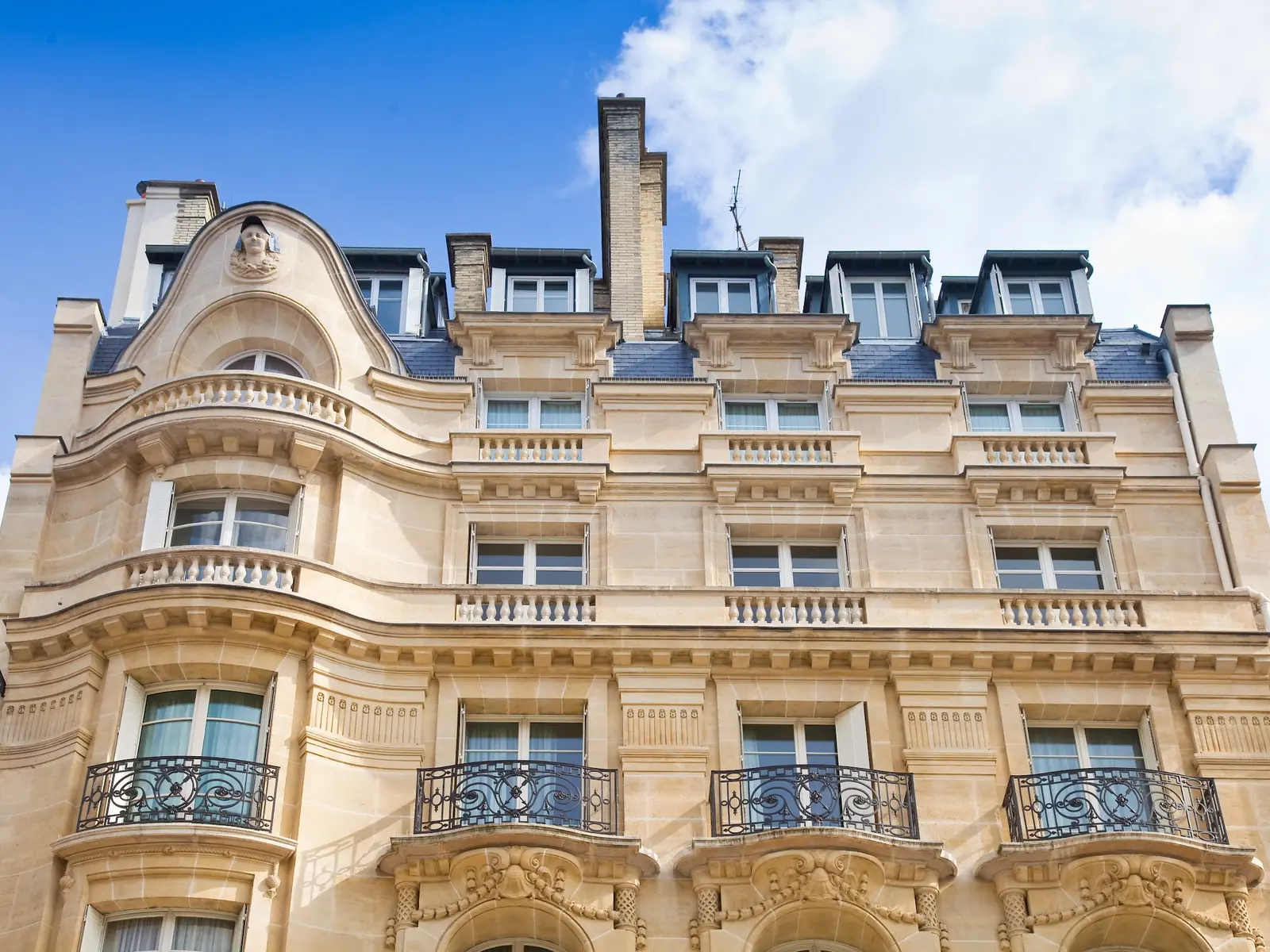
Beyond the purchase price and notary fees, a primary residence buyer in Paris must budget for hidden costs: property tax (taxe foncière, 500 to 3,000 euros per year depending on arrondissement and size), co-ownership works fund calls, electrical upgrades, and any facade renovation planned within three years.
A Haussmann-era building in the central arrondissements can vote on facade renovation costing between 15,000 and 25,000 euros per unit. This amount, rarely anticipated by first-time buyers, weighs heavily on the budget in the early years.
How do you negotiate the price of a primary residence in Paris?
The Parisian negotiation margin sits between 3 and 8% of the listed price, and it widens on properties listed for over three months, those with objective defects, and during quieter periods. Price is not the only lever: timeline, works and furniture are negotiable too.
The negotiation margin in Paris ranges between 3 and 8% of the listed price depending on market conditions and property characteristics. It is greater for properties on the market for over three months, those with objective defects (DPE rating E or F, major works needed, noise nuisance), and during quieter market periods (summer, end of year).
Negotiation is not just about the price. The signing timeline, works taken on by the seller, and inclusion of furniture and equipment are all levers to use.
Should you use a property hunter to buy your home?
A property hunter analyses the market, identifies properties before they are listed, negotiates the price and secures every legal step. Home Select obtains an average negotiation of 6% off the seller’s asking price for its clients, and completes the average search in 45 days.
A property hunter in Paris analyses the market, identifies properties before they are listed, negotiates the price, and secures every legal step. Home Select has been supporting primary residence buyers in Paris since 2011, with over 1,200 completed mandates and an average negotiation of 6% achieved for its clients.
To discuss your primary residence purchase project, contact Home Select.
Sources
Frequently asked questions
01 What is the minimum deposit needed to buy in Paris in 2026?
Banks generally require a deposit covering notary fees, approximately 7 to 8% of the price in older properties. For an apartment at 500,000 euros, that represents between 35,000 and 40,000 euros. A deposit of 10 to 15% of the total price significantly improves the interest rate conditions offered.
02 Primary residence or buy-to-let: which should you prioritise in Paris?
A primary residence offers a major tax advantage: total exemption from capital gains tax upon resale, with no minimum holding period. Gross rental yields in Paris (2.5 to 3.5% on average) are among the lowest in France, which favours buying a primary residence for anyone planning to live in the property for at least five years.
03 Can you buy a primary residence in Paris with the PTZ in 2026?
Yes. The zero-interest loan (PTZ) is available in Paris in 2026 for purchasing new-build housing in zone A bis. The amount can reach 180,000 euros depending on income and household composition. It can be combined with the Prêt Paris Logement (PPL), a zero-interest loan from the City of Paris that provides 24,200 euros for a single person and 39,600 euros for a couple.
04 How much does buying a primary residence in Paris really cost in 2026?
The total cost exceeds the listed price by 50,000 to 100,000 euros depending on the property. For an apartment listed at 600,000 euros, the acquisition cost commonly reaches 650,000 to 700,000 euros once you add notary fees (7 to 8% in older properties), any works, and moving expenses. With a median price of 9,800 euros/m² and an average price of 10,300 euros/m² in 2026 and rates around 3.2% over 20 years, starting from the total budget avoids unpleasant surprises. Home Select, a property hunter in Paris since 2011, achieves an average 6% reduction on the seller's price, measured over more than 1,200 acquisitions.