


People often ask me what an apartment hunter does with their days. The question is fair: the profession is still relatively unknown, and the popular image of a professional who “visits apartments all day” is as reductive as describing a surgeon’s work as “they operate.” The reality is denser, more varied, and more physical than people imagine. Here is a typical day, as experienced by our sixteen hunters at Home Select, and as I lived it myself for years before focusing more on managing the firm.
7:15 AM: The scan, before even having coffee
A property hunter’s day in Paris starts early, and it starts with a screen. Before breakfast, sometimes before getting out of bed, the hunter opens their apps and alerts. Overnight, new listings have been published on professional and consumer portals. Agents have put properties online at 11 PM, midnight, 5 AM. The Parisian market never truly sleeps.
The morning scan takes between thirty and forty-five minutes. The hunter reviews between 40 and 80 new listings, mentally cross-referencing them with the profiles of their four to six active clients. The majority are eliminated in seconds: price over budget, wrong location, insufficient surface area, photos that betray a deal-breaking flaw. Out of these dozens of listings, the hunter might retain five or six that warrant a closer look.
For these five or six properties, the hunter digs deeper. They search for the exact address (often hidden in the listing), consult the land registry, check the co-ownership in their databases, calculate the price per square metre, and compare it to recent transactions in the neighbourhood. If the property holds up after this quick analysis, they move to the next step: picking up the phone.
8:30 AM: Morning calls to agents, caretakers, and contacts
The telephone is the apartment hunter’s primary tool. Not email, not text messages: the telephone. Because in Parisian real estate, speed and human connection make the difference.
First call: the estate agent who listed a property spotted during the morning scan. The hunter asks for the exact address, whether the price is firm or negotiable, the reason for the sale, the availability timeline, and above all, the key question: whether there are already viewings scheduled or offers on the table. The answer to this last question determines the urgency: if three viewings are already booked for today, the hunter needs to get in line this morning.
Second round of calls: the off-market network. The hunter contacts three or four agents they work with regularly in the arrondissements their clients are targeting. “Do you have anything coming up in the 11th, between 500,000 and 700,000? A three-bedroom with potential?” These calls do not always lead anywhere, far from it. But out of ten calls made in a week, one or two uncover a property that is not yet on the market. And those properties are often the best, because they are not yet subject to competitive pressure.
The third type of call, rarer but invaluable: building caretakers. In the fine buildings of Paris, the caretaker knows everything. They know that Madame Dupont on the fourth floor has been thinking of selling since her husband passed away. They know that the tenant on the second floor is leaving and the owner is deciding between reletting and selling. This information does not appear in any database. It is obtained through trust, built over the years: a regular hello, a shared coffee, genuine attentiveness. A hunter who has been working in Paris for fourteen years has dozens of caretakers in their address book. A hunter just starting out has none.
10:00 AM: The first pre-viewing, always on the ground
The hunter gets on their bike or heads into the metro. Destination: an apartment spotted the day before or that morning, a three-bedroom of 65 m2 on the fourth floor of a Haussmann building in the 9th, listed at 620,000 euros. The listing photos are promising. But photos lie.
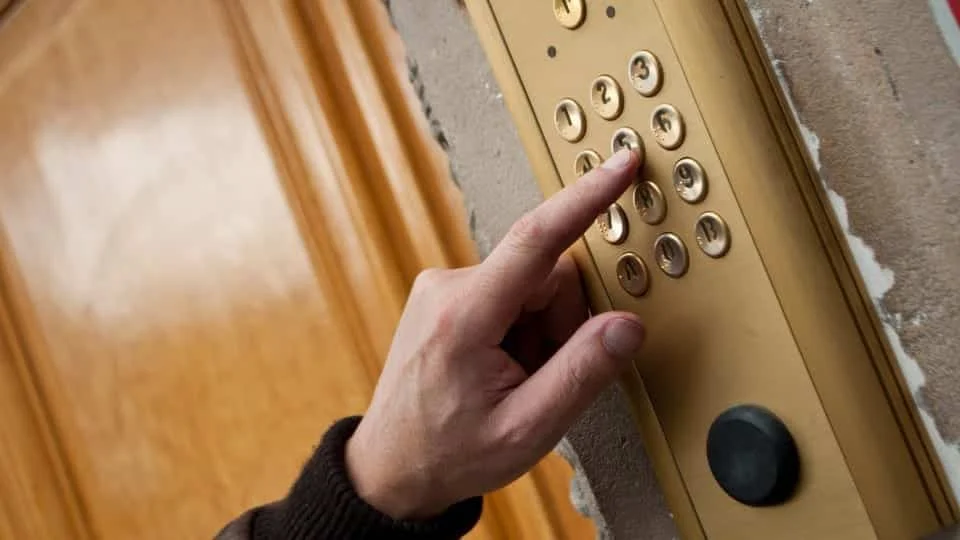
Arriving at the building, the hunter observes. The facade: has it been recently renovated, or is renovation due? The entrance: the door code works, the lobby is clean, the stairwell lights work. The staircase: the steps are worn but solid, the paintwork faded but not alarming. The lift: how old is it? Is maintenance up to date? A notice in the stairwell announces that the property manager has called an extraordinary general meeting next month. The hunter notes this mentally, they will ask for the minutes.
Inside the apartment, the hunter spends thirty to forty minutes. They open cupboards, test taps, check sockets, look behind furniture where possible. They examine the walls: is this ceiling crack structural or superficial? Does that dark patch under the bathroom window indicate a water infiltration issue? The parquet creaks in the middle of the living room: is that Haussmann charm or a tired floor?
They open the windows. The noise. This is often the invisible criterion that tips an opinion. The listing said “quiet,” but at 10:30 on a Tuesday morning, the street below hums with passing buses and deliveries. The hunter notes: “moderate noise on the street side, quiet on the courtyard side.” They take photos: their own, not the retouched wide-angle listing shots. Real photos, with visible defects.
On the way out, they bump into the caretaker. “What are the charges in this building?” “Are any works planned?” “The fourth floor, is that the one that had a water leak two years ago?” The caretaker talks, the hunter listens. These five minutes of conversation are sometimes worth more than the viewing itself.
Internal verdict: the apartment is decent but overpriced by roughly 8% relative to the neighbourhood market. The DPE rating of E mandates insulation works. Facade renovation seems imminent. For Client A, it is a no: the budget is too tight to absorb the works. For Client C, who is looking for a renovation opportunity, it is a maybe, provided significant negotiation is achieved.
11:30 AM: Second and third pre-viewings
The hunter moves on. A studio of 28 m2 in the 10th for an investor: a quick visit, fifteen minutes, the property is clean and the rental yield is acceptable. Then a one-bedroom in the 3rd for an expat couple: the property is stunning in the photos, but the co-ownership displays alarming unpaid charges on the lobby noticeboard. The hunter notes it down, they will check with the property manager this afternoon.
Between viewings, in the metro or while walking, the hunter sends voice messages to their clients. Brief updates, a progress report, a property ruled out with the reason. “Hello Sophie, I’ve just come out of the viewing on rue des Martyrs. The apartment is well located but the DPE is dreadful and the facade renovation is not provisioned. I would not recommend it. I’m continuing, I have two other leads this week.”
These short, regular messages are essential, especially for clients living outside Paris or abroad. They show that the hunter is working, making progress, and that each property ruled out was ruled out for good reasons, not through negligence.
1:00 PM: Lunch break (not always)
An apartment hunter’s lunch is rarely a moment of relaxation. It is often a sandwich grabbed between two viewings, or a lunch with a partner estate agent: one of those networking meals where relationships are formed that, six months later, lead to a call along the lines of “I have a property that’s not listed yet, it might interest one of your clients.”
A Parisian property hunter’s network is not built behind a screen. It is built over a table, at a cafe counter, in a stairwell, in front of a porch. This is a profession of fieldwork and human relationships, and hunters who forget this, those who think an algorithm can replace an address book, miss the point entirely.
2:30 PM: Desk work, the invisible analysis
The afternoon begins with the work nobody sees: document analysis. The hunter pores over the general meeting minutes for the 3rd-arrondissement property viewed that morning. They search for the mention of unpaid charges spotted in the lobby. They check whether major works have been voted, discussed, or deferred for years (a bad sign). They calculate the works fund balance, the recurring charges, and the co-ownership’s unpaid rate.
This work is unglamorous but decisive. An average buyer does not read general meeting minutes: they may not even know they can request them before signing the preliminary agreement. The hunter reads them systematically. This is where unpleasant surprises hide: the 800,000-euro facade renovation voted for the building, the legal proceedings against a co-owner, the property manager changed three times in four years (a sign of an unmanageable co-ownership).
The hunter then writes up their pre-viewing reports. For each property retained as potentially interesting for a client, a structured document is prepared: annotated photos, price analysis, co-ownership status, strengths, points of concern, personal opinion. This document will be sent to the client by end of day or the following morning.
Jean Mascla’s advice: Time spent on document analysis and report writing represents roughly 30% of a hunter’s working time. It is the least visible work but the most protective for the client. A hunter who rushes from viewing to viewing without taking the time to analyse what they have seen is a hunter who exposes you to risk.
4:00 PM: The client viewing, the moment of truth
In the late afternoon, the hunter meets a client for the viewing of a shortlisted property. It is the second property this client has visited since the mandate started three weeks ago. The first one had not convinced them: too much noise from the street. This one is more promising: a three-bedroom of 72 m2 in the 11th, dual-aspect, on the third floor with a lift. The hunter pre-viewed it the previous week and believes the price is negotiable by 5 to 7%.
During the viewing, the hunter observes their client as much as the apartment. Spontaneous reactions, the smile at the brightness of the living room, the hesitation at the narrow kitchen, the thoughtful silence in the children’s bedroom, say more than the written criteria in the mandate. A good hunter reads these signals and adapts their comments: “the kitchen can be opened onto the living room by removing this partition, which is not load-bearing: you gain three square metres of perceived space.”
After the viewing, the hunter and client have coffee on a terrace. No pressure, no “so, shall we make an offer?” The hunter gives their factual analysis: the market price, the negotiation margin, the works to anticipate, the advantages of the location, and lets the client digest. The decision belongs to the client, always. The hunter’s role is to inform, not to push.
6:00 PM: The negotiation, the call that changes everything
The client has thought it over. They want to make an offer. The hunter drafts the document: an offer at 565,000 euros for a property listed at 610,000, or 7.4% below the asking price. The offer is backed by evidence: a DPE rating of D implying insulation works estimated at 15,000 euros, a price per square metre slightly above recent DVF transactions in the neighbourhood, and the property has been on the market for six weeks with no firm offer.
The hunter calls the seller’s agent. The conversation is cordial but firm. The hunter knows this agent: they have already completed three transactions together. This working relationship facilitates the discussion. The agent passes the offer to the seller with the recommendation to “take this offer seriously: this is a solid buyer with financing in place, accompanied by Home Select.”
The seller will respond tomorrow. The hunter tells their client, hangs up, and opens the next client’s file. The day is not over.
7:30 PM: The evening review, preparing for tomorrow
Before closing the laptop, the hunter takes stock of the day. Three pre-viewings, one client viewing, one offer submitted, two properties ruled out, one report sent. They prepare the next day’s programme: two pre-viewings scheduled in the 15th, a follow-up call to a caretaker in the 7th who was going to share news about a potential property, and a phone call with an expat client in London.
They check the evening’s new listings one last time: some agents publish late in the day so the property is visible the next morning. An alert catches their eye: a property in the 6th, perfectly matching the criteria of their most demanding client. They note the address and will call the agent tomorrow at 8:30 AM. Being the first to call is sometimes all that separates a successful mandate from a missed opportunity.
Sixteen hunters experience this intensity every day at Home Select. Since 2011, it is this daily energy, the fieldwork, the calls, the analysis, the negotiations, that has produced our 1,200 completed mandates and our 4.9/5 rating on Google.
What this day reveals about the profession
A day in the life of an apartment hunter is a chain of micro-decisions: is this property worth a viewing? Is this defect a dealbreaker or negotiable? Is this co-ownership healthy? Is this price fair? Each decision draws on accumulated experience: the hundreds of properties viewed, the dozens of negotiations concluded, the mistakes seen in others and avoided for one’s own clients.
The profession is physical: an active hunter walks between 8 and 12 kilometres per day across Paris. It is intellectual: market analysis, reading general meeting minutes, and yield calculations demand constant rigour. It is emotional: supporting a couple buying their first home, reassuring an expatriate who has doubts, telling a client that the property they loved has just been sold: all of this requires a relational intelligence that algorithms will not replace.
Jean Mascla’s advice: If you want to assess a property hunter’s quality before signing, ask them to describe their last working week. Not their sales pitch, not their numbers: their last week. The number of properties viewed, agents contacted, reports written, offers submitted. A hunter who lives this rhythm daily will describe it with a precision that speaks for itself.
Want a property hunter who lives the field every day? Meet our team: sixteen passionate professionals, each with their own style and preferred neighbourhoods, all driven by the same exacting standards.
Frequently asked questions
How many viewings does a property hunter do per day?
An active apartment hunter in Paris carries out an average of 3 to 5 pre-viewings per day, or between 15 and 25 per week. These viewings are done solo, without the client, and serve to filter properties before presenting only the best ones. On a busy day with properties across several arrondissements, a hunter may complete up to 6 or 7 viewings.
Does a property hunter work on weekends?
Most apartment hunters in Paris occasionally work on Saturdays, particularly for viewings with clients who work during the week. Sundays are generally kept free, but a hunter remains available if an urgent opportunity arises. The profession requires considerable availability, especially when a rare property appears on the market.
How many mandates does a property hunter manage simultaneously?
An experienced apartment hunter manages an average of 4 to 6 mandates simultaneously. Beyond 6, the quality of attention per client diminishes. Below 3, the synergy effect between searches is limited. This volume allows the hunter to cross-reference opportunities: a property viewed for one client may be a perfect match for another.