

Noise is the number one source of dissatisfaction for Parisians in their home. In a dense city where buildings adjoin one another, soundproofing is a decisive purchasing criterion. Here is how to assess it before buying and what solutions exist to improve an existing property.
Types of noise in a Parisian flat
External noise
Parisian streets generate an average noise level of 65 to 75 decibels during the day. Main roads (boulevards, avenues) exceed 80 dB. The type of glazing is the main factor: single glazing reduces noise by around 25 dB, acoustic double glazing by 35 to 40 dB. The difference is considerable for daily comfort.
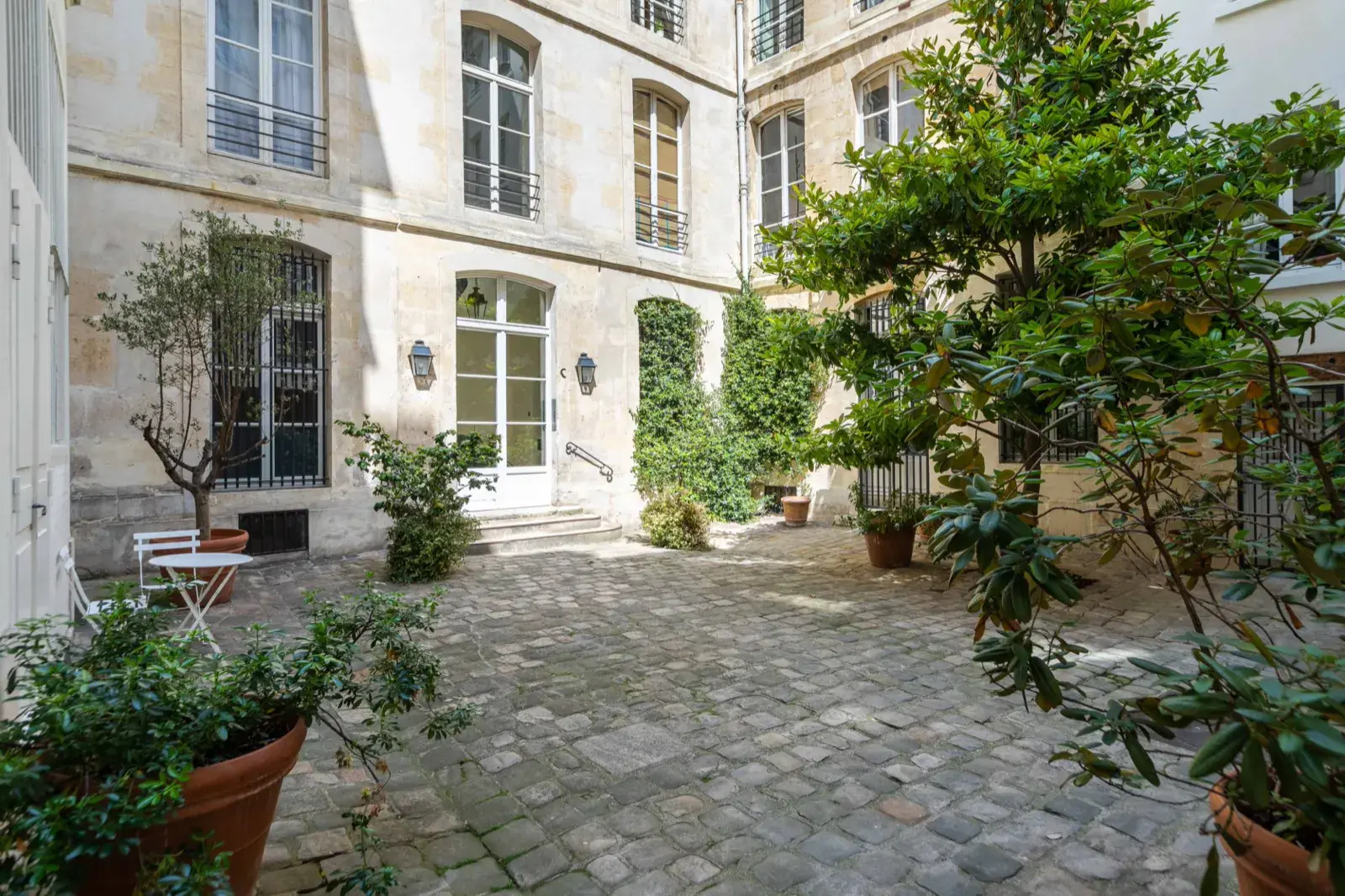
Inner courtyards, characteristic of Parisian buildings, offer a much quieter environment (40 to 50 dB). This is why courtyard-facing flats are often preferred by buyers, despite sometimes lower light levels.
Neighbour noise
Airborne noise (voices, music, television) is transmitted through walls and floors. Its attenuation depends on the mass of the partitions: a 60 cm stone wall performs far better than a 7 cm plasterboard partition. Haussmann buildings, with their thick walls, offer good insulation against airborne noise.
Impact noise (footsteps, furniture being moved, falling objects) is transmitted through rigid structures: floors, beams, slabs. The wooden floors of older buildings transmit this type of noise well, especially if the infill between the joists has deteriorated.
Equipment noise
Pipes, lifts, mechanical ventilation and communal boilers generate vibrations and continuous noise. In older buildings, cast iron rising mains transmit water noise from one floor to another. This is a point to check during viewings.
What to check before buying
During the viewing
Visiting the flat at different times of day is essential. A home that is quiet on a Saturday morning can be noisy on a Tuesday evening. Open the windows to assess street noise. Close them to listen for internal noise. Ask the neighbours or the concierge if there are recurring nuisances.
Our property hunters systematically check the orientation (street or courtyard), the type of glazing, the thickness of party walls and the nature of the floors. These are elements that do not appear in listings but determine daily quality of life.
In the co-ownership documents
General meeting minutes often mention noise complaints and insulation works carried out or planned. The co-ownership rules specify permitted working hours and usage restrictions (no floating parquet without an acoustic underlay, for example).
Soundproofing solutions
Windows and glazing
Replacing windows is the most effective intervention against external noise. Asymmetric double glazing (4/16/10 mm) offers an acoustic reduction of 35 to 38 dB. Laminated acoustic double glazing reaches 40 dB. The additional cost compared to standard double glazing is 20 to 30%. In a co-ownership, replacing windows often requires approval at a general meeting.
Wall lining
For insufficiently insulating party walls, lining with acoustic plasterboard (13 mm) and insulation (45 mm mineral wool) improves attenuation by 10 to 15 dB. The downside is the loss of living space: approximately 7 cm per treated wall, which represents 1 to 2 m2 for a 20 m2 room.
Floor treatment
A floating screed with a resilient underlay improves insulation against impact noise. For old wooden floors, acoustic levelling is possible without removing the existing parquet. Cost: 50 to 100 euros/m2.
Ceilings
Ceiling treatment is the most complex and expensive intervention. An acoustic suspended ceiling with insulation and anti-vibration hangers reduces noise by 15 to 20 dB, but costs 10 to 15 cm of ceiling height, a significant sacrifice in older buildings with high ceilings.
Soundproofing as an investment criterion
A well-soundproofed flat sells better and lets more easily. In the Parisian context, where spaces are small and density is high, acoustic comfort is a measurable competitive advantage. Experienced buyers know this and factor the potential cost of insulation works into their overall budget.
For a precise budget estimate, including insulation works, our property hunters can direct you to qualified professionals.
Looking for a quiet flat in Paris? Contact our team: acoustic comfort is one of our search criteria.
Frequently asked questions
Are Haussmann-style flats well soundproofed?
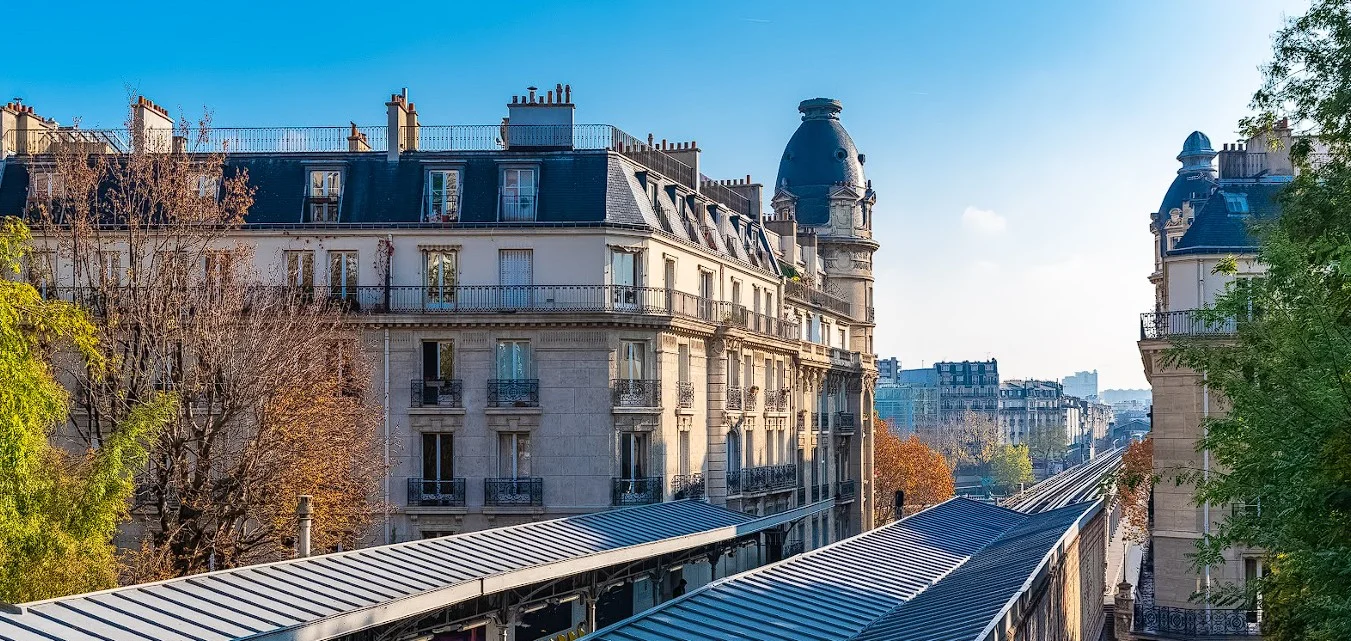
Haussmann buildings offer good insulation thanks to the thickness of their stone walls (50 to 80 cm) and their wooden floors with infill. Airborne noise (voices, music) is well attenuated. However, impact noise (footsteps, falling objects) is easily transmitted through wooden floors. The condition of seals and joinery is decisive for external noise.
How much does it cost to soundproof a flat in Paris?
The cost depends on the type of intervention. Replacing windows with acoustic double glazing costs between 800 and 1,500 euros per window. Wall lining (acoustic plasterboard plus insulation) comes to 80 to 150 euros/m2. An acoustic screed on the floor costs 50 to 100 euros/m2. For a 60 m2 flat, a full treatment ranges between 15,000 and 30,000 euros.
How can you check the soundproofing during a viewing?
Visit at different times (quiet morning, busy evening). Open and close windows to assess external noise. Ask someone to walk on the floor above. Check the wall thickness (knock on them), the condition of windows and the presence of double glazing. A property hunter systematically checks these points.