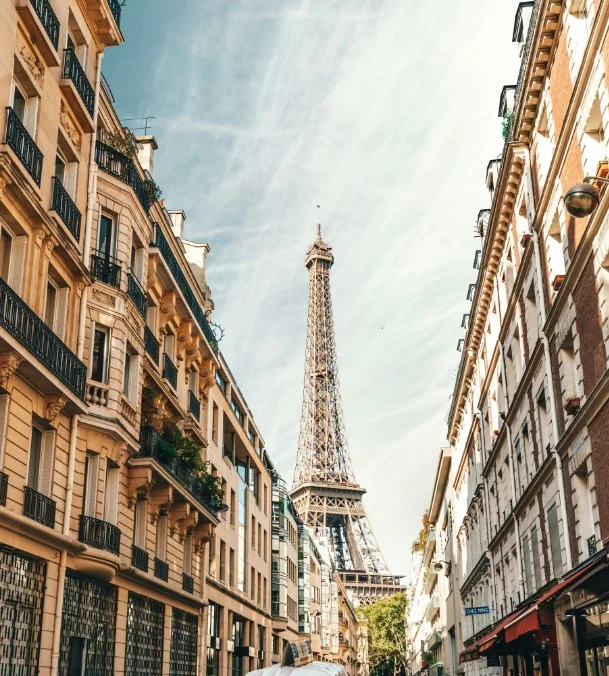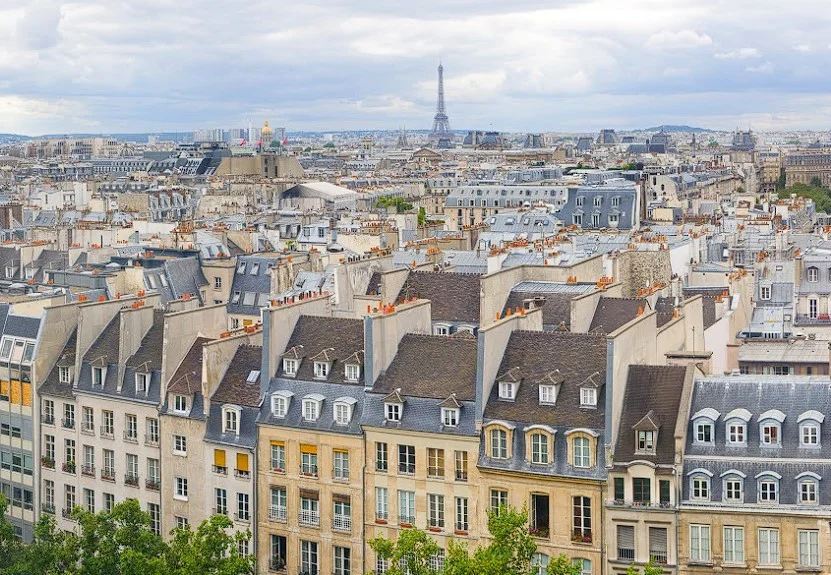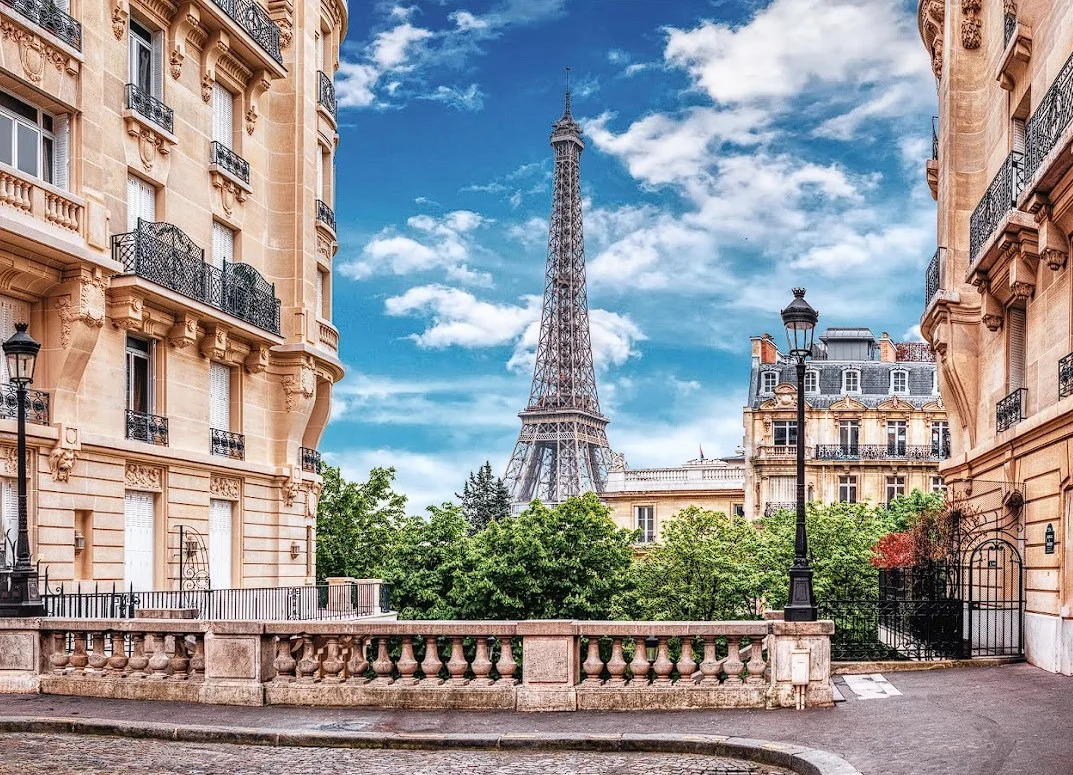


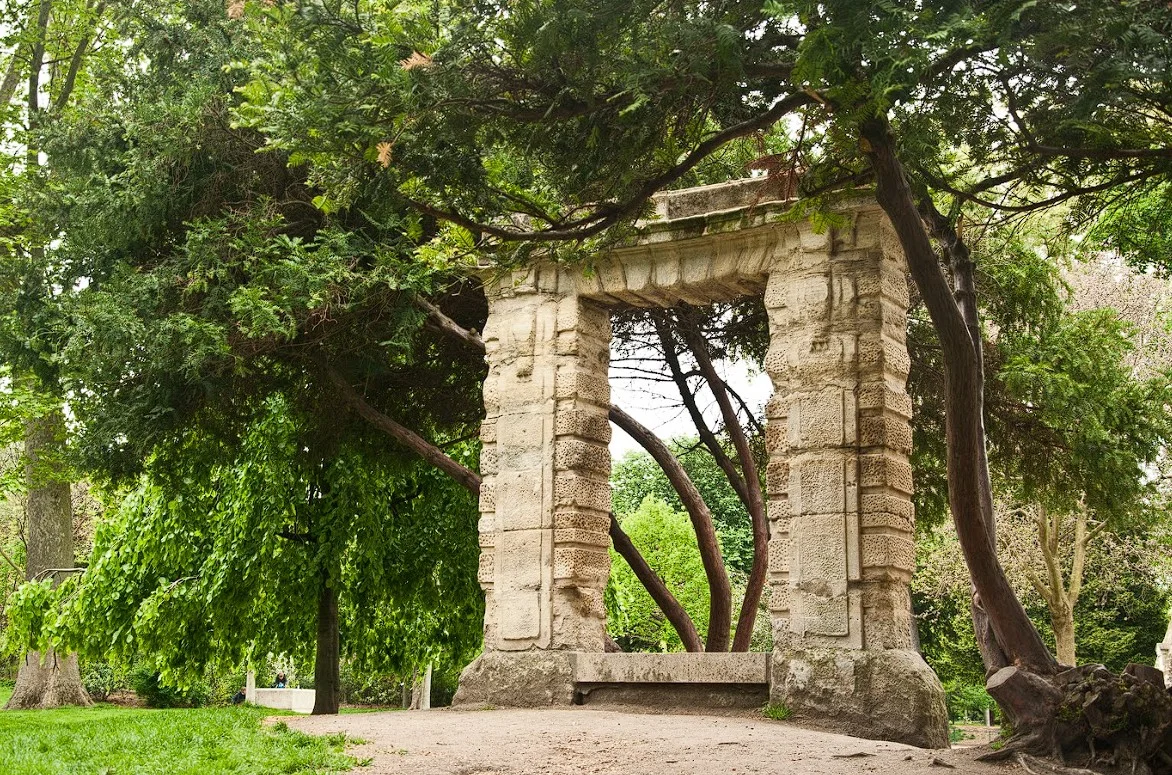
Everyone knows the Luxembourg Gardens. Everyone knows the Tuileries, the Buttes-Chaumont, the Champ-de-Mars. They are the big names, the stars of green Paris, the ones that feature in every guidebook and every Instagram post. They are magnificent. They are also packed.
But Paris hides other gardens. Gardens you do not stumble upon by chance: you have to push open a gate, take a passage, know the exact address. Gardens where you sit on a bench at noon and find yourself alone with the birds and the sound of a fountain. Gardens that smell of linden in June, wet earth in November, and silence in every season.
In fifteen years of property hunting in Paris, I have learned one thing: the nearest garden is often the most underrated purchasing criterion. Clients ask about the size, the floor, the neighbourhood, the price per square metre. They forget to ask: how far is the nearest beautiful garden? And yet our internal data confirms it: proximity to a quality green space adds 5 to 12% to a property’s price. A direct view over a garden? Count on a premium of 15 to 20%. In Paris, greenery is a luxury. And like all luxuries, it has a price, and a value.
Here are twelve gardens you probably do not know. And that might just change your idea of what it means to live in Paris.
Walled gardens: paradise behind the walls
Jardin Catherine-Laboure, 7th arrondissement
33 rue de Babylone. Behind a blank wall, between a chapel and a former convent, lies one of the most extraordinary gardens in Paris. You push open a small metal gate, walk through a narrow passage, and emerge into a hectare of greenery in the heart of the 7th arrondissement. Vines climb along the convent walls. Accessible lawns, a Parisian rarity, invite you to lie down. A community vegetable garden occupies the far end. And the silence is total.
The Catherine-Laboure is the favourite garden of residents around Sevres-Babylone. Mothers bring their children on Wednesdays. Retirees read the newspaper on the wooden benches. Couples come in the evening, before closing time. No one raises their voice. It is a place of rare gentleness, five minutes from Le Bon Marche: the contrast is striking.
Flats on rue de Babylone and rue de Varenne that border the garden sell at a significant premium. Some, on upper floors, offer a plunging view over the vines and convent rooftops. This is the kind of property our hunters spot for clients seeking absolute calm without leaving the heart of Paris.
Jardin Anne-Frank, 3rd arrondissement
14 impasse Berthaud, also accessible from rue Beaubourg. A tiny garden, 2,000 m2, wedged between the rear walls of the Hotel de Saint-Aignan (home to the Museum of Jewish Art and History) and the buildings of rue Rambuteau. A hundred-year-old chestnut tree dominates the space. Climbing roses cover the stone walls. At the far end, a small gravel clearing with shaded benches.
This garden is almost invisible. No sign on the street. The entrance from impasse Berthaud looks like the entrance to a car park. And yet, once inside, you are in another world: a walled garden, protected, intimate, in the middle of one of the densest neighbourhoods in Paris. The residents of the Haut-Marais know it. Tourists walk past without seeing it.
Arenes de Lutece, 5th arrondissement
49 rue Monge. You enter through a building porch, walk down a corridor, and emerge into a Gallo-Roman amphitheatre from the 1st century. The Arenes de Lutece are not exactly a garden: they are Roman ruins turned into a public square. But the space surrounding them, with its stone tiers, lawns and large trees, is one of the most peaceful spots in the 5th arrondissement.
On Sunday afternoons, old gentlemen play boules in the arena. Children run across the tiers. Students lie reading on the grass. It is a neighbourhood garden as only Paris can create, with two thousand years of history as a bonus.
Promenades: greenery in motion
La Promenade plantee, 12th arrondissement
Avenue Daumesnil, from the Viaduc des Arts to the Bois de Vincennes. Four and a half kilometres of elevated promenade on a former railway viaduct. This is the model that inspired New York’s High Line, except Paris did it twenty years earlier.
The most spectacular section is the viaduct itself: you walk along a planted path, ten metres above avenue Daumesnil, between the rooftops and windows of neighbouring buildings. Rose bushes, bamboo and lavender line the path. Below, the arches of the viaduct house artisan workshops and galleries: the Viaduc des Arts.
The 12th arrondissement owes part of its residential appeal to this promenade. Flats overlooking the Coulee verte are highly sought after: windows facing vegetation, no road traffic below, surprisingly quiet for an urban setting.
La Petite Ceinture, 12th, 13th, 14th, 15th, 16th arrondissements
The former circular railway of Paris, abandoned since the 1930s, is being progressively reopened as green promenades. It is one of the most exciting projects in contemporary green Paris. Sections are already accessible in the 12th (near the Gare de Reuilly), the 15th (Allee de la voie verte), the 16th (Sentier nature d’Auteuil).
The Petite Ceinture has that beauty of wastelands reclaimed by nature: rusted rails buried under ivy, embankments covered with buddleia, tunnels where bats roost. It is wild, unexpected Paris, in full transformation. And the neighbourhoods bordering the Petite Ceinture are benefiting from this change: a 32-kilometre linear green space crossing the city is a real estate asset whose effects are only beginning to be measured.
Neighbourhood squares: green intimacy
Square des Batignolles, 17th arrondissement
Rue Cardinet. An English-style garden in the middle of the 17th arrondissement: hilly, planted with century-old trees, with an artificial lake where ducks coexist with turtles. The Square des Batignolles is the green heart of the neighbourhood that bears its name, and one of the reasons Batignolles has become one of the most sought-after family neighbourhoods in Paris.
On Sunday mornings, between the organic market on boulevard des Batignolles and a lap of the lake with the children, Batignolles residents have a rhythm of life that resembles a small provincial town more than a metropolis of ten million inhabitants. The square is its centre of gravity.
Square du Temple, 3rd arrondissement
Rue de Bretagne. A formal French-style garden, with its straight paths, flowerbeds and wrought-iron railings. But the charm of the Square du Temple lies in its atmosphere. It is the garden of the children of the 3rd: on Wednesday afternoons, the playground is an open-air theatre. It is also the garden of readers, chess players and retirees chatting on the iron benches.
Historically, it is the site of the Tower of the Temple, where Louis XVI and Marie-Antoinette were imprisoned. The tower was demolished in 1808, but the square retains this historical weight that local residents carry without thinking about it: you play boules on the ruins of the monarchy.
Square de la Butte-du-Chapeau-Rouge, 19th arrondissement
No famous name, no monument, no historical pedigree. Just a hilly park of five hectares in the 19th arrondissement, with a spectacular view over the north-east of Paris. From the top of the hill, you can see the Basilica of Saint-Denis, the rooftops of Pantin, the cranes of the Grand Paris. It is one of the most open viewpoints in the capital, and one of the least known.
The square is surrounded by residential buildings from the 1930s and 1960s, with prices still accessible for Paris, around 7,000 to 8,000 euros/m2. For buyers who prioritise space and greenery over the prestige of the address, this is a sector to seriously consider.
Jardin du Seminaire de Saint-Sulpice, 6th arrondissement
Rue du Canivet, behind the church of Saint-Sulpice. A tiny garden, open only a few hours a day, wedged between convent walls and Haussmann buildings. A round basin, trimmed boxwood beds, monastic silence. Ten minutes from boulevard Saint-Germain, and yet another world.
This type of micro-garden is typical of the 6th, an arrondissement where greenery hides behind walls, in convent courtyards, foundation gardens and confidential squares. The property market in the 6th factors this scarcity into its prices: every accessible square metre of green is worth gold.
Little-known parks: space without the crowds
Parc de la Butte-du-Chapeau-Rouge, 19th (see above)
Jardin de la Vallee Suisse, 16th arrondissement
Rue Claude-Lorrain. An unlikely name for an unlikely garden. Nestled between residential buildings of the southern 16th, the Jardin de la Vallee Suisse is a green valley: steep, planted with mature trees, with an artificial stream and winding paths. The atmosphere is that of a miniature mountain park, ten minutes from the Trocadero.
Families of the southern 16th know it well. Other Parisians, almost never. It is a garden for local residents, protected by its discretion and by the terrain: you cannot see it from the street, you have to go down to discover it.
Parc Clichy-Batignolles Martin-Luther-King, 17th arrondissement
This one is recent, opened in phases since 2007, completed in 2019. Ten hectares of green space on the former Batignolles railway wasteland. It is the largest park created in Paris since the early 20th century, and it has transformed the neighbourhood.
A biotope basin with reeds and water lilies, community gardens, enormous playgrounds, a skatepark, accessible lawns: the Parc Martin-Luther-King is designed to be lived in, not merely walked through. It is the most ambitious urban project in the 17th arrondissement for decades, and its impact on the local property market is measurable: prices of new and recent buildings bordering the park include a “park view” premium that can reach 10 to 15%.
Jardin Atlantique, 15th arrondissement
Above the Gare Montparnasse. Yes, above. It is a garden built on a slab, on the station roof, accessible by discreet staircases from rue du Commandant Mouchotte or place des Cinq-Martyrs-du-Lycee-Buffon. You climb a few steps, push open a door, and find yourself in a 3.4-hectare park suspended above the railway tracks.
Undulating lawns, water mirrors, children’s play areas, a tennis court, a table tennis table, and the deep rumble of TGVs passing below, barely perceptible. The place is surreal and delightful. Residents of the Montparnasse towers and the buildings on place de Catalogne make it their daily garden, a privilege few visitors suspect.
Jean Mascla’s advice. “Garden view”, “quiet courtyard with planting”, “overlooking a green space”: these mentions in a property listing change everything. When one of our hunters spots a property with a view over a garden, even a small neighbourhood square, we know that long-term value appreciation is virtually guaranteed. Paris barely creates any more housing, but the city still creates green space. And every square metre of green created near a property increases its value. It is one of the best silent investments in the Parisian market.
Green as a buying criterion
Paris is a mineral city. That is its charm and its limitation. Stone, zinc, asphalt: the city’s vocabulary is that of construction, not nature. But it is precisely this mineral character that makes every green space so precious. A century-old plane tree in a building courtyard. A wisteria spilling over a fifth-floor balcony. A neighbourhood square with three benches and a linden tree. In Paris, the smallest patch of greenery is a treasure.
Our clients know this instinctively. When they describe their dream flat, the word “quiet” always comes up, and in Paris, quiet almost always means green. A flat facing a planted courtyard. A window overlooking the trees of a square. A balcony large enough for two planters. These are the details that turn a dwelling into a home.
If you are looking for a flat with greenery, a view over a garden, a tree-lined courtyard, a park at the end of the street, tell us about your criteria. Our 16 hunters know every garden in this article, and several dozen more. They know which buildings offer the best views, which courtyards have the most planting, which neighbourhoods hide the best-kept green treasures in the capital.
Want to read more? Discover our ranking of the most beautiful neighbourhoods in Paris to live in and our guide for families in Paris.
Frequently asked questions
How many green spaces are there in Paris?
Paris has approximately 500 green spaces, including parks, gardens, squares and promenades, totalling more than 500 hectares within the city limits (excluding the Bois de Boulogne and Bois de Vincennes). The City of Paris has created more than 30 new gardens since 2020, with the aim of greening every neighbourhood. Despite this density, many Parisians are unaware of remarkable gardens just a few streets from home.
Does proximity to a garden increase property prices in Paris?
Yes, significantly. Immediate proximity to a quality green space (less than 5 minutes on foot) represents an estimated premium of 5 to 12% on the price per m2 in Paris, depending on the size and quality of the garden. Flats with a direct view over a park or garden can command a premium of 15 to 20%. This criterion is particularly valued by families and international buyers.
Which are the greenest neighbourhoods in Paris?
The greenest neighbourhoods within Paris proper are the 12th (proximity to the Bois de Vincennes, Promenade plantee, Parc de Bercy), the 16th (Bois de Boulogne, Jardin du Ranelagh, Trocadero gardens), the 19th (Buttes-Chaumont, Parc de la Villette), the 5th (Jardin des Plantes, proximity to the Luxembourg Gardens) and the 6th (Luxembourg). The 17th is advancing rapidly thanks to the new Parc Martin-Luther-King in Batignolles.