

A Saturday morning, ten o’clock. The Marche d’Aligre is in full swing. A man in a puffer jacket is negotiating a crate of Corsican clementines with the greengrocer he has been on first-name terms with for twenty years. Three metres away, a woman hesitates between two goat’s cheeses in front of a stall that looks unremarkable but is the best cheese shop in the neighbourhood. A child is eating a crepe standing up; his father carries a canvas bag overflowing with leeks. Nobody is taking photos. It is a normal market day. It is real life.
There is something the tourist guides never tell you about Paris: you do not know a neighbourhood until you have done your shopping at the market. The market is the pulse. It is where the soul of an arrondissement reveals itself: its sociology, its rhythm, its codes. In fifteen years of property hunting in Paris, I have made a habit of recommending a simple exercise to my clients before any purchase: go and do your shopping at the neighbourhood market on a Saturday morning. If you feel at home there, you have found your neighbourhood.
Here are fifteen markets that tell fifteen faces of Paris. Not the picture-postcard markets: the markets where Parisians live.
Rive droite: energy and diversity
Marche d’Aligre, 12th arrondissement
The Marche d’Aligre is perhaps the last truly working-class market in inner Paris. Place d’Aligre and rue d’Aligre, between Bastille and Nation, it is a world apart. The covered Beauvau market, with its 19th-century iron halls, houses the permanent traders: the butcher, the fishmonger, the cheese maker who ages his own small cheeses in the cellar. Outside, on the square, open-air stalls sell fruit and vegetables at prices that would make the rest of the Right Bank pale. And around it, the daily flea market: mismatched crockery, old vinyl records, brass lamps.
What makes Aligre unique is the mix. Bobos from the 12th, families who have been in the neighbourhood for three generations, restaurateurs who come to stock up at dawn, students hunting for a bargain at 1pm when prices drop. The 12th arrondissement owes a great deal to this market: it is what anchors the neighbourhood in the authenticity that developers cannot manufacture.
Days: Tuesday to Sunday. Atmosphere: working-class, lively, noisy. Do not miss: the Beauvau hall for charcuterie, the outdoor stalls for citrus fruits in winter.
Marche des Enfants Rouges, 3rd arrondissement
The oldest covered market in Paris, founded in 1615. The name comes from the neighbouring orphanage whose residents wore red uniforms: a detail that even many Parisians do not know. Under a restored timber frame, the stalls are shared between international food vendors and local producers. It is the original food court, well before the concept became fashionable.
You can eat Japanese, Moroccan, Italian, Lebanese and Creole food here, sitting on wooden benches, elbow to elbow with your neighbours. On Saturdays at noon, the queue spills out into rue de Bretagne. It has become an unmissable meeting point of the Haut-Marais, halfway between gastronomy and neighbourhood life. The flats on rue de Bretagne and adjacent streets directly benefit from this energy: it is one of the most sought-after micro-areas of the 3rd.
Days: Tuesday to Sunday. Atmosphere: cosmopolitan, gourmet, convivial. Do not miss: the Moroccan couscous from the historic stand, the Japanese caterer for bentos.
Marche des Batignolles bio, 17th arrondissement
Every Saturday morning, the Boulevard des Batignolles transforms into the temple of Parisian organic food. It is the largest organic market in the capital, and probably the most committed. No plastic trays or out-of-season tomatoes here. The growers come from Ile-de-France, the prices are fair for organic, and the atmosphere is that of a village: everyone knows each other, children run between the stalls, and you see as many linen tote bags as wheeled shopping trolleys.
The Batignolles neighbourhood has undergone a spectacular transformation over the past ten years, and the organic market is both its symbol and its engine. The 17th arrondissement, long in the shadow of the 8th and 16th, has found its own identity through Batignolles: family-oriented, eco-conscious, vibrant. Property prices have followed: +15% over five years in the Batignolles-Epinettes area.
Day: Saturday only. Atmosphere: organic, family, village. Do not miss: the sourdough bread from the Picard baker, the farmhouse goat’s cheeses.
Marche Dejean, 18th arrondissement
We change continents. Rue Dejean, between Chateau-Rouge and Barbes, the market is a concentrate of West Africa in the heart of Paris. Yams, plantains, okra, scotch bonnet peppers, smoked fish: the products come from Senegal, Mali, Cameroon, Cote d’Ivoire. The atmosphere is dense, loud, colourful. People bargain, call out, taste.
This market divides opinion. For some, it is chaos. For others, and I am among them, it is the purest expression of what makes Paris so rich: its capacity to welcome the whole world into its streets. The Chateau-Rouge area is in the midst of change, with prices still accessible for the 18th (around 8,000 euros/m2) and revaluation potential that astute buyers have already spotted.
Days: every day except Monday. Atmosphere: African, working-class, intense. Do not miss: the bulk spices, the fresh fish on Fridays.
Marche Saint-Quentin, 10th arrondissement
The most beautiful covered market in Paris? It is debatable, but the Saint-Quentin hall, a metal structure from 1866, contemporary with the Halles de Baltard, has serious arguments. Under its restored glass roof, the traders keep shop the old-fashioned way: the butcher who cuts in front of you, the fishmonger who explains how to cook sea bass, the wine merchant who opens a bottle for you to taste.
Wedged between the Gare de l’Est and the Canal Saint-Martin, the Marche Saint-Quentin is the beating heart of a neighbourhood in full renaissance. The 10th has become one of the most sought-after arrondissements for thirty-somethings and young families, and this market is a large part of why. It is the kind of place that transforms an address into a living neighbourhood.
Days: Tuesday to Saturday, Sunday morning. Atmosphere: historic hall, passionate traders. Do not miss: the ripening cheese specialist, the Italian caterer.
Marche President-Wilson, 16th arrondissement
The Avenue du President-Wilson, between Trocadero and Alma, hosts twice a week a market that is to Parisian markets what the 16th arrondissement is to Paris: impeccable, generous, and a notch above in quality. The fruit stalls look like Flemish still lifes. The fishmonger displays whole turbot on beds of ice. The organic greengrocer lines up heritage vegetables you did not know existed.
Is it expensive? Yes. But the quality is exceptional, and the atmosphere surprisingly relaxed for a neighbourhood with a reputation for stiffness. On Wednesdays, the mothers of the 16th do their shopping while chatting with the traders they know by first name. On Saturdays, chefs from neighbouring restaurants come to choose their produce.
Days: Wednesday and Saturday. Atmosphere: premium, peaceful, top quality. Do not miss: the oysters at the shellfish bar, the heritage vegetables from the organic grower.
Rive gauche: elegance and tradition
Marche Raspail bio, 6th arrondissement
On Sunday mornings, the Boulevard Raspail between the rue de Rennes and the rue du Cherche-Midi hosts the chicest organic market in Paris. It is the Sunday rendezvous of the enlightened bourgeoisie of the 6th arrondissement: those who read Le Monde on a terrace and buy their vegetables from the producer. Prices are high, quality is impeccable, and the atmosphere has something almost reverential about it.
The Raspail bio is also a fascinating sociological marker. It says everything about today’s 6th: cultured, concerned with eating well, affluent enough to pay the price of quality, and deeply attached to its neighbourhood rituals. The flats in the Haussmann buildings lining the boulevard have a direct view of the stalls on Sunday mornings, and their owners would not trade that privilege for anything in the world.
Day: Sunday only (Tuesday and Friday: conventional market). Atmosphere: chic, organic, Sunday. Do not miss: the speciality bread stand, the Basque sheep’s milk cheeses.
Marche de la rue Mouffetard, 5th arrondissement
La Mouffe. If you say “la Mouffe” to a Parisian, they know exactly what you mean. This cobblestone street descending from the Place de la Contrescarpe towards the Church of Saint-Medard is one of the oldest open-air markets in Paris: the stalls have been there since the Middle Ages, literally.
Today, the Mouffetard navigates between authenticity and tourism. The bottom of the street, around Saint-Medard, has kept its neighbourhood shops: the butcher, the cheese maker, the olive merchant. The top, towards the Contrescarpe, leans more towards restaurants and tourist bars. But in the morning, before eleven, when the residents of the 5th come down to do their shopping with their wicker basket, the Mouffetard recovers its soul. And it is magnificent.
Days: Tuesday to Sunday. Atmosphere: historic, picturesque, village-like. Do not miss: the cheese maker on the street (the one at the bottom, not the one at the top), the bakery for country bread.
Marche de Saxe-Breteuil, 7th arrondissement
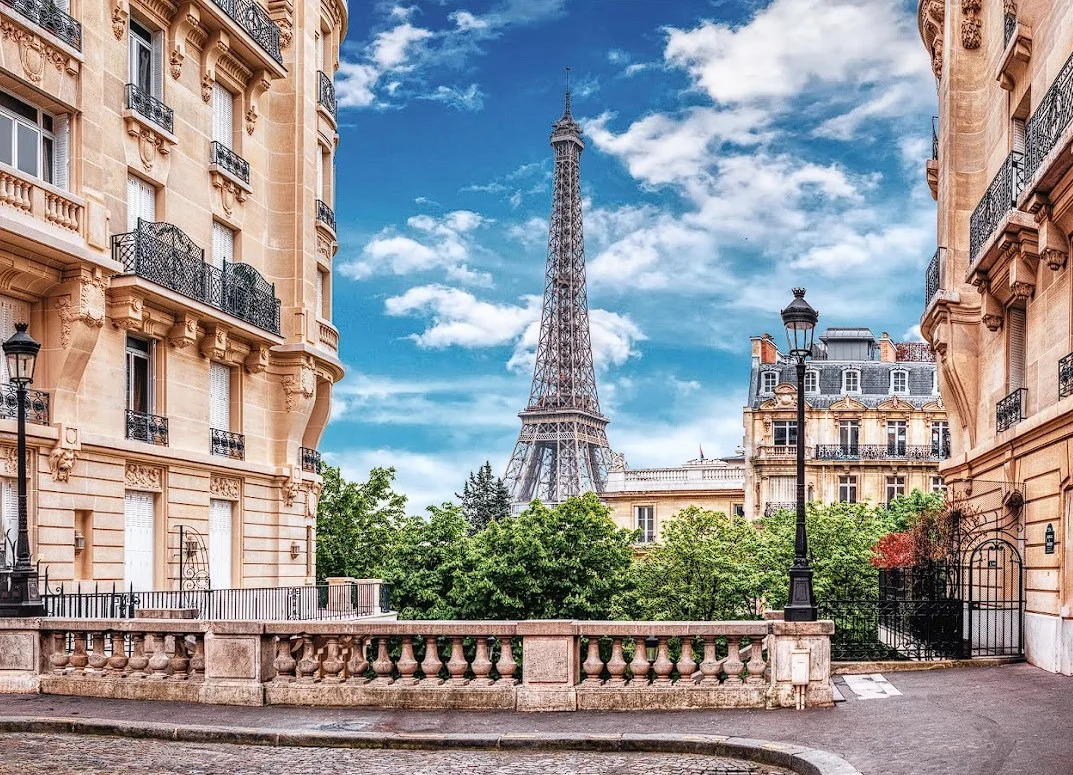
Imagine: you buy your tomatoes with the Eiffel Tower as a backdrop. This is not a metaphor. The market on the Avenue de Saxe, held on Thursdays and Saturdays between the Place de Breteuil and the Avenue de Segur, offers one of the most beautiful perspectives in Paris: the Iron Lady stands at the end of the avenue, framed by plane trees.
Beyond the scenery, it is an excellent food market, frequented by the residents of the 7th arrondissement: a demanding public that does not compromise on quality. Prices match the neighbourhood, but so do the products. On Saturday morning, it is a spectacle of Parisian life at its most elegant and simple.
Days: Thursday and Saturday. Atmosphere: elegant, Eiffel Tower view, quality. Do not miss: the view from the middle of the avenue, the farmhouse poultry.
Marche Edgar-Quinet, 14th arrondissement
Every Wednesday and Saturday, the Boulevard Edgar-Quinet, at the foot of the Tour Montparnasse, unfurls a generous and eclectic market. It is the market of the people of the 14th: a mix of neighbourhood retirees, young couples from Denfert-Rochereau, and artists from the rue de la Gaite. The stalls are plentiful, the prices reasonable for Paris, and the atmosphere has that relaxed quality unique to the southern Left Bank.
The 14th is an arrondissement that buyers often discover by chance, and never leave. This market is its best introduction: a lively neighbourhood, unpretentious, with genuine village life ten minutes from the Luxembourg Gardens.
Days: Wednesday and Saturday. Atmosphere: relaxed, Left Bank, generous. Do not miss: the rotisserie (the Saturday lunchtime chicken), the flowers.
Neighbourhood markets: the ones you adopt
Marche Maubert, 5th arrondissement
A small open-air market, three times a week, on the Place Maubert. Not spectacular, not touristy. Just a good neighbourhood market, with excellent producers and a clientele of regulars. It is the kind of market that makes you feel at home in a neighbourhood within three weeks.
Days: Tuesday, Thursday, Saturday. Atmosphere: intimate, Latin Quarter, discreet.
Marche Popincourt, 11th arrondissement
Boulevard Richard-Lenoir, between Oberkampf and Bastille. On Tuesday and Friday mornings, this open-air market is the meeting point for residents of the 11th, one of the most dynamic arrondissements in Paris. Fair prices, good quality, and that characteristic 11th energy: young, multicultural, resourceful.
Days: Tuesday and Friday. Atmosphere: young, dynamic, pure 11th.
Marche Poncelet, 17th arrondissement
Rue Poncelet, between Ternes and Wagram. A permanent street market, with established traders who know their customers by name. It is the other face of the 17th: not the organic Batignolles, but bourgeois Ternes. The stalls are immaculate, the products excellent, and the atmosphere is that of a village within the city.
Days: Tuesday to Saturday, Sunday morning. Atmosphere: bourgeois, loyal traders, village.
Marche de Passy, 16th arrondissement
The covered market of Passy, on the rue Bois-le-Vent, is an institution of the southern 16th. Under its 1950s concrete hall (not the most beautiful, but functional), you find a concentration of quality traders: the butcher who supplies starred restaurants, the most expensive fishmonger in Paris (but what turbot), the greengrocer who sorts his strawberries one by one.
Days: Tuesday to Saturday, Sunday morning. Atmosphere: high-end, discreet, Passy.
Marche Bastille, 11th-12th arrondissement
The largest open-air market in Paris, along the Boulevard Richard-Lenoir. Thursdays are calm, family-oriented. Sundays are a festival: the stalls stretch for hundreds of metres, Parisians come from all over the city, and the energy is contagious. This is where you will find the widest selection of Ile-de-France producers, international caterers, and florists with spectacular arrangements.
Days: Thursday and Sunday. Atmosphere: huge, Sunday, festive. Do not miss: Sunday morning for the full experience.
The market as a property buying criterion
Jean Mascla’s advice: The neighbourhood market is the criterion that 90% of buyers forget in their brief. And yet it is the one that makes the difference between “living in a neighbourhood” and “truly belonging to it”. When I start a search for a client, I always ask: what kind of market do you want? The answer says more about their ideal neighbourhood than any criterion of surface area or budget.
It is no coincidence that the streets adjacent to Paris’s great markets are among the most sought-after, and the most expensive, in their respective arrondissements. Proximity to a quality market is a marker of quality of life that the property market has long recognised. Our internal estimates show a premium of 3 to 5% on the price per m2 for a flat located less than five minutes on foot from a major food market.
But beyond price, the market is an indicator. A neighbourhood whose market is lively, busy and well-stocked is a neighbourhood that works. A neighbourhood where people cross paths, talk, share a weekly ritual. That is exactly the kind of signal our property hunters look for when evaluating an area for a client, because finding the right neighbourhood is the first step towards the right flat.
If you are looking for a neighbourhood that suits you, with the right market, the right energy, the right balance between practical living and Parisian charm, tell us about your project. Our sixteen property hunters walk these markets every week. They will guide you to the address that will become yours.
Want to explore Paris neighbourhood by neighbourhood? See our ranking of the best neighbourhoods to live in and our detailed guides by arrondissement.
Frequently asked questions
What are the best food markets in Paris?
The most renowned markets in Paris for product quality are the Marche d'Aligre (12th, the most authentic), the Marche Raspail bio (6th, Sundays), the Marche des Enfants Rouges (3rd, the oldest), the Marche President-Wilson (16th, premium quality) and the Marche des Batignolles bio (17th). Every neighbourhood in Paris has its reference market, open two to three times a week.
What days do markets take place in Paris?
Most Parisian markets are held two to three days a week, typically Tuesday, Friday and Sunday or Wednesday, Saturday and Sunday. Covered markets (Enfants Rouges, Passy, Saint-Quentin) are open Tuesday to Sunday. Standard hours are 7am to 2.30pm for open-air markets. It is advisable to arrive before 10am for the best selection and after 1pm for the best deals.
Does proximity to a market influence property prices in Paris?
Yes. Immediate proximity to a quality food market is a criterion sought by Parisian buyers and can represent a premium of 3 to 5% on the price per m2. The market is a reliable indicator of a neighbourhood's vitality: a busy, well-stocked market signals a living social fabric, dynamic local shops and everyday quality of life.