

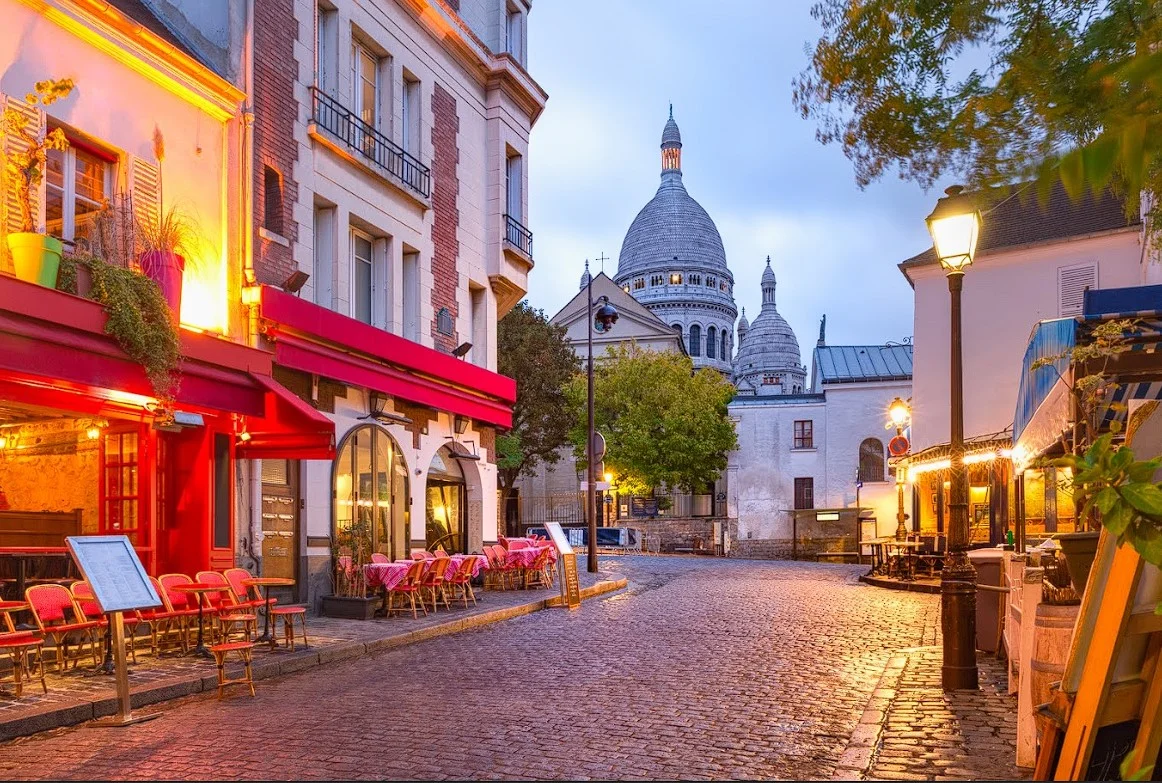
The 18th arrondissement is the most paradoxical in Paris. It is the most romantic and the most rough, the most touristic and the most working-class, the most expensive street-by-street and the least expensive on average. Buying in the 18th without knowing it intimately is playing roulette. Buying it with the right reading of the terrain is making one of the best property deals in Paris.
The average price in the 18th is 9,400 euros/m2 in 2026, up 2.6% year-on-year. But this average means strictly nothing. An apartment with rooftop views from the butte Montmartre trades at 12,000 euros/m2. A ground floor on boulevard Barbes sells at 6,500 euros/m2. These are two worlds separated by 800 metres. No other arrondissement in Paris presents such an internal gap.
The geography of the 18th: five neighbourhoods, five realities
Historic Montmartre: the jewel (10,500 to 12,500 euros/m2)
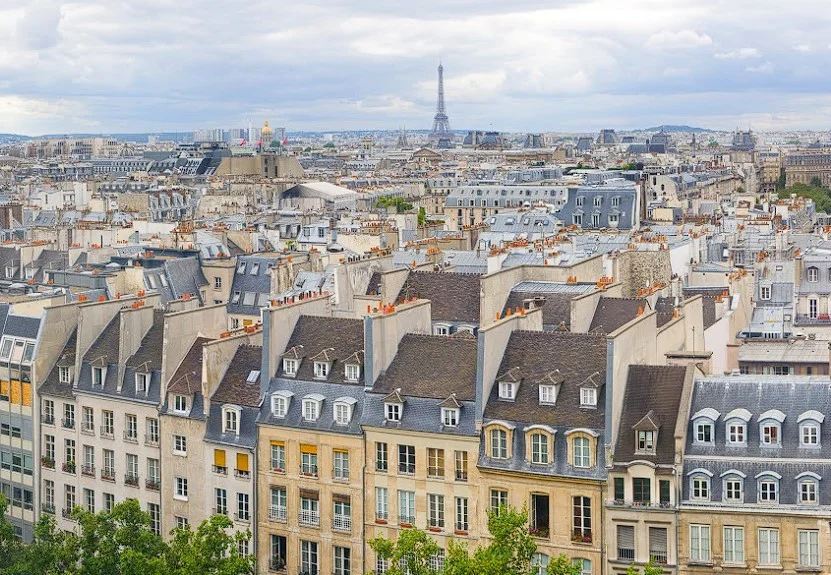
The butte Montmartre, Abbesses, rue Lepic, place du Tertre, upper rue Caulaincourt, square Suzanne-Buisson: this is the Montmartre of postcards, and it deserves its reputation. The cobbled streets, the staircases, the vineyards, the view over Paris from the Sacre-Coeur esplanade: this is one of the most beautiful places in the world to live.
The market here has nothing in common with the rest of the 18th. Properties are rare because nobody sells: when you have an apartment with rooftop views from the butte, you keep it. Turnover is among the lowest in Paris. The few properties that come up go off-market, often at prices that would make some 6th arrondissement streets blush relative to the surface area.
What you need to know: historic Montmartre is absolute charm but also discomfort. The steep streets make daily life athletic (pushchairs and shopping on your back, forget the car). The buildings are old, often without a lift, with narrow staircases and sometimes tired common areas. The apartments have quirky layouts: exposed beams, low ceilings, angled corridors. That is the price of charm, and it is a charm that does not suit everyone.
Streets to target: rue Lepic (the upper section, above the Moulin de la Galette), rue de l’Abreuvoir, rue Cortot, rue Saint-Rustique, allee des Brouillards, avenue Junot (the finest townhouses in the 18th). The impasses and cites (cite du Midi, villa Leandre) offer extraordinary quiet in a tourist neighbourhood.
Abbesses: the creative epicentre (9,800 to 11,500 euros/m2)
Place des Abbesses is the beating heart of lived-in Montmartre: the one of residents, not tourists. Rue des Abbesses, rue des Trois-Freres, rue Yvonne-le-Tac form a shopping triangle of remarkable quality: artisan bakeries, wine merchants, cheese shops, neighbourhood restaurants, bookshops.
Abbesses has the energy of the Marais without the Marais prices. The profile is similar: creative thirty- and forty-somethings, freelancers, artists, executives in culture or tech. The price difference with the 3rd or 4th is around 20 to 30% for a comparable atmosphere.
The Abbesses pitfall: the border with Pigalle is blurry. Two streets down, you cross into boulevard de Clichy and its adult shops. The transition is abrupt. You must check the exact address, not the stated neighbourhood. An apartment labelled “Abbesses” but actually on rue de Steinkerque (facing the tourist side of the Sacre-Coeur) or boulevard de Rochechouart has nothing in common with a true Abbesses village apartment.
Jules Joffrin and the 18th mairie: the up-and-coming neighbourhood (9,000 to 10,000 euros/m2)
Jules Joffrin is the best-kept secret of the 18th. It is a residential, calm, well-connected neighbourhood (line 12), with a genuine neighbourhood life around the 18th mairie and rue du Poteau. The covered market and local shops make it a village within the city.
What estate agents timidly call “Montmartre, Jules Joffrin” in their listings is in reality the most balanced neighbourhood in the 18th for living. Not the dizzying charm of the butte, not the problems of the northern part of the arrondissement. A true Parisian neighbourhood, with families, elderly residents who have lived there for forty years, and a growing number of young professionals discovering the area.
Prices have risen steadily over the past five years, and the trend continues. A 60 m2 3-bedroom trades between 540,000 and 600,000 euros, a budget that would only buy a 2-bedroom in the neighbouring 9th. For pragmatic buyers, the argument is irresistible.
Streets on the rise: rue du Mont-Cenis (lower section, Jules Joffrin side), rue Ordener (even-numbered side, between Simplon and Jules Joffrin), rue Hermel, rue du Poteau. Place Jules-Joffrin itself is a transport and shopping hub that anchors the neighbourhood.
Clignancourt, Simplon and Marcadet: the intermediate zone (7,500 to 9,000 euros/m2)
Between Jules Joffrin and the porte de Clignancourt, the 18th changes face. The buildings are taller, the streets wider, the population more diverse. This is the working-class 18th, the one of street markets, late-night corner shops, African hairdressers and Turkish restaurants.
The Saint-Ouen flea market, accessible from porte de Clignancourt, gives the neighbourhood a unique character at weekends. During the week, it is a functional residential neighbourhood, unpretentious, well served by line 4.
For an investor, this area is interesting. Rental yields are among the best in Paris (4 to 5% gross), rental demand is strong (metro proximity, moderate rents), and purchase prices remain accessible. A 40 m2 2-bedroom is found between 280,000 and 340,000 euros. As a primary residence, it is a choice that requires accepting a less polished environment than the butte or Jules Joffrin, but an authentic and lively one.
Barbes, Goutte d’Or and Chateau-Rouge: the deep north (6,500 to 8,000 euros/m2)
Let us be frank: this part of the 18th is not for everyone. Boulevard Barbes, the eponymous metro station, Goutte d’Or and Chateau-Rouge are high-density, noisy, sometimes tense neighbourhoods. The rue Dejean market is a fascinating sensory experience: spices, fabrics, fish. But daily life there is demanding.
That said, reducing these neighbourhoods to their problems would be unfair. Goutte d’Or is home to a vibrant cultural scene (the Lavoir Moderne, La Recyclerie nearby), genuine social diversity, and faubourien buildings with character. Streets like rue Leon, rue Myrha (undergoing gentrification) and rue Boris-Vian offer apartments with potential at prices that the rest of Paris no longer offers.
My view: this is a neighbourhood for savvy buyers. An investor who knows the terrain can do excellent business here. A first-time buyer seeking a primary residence must spend time there before committing: a lot of time. And they must visit in the evening, not just on Saturday mornings.
Property types in the 18th
The 18th offers architectural diversity greater than most Parisian arrondissements.
On the butte and at Abbesses, the housing is faubourien: 3 to 5-storey buildings, built before Haussmann, with irregular facades, cobbled courtyards and spiral staircases. The apartments are atypical: under the eaves with exposed beams, duplexes with mezzanines, converted artist studios. This is the charm of the 18th, and also its constraint: layouts are rarely optimised, kitchens are tiny, and renovations are complicated by the age of the construction.
Around Jules Joffrin and towards Clignancourt, Haussmann and post-Haussmann buildings dominate. Buildings of 6 to 7 storeys with lift, better-organised apartments, more generous floor areas. This is the most liquid segment of the 18th: the one that sells fastest and attracts families.
Brick buildings from the 1930s are a speciality of the northern 18th. They are found around porte de Clignancourt and towards porte de la Chapelle. They offer bright apartments with large balconies, rational layouts, and a good surface-to-price ratio. Their Art Deco aesthetic is undervalued.
Pitfalls of the 18th: what a property hunter checks
The 18th is the arrondissement where the expertise of a property hunter makes the greatest difference. The pitfalls are more numerous here than elsewhere.
The marketing address pitfall. Estate agents have a very generous concept of “Montmartre”. An apartment on rue Ordener, Simplon side, will be listed as “Montmartre” even though it is a fifteen-minute walk from the butte, in a radically different environment. At Home Select, we verify the exact address and analyse the micro-neighbourhood, street by street.
The lower-floor-on-busy-road pitfall. Boulevard de Clichy, boulevard de Rochechouart, boulevard de la Chapelle, rue Ordener (odd-numbered side): these arteries are extremely noisy. A ground floor or first floor is unliveable with the windows open. From the 4th floor up, the disturbance diminishes significantly. For noisy secondary roads, the 3rd floor is generally sufficient.
The charges pitfall. The older buildings on the butte are often fragile co-ownerships. The slopes complicate facade and roof maintenance. Facade restorations are frequent and expensive. The minutes of the last three general meetings are essential reading before any purchase in the 18th, even more so than in other arrondissements.
The view pitfall. “Rooftop views over Paris” is the number one selling point of the 18th. But not all views are equal. A view over the rooftops from a top floor on rue Lepic is exceptional. A “clear view” from a 5th floor on rue Marcadet looking out at a high-rise block is something else entirely. Views are verified on-site, not from photos.
Jean Mascla’s advice: In the 18th more than anywhere else, visit at different times. An apartment that seems idyllic on a Tuesday at 2pm can reveal a completely different reality on a Friday evening or Saturday afternoon. The 18th has several faces depending on the day and time: an experienced property hunter knows this and plans viewings accordingly.
The 18th in five years: outlook
The 18th is in a trend of selective growth. The already established neighbourhoods (historic Montmartre, Abbesses) will continue to progress slowly, driven by scarcity and prestige. Jules Joffrin is the neighbourhood with the most revaluation potential: I see it converging towards 11,000 euros/m2 by 2030.
The north of the 18th (Simplon, Marcadet, Clignancourt) will depend largely on ongoing urban projects and the evolution of the security situation. The potential is real: metro proximity, low prices, rental demand. But the transformation will take time.
Goutte d’Or is the big question mark. Gentrification is progressing street by street (rue Myrha being the most visible example), but the neighbourhood retains a strong working-class identity that resists gentrification. For a patient investor, it may be the best bet in the 18th on a 10-year horizon. For a primary residence, it remains a committed choice.
Buying in the 18th: the right method
The 18th cannot be treated like other arrondissements. The price dispersion, the diversity of neighbourhoods and the frequency of pitfalls demand a methodical approach.
The first step is to define your perimeter precisely. Not “the 18th”: that is too broad. Not “Montmartre”: that is too vague. A perimeter of five to six streets, bounded by concrete landmarks (metro station, boulevard, square). It is at this scale that the 18th is understood.
The second step is to spend time on the ground. The 18th must be earned: you need to walk it on foot, in the evening, in the morning, at weekends, before committing. Buyers who rush are the ones who have regrets. Those who take the time to know the neighbourhood are the ones who flourish there.
The third step, for buyers who want to maximise their chances, is to mandate a property hunter who knows the 18th inside out. Quality properties in historic Montmartre and Abbesses sell off-market in more than 30% of cases. Jules Joffrin is also accelerating towards off-market as the neighbourhood moves upscale. A hunter with a network in the 18th: notaires, building concierges, managing agents, local estate agents, accesses these properties before they reach the public market.
Our 16 property hunters know every street of the 18th, its strengths and weaknesses. If Montmartre appeals to you, let us start by defining together which Montmartre is right for you.
Frequently asked questions
What is the price per m2 in Montmartre in 2026?
The average price in the 18th arrondissement is 9,400 euros/m2 in 2026 (+2.6% year-on-year), but this average masks enormous disparities within the arrondissement. Historic Montmartre (Abbesses, place du Tertre, Lepic) trades between 10,500 and 12,500 euros/m2. Jules Joffrin and the 18th mairie area range from 9,000 to 10,000 euros/m2. The Clignancourt, Simplon and Marcadet areas sit between 7,500 and 9,000 euros/m2. And Barbes, Goutte d'Or and Chateau-Rouge, the most affordable, range from 6,500 to 8,000 euros/m2. The 18th is the arrondissement where street-by-street location matters most.
Is Montmartre a good property investment?
Historic Montmartre (Abbesses, Lepic) is a solid heritage investment: demand never wanes, properties are scarce, and furnished tourist rental yields are excellent. Jules Joffrin is the best value bet in the 18th for a medium-term investment: prices progress steadily and the neighbourhood keeps improving. The northern areas (Simplon, Marcadet) offer the highest rental yields but with less certain long-term capital gains. In short: historic Montmartre for safety, Jules Joffrin for balance, north of the 18th for yield.
What are the pitfalls to avoid when buying in the 18th?
The number one pitfall is buying 'in Montmartre' without checking the exact address: property marketing stretches the Montmartre name well beyond the butte. The second concerns ground floors and first floors on major roads (boulevard de Clichy, boulevard de la Chapelle, rue Ordener): noise pollution is considerable. The third is underestimating charges in older buildings on the butte: slopes complicate maintenance and common areas are often in poor condition. A property hunter who knows the 18th identifies these pitfalls in advance.