

















In brief
In 2026, the negotiation margin in Paris is built on DVF (Demandes de Valeurs Foncieres) data, recent comparables and the strength of the buyer's file, not on a simple show of force. Where an individual acting alone secures an average 2 to 3% discount, a property hunter backed by a factual argument secures more. Home Select, a Paris firm since 2011, has supported 1,200+ buyers with its 16 buying agents and obtains an average negotiation of 6% off the seller's price, with every offer calibrated to remain ambitious yet credible.
Key takeaways
- The offer was pitched 8.2% below the 795,000 euro asking price and the deal closed 5.9% below it, in the 10th arrondissement
- DVF data revealed the asking price was 8.5% above the average observed transaction price in the area
- Three negotiation pillars were used: DVF comparables, co-ownership analysis, and seller context investigation
- A pending facade restoration vote (18,000 euro share) was a key negotiation argument not disclosed by the selling agent
- Home Select, a property hunter in Paris, achieves an average 6% reduction on the seller's price, measured over 1,200+ acquisitions.
What I am about to recount is a true story. First names have been changed, certain geographical details slightly modified to preserve the anonymity of the parties. But the mechanics of the negotiation, the figures, the twists: everything is authentic. This is the daily reality of a property hunter in Paris, and it is probably the least visible part of the profession from the outside.
What does a buyer ask a property hunter for at the outset?
A brief comes down to three figures: a budget, a surface area, a perimeter. For Sophie and Marc, that was 750,000 euros, a minimum of 80 square metres and the 9th-10th-11th arrondissement triangle.
Sophie and Marc contacted Home Select on a Thursday in September. A couple in their forties, two children aged 7 and 10, tenants of a four-room apartment in the 11th for eight years. Purchase budget: 750,000 euros, potentially extendable to 780,000 for the perfect property. Criteria: four rooms minimum, 80 square metres, bright, within the 9th-10th-11th arrondissement perimeter. Near metro and schools, relatively quiet: they had had enough of boulevard de Ménilmontant.
Their property hunter, Isabelle, took the mandate on a Friday. By the following Monday, she had already identified twenty-three properties matching the brief. By Wednesday, after four pre-viewings, she had eliminated seventeen. Six remained in the running. By the following Friday, she was presenting only three to Sophie and Marc.
It was the third that would become the stage for this negotiation.
What did the property under negotiation look like?
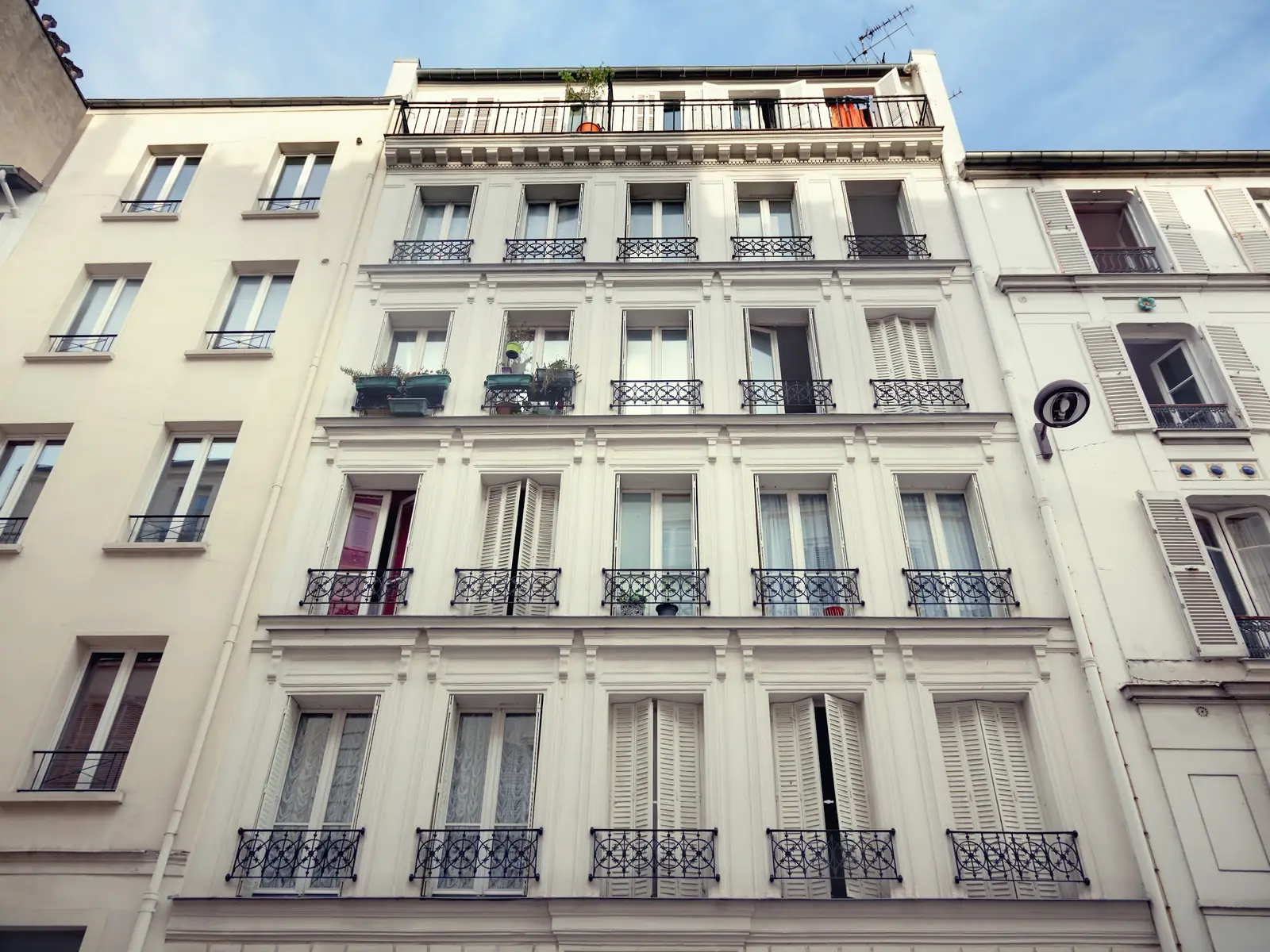
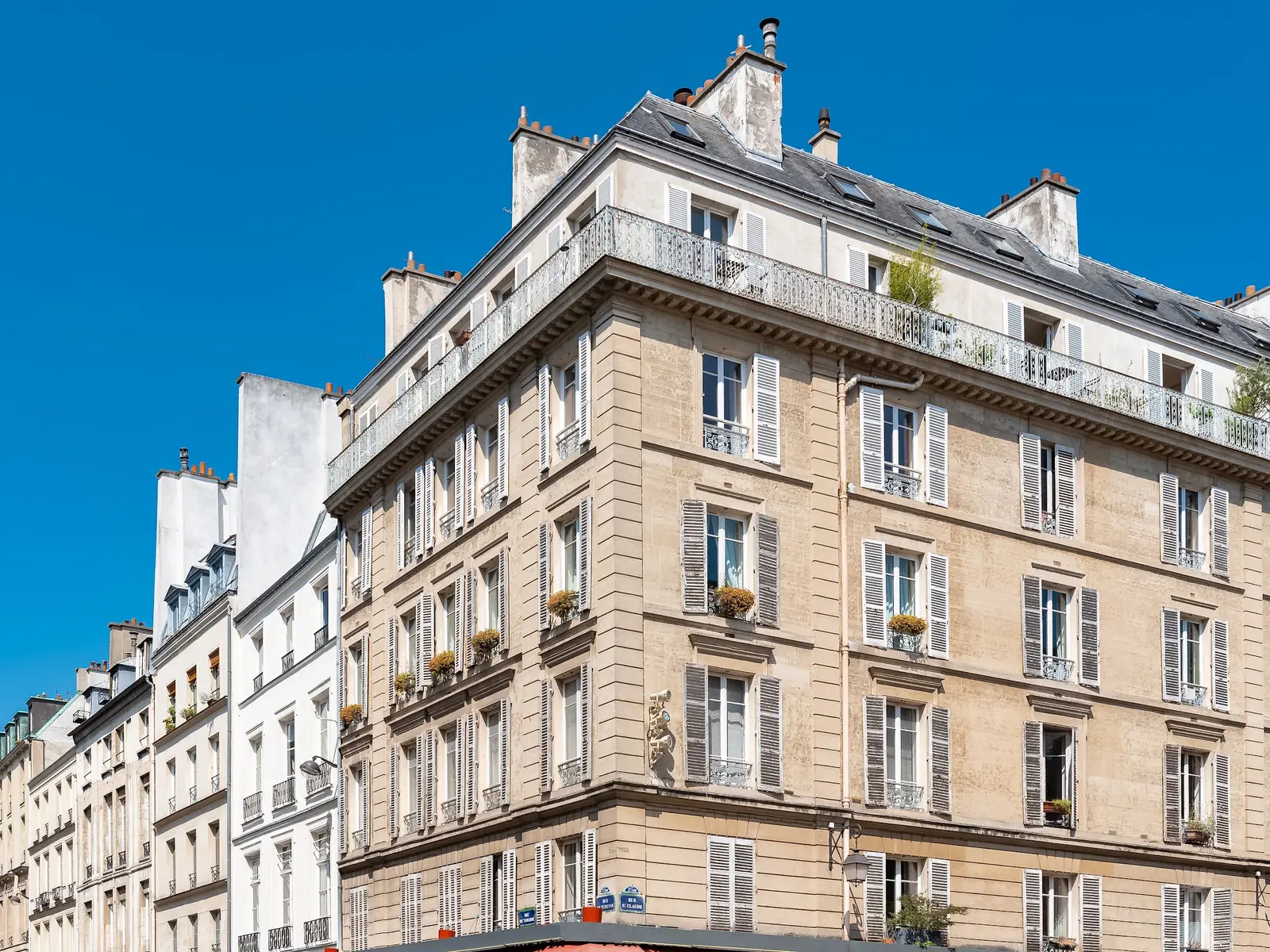
A four-room Haussmann apartment of 87 square metres on the fourth floor, in the 10th arrondissement on the canal Saint-Martin side, listed at 795,000 euros. That is approximately 9,140 euros per square metre, a level the analysis would show to be well above comparable transactions.
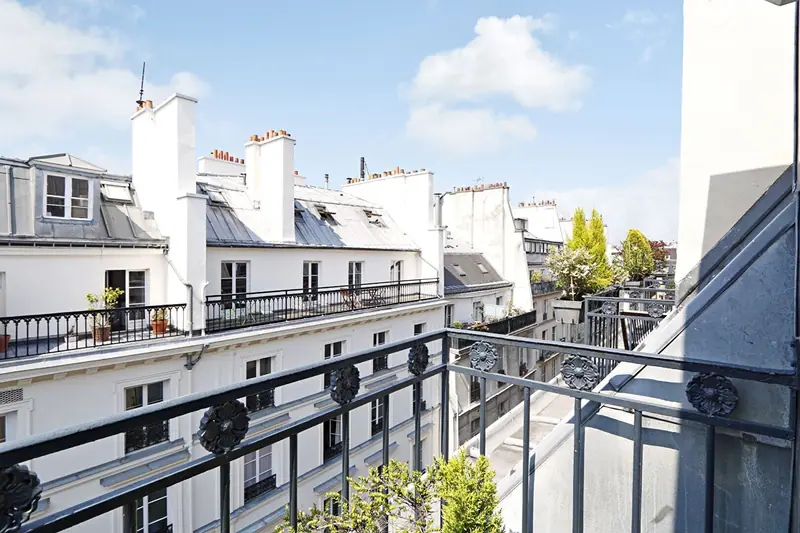
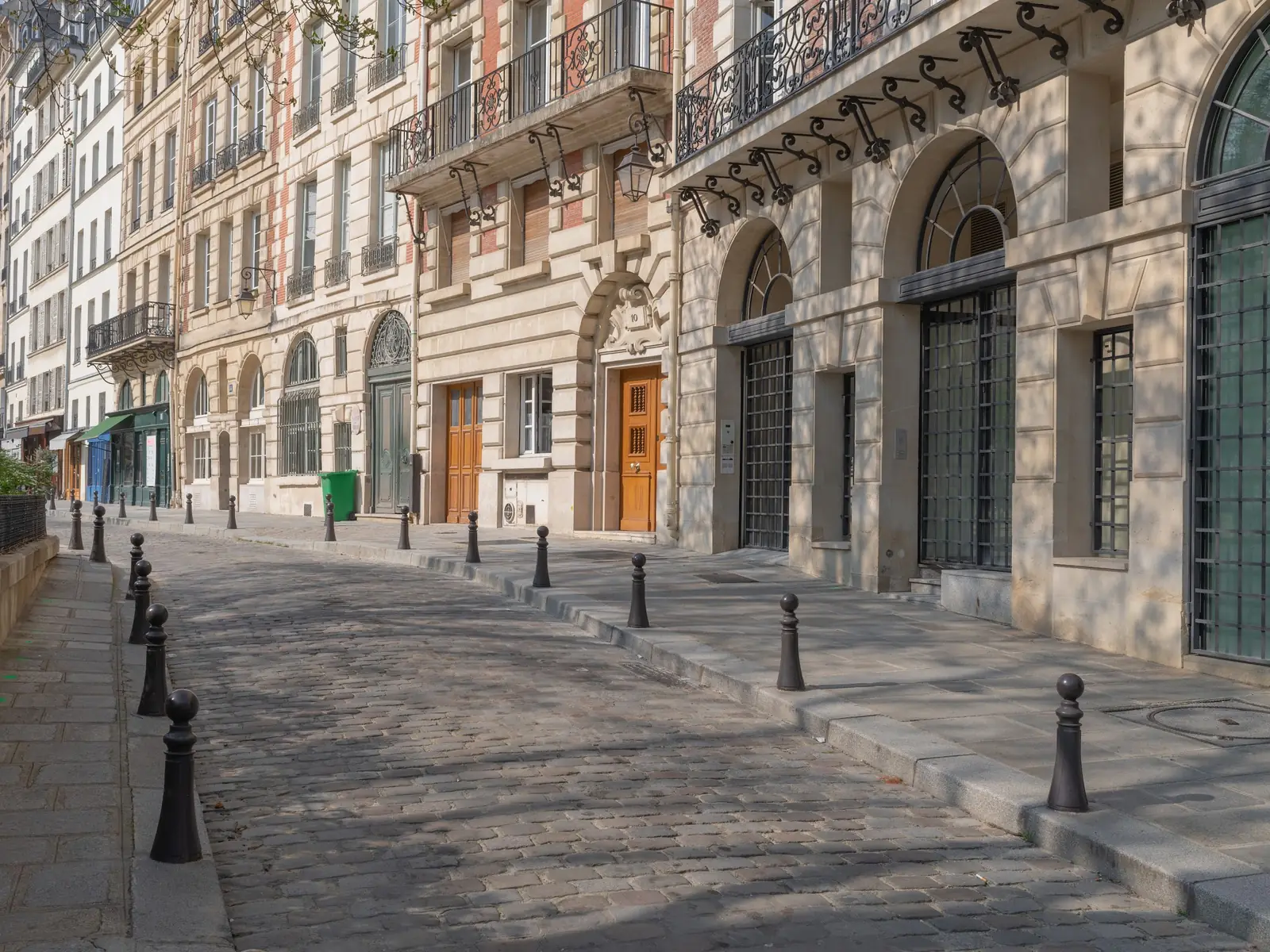
A four-room apartment of 87 square metres on the fourth floor of a Haussmann building in the 10th arrondissement, on the canal Saint-Martin side. Dual-aspect east-west, original parquet in good condition, 3.10 metre ceiling height, closed kitchen but with obvious opening potential (non-load-bearing partition verified by Isabelle during the pre-viewing). Two bedrooms facing the courtyard, living room and study facing the street, a quiet, one-way street lined with lime trees.
The property was listed at 795,000 euros. Approximately 9,140 euros per square metre.
Sophie and Marc had a reasoned coup de cœur: ideal for a property hunter. Enough enthusiasm to want to move forward, enough lucidity to listen to the analysis. Isabelle, meanwhile, had already begun her investigative work before even showing them the apartment.
What does a property hunter do between the viewing and the offer?
They investigate on three fronts: the prices actually paid in the area (the DVF database), the health of the co-ownership, and the seller’s personal situation. This invisible work, carried out in a few days, produces the hard figures the offer will rest on.
This is where the negotiation truly begins, well before the offer is drafted. What a property hunter does between the viewing and the offer is a methodical investigation that the individual buyer has neither the time, the tools, nor the experience to conduct.
First pillar: DVF data.
Isabelle extracted from the DVF database (Demandes de Valeurs Foncieres) all transactions recorded within a 300-metre radius of the property, over the previous twelve months. Twenty-seven comparable sales. She sorted them by surface area, floor, condition and aspect to retain only those genuinely comparable to the target apartment: four-room units between 75 and 95 square metres, in Haussmann buildings, between the third and sixth floors.
Seven transactions matched this filter. Average price observed: 8,420 euros per square metre. The highest: 9,100 euros, for a fully renovated property with high-end materials and a continuous balcony. The lowest: 7,800 euros, for a property needing refreshing on the third floor without lift.
The apartment of Sophie and Marc, listed at 9,140 euros per square metre, was therefore positioned at the high end of the range, 8.5% above the average observed price. A significant gap, especially for a property that, however charming, required kitchen opening works (estimated at 12,000 euros) and paint refreshing (5,000 euros).
Second pillar: co-ownership analysis.
Isabelle had obtained the three most recent general meeting minutes before the viewing. Good news: the co-ownership was healthy, the works fund properly maintained in compliance with the law, no major litigation. Less good news: a facade restoration vote was scheduled for the next meeting, with an estimated budget of 280,000 euros shared across all co-owners. For the unit in question, the estimated share amounted to around 18,000 euros.
This information, Sophie and Marc would probably never have obtained, or understood, without their property hunter. The selling agent had not mentioned this point during the viewing. This is not concealment: the restoration had not yet been voted, only placed on the agenda of the next general meeting. But for an informed buyer, it is a legitimate and powerful negotiation argument.
Third pillar: the seller’s context.
Isabelle gathered information about the seller through the agent. A retired couple who had already purchased in the provinces and wanted to sell to finance their new property. The property had been on the market for seven weeks without an offer. The agent had received some viewings but no formal proposal. The initial price had been 820,000 euros, already reduced once to 795,000.
These three pieces of information, the property has been on the market for nearly two months, it has already been reduced, and the seller has a purchase in progress, paint a context favourable to negotiation. The seller needs to sell, not wants to sell. The difference is fundamental.
How do you set the amount of a purchase offer?
You start from value, never from the asking price. Here, adjusted DVF comparables placed the property between 720,000 and 740,000 euros against an asking price of 795,000: the offer was calibrated at 730,000 euros, 8.2% below asking.
Isabelle and I exchanged before advising Sophie and Marc. Home Select has made this common practice: on high-stakes negotiations, the property hunter managing the file can seek a second opinion, whether mine or that of an experienced colleague.
Home Select’s analysis established the following foundation: the property was worth, in its current condition and accounting for works and the upcoming restoration, between 720,000 and 740,000 euros based on adjusted DVF comparables. Listing it at 795,000 was optimistic positioning, not absurd, but clearly above market.
Three options presented themselves.
The first: an offer at 710,000 euros, aggressive, maximising the margin but risking antagonising the seller. The risk was real: an offer perceived as insulting often closes the door, even when it is objectively justifiable by the data.
The second: an offer at 740,000 euros, reasonable, close to Home Select’s estimate, leaving little room for counter-offer but with good chances of being accepted or triggering a discussion.
The third, the one Home Select chose: an offer at 730,000 euros, a discount of 8.2% from the asking price. Ambitious enough to represent a real saving, substantiated enough to be taken seriously. With internal room to manoeuvre: Sophie and Marc were prepared to go up to 750,000 as a last resort, but there was no question of revealing this from the outset.
Home Select builds every offer on data, not intuition. With its 16 property hunters, Home Select cross-references DVF data, co-ownership status and seller context to calibrate the optimal negotiation. Describe your project
What does a purchase offer that gets accepted contain?
A three-page document, not a number. Presentation of the buyers, the amount proposed, then a four-point documented argument: DVF comparables, works to budget for, the upcoming façade restoration, and the strength of the financing.
The written offer that Isabelle transmitted to the agent was not simply a number on a sheet. It was a structured three-page document comprising the presentation of the buyers (profile, motivation, financial capacity with a financing attestation from a partner broker), the proposed amount, and above all, the argument.
The argument rested on four points, each documented.
First point: DVF comparables. Summary table of the seven retained transactions, with address, surface area, floor, price per square metre, sale date. Average: 8,420 euros per square metre. The 730,000 euro offer corresponded to 8,390 euros per square metre, right at the observed market average.
Second point: necessary works. Kitchen opening (estimated quote: 12,000 euros), paint and finishes refreshing (5,000 euros). Total: 17,000 euros at the buyer’s expense, not offset by the asking price.
Third point: upcoming facade restoration. Estimated share of 18,000 euros, to be provisioned by the buyer from purchase. A cost the seller knows but the asking price does not reflect.
Fourth point: strength of the file. Pre-approved financing, no property to sell beforehand, immediate availability to sign the preliminary contract, flexibility on the property release date.
This fourth point is often underestimated by individuals negotiating alone. When a seller receives two offers, one at 760,000 euros from a buyer whose financing is uncertain and who must first sell their property, the other at 730,000 from a buyer with a rock-solid file, the experienced (or well-advised) seller often chooses the second. Transaction certainty has a monetary value.
How many counter-offers does it take to reach a deal?
Six moves were enough here, spread over about ten days: an offer at 730,000 euros, a seller counter-offer at 770,000, a counter-proposal at 740,000, a seller “final price” at 755,000, a further bid at 745,000, and agreement at 748,000 euros.
The agent called Isabelle the day after the offer was transmitted. Classic first reflex: he said the sellers were “disappointed” by the amount. Isabelle knows the script. Displayed disappointment is part of the game. What matters is what comes next.
What came next: a counter-offer at 770,000 euros. The sellers accepted the principle of negotiation but found the gap too large. The agent mentioned there had been another viewing the day before, that the property was generating interest.
Isabelle did not flinch. Mentioning another potential buyer is the most classic pressure tool in property negotiation. Sometimes it is true, sometimes not. In both cases, the response is the same: stick to the data and the defined strategy.
She called the agent back two days later, never respond within the hour, that signals eagerness, with a counter-proposal at 740,000 euros. The argument remained unchanged, but Isabelle added one element: the duration on market. Seven weeks without an offer in this area of the 10th, for a property of this quality, signalled a pricing problem. The market had spoken.
Three days of silence. Then the agent called back. The sellers proposed 755,000 euros and specified it was their “final price”. The famous final price that is almost never final.
Isabelle consulted Sophie and Marc. Their maximum budget, recall, was 780,000. At 755,000, the property remained above Home Select’s value estimate, but the margin was narrowing. The question was: how far to push without risking losing the property?
This is where the hunter’s experience makes the difference. An individual, at this stage, would probably have accepted. The coup de cœur, the fatigue of negotiation, the fear that another buyer might appear: everything pushes you to say yes. Isabelle knew that the “final price” of a seller who has already come down three times (from 820,000 to 795,000, then 770,000, then 755,000) and has a purchase in progress is usually not as definitive as announced.
She proposed 745,000 euros. Not 740, not 750. This precise figure signalled that Home Select had calculated to the last cent, that it was not a round number thrown out at random. And she added a concession: signing the preliminary contract within ten days, loan condition precedent reduced to 45 days instead of the usual 60, and property release at the date desired by the sellers.
Twenty-four hours later, the agent called back. Agreement at 748,000 euros. The sellers had split the difference on the final few thousand euros. Isabelle accepted on behalf of Sophie and Marc.
What did the negotiation earn, net of fees?
47,000 euros off the asking price, or 5.9%, and 28,300 euros net once the 18,700 euros of fees are deducted. Here is the deal, line by line.
Initial asking price: 820,000 euros (before the seller’s first reduction). Asking price at the time of the offer: 795,000 euros. Final purchase price: 748,000 euros.
Negotiation achieved against asking price: 47,000 euros, or 5.9%. Against the initial price: 72,000 euros, or 8.8%.
But once the elements revealed by Isabelle’s analysis are factored in, the 17,000 euros of works and 18,000 euros of facade restoration, the “real” price paid by Sophie and Marc for a property in usable condition is 783,000 euros all-in. For a dual-aspect four-room Haussmann apartment of 87 square metres on the fourth floor facing the canal, this is a remarkably consistent market price. They did not get the deal of the century, but they bought at the right price, without overpaying, with complete visibility on future costs.
Isabelle’s fees on this transaction: 18,700 euros (2.5% of the net purchase price). The net negotiation, after deducting fees: 28,300 euros saved against the asking price. Not counting the mechanical reduction in notaire fees linked to the lower price.
What lessons does this negotiation teach?
One above all, and it is a number: in Paris a buyer negotiating alone secures an average 2 to 3% off the asking price, while Home Select secures 6%. Home Select has observed this across more than 1,200 purchases supported since 2011. The gap does not come from rhetoric, it comes from preparation.
There are five lessons in this negotiation, and they apply to virtually any property purchase in Paris.
The first is that data is not a luxury, it is a weapon. A buyer who arrives with a table of DVF comparables is not in the same position as a buyer who says “I think it is a bit expensive”. The first makes a proposal. The second makes a comment.
The second is that the seller’s context matters as much as the property’s value. A seller under pressure makes concessions that a relaxed seller would not consider. Identifying this context is part of the property hunter’s job.
The third is that the strength of the buyer’s file is a negotiation lever in itself. Pre-approved financing, no chain, availability to sign quickly: all of this has a monetary value that the seller factors into their decision.
The fourth is that negotiation is a process, not an event. It lasts several days, sometimes several weeks. Every exchange is calibrated, every silence is strategic, every concession is measured. The individual negotiating alone, under the influence of emotion and impatience, does not have this discipline.
The fifth, and perhaps the most important: knowing when to stop. Isabelle could have held at 745,000. She accepted 748,000 because the risk-reward ratio no longer justified pushing further. Three thousand euros difference against the risk of the seller digging in and reverting to 755,000, or even withdrawing the property from the market out of exasperation: the calculation was quickly made. A successful negotiation is not one that achieves the lowest possible price. It is one that achieves the best price at which the seller says yes, in a framework where both parties feel respected.
Sophie and Marc moved in three months later. The kitchen opening works finished just in time for Christmas. Their property hunter had warned them: in December, contractors are keen to finish before the holidays. That is the kind of detail you will not find in any database. It is called experience.
Home Select negotiates 6% off on average, has completed 1,200+ acquisitions since 2011 and charges fees 100% on success. For Home Select, negotiation is not a bonus: it is the firm’s profession. Describe your project to Home Select
Sources
Frequently asked questions
01 What percentage of negotiation can you achieve in Paris in 2026?
The negotiation margin in Paris varies by arrondissement, property type and market conditions. On average, individuals achieve a 2 to 3% discount. Home Select achieves an average of 6% thanks to a method based on DVF data, recent comparables and a structured argument.
02 How does a property hunter negotiate the price of a property?
A property hunter builds their negotiation on three pillars: objective data (recent transaction prices via DVF, property condition, anticipated works), professional relationships with the selling agent (credibility of the file, track record of successful transactions), and structuring the offer (timelines, conditions, strength of financing).
03 Should you always negotiate the price of an apartment in Paris?
Not systematically. Some properties correctly positioned in a tight market leave no margin. A good property hunter knows how to recognise a fair price and advise their client to make an offer at asking price when that is the right strategy, rather than risk losing the property.
04 Is DVF data reliable for negotiation?
DVF data (Demandes de Valeurs Foncieres) records actual transactions registered by notaires. The data is reliable but must be interpreted: it does not specify the condition of the property, the floor, the view or any renovation work. A property hunter knows how to cross-reference this data with on-the-ground knowledge to produce relevant comparables.
05 Can an offer that is too low be counter-productive?
Yes. An offer perceived as disrespectful by the seller can close the door to any discussion. Home Select, a property hunter in Paris, calibrates every offer to be ambitious yet credible, always accompanied by a factual argument justifying the proposed amount.