

There comes a moment in every Parisian property search where the question arises. You have visited twenty apartments in Paris, you have seen 55 m² 3-bedrooms at provincial house prices, you have given up on the third bedroom, then the balcony, then the light. And one evening, returning from yet another disappointing viewing in the 15th, you wonder: what if we looked just the other side of the peripherique?
This question, 20% of our clients at Home Select end up asking themselves. And for many, the answer lies in the golden triangle of the western inner suburbs: Neuilly-sur-Seine, Boulogne-Billancourt, Levallois-Perret. Three municipalities in the Hauts-de-Seine department that offer what Paris increasingly refuses: space, light, quiet, without giving up what makes Parisian life worthwhile: centrality, transport, culture, restaurants.
The golden triangle of the inner suburbs: overview
Why these three municipalities and not others
The Hauts-de-Seine department has 36 municipalities. But only three function as a natural extension of Paris: Neuilly, Boulogne and Levallois. The reason is geographical. These three cities border the 16th and 17th arrondissements, separated from Paris by the peripherique, a psychological barrier more than a physical one. By metro, Neuilly (line 1) is 8 minutes from the Champs-Elysees. Boulogne (lines 9 and 10) is 12 minutes from Saint-Lazare. Levallois (line 3) is 10 minutes from Opera.
Above all, these three municipalities share with western Paris a level of services, shops and infrastructure that distinguishes them from the rest of the suburbs. Schools are excellent, streets are clean, quality shops are plentiful. You do not leave Paris by moving to Neuilly or Boulogne: you change your postal address, not your lifestyle.
The comparison that matters: inner suburbs vs Paris
| Criterion | Paris 15th-16th-17th | Neuilly, Boulogne, Levallois |
|---|---|---|
| Average price/m² | 10,000 to 12,400 euros | 8,900 to 10,800 euros |
| 4-room surface for 1M euros | 75 to 90 m² | 90 to 110 m² |
| Green spaces | Variable | Bois de Boulogne, municipal parks |
| Transport to centre | Direct metro | Direct metro (L1, L3, L9, L10) |
| Schools | Very good | Very good to excellent |
| Nightlife | Moderate (west) | Limited |
| Address prestige | Paris intra-muros | ”Almost Paris” |
The real advantage of the inner suburbs is visible in the “surface” column. For the same budget of one million euros, you gain 15 to 25 m² by crossing the peripherique. These square metres, a real third bedroom, a 35 m² living room instead of 25, a continuous balcony, are what tip the decision.
Neuilly-sur-Seine: the 17th arrondissement, only better
10,800 euros/m²: the most expensive suburb in France
Neuilly-sur-Seine is a case apart. It is not a “suburb” in the way Parisians understand the word: it is an extension of the 16th and 17th, with comparable architectural heritage, tree-lined avenues with century-old plantings, and one of the wealthiest populations in France.
The average price of 10,800 euros/m² (+1.6% in 2026) places Neuilly above the 15th, 14th, 12th and most Parisian arrondissements. Only the 6th, 7th, 8th, 4th and 16th are more expensive. Buying in Neuilly is not a bargain: it is a lifestyle choice.
Neuilly’s neighbourhoods
Neuilly, Bagatelle (west, Bois de Boulogne side) is the most prestigious area. The boulevards Maurice-Barres and d’Argenson border the wood and offer apartments with green views at 12,000 to 14,000 euros/m². The townhouses on boulevard du Commandant-Charcot and adjacent streets represent the top of the market, easily exceeding 3 million euros.
Neuilly, Sablons (centre, around the Les Sablons metro, line 1) is the most central and commercial neighbourhood. Avenue Charles-de-Gaulle (extension of the Champs-Elysees) and rue de Chartres concentrate the shops. Prices range from 10,500 to 12,000 euros/m². This is the most vibrant, most urban Neuilly.
Neuilly, Peretti (south, towards the Seine and Levallois) is the most accessible area, with prices between 9,500 and 11,000 euros/m². The buildings are less prestigious (more 1960s-70s construction), but the layouts are rational, surfaces generous, and proximity to the Seine is an asset.
Neuilly, Ile de la Jatte deserves a special mention. This island on the Seine, made famous by the Impressionists, offers a unique setting: individual houses, residences with gardens, absolute quiet. Prices are high (11,000 to 13,000 euros/m²) but the environment is incomparable in the inner suburbs.
The Neuilly profile
The typical buyer in Neuilly is a family with children leaving the 16th or 17th to gain surface area without losing standing. Budget: 1 to 2 million euros for a 100 to 130 m² 4 to 5-room apartment. Senior executives who work at La Defense also represent a significant share of the market: Neuilly is 5 minutes from La Defense by metro.
What Neuilly does not offer: nightlife, social diversity and the cultural buzz of Paris. Restaurants close early, bars are rare, and Sunday resembles that of an upscale small town. Childless couples and thirty-somethings get bored here: it is not their city.
Boulogne-Billancourt: the family-friendly inner suburb
8,900 euros/m²: the best value in the triangle
Boulogne-Billancourt is the most populated municipality in the Hauts-de-Seine and the sixth largest city in France by population. This urban density gives it a vitality that Neuilly lacks: more shops, more restaurants, more cinemas, more neighbourhood life.
At 8,900 euros/m² (+2.0% in 2026), Boulogne offers the best value of the three municipalities. A 90 m² 4-room apartment is found between 750,000 and 850,000 euros, a budget that would buy only a 70 m² 3-bedroom in the neighbouring 16th.
Boulogne’s neighbourhoods
Boulogne Nord (between porte de Saint-Cloud and place Marcel-Sembat) is the most Parisian area. The shopping streets (rue des Princes, rue du Chateau) are lively, the metro (lines 9 and 10) is close, and the atmosphere recalls the 15th arrondissement. Prices: 9,000 to 10,500 euros/m². This is the Boulogne I recommend for families who want to stay close to Paris.
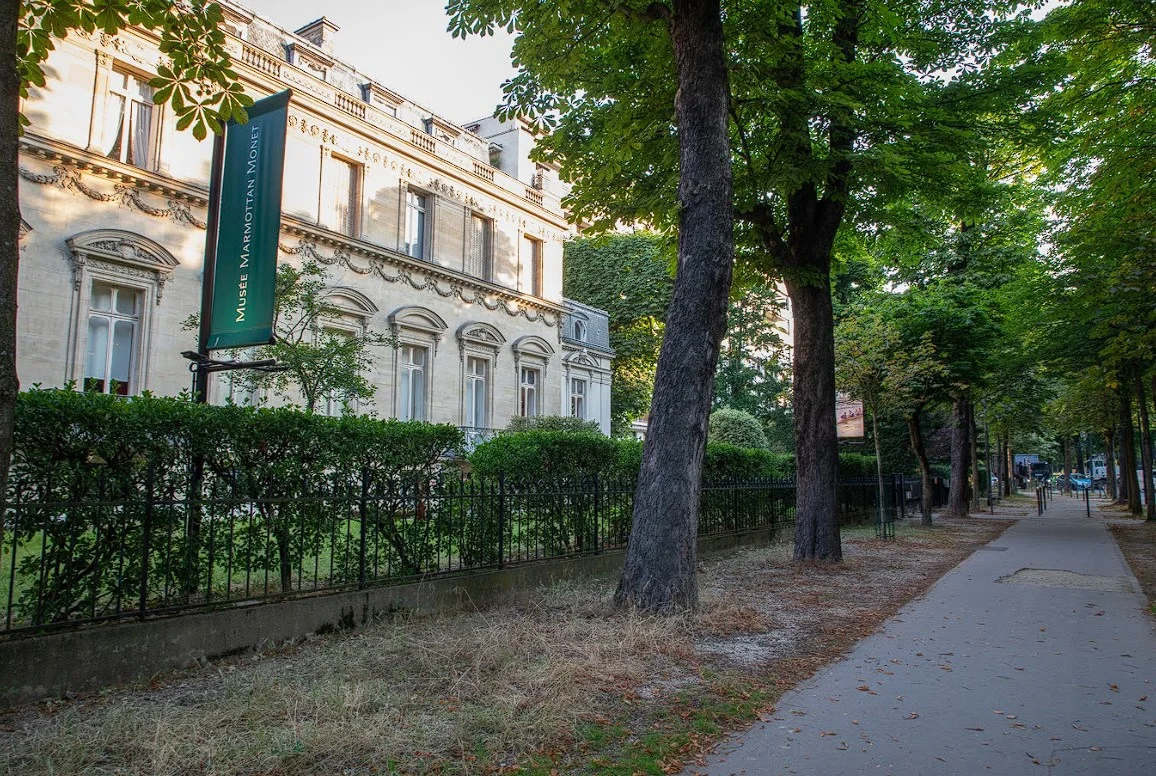
Boulogne, Prince-Marmottan (centre-west, towards the wood) is the quintessential residential neighbourhood. Tree-lined streets, 1930s Art Deco buildings (the finest in the municipality), proximity to the Bois de Boulogne. Prices rise to 9,500 to 11,000 euros/m², but the architectural quality justifies the premium. Apartments in the brick buildings of the 1930s, with their curved balconies and marble entrance halls, are Boulogne’s most sought-after properties.
Boulogne, Pont de Sevres (south) is the most accessible area, with prices between 7,800 and 9,000 euros/m². Buildings are more recent (1960s-80s), surfaces are generous, and the T2 tramway serves the neighbourhood. This is the entry point for first-time buyers in the inner suburbs.
Boulogne, Billancourt / Ile Seguin (south-east, on the Seine waterfront) is undergoing transformation. The former Renault site hosts new-build programmes, the Seine Musicale has given the neighbourhood a cultural identity. New-build trades between 9,000 and 11,000 euros/m², existing stock around 8,500 euros/m². This is a bet on the future: the neighbourhood will be fully developed within five to seven years.
The Boulogne profile
Boulogne attracts three profiles: families seeking space and schools (good state schools, several well-regarded private schools), young professionals who work in Boulogne itself (Renault, TF1, many companies) or in western Paris, and expatriates who appreciate the proximity of the Bois de Boulogne and bilingual schools.
Boulogne’s advantage over Neuilly: diversity. Boulogne has working-class neighbourhoods, affluent neighbourhoods, and neighbourhoods in transition. You can find a 2-bedroom at 350,000 euros or a penthouse at 2 million. This market range allows every buyer profile to find their place.
Levallois-Perret: urban energy at the gates of Paris
9,200 euros/m²: the strongest momentum
Levallois-Perret is the municipality that most resembles a Parisian arrondissement. Dense, urban, commercial, with an intense neighbourhood life around the mairie and rue du President-Wilson. Above all, Levallois is on the rise: +2.3% in 2026, the strongest progression of the three municipalities.
The reason for this momentum: Levallois concentrates an impressive number of corporate headquarters (telecoms, media, digital) that attract young, well-paid executives. Metro line 3 connects Levallois directly to Saint-Lazare, Opera and Republique. In terms of service, it is as good as the 17th arrondissement.
Levallois’s neighbourhoods
Levallois, Centre / Mairie is the commercial and residential heart. Rue du President-Wilson and place de la Republique de Levallois concentrate shops and restaurants. Prices: 9,000 to 10,500 euros/m². The buildings are a mix of late Haussmann, 1930s brick and recent construction.
Levallois, Front de Seine (south, along the Seine) offers a pleasant setting with the riverside promenade and proximity to the Levallois bridge (access to the 16th and the Bois de Boulogne). Prices: 9,500 to 11,000 euros/m² for properties with open views.
Levallois, Louise Michel (north-east, towards Clichy) is the most accessible area: 8,500 to 9,500 euros/m². Less chic than the centre, but well-served and improving steadily thanks to urban projects.
The Levallois profile
Levallois attracts professionals aged 30-45 who work at La Defense, in the central Parisian business district, or in companies based in Levallois itself. The profile is younger and more dynamic than Neuilly, more urban than Boulogne. Childless couples and young families find an excellent balance between affordability and quality of life.
What Levallois does not offer: address prestige (Levallois does not have Neuilly’s or Boulogne’s name recognition among foreigners), large green spaces (the Parc de la Planchette is pleasant but modest), and architectural charm (the built environment is more heterogeneous than Neuilly or northern Boulogne).
The real debate: Paris or inner suburbs?
Jean Mascla’s advice: The question is never “Paris or suburbs?”. The question is: “What matters most to me: a Paris address or the square metres?”. In fifteen years in the profession, I have seen families thriving in 70 m² in the Marais and families thriving in 120 m² in Boulogne. Property happiness is not measured by postcode.
What I observe among my clients: those who regret choosing the inner suburbs are those who value nightlife, spontaneity, walking (doing everything on foot). Those who regret staying in Paris are those who sacrificed a bedroom, a balcony, or natural light to keep a Parisian address.
The only truly objective criterion is resale. Central Paris resells faster and better than the inner suburbs, for comparable property quality. This is a statistical fact. But the gap narrows year after year for Neuilly, Boulogne and Levallois: these three municipalities have acquired an “almost Paris” status that secures the investment.
Buying in the inner suburbs: what a property hunter changes
The inner suburbs property market is fragmented. Unlike Paris, where the large agencies cover several arrondissements, each municipality has its local agencies, its neighbourhood notaires, its networks. A buyer going it alone must multiply contacts and alerts across five or six different agencies to cover the market properly.
A property hunter who covers Paris and the inner suburbs solves this problem. At Home Select, our hunters maintain relationships with agencies in Neuilly, Boulogne and Levallois on the same footing as those in the 16th or 17th. A mandate that starts “in the 16th” can naturally extend to Neuilly if the budget demands a surface-location trade-off. A “western Paris” mandate can include Boulogne and Levallois from the outset.
This geographical flexibility is a decisive advantage. It allows an objective comparison between a 4-room in Passy and a 4-room in northern Boulogne, a 3-bedroom in the 17th and a 3-bedroom in central Levallois: same transport, same schools, same quality of life, but 15 to 20% more space on the other side of the peripherique.
Our 16 property hunters know every street of these three municipalities. If your Paris search is reaching its limits, or if you are considering the inner suburbs from the start, we will guide you to the right neighbourhood and the right property: the one that matches your life, not a geographical preconception.
Frequently asked questions
Is it cheaper to buy in Neuilly, Boulogne or Levallois than in Paris?
It depends on which Parisian arrondissement you compare with. Neuilly-sur-Seine at 10,800 euros/m² is on par with the 5th arrondissement and more expensive than the 15th (10,000 euros/m²) or the 12th (9,200 euros/m²). Boulogne-Billancourt at 8,900 euros/m² is comparable to the 20th or 13th. Levallois-Perret at 9,200 euros/m² sits at the level of the 12th. The real advantage of the inner suburbs is not always the price per m², but the surface area: for a given budget, you gain 15 to 25% more space thanks to more rational layouts and more recent buildings than within central Paris.
Which inner suburb municipality is best for families?
Boulogne-Billancourt is the family choice par excellence: the Parc de Boulogne (Bois de Boulogne on the west side), quality schools, generous floor areas in 1930s buildings, and a dense neighbourhood life around rue des Princes and place Marcel-Sembat. Neuilly is also very family-friendly but more socially homogeneous and more expensive. Levallois suits families who want to stay close to Paris without the Neuilly budget: the Parc de la Planchette and newer neighbourhoods offer a pleasant setting.
Does a Parisian property hunter work in the inner suburbs?
At Home Select, our 16 property hunters cover Paris and the Ile-de-France region, inner suburbs included. Neuilly, Boulogne and Levallois are part of our regular zones of activity: approximately 20% of our mandates involve the western inner suburbs. A property hunter's expertise is particularly valuable in the inner suburbs because the market is fragmented across many local agencies, and quality properties in the best neighbourhoods sell fast, often before appearing on portals.