


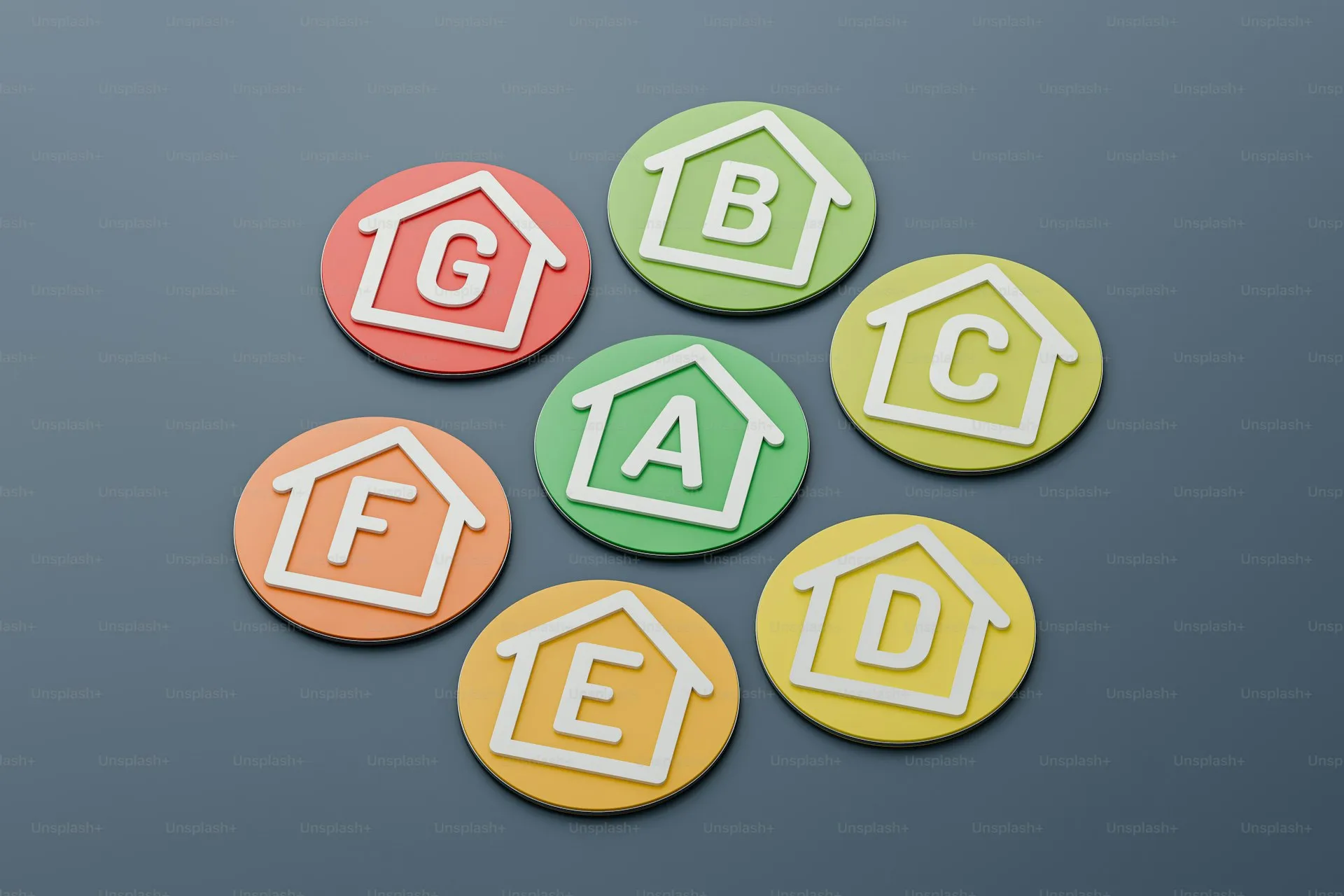
The reformed DPE: what has changed
The Diagnostic de Performance Energetique (Energy Performance Rating) was thoroughly overhauled in 2021, then adjusted for small surface areas in 2024. In 2026, it is a central document in every property transaction. It is no longer merely informational: it now has binding force, with progressive rental bans for the least energy-efficient homes.
The new DPE uses a unified calculation method (3CL method) based on the physical characteristics of the building, no longer on energy bills. It incorporates two components: primary energy consumption (in kWh/m2/year) and greenhouse gas emissions (in kg CO2/m2/year). The final class retained is the less favorable of the two.
The rental ban timetable
Homes rated G have been banned from the rental market since January 1, 2025 (for new leases and renewals). Homes rated F will be banned from January 1, 2028. Homes rated E will follow in 2034.
In 2026, a G-rated property can no longer be let. An F-rated property can still be rented, but with a clear deadline: any lease signed after January 1, 2028 must concern a property rated E or better.
The impact on prices in Paris
The DPE has created a two-speed market in Paris. Properties rated D or better trade at market price. Properties rated E suffer a discount of 5 to 10%. Properties rated F and G show discounts of 10 to 20%, and even more for small units where the renovation cost per square meter is proportionally higher.
This discount represents an opportunity for buyers willing to undertake energy renovation works. An F-rated apartment in a handsome Haussmannian building can, after window insulation, heating system replacement and loft insulation, reach class D, with significant potential capital appreciation.
Paris-specific considerations
The Parisian housing stock is predominantly old. Nearly 60% of homes are in buildings constructed before 1948, with specific constraints: cut-stone walls (exterior insulation often impossible in protected areas), wooden windows under the supervision of the Architectes des Batiments de France, collective heating systems (impossible to modify individually).
The DPE adjustment for small surfaces (under 40 m2), applied since 2024, has reclassified many Parisian studios and one-bedroom apartments that were artificially penalized by the surface-to-heat-loss ratio.
Our purchasing advice
If you are buying to live in, a property rated E or F with renovation potential can represent an excellent deal, provided you budget for the works (15,000 to 40,000 euros for a standard Parisian apartment). If you are buying as a rental investment, aim for D at minimum to avoid any rental restrictions.
At Home Select, our property hunters systematically analyze the DPE and estimate the cost of bringing the property up to standard before recommending it. Discover our purchasing support.
FAQ
Can a G-rated property still be sold?
Yes, the sale is not prohibited. Only letting is banned for G-rated homes. A buyer can purchase a G-rated property to live in or to renovate before renting it out.
How to go from F to D?
The most effective works in Paris are window replacement (double or triple glazing), interior wall insulation, heating system replacement and VMC (mechanical ventilation) installation. Estimated budget: 15,000 to 40,000 euros depending on the surface area.
Is the DPE reliable for old buildings?
The 3CL method has its limitations for older construction. Cut-stone walls have a thermal inertia that the standard calculation does not always properly account for. This is why some old buildings are rated F even though their occupants consume energy reasonably.
Are renovation grants compatible with a purchase?
Yes. MaPrimeRenov’ is available to owner-occupiers and landlords, subject to income conditions. CEE (Energy Savings Certificates) provide additional support. In co-ownerships, MaPrimeRenov’ Copro finances collective works.
Frequently asked questions
Can a G-rated property still be sold in Paris in 2026?
Yes, the sale is not prohibited. Only letting is banned for G-rated homes since January 2025. A buyer can purchase a G-rated property to live in or to renovate before renting it out. These properties often trade at discounts of 10 to 20% below market value.
How much does it cost to renovate an F-rated apartment to D in Paris?
Energy renovation from F to D typically costs between 15,000 and 40,000 euros depending on surface area. The most effective works include window replacement, interior wall insulation, heating system replacement and mechanical ventilation installation. Grants such as MaPrimeRenov' can offset part of the cost.
How does the DPE rating affect property prices in Paris?
Properties rated D or better trade at market price. E-rated properties suffer a discount of 5 to 10%. F and G-rated properties show discounts of 10 to 20%, and even more for small units where renovation costs per square meter are proportionally higher.
When will F-rated properties be banned from the rental market in France?
F-rated homes will be banned from new leases and renewals starting January 1, 2028. E-rated homes will follow in 2034. At Home Select, property hunters systematically analyze the DPE and estimate the cost of bringing properties up to standard before recommending them to buyers.