

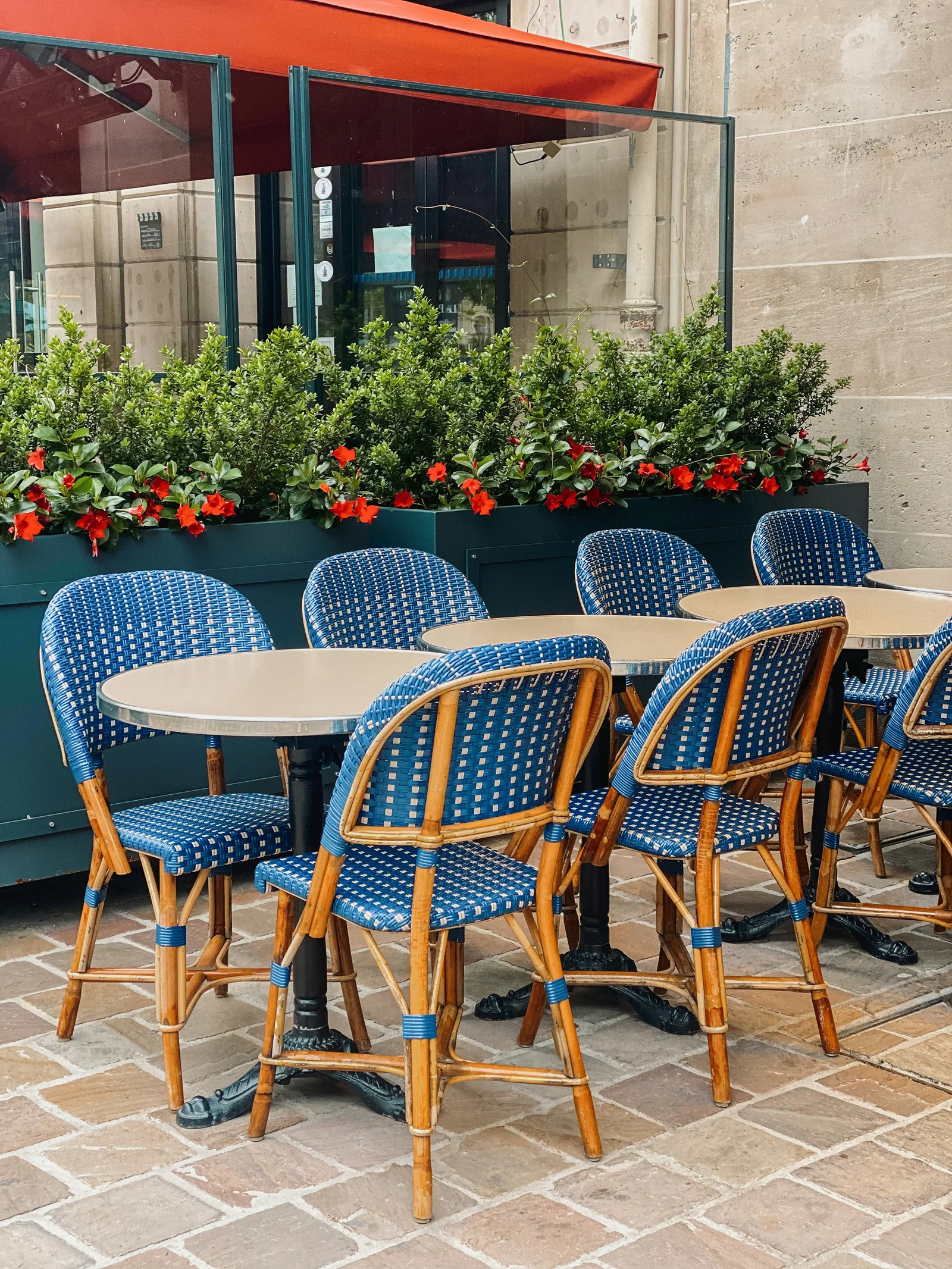
There is a cafe, not far from my home, where the owner knows my order. An allonge, not too long, in a porcelain cup, not a cardboard takeaway. I settle at the zinc counter, unfold the newspaper, and for ten minutes I am no longer a property hunter, nor a business owner, nor a father. I am a man in a Parisian cafe. It is a role three centuries old. And it has not aged a day.
The cafe, in Paris, is not a business. It is an institution. It is the place where you exist publicly, seated on the terrace, visible from the pavement, available for conversation or silence. Americans have the porch, Italians have the piazza, Parisians have the cafe. And each cafe tells something about the neighbourhood that surrounds it. Its age, its sociology, its ambitions, its rhythm. Show me the local cafe and I will tell you which Paris you live in.
This is not a foodie guide. It is an exploration of Paris through its cafes, and a reflection, inevitably subjective, on what the neighbourhood cafe says about the place where you live.
The myths: Saint-Germain and the cafe as literature
Le Flore and Les Deux Magots, 6th arrondissement
It is impossible to talk about Parisian cafes without starting here. The Cafe de Flore (172 boulevard Saint-Germain) and Les Deux Magots (6 place Saint-Germain-des-Pres) have faced each other for more than a century, separated by a few metres of pavement and a century of cordial rivalry.
Le Flore is Sartre and Beauvoir, of course. The first-floor table where they wrote, the red moleskin banquettes, the black-waistcoated waiters who call you “Monsieur” with millimetre-calibrated deference. Les Deux Magots is the other camp, even more literary, with its annual literary prize and its terrace overlooking the church of Saint-Germain-des-Pres.
Yes, the prices are high. Yes, there are tourists. But in the evening, after nine o’clock, when the groups disperse and the neighbourhood regulars settle in, the publishers, the gallery owners, the Sorbonne professors, the Flore becomes again what it has always been: the salon of the Rive Gauche. A cafe-creme at the Flore at ten in the evening, alone with a book, is an experience Paris offers that no other city in the world can replicate.
The 6th arrondissement is inseparable from its cafes. Buying in the 6th means buying a lifestyle where the cafe is not a detour but a daily destination, an extension of the living room. The apartments on boulevard Saint-Germain and the adjacent streets incorporate this intimate geography into their value.
Le Procope and the historic cafes
Le Procope (13 rue de l’Ancienne Comedie, 6th) is the oldest cafe in Paris, dating from 1686. Voltaire reportedly drank forty cups of coffee a day there. Diderot wrote entries of the Encyclopedie there. Benjamin Franklin visited during his stay in Paris. Today it is a restaurant, but the decor, mirrors, chandeliers, wood panelling, transports you to the Paris of the Enlightenment.
What Le Procope reminds us is that the Parisian cafe has never been merely a drinks establishment. It is a place of thought, debate, creation. The tradition is not dead: it has simply migrated to other addresses, other neighbourhoods, other forms.
The new wave: the roasters of East Paris
The 11th: Oberkampf, Charonne, Bastille
Something happened in the 11th arrondissement in the early 2010s. Independent roasters began opening tiny shops, raw wood counters, artisan espresso machines, beans roasted on-site. Within a few years, the 11th became the French capital of specialty coffee.
Belleville Brulerie (rue Ligner), Coutume Cafe (originally from the 7th but with the soul of the 11th), Hexagone Cafe (rue du Chemin Vert), Cafe Oberkampf (rue Neuve Popincourt): each address has its philosophy, its bean origins, its preferred extraction method. The barista knows the traceability of each cup the way a sommelier knows their terroir.
This movement tells something profound about the 11th: a young, creative, demanding neighbourhood that refuses the standardised. The people opening these cafes are the same ones opening ceramics workshops, independent bookshops, bistronomic restaurants. And the people who frequent them are those buying in the Oberkampf-Charonne area, thirty-somethings in creative or tech professions, budget between 500,000 and 800,000 euros for a characterful 3-bedroom.
The 10th: Canal Saint-Martin
The canal Saint-Martin has its own cafe codes. Here, coffee is drunk by the water, in addresses that play the slow living card: bright interiors, green plants, free wifi, weekend brunch. Ten Belles (rue de la Grange aux Belles), Holybelly (rue Lucien Sampaix), Cafe Craft (rue des Vinaigriers): these names circulate in the conversations of Parisian thirty-somethings like passwords.
The atmosphere differs from the 11th. Less raw, more peaceful, almost Scandinavian. The canal itself sets the rhythm: the water, the locks, the passing barges. The cafes of the 10th are places where you settle in for two hours, not for a quick espresso at the counter. It is a relationship with time that defines the neighbourhood, and that attracts a very specific buyer profile.
Neighbourhood cafes: those in no guide
The counter cafe: everywhere and nowhere
Before the coffee shops, before the roasters, there was the counter cafe. The zinc bar. The local PMU with its percolator that spits out a scalding espresso for one euro fifty. The owner behind the bar, horse racing on the radio, regulars elbow to elbow at eight in the morning.
These cafes are disappearing. Paris loses about a hundred a year and has for twenty years, victims of rents, regulations, competition from chains. Those that remain are sociological treasures. Chez Prune on the canal (10th), which has held on since 2001 despite gentrification. Cafe de l’Industrie (rue Saint-Sabin, 11th), with its green plants, black-and-white photos and neighbourhood-headquarters atmosphere. Cafe de la Mairie (place Saint-Sulpice, 6th), whose terrace facing the church is the best observation post on the Rive Gauche.
These cafes have no Instagram account. They have no world-champion barista. But they have something nobody can copy: years of presence in a neighbourhood, a clientele that knows each other, an owner who knows who you are. And that, in a city of ten million inhabitants, is a luxury.
Montmartre: the cafe as terrace
In Montmartre, the cafe is a belvedere. You sit on the terrace not to watch passersby, but to see Paris. Le Consulat (rue Norvins, 18th), with its half-timbered facade and view over the rooftops of northern Paris. The Cafe des Deux Moulins (rue Lepic, 18th), made famous by Amelie Poulain: touristy, certainly, but authentically rooted in the life of the Butte. Hardware Societe (rue Lamarck, 18th), an Australian coffee shop that has become a Montmartre breakfast institution.
Montmartre is a village within the city, and its cafes function like village bistros: you always run into someone you know. For buyers seeking this rare Parisian conviviality, the slopes of the Butte and the streets around place des Abbesses offer a way of life that few neighbourhoods can match.
Batignolles: the cafe as living room
The 17th arrondissement in its Batignolles version has invented its own cafe genre: warm, family-friendly, slightly bohemian. Addresses such as Cafe des Batignolles (place du Docteur Felix Lobligeois), Bistrot des Dames (rue des Dames) or James Bun (rue Legendre) reflect the soul of a neighbourhood that aims to be welcoming without being trendy, lively without being noisy.
Saturday morning in Batignolles follows an immutable ritual: organic market, coffee on the square, a turn around the park with the children. It is a rhythm of life that attracts young families like a magnet, and that explains why the 17th has become one of the arrondissements where family demand is growing fastest.
Literary and intellectual cafes: a living tradition
The 5th: Quartier Latin
The Quartier Latin has kept its cafe-bookshops, its literary tea rooms, its terraces where Sorbonne professors mark their papers. The Shakespeare and Company Cafe (rue de la Bucherie) has become an essential address, connected to the legendary bookshop, serving decent coffee in a postcard setting with a view of Notre-Dame.
But the true cafe of the 5th, the one locals know, is the small tavern on rue Mouffetard, the wine bar on rue de l’Estrapade, the terrace at place de la Contrescarpe where you watch the day fade with a glass in hand. The 5th is a neighbourhood that still lives the old way, and its cafes are the daily proof.
The Marais: the cafe as statement
In the Marais, the cafe is a declaration. Addresses are designed, photographed, instagrammed. Cafe Charlot (rue de Bretagne), Merci (boulevard Beaumarchais), Le Mary Celeste (rue Commines): these are places where the aesthetics of the venue matter as much as what you drink. The clientele is international, creative, connected.
This is the cafe as mise en scene, and it is very Marais. The neighbourhood lives in this constant tension between authenticity and spectacle, between the Sunday rue des Francs-Bourgeois and the concept stores of rue de Turenne. Its cafes embody this ambivalence with an elegance all their own.
The cafe as a property compass
Jean Mascla’s advice: When I visit a neighbourhood for a client, I always stop in a cafe. Not for the quality of the coffee, but to observe. Who are the customers? Locals or passers-by? Is the atmosphere hurried or relaxed? Does the owner know first names? The neighbourhood cafe is a social thermometer more reliable than any INSEE statistic. If you feel at home in the local cafe, you will feel at home in the neighbourhood.
There is a very real correlation between the quality of a neighbourhood’s cafes and the dynamics of its property market. The arrival of third-wave coffee shops in a working-class neighbourhood is a signal that estate agents and property hunters know well: it means a young, urban and solvent population is settling in. The canal Saint-Martin in the 2010s, Pantin in the 2020s, certain parts of the 19th and 20th today: specialty coffee is often the scout of a broader urban transformation.
Conversely, a neighbourhood where cafes are closing, where terraces empty out, where shutters stay down, is a neighbourhood losing its appeal. The cafe is the canary in the coal mine of neighbourhood life.
Our property hunters know this. When they assess an area for a client, they do not only look at price per square metre and statistical trends. They look at the streets. The shop fronts. The terraces. They have a coffee at the counter and listen to the neighbourhood speak. It is an expertise that cannot be learned from data: it is learned on the ground, cup after cup, neighbourhood after neighbourhood.
If you are looking for a neighbourhood that suits you, with the right cafe, the right energy, the right balance between charm and practicality, tell us about your project. We will know exactly where to take you for a coffee.
To continue the neighbourhood-by-neighbourhood exploration, see our guide to the Marais and our portrait of the canal Saint-Martin, Oberkampf and Bastille.
Frequently asked questions
Which Paris neighbourhoods have the best cafes?
The neighbourhoods richest in quality cafes in Paris are Saint-Germain-des-Pres (6th) for historic and literary cafes, the Haut-Marais (3rd) and canal Saint-Martin (10th) for third-wave coffee shops, Oberkampf-Charonne (11th) for independent roasters, Montmartre (18th) for terraces with views, and Batignolles (17th) for village-atmosphere neighbourhood cafes. Each arrondissement has its reference addresses.
What is the oldest cafe in Paris?
Le Procope, founded in 1686 on rue de l'Ancienne Comedie (6th arrondissement), is considered the oldest cafe in Paris. Voltaire, Diderot, Benjamin Franklin and Napoleon Bonaparte were regulars. Today it is a restaurant, but it preserves its historic decor. Among cafes still operating in their original function, the Cafe de Flore (1887) and Les Deux Magots (1885) are among the oldest.
Does the presence of good cafes influence property prices?
Indirectly, yes. The density and quality of cafes and local shops are reliable indicators of a neighbourhood's vitality, which is reflected in property prices. Lively shopping streets with quality cafes attract an active and affluent population, which supports property demand. The arrival of independent roasters and coffee shops in a neighbourhood is often a precursor of gentrification and rising prices.