

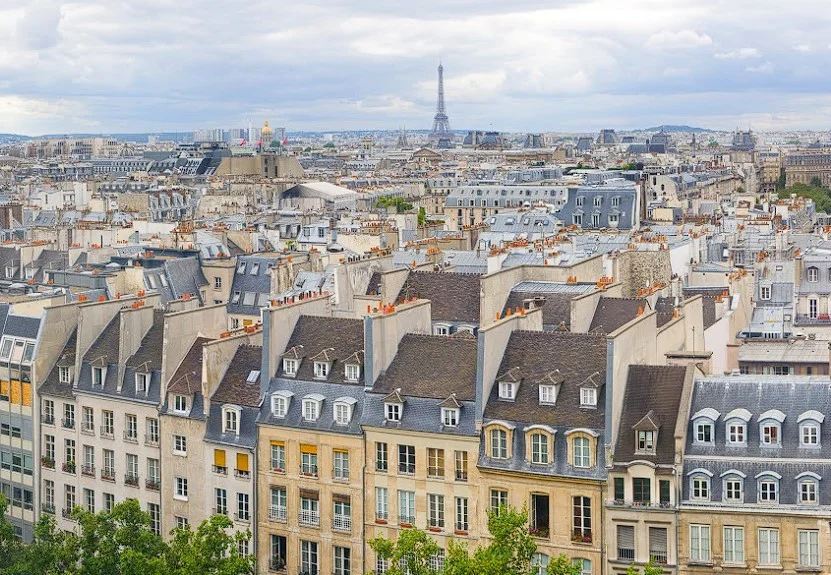
Paris officially has 80 administrative neighbourhoods spread across 20 arrondissements. In practice, when you have been searching for apartments for 15 years as I have, you can easily distinguish triple that number: every street has its character, every micro-sector its atmosphere, and two addresses 300 metres apart can offer radically different lives. This ranking is the product of more than 1,200 buyer accompaniments and a simple conviction: the best neighbourhood in Paris is the one that looks like you.
A word of warning: this is not an objective ranking. It is the perspective of a property hunter who has walked every arrondissement, negotiated in every neighbourhood, and heard the feedback of hundreds of settled clients. Some choices will surprise you. That is the point.
Why this ranking is different from all the others
Most Parisian neighbourhood rankings make the same mistake: they mix everything together. They compare the Marais and Montmartre as though a childless couple looking for 45 m2 and a family of four targeting a 4-room apartment could be served by the same answer. That makes no sense.
I have therefore structured this ranking by buyer profile, because that is how it works in the reality of a property hunter. When a client describes their life to me, their job, their children, their weekends, their schedule, I generally know within twenty minutes which neighbourhoods will make them happy. Not because I have a gift, but because I have accompanied enough people to see the patterns repeat.
Each neighbourhood is assessed on what I call “real-life criteria”: the light in the streets in the afternoon, the noise on Saturday evening, how easy it is to find fresh bread at 8 a.m. on Sunday, the commute time by metro, the quality of schools within walking distance, the existence (or otherwise) of genuine neighbourhood life. Things no algorithm measures but that you will feel from the first week.
For families: where children grow up well
The 15th arrondissement: Commerce and La Motte-Picquet
The 15th is the great forgotten arrondissement in Parisian rankings, and that is just as well for those who live there. It is the most populous arrondissement in Paris, and there is a reason: life is good here, simply. The Commerce and La Motte-Picquet neighbourhood offers what every family looks for but does not always find in Paris: spacious apartments (real 4 and 5-room apartments exist here), decent state schools, Parc Andre-Citroen for Wednesday afternoons, and an authentic neighbourhood life around Rue du Commerce.
The average price is around 10,000 euros/m2 in 2026, making it one of the best size-to-location ratios in Paris. For a 4-room of 85 m2, expect between 800,000 and 950,000 euros. The trend is +1.4% over twelve months, a moderate increase that reflects the neighbourhood’s stability.
What I particularly like is the pace. The 15th does not try to be trendy. The restaurants are good without being Instagrammable, the neighbours know each other, and on Sunday morning at the Rue Saint-Charles market, you see the same families as at the Parc Georges-Brassens.
The downside: the architecture is uneven. The 15th has many 1960s-70s buildings without much charm. You need to search, or rather have someone search for you, for the fine older buildings, which exist but sell very quickly.
The 16th arrondissement: Passy and Auteuil
I can already hear the sighs: “The 16th is bourgeois and boring.” I have heard this a thousand times. Then I accompanied hundreds of families who are very happy there and would not change a thing.
Passy works like a village. Rue de Passy with its shops, Rue de l’Annonciation with its market, the Jardin du Ranelagh five minutes away: it is an environment children love. Auteuil, further south, offers even greener spaces with proximity to the Bois de Boulogne and townhouses you will not find elsewhere in Paris.
Prices are higher: 12,400 euros/m2 on average, with strong variations. A fine family apartment in Passy trades between 1 million and 1.5 million euros for a 4-room, while Auteuil sometimes offers generous surface areas below the million mark in 1930s buildings.
School quality is a massive draw. The 16th concentrates some of the best secondary schools in Paris, state and private: Janson-de-Sailly, Moliere, La Fontaine. For families planning their purchase over a ten or fifteen-year horizon, it is an investment in education as much as in bricks and mortar.
The 12th arrondissement: Nation and Bois de Vincennes
The 12th is my “value for money” recommendation for families. The Bois de Vincennes is a considerable asset: it is three times the size of the Bois de Boulogne in terms of sense of space, with the Vincennes Zoo, Lac Daumesnil, and kilometres of cycle paths.
The Nation neighbourhood offers exceptional connections (lines 1, 2, 6, 9, RER A) and still-reasonable prices: around 9,200 euros/m2. A 4-room of 80 m2 can be found between 680,000 and 800,000 euros. It is the kind of neighbourhood where you move in saying “for two or three years” and stay for fifteen.
The downside: the architectural heritage is less spectacular than on the Left Bank. Little classic Haussmann, more red-brick 1930s and post-war buildings. What matters here is quality of life, not the Instagram shot from the balcony.
For couples and young professionals: where Paris pulses
The 9th arrondissement: SoPi and Nouvelle Athenes
If I had to recommend a single arrondissement to a couple in their thirties with a solid budget but not an unlimited one, it would be the 9th. SoPi, South Pigalle, has become in ten years the most desirable neighbourhood for this age bracket. Cocktail bars, creative restaurants, concept stores, but also genuine residential life in the side streets.
Nouvelle Athenes, a little further south, offers a romantic charm that few Parisian neighbourhoods can match. Tree-lined squares, former private mansions converted into apartments, renovated artist studios: it is a picture-postcard Paris that remains liveable.
At 10,800 euros/m2 on average, the 9th shows a rise of +3.2% over twelve months, one of the strongest in Paris. A well-located 2-room of 50 m2 trades between 500,000 and 580,000 euros. The Haussmann stock is magnificent and still relatively accessible compared to the central Left Bank arrondissements.
Jean Mascla’s advice: In the 9th, the price difference between quiet streets and busy streets can reach 15 to 20%. A property hunter who knows the area knows exactly which streets to avoid. Rue des Martyrs on weekends, for example, has become a noise nightmare for residents on lower floors. Two streets away, it is perfectly calm.
The 11th arrondissement: Oberkampf and Charonne
Oberkampf has a reputation for being noisy and festive. That is true for three or four streets. The rest of the area is surprisingly residential, with a social and generational mix that few Parisian neighbourhoods can claim.
Charonne, further east, is my hidden gem for couples looking to settle long-term. Tree-lined passages (Passage Lhomme, Passage de la Bonne-Graine), inner courtyards, the Marche d’Aligre ten minutes’ walk away: it is a working-class, lively Paris that is gentrifying slowly without losing its soul. Not yet, at least.
Prices hover around 9,800 euros/m2, trending at +2.5%. For a 3-room of 60 m2, expect between 540,000 and 630,000 euros. The Haussmann stock is limited (much of it is faubourien, with more modest ceiling heights), but atypical properties, former workshops, lofts, split-level apartments on courtyards, are more common than elsewhere.
The 10th arrondissement: Canal Saint-Martin
The Canal Saint-Martin has become a classic, and for good reason. The atmosphere on the quays on Sundays, the footbridges, the light on the water: there is a sweetness of life here that contrasts with the energy of the rest of east Paris.
Prices have risen considerably over ten years (9,600 euros/m2, +2.8%) but remain below what you find in the neighbouring Marais. The typical profile: creative or tech professionals in their thirties, first-time buyers with a substantial deposit.
The downside: the 10th is vast and uneven. The northern section near the stations (Gare du Nord, Gare de l’Est) has nothing in common with the canal quays. This is an arrondissement where the exact address makes all the difference, and where a property hunter who knows the terrain is the difference between a success and a disappointment.
For heritage lovers: where Paris is eternal
Saint-Germain-des-Pres: 6th arrondissement
This is the most expensive neighbourhood in Paris, and there are reasons for that. Saint-Germain-des-Pres concentrates everything that constitutes Parisian mythology: the art galleries of Rue de Seine, the bookshops of Rue de l’Odeon, the terraces of the Flore and Les Deux Magots, the Luxembourg Gardens five minutes away. Living here is inhabiting a living museum.
At 15,800 euros/m2, the entry bar is selective. A 2-room of 45 m2 rarely starts below 650,000 euros and a fine apartment with a view or on a high floor easily exceeds the million mark. The trend is +1.1%, moderate, because prices are already at the ceiling and the clientele is predominantly long-term investors who do not negotiate on properties they fall in love with.
What I tell my clients: if you have the budget, do not hesitate. Supply in Saint-Germain is structurally scarce (low turnover, many inter-generational transfers) and fine properties often sell before they are even listed. This is the realm of off-market, and it is precisely here that a property hunter in Paris comes into its own.
Ile Saint-Louis: 4th arrondissement
Four hectares, a single main street, and one of the most extraordinary living environments in the world. Ile Saint-Louis is Paris outside of time. No metro (you have to walk to Pont Marie or Sully-Morland), no supermarket, one tiny grocery store, and an astonishing silence for a neighbourhood this central.
Prices are comparable to the 6th, or even higher for upper floors with a river view. But transactions are so rare (about ten per year) that it is hard to speak of average prices. Each property is unique.
I will say it frankly: Ile Saint-Louis is not a neighbourhood where you “search for an apartment.” It is a neighbourhood where you wait for the right property to become available, sometimes for years. If this is your dream, entrust it to a property hunter and arm yourself with patience.
The 7th arrondissement: Invalides and Rue Cler
The 7th combines the prestige of heritage with a family dimension that the 6th does not match to the same degree. The Invalides neighbourhood offers monumental perspectives (the esplanade, the golden dome, the Champ-de-Mars in the distance) and a residential calm that is almost provincial.
Rue Cler is a phenomenon unto itself. This pedestrianised shopping street works like the town centre of a small provincial city: baker, fishmonger, cheesemonger, wine merchant, except you are 800 metres from the Eiffel Tower. Apartments on Rue Cler or adjacent streets sell at a 10 to 15% premium over the rest of the 7th arrondissement.
At 14,200 euros/m2 on average (+2.3% over twelve months), the 7th is expensive but offers a stability of value that reassures long-term buyers. It is the arrondissement where our property hunters handle the most high-end family mandates.
For savvy investors: where value is rising
The 17th arrondissement: Batignolles
Batignolles is my number one recommendation for investors seeking medium-term capital growth. The neighbourhood has been profoundly transformed by the arrival of Parc Martin-Luther-King, the Paris courthouse, and the extended line 14. What was a working-class, slightly sleepy neighbourhood has become one of the most dynamic areas on the Right Bank.
Prices (10,600 euros/m2, +2.2%) remain significantly below those of the neighbouring 8th or 9th, but the trajectory is clearly upward. A 2-room of 40 m2 for furnished rental can be found around 400,000 to 450,000 euros, with interesting rental yields thanks to demand from young professionals and expatriates.
Parc Batignolles has had the same effect as Parc des Buttes-Chaumont in the 19th did fifteen years ago: it has created an anchor point around which quality of life organises itself. Prices have followed.
The 18th arrondissement: Jules Joffrin
Montmartre attracts tourists. Jules Joffrin attracts savvy investors. This neighbourhood around the mairie of the 18th offers an unexpected mix of village life (Place Jules-Joffrin with its market, its cafes, its library) and urban connectivity (line 12, bus 31).
Prices are the most accessible in central Paris: 9,400 euros/m2, up +2.6%. Haussmann stock is present, often in very good condition thanks to successive renovations, and small units for rental investment can still be found under 300,000 euros.
The downside: the 18th is the most uneven arrondissement in Paris. Between Place du Tertre and Porte de la Chapelle, there is a world of difference. Jules Joffrin is the equilibrium point: central enough, quiet enough, mixed enough to appeal to both residents and tenants.
Jean Mascla’s advice: For rental investment in Paris, I systematically recommend that clients think in terms of “price per m2 vs. rent per m2.” The 18th offers a more favourable differential than the 6th or 7th: you buy 30 to 40% cheaper but rent only 15 to 20% cheaper. The gross yield is therefore mechanically higher. On the other hand, long-term capital growth will be less certain: that is the trade-off.
The 14th arrondissement: Alesia and Denfert
The 14th is the best-kept secret of the Left Bank. Alesia and Denfert-Rochereau offer remarkable quality of life: Parc Montsouris, the Cite Universitaire, tree-lined residential streets, at prices well below the neighbouring 6th or 7th (10,200 euros/m2, +1.5%).
The investment profile is ideal for those targeting long-term capital appreciation. The 14th attracts a growing number of families priced out of the 6th and 15th, and this rising demand supports the upward trend.
Rue Daguerre, with its shopkeepers and its permanent-market atmosphere, has become a selling point in itself. I have clients who buy in the 14th solely because they want to be five minutes from this street.
Emerging neighbourhoods: the Paris of tomorrow
Pantin and Les Lilas (93): beyond the peripherique
I know, this is not Paris intra-muros. But when 40% of our first-ring mandates concern these two communes, it would be dishonest to ignore them.
Pantin has been transformed. The former workshops along the Canal de l’Ourcq have become co-working spaces, galleries, restaurants. The Magasins Generaux (BETC’s headquarters), the CentQuatre-Paris just on the other side of the peripherique: the boundary between the 19th and Pantin is blurring year by year.
Les Lilas, more residential, offers a remarkable compromise: calm, greenery, metro line 11 which reaches central Paris in twenty minutes, and prices at 5,500-6,200 euros/m2, some 40% below the neighbouring 11th.
For young buyers who cannot afford central Paris but want to remain in the Parisian ecosystem, the premium first ring has become a credible option. And prices still have room to grow.
The 13th arrondissement: Butte-aux-Cailles
Butte-aux-Cailles is a village within the city. Cobbled lanes, low-rise houses, artist studios, an Art Deco swimming pool, and a community of residents fiercely attached to the neighbourhood’s identity.
Prices are among the lowest on the Left Bank (around 9,000 to 10,000 euros/m2 depending on the street), but properties are rare: the neighbourhood is small and turnover is slow. When an apartment becomes available on the Butte, you need to be fast. This is exactly the type of area where a property hunter saves precious time.
The criteria that truly matter (and that nobody tells you)
Light
This is the most underestimated criterion. A 2nd-floor courtyard-facing apartment in the 6th can be darker than a 5th-floor street-facing apartment in the 12th. In Paris, orientation and floor level matter as much as the neighbourhood. In the narrow streets of the Marais or Montmartre, only the top floors see sunshine in winter.
My advice: always visit a neighbourhood at two different times of day. In the morning, observe where the sun falls. In the afternoon, note which streets are in shadow. Our property hunters do this work systematically: it is the advantage of having someone who knows the streets by heart.
Noise
Paris is noisy. Full stop. But noise levels vary considerably from one street to the next. Haussmann boulevards are the most exposed (buses, horns, sirens). Inner streets of residential arrondissements (15th, 16th, southern 17th) are surprisingly quiet. Nightlife neighbourhoods (Oberkampf, Bastille, Pigalle) are problematic on lower floors on Thursday, Friday and Saturday evenings.
My recommendation: always look for a courtyard-facing apartment in lively neighbourhoods, and you can afford a street-facing apartment in residential ones. The discount for a courtyard-facing apartment in the 11th compared to a street-facing one is often 5 to 10%: an investment in your sleep.
Daily transport
Paris is a metro city. An apartment ten minutes’ walk from a metro station with a direct line to your office is mechanically worth more than an apartment in a “better-ranked” neighbourhood that is poorly served. Line 1 (east-west) and line 14 (north-south, automated, fast) are the two most value-enhancing routes.
The Grand Paris Express will reshuffle the deck in the coming years. First-ring communes served by the new lines 15 and 16, Saint-Denis, Bagneux, Villejuif, will see their prices rise significantly. The most astute investors are buying now.
Neighbourhood life
This is subjective but essential. A lively neighbourhood is one where you recognise the baker, where children play in the square after school, where the corner cafe serves as a shared living room. That is what makes the difference between “living in Paris” and “being alive in Paris.”
The neighbourhoods with the best neighbourhood life, in my experience: Commerce (15th), Passy (16th), Rue Cler (7th), Batignolles (17th), Jules Joffrin (18th), Alesia (14th), Charonne (11th). These are neighbourhoods where people stay. And where prices hold.
My personal ranking: the cross-cutting top 5
If I were buying today, with no budget constraints, here are the five neighbourhoods where I would look, in order:
1. Nouvelle Athenes (9th): absolute charm, still-reasonable prices for the centre, exceptional architectural quality. It is the neighbourhood I recommend most often to my clients. See our case study: 3-room of 68 m2 near Nouvelle Athenes.
2. Rue Cler and surroundings (7th): village life in the shadow of the Eiffel Tower. Perfect for families and couples alike. Prices are high but the stability of value is unmatched.
3. Charonne (11th): authentic Paris that improves without losing its soul. The best atypical properties in the capital are found here. And prices, though rising, still have room.
4. Batignolles (17th): the best appreciation potential in Paris. A neighbourhood in full transformation with solid fundamentals: park, transport, shops, social mix.
5. Passy (16th): the rational choice for demanding families. Green spaces, schools, safety, calm: everything a family looks for, with architectural quality as a bonus.
This ranking is personal, unapologetic, and debatable. That is precisely the point: it was born from the streets, not from a spreadsheet. If you would like to discuss it and together identify your ideal neighbourhood, that is exactly what a property hunter does at the first meeting.
How to find your neighbourhood: the Home Select method
When a client comes to us with a purchase project in Paris, the first step is never the property search. It is the neighbourhood search. We typically spend an hour understanding your daily life, your habits, your non-negotiable priorities. Where is your office? How old are your children? What sports do you play? What are your favourite outings? Do you need absolute quiet or can you tolerate urban noise?
From this conversation emerges a shortlist of two to three neighbourhoods, rarely more. Experience shows that beyond three neighbourhoods, the search becomes diluted and comparisons become impossible. This is one of the fundamental contributions of a property hunter: narrowing the field of possibilities to increase the quality of viewings. Our 16 property hunters cover all 20 arrondissements of Paris and the first ring. Whatever your profile, one of them knows your future neighbourhood inside out.
Our clients view an average of 3 properties before finding the right one. Not 3 properties in the same neighbourhood: 3 in total, because the upstream targeting was done well. That is the difference between searching alone (40 viewings on average, 6 months of searching) and being accompanied (3 viewings, 45 days). The complete guide to buying in Paris details every step of the process.
Paris is a city where you can be profoundly happy or profoundly unhappy depending on whether you live in the right place. The price per square metre does not tell the whole story. The atmosphere, the light, the neighbours, the corner cafe: that is what makes a neighbourhood. And that is what we know better than anyone.
Frequently asked questions
What is the best neighbourhood in Paris for living?
There is no universal answer. For families, the 15th (Commerce) and 16th (Passy, Auteuil) offer space and greenery. For young professionals, the 9th (SoPi, Nouvelle Athenes) combines centrality and energy. For heritage lovers, Saint-Germain-des-Pres (6th) and Ile Saint-Louis (4th) remain unmatched. The best neighbourhood is the one that suits your rhythm of life and your budget.
What budget should you plan for buying in Paris's best neighbourhoods in 2026?
Prices vary considerably. For a 3-room apartment of 65 m2, expect 700,000 to 850,000 euros in the 9th or 17th, 900,000 to 1.2 million euros in the 7th or 16th, and 1 million to 1.5 million euros and above in the 6th. East Paris arrondissements (10th, 11th) offer more accessible entry points around 550,000 to 700,000 euros for the same size.
Does a property hunter really know the neighbourhoods better than an estate agent?
An estate agent knows their stock of properties. A property hunter knows the ground. At Home Select, our 16 property hunters walk the streets of Paris daily, visit 30 to 50 properties per month and assist buyers with varied profiles. This cross-cutting perspective, across all arrondissements, all budgets, all profiles, provides a market reading that an agent anchored in one area cannot match.