

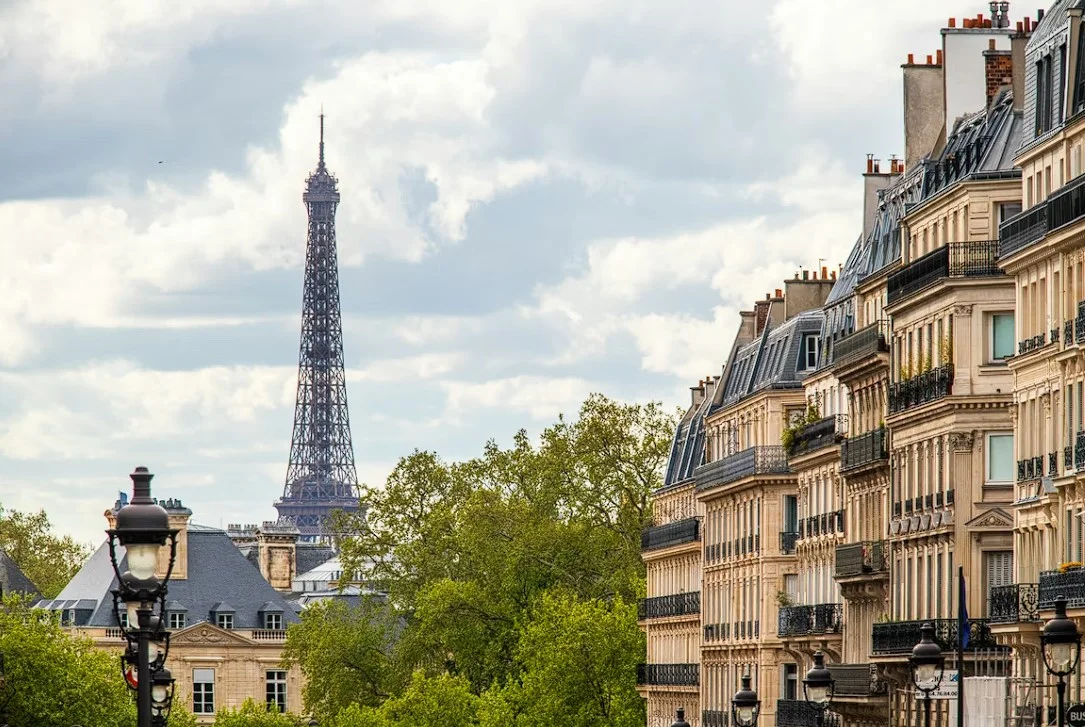
A first-time buyer can purchase in Paris in 2026 from 250,000 euros for a habitable 2-room apartment in the most accessible arrondissements, by mobilising the PTZ, a 10 to 15% deposit and 25-year financing. The average budget for a first purchase in Paris sits between 300,000 and 450,000 euros, depending on the surface area and neighbourhood targeted.
I will say it straight away: buying in Paris as a first-time buyer is difficult. Prices are among the highest in Europe, properties sell fast, competition is stiff, and the process is complex. But it is far from impossible. In fourteen years at Home Select, I have accompanied hundreds of first-time buyers: young professionals, couples expecting their first child, single people tired of throwing their rent out of the window. Some had tight budgets. All of them found something in the end. This guide gathers everything I have learned alongside them.
The real budget for a first-time buyer in Paris in 2026
Let us start by dispelling a myth: no, you do not need to be a millionaire to buy in Paris. You need to be realistic, methodical, and willing to make trade-offs.
What you can buy according to your budget
With 200,000 to 250,000 euros, you access the Parisian market, but in a compact format. This is the territory of the 18-25 m2 studio in the 13th, 18th, 19th or 20th arrondissements, or the very small 2-room (25-30 m2) in the same areas. It is not a family apartment, but it is a first step onto the property ladder, and in Paris that first step has value. The potential capital gain over 5 to 10 years in these changing arrondissements is significant.
With 300,000 to 400,000 euros, the field opens considerably. You can target a proper 2-room of 35-45 m2 in the 10th, 11th, 13th, 18th, 19th or 20th. Or a smaller 2-room but in a better location, in the 9th or 3rd, for example. This is the most common budget range for Parisian first-time buyers, and the one where the search is most competitive.
With 400,000 to 550,000 euros, you access 3-room apartments in outer arrondissements (50-65 m2 in the 12th, 13th, 14th, 15th, 18th, 19th, 20th) or 2-room apartments in central arrondissements (35-45 m2 in the 6th, 7th, 4th). This is the budget that allows you to plan for the medium term: an apartment in which you can live for 5 to 10 years.
Calculating your real capacity
The formula is simple but unforgiving. Take your net monthly household income. Multiply by 35% (the maximum debt-to-income ratio). Subtract any existing loans. The result is your maximum monthly repayment.
A couple earning 5,000 euros net per month, with no existing loans, can allocate 1,750 euros per month to repayments. Over 25 years at 3.3%, this corresponds to a loan of approximately 360,000 euros. Add a 50,000-euro deposit and a PTZ of 40,000 euros: the total budget reaches 450,000 euros. Remove 10% for unavoidable costs (notary fees, loan guarantee): the maximum purchase price is approximately 410,000 euros.
A single person earning 3,200 euros net per month can repay 1,120 euros monthly, corresponding to a loan of approximately 230,000 euros. With a 30,000-euro deposit and a possible PTZ: total budget around 290,000 euros, giving a maximum purchase price of 260,000 to 265,000 euros after costs.
These figures are indicative: every situation is unique. But they provide a realistic framework. The worst thing you can do is start viewing properties at 400,000 euros when your real capacity is 300,000 euros.
First-time buyer assistance: what actually exists in 2026
First-time buyers benefit from several specific schemes. Some are substantial, others are tokenistic. Here is the sift.
The PTZ: Pret a Taux Zero (Zero-Interest Loan)
The PTZ is the most significant scheme for first-time buyers. It is a complementary loan with no interest, granted subject to income conditions, with repayments deferred by 5 to 15 years depending on your income.
Paris is classified in zone A bis, the most constrained zone in France. In 2026, the PTZ is accessible for new-build (with no income ceiling since the recent broadening) and for older properties with works (subject to income ceilings). The amount depends on household composition, income and purchase price, but can reach 50,000 euros for a couple.
The value of the PTZ goes beyond 0% interest. The repayment deferral is a considerable cash flow advantage: for 5 to 15 years, you only repay your main loan. PTZ repayments only begin after that. This frees immediate purchasing power, exactly what a first-time buyer needs at the outset.
A caveat, however: conditions change annually. Check your eligibility with your banker or broker before factoring the PTZ into your financing plan.
Partial property tax exemption
In certain cases (new-build, older property with BBC renovation label), the first-time buyer can benefit from a 2-year property tax exemption. The saving is modest in Paris (1,000 to 2,000 euros over two years) but worth taking. Enquire at the tax office for the arrondissement.
The Action Logement loan
If you are employed by a company with more than 10 staff, you can access the Action Logement loan (formerly 1% Logement): up to 30,000 euros at a preferential rate of 1%, repayable over a maximum of 25 years. Income conditions are the same as for the PTZ. Combined with the PTZ, the Action Logement loan can represent 80,000 euros of reduced-cost financing, a boost that can change the monthly repayment picture.
Municipal and departmental assistance
The City of Paris and the department periodically offer schemes to assist homeownership. Their form and conditions vary from year to year: reduced-rate loans, grants for energy renovation works, purchasing assistance in certain urban policy neighbourhoods. These individually are rarely dramatic, but combined with the PTZ and Action Logement, they improve the overall financing package.
My advice: do not build your financing plan around these variable schemes. Consider them a bonus. If they are available at the time of your purchase, all the better. If not, your project must stand on its own.
Accessible arrondissements: where to look as a first-time buyer
The choice of arrondissement is the most powerful lever available to a first-time buyer. Between the 6th arrondissement (15,800 euros/m2) and the 20th (7,500 euros/m2), the gap is two to one. Here is my selection of the most relevant areas for a first purchase in 2026.
The 19th arrondissement: the best value in Paris
At an average price of 7,800 euros/m2, the 19th arrondissement is objectively the most accessible within Paris. But the 19th is not a uniform arrondissement, and that is precisely where knowledge of the ground makes the difference.
The Buttes-Chaumont area is the 19th’s jewel: the magnificent park, quiet residential streets around la Mouzaia (with its townhouses unique in Paris), a preserved village atmosphere. Prices are 10 to 15% above the 19th’s average, but remain well below central Paris. This is an area that has been consistently gaining value for ten years.
The Place des Fetes neighbourhood, by contrast, presents a more mixed picture. Prices are very low (sometimes 6,500-7,000 euros/m2) but the immediate surroundings are less appealing. It is a bet on the future that may pay off in 10 years, but requires tolerance for noise and urban density.
The 20th arrondissement: the nursery
The 20th is the favourite arrondissement of thirty-something first-time buyers. Belleville, Jourdain, Gambetta, Pere-Lachaise: each neighbourhood has its personality, its village life, its shops. Prices (7,500 euros/m2 on average) allow access to real surface areas: a 3-room of 55 m2 can be found around 410,000 euros.
The Jourdain-Pyrenees area is particularly interesting: quiet streets, a family atmosphere, characterful buildings from around 1900, and excellent metro access (line 11, soon to be extended). The Gambetta neighbourhood, around Boulevard Mortier, offers family apartments in 1930s brick buildings, an undervalued architectural style that I am very fond of for its solidity and brightness.
The 13th arrondissement: diversity
The 13th offers a unique property landscape within Paris, mixing Haussmann buildings (around Place d’Italie), modern towers (Olympiades neighbourhood), small houses (Butte-aux-Cailles) and new-build developments (Bibliotheque neighbourhood). This diversity is reflected in prices: from 7,000 euros/m2 in parts of the Olympiades to 10,000 euros/m2 around the Butte-aux-Cailles.
For a first-time buyer, the Bibliotheque-Tolbiac area is particularly relevant. Recent developments offer apartments built to current standards (insulation, favourable energy rating, balconies) at contained prices. The neighbourhood has improved considerably over the past decade and appreciation should continue.
The 18th arrondissement: beyond the Montmartre cliche
The 18th is often reduced to Montmartre in the popular imagination. In reality, it is a vast and heterogeneous arrondissement. The neighbourhoods of Jules Joffrin, Mairie du 18e and Simplon-Marcadet offer prices between 7,500 and 9,000 euros/m2, well below the Montmartre-Abbesses section (11,000-13,000 euros/m2), with a perfectly decent quality of life.
The area around Rue Ordener and Rue du Poteau is particularly interesting for families: schools are good, shops abundant, the Marche de l’Olive is one of the most charming in Paris, and line 4 (renovated and extended) offers direct access to the centre.
And the first ring?
If your budget does not allow you to buy within Paris at the surface area you want, the first ring is an alternative to consider seriously. Montreuil (5,800 euros/m2), Pantin (5,500 euros/m2), Les Lilas (6,200 euros/m2), Ivry-sur-Seine (5,000 euros/m2) offer prices 20 to 40% below Paris for communes undergoing real transformation, often served by the metro.
A 3-room of 65 m2 in Montreuil costs approximately 380,000 euros. The same apartment in the neighbouring 11th arrondissement: 660,000 euros. The difference, 280,000 euros, funds an entirely different lifestyle.
To explore these communes, consult our pages dedicated to the Ile-de-France region.
Jean Mascla’s advice: I often tell the first-time buyers I advise: your first purchase is not your last. Do not look for the apartment of your dreams; look for the best stepping stone for building wealth. A well-located 2-room in an appreciating neighbourhood, bought at the right price, resold in 5 to 7 years with a capital gain of 15 to 20%: that is the strategy that will later allow you to buy something bigger, better located, on better terms. The first purchase is an investment in your property future.
Classic first-time buyer mistakes
In more than 1,200 projects accompanied, I have identified the mistakes that come up systematically among first-time buyers. Knowing them means avoiding them.
Viewing before securing financing
This is mistake number one, and I never tire of repeating it. You fall in love with a 2-room on Rue des Martyrs, you make an enthusiastic offer, the seller asks for your bank agreement, and you do not have one. By the time you obtain it, another better-prepared buyer has signed. I have seen this scenario dozens of times.
The bank agreement in principle takes between 5 and 15 days. Obtain it BEFORE pushing through the door of a single agency. It is the foundation for everything else.
Searching in arrondissements beyond your budget
A couple with a budget of 350,000 euros viewing properties in the Marais or Saint-Germain is wasting their time, and will end up discouraged. Repeated disappointment (“we can’t find anything in our budget”) is often the sign of a mismatch between ambitions and financial reality.
My approach: start with the budget, then identify the compatible arrondissements. Not the other way round. It is less romantic but infinitely more effective.
Underestimating ancillary costs
I have written an entire article on the subject, but the reminder is necessary here: an apartment at 300,000 euros actually costs 330,000 to 340,000 euros once notary fees, loan guarantee and processing fees are factored in. If you are planning a cosmetic refresh (painting, parquet), add 15,000 to 30,000 euros. The total budget rises to 345,000-370,000 euros.
If your financing plan is calibrated to 300,000 euros on the dot, you are heading for trouble. Always plan for 12 to 15% above the purchase price.
Neglecting the co-ownership’s condition
A first purchase at a low price, in an older building, with modest charges: it sounds perfect. Unless a 15,000-euro facade renovation has been approved for next year, the collective pipes are leaking, and the voluntary managing agent is holding the building together with string.
The general meeting minutes from the last three years tell the building’s story. Read them. Not skimming, but in detail. If you do not know what to look for, have them analysed by a professional. This is the kind of precaution that saves you a 20,000-euro bill in the two years following your purchase.
Rushing out of fear of “missing out”
FOMO (Fear Of Missing Out) is the first-time buyer’s worst enemy. “If I don’t buy now, prices will keep going up.” “This property is the last one like it.” “The agent told me there are three other offers.”
The truth: in Paris, there is always another property. Always. Good deals exist permanently; they are simply not visible if you do not know where to look. Rushing into a property out of fear of missing the boat means risking a purchase you will regret over 20 years of loan repayments.
Refusing all compromise
The first-time buyer who wants a bright 3-room with a balcony, on the 4th floor with a lift, fully renovated, in the Marais, for 350,000 euros: that first-time buyer will never find anything. The Parisian market demands trade-offs, and a first purchase demands the most radical trade-offs of all.
The wisdom of the first-time buyer is choosing your battles. Surface area or location? Impeccable condition or potential with works? Absolute quiet or lively neighbourhood life? Each compromise opens a door that refusing to compromise kept closed.
The first-time buyer and the property hunter
I am often asked: “Isn’t a property hunter really for big budgets?” The answer is no, and in fact it is the opposite.
The tighter the budget, the more every euro counts. The more competitive the market (and the 250,000-400,000 euro segment is the most competitive in Paris), the more speed and precision in the search make the difference. A first-time buyer who visits 40 apartments in six months becomes exhausted. One who views 3 pre-selected properties in six weeks keeps their energy, and makes a better decision.
At Home Select, our property hunters find the property in 45 days on average, with 3 viewings for the client. Negotiation, averaging 6% off the seller’s price, more than offsets the property hunter’s fees. On a 350,000-euro property, 6% represents 21,000 euros in savings. With fees of 2.5% (8,750 euros), the net saving for the client is 12,250 euros. For a first-time buyer with a tight budget, that 12,000 euros can be the difference between a project that goes through and one that stalls.
And beyond the financial saving, there is the stress saving. Buying for the first time in Paris means navigating a system you do not know: notary, preliminary agreement, conditions precedent, diagnostics, co-ownership. The property hunter is a guide. They translate, they explain, they protect. For a first-time buyer, it is often the difference between a smooth experience and an obstacle course.
The ideal first-time buyer timeline
Here is the reverse planning I recommend to every first-time buyer I advise.
Six months before the purchase: start saving seriously to build or top up your deposit. Even 500 euros per month for 6 months adds 3,000 euros to your capacity. In parallel, research the PTZ and the Action Logement loan: application files sometimes take several weeks to assemble.
Three months before: make appointments with your bank and a broker. Have your borrowing capacity simulated. Obtain an agreement in principle. This is the green light that authorises you to start viewing.
Two months before: define your criteria precisely. Which arrondissements are compatible with your budget? What is the minimum surface area? What compromises are you prepared to make? If you are engaging a property hunter, this is the time to contact them.
Search weeks: view in a targeted manner. Not 40 random properties, but 5 to 10 that genuinely match your brief. Analyse each property dispassionately: the condition of the building, the charges, the works, the energy rating, the resale potential.
The day: make an argued offer, with your financing certificate attached. Be responsive: in Paris, 48 hours of delay can cost you a property.
After the accepted offer: preliminary agreement within 2 to 4 weeks, final loan approval within 45 days, deed of sale 2 to 3 months later. All in, it takes 4 to 5 months from the first day of searching to keys in hand.
Jean Mascla’s advice: The best time for a first purchase in Paris in 2026 is when you are ready. Not when the market is “at its lowest” (nobody knows when that is) or when rates are “at the floor” (same comment). When YOU have the deposit, validated financing, a clear project and the desire. The Parisian market has weathered wars, crises and pandemics: it has always recovered. Your first purchase is a minimum 10-year investment. At that time horizon, market timing matters infinitely less than the quality of your choice.
Getting started
Buying your first apartment in Paris is a rite of passage. It is stressful, demanding, sometimes discouraging. But it is also one of the best financial decisions you will make. Parisian property is a store of value, and every month of rent you no longer pay is a month of savings working for you.
Our 16 property hunters at Home Select accompany first-time buyers every week. We know the good deals, the undervalued streets, the well-managed buildings, the opportunities before they reach the portals. If you have a first purchase project in Paris, tell us about it: your dedicated property hunter will call you back within 24 hours, free of charge and with no obligation. Tell us about your project
Frequently asked questions
What is the minimum budget for a first purchase in Paris in 2026?
A 20 m2 studio in the 19th or 20th arrondissement can be found from 150,000 to 170,000 euros. A habitable 2-room of 30-35 m2 starts at around 250,000 euros in the most accessible arrondissements (13th, 18th, 19th, 20th). With the PTZ and a 10% deposit, a couple earning 4,500 euros net per month can aim for a budget of 300,000 to 350,000 euros.
Can a first-time buyer benefit from the PTZ in Paris in 2026?
Yes. Paris is classified in zone A bis, the most constrained zone. In 2026, the PTZ is accessible for new-build properties with no income conditions and for older properties with works subject to income thresholds. The amount can reach 50,000 euros in complementary zero-interest financing, with a repayment deferral of 5 to 15 years depending on income. Check your eligibility with your bank or a broker.
Which are the most accessible arrondissements for a first purchase in Paris?
The 13th (8,200 euros/m2), the 18th outside Montmartre (8,000 euros/m2), the 19th (7,800 euros/m2) and the 20th (7,500 euros/m2) offer the lowest prices within Paris. The eastern 10th (9,600 euros/m2) and the 11th (10,200 euros/m2) are a step up but remain accessible with sound financing. The first ring (Montreuil, Pantin, Ivry) offers prices 20 to 40% lower.