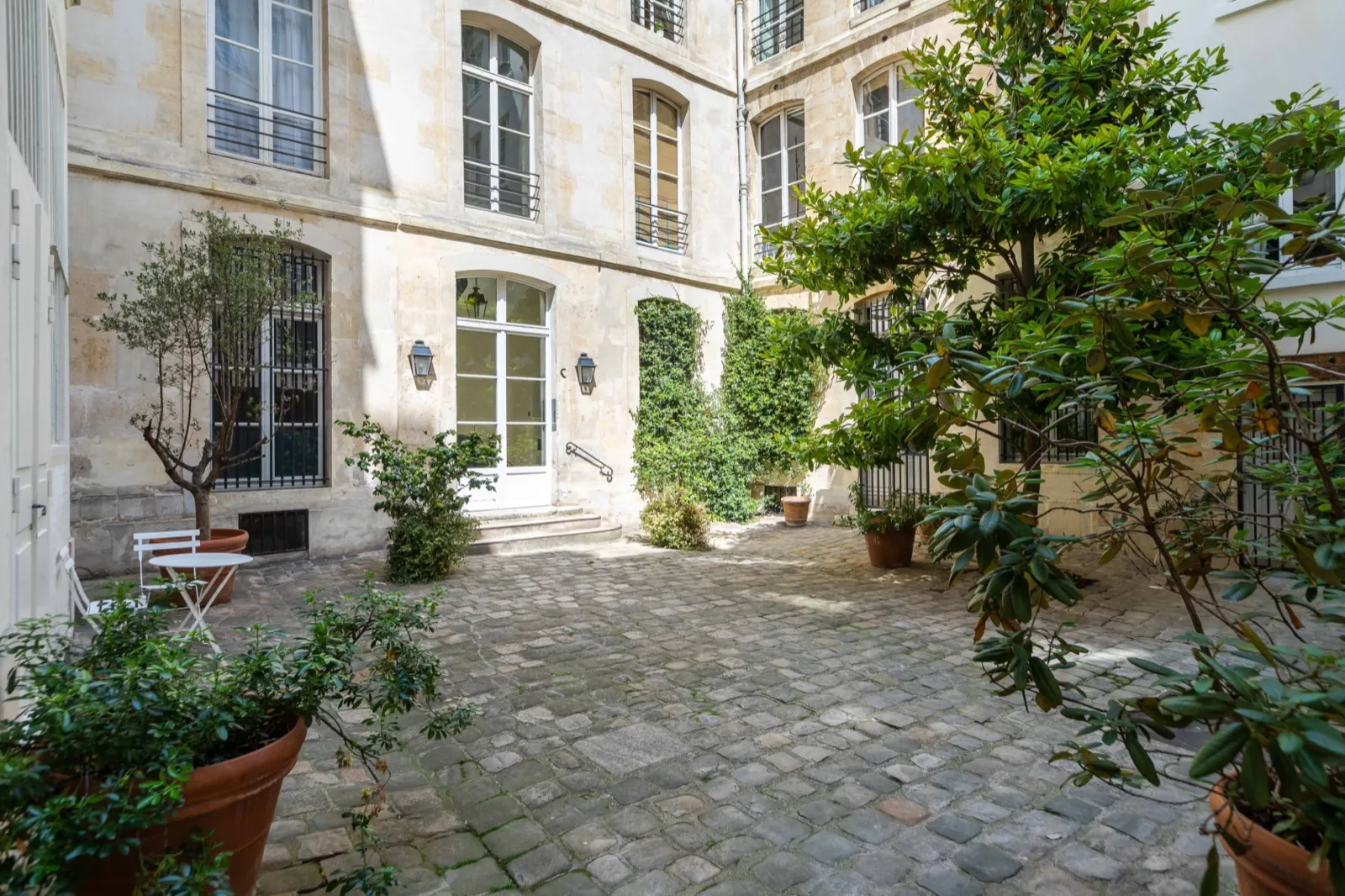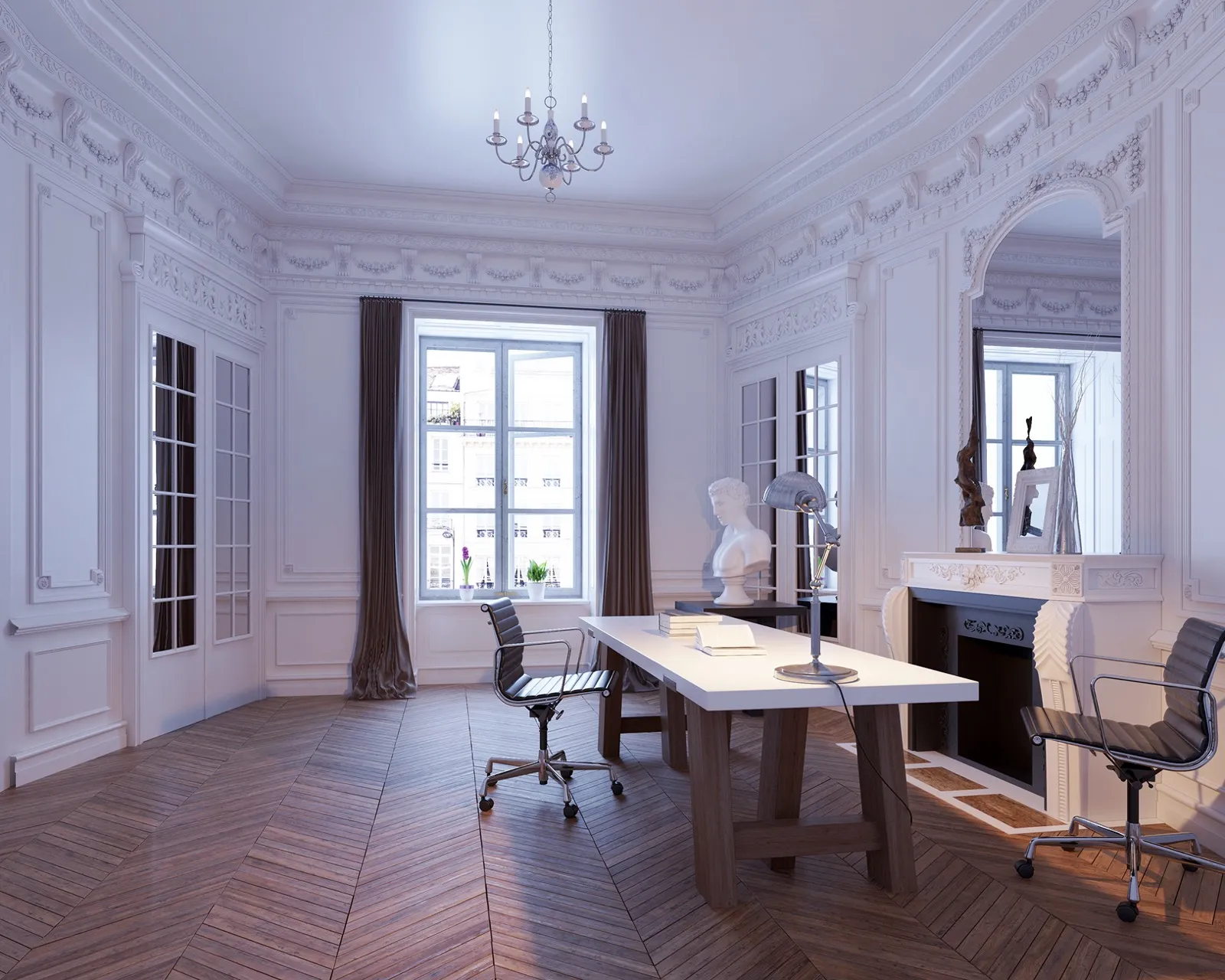


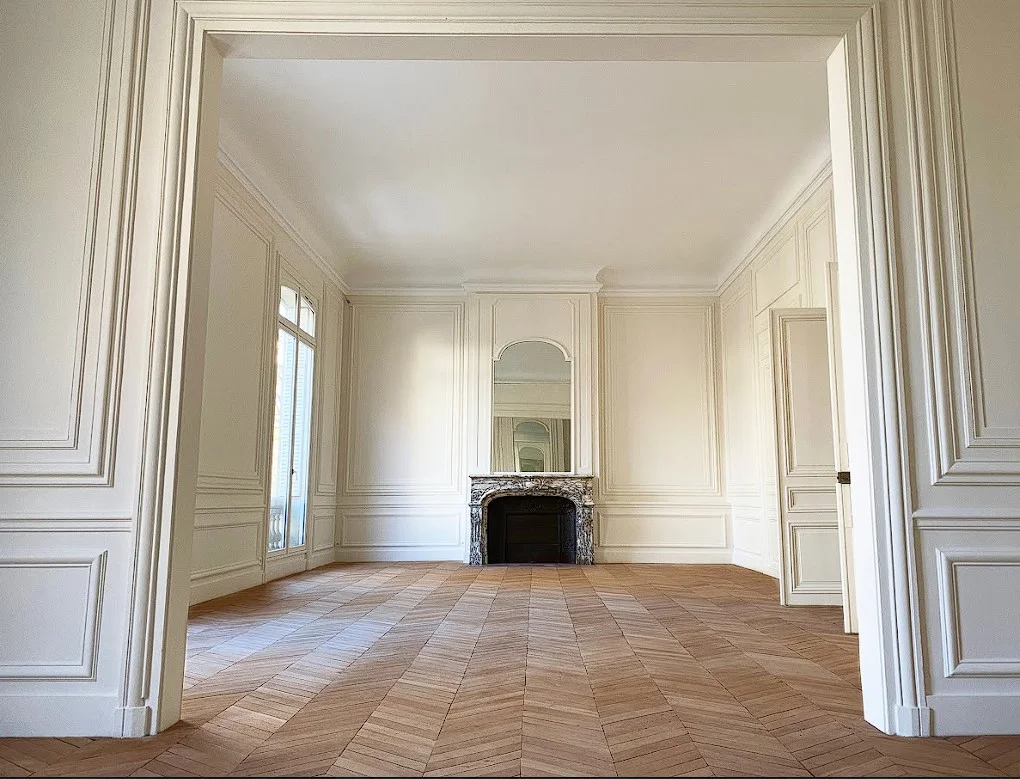
The coup de coeur always comes at the same moment. You push open the door of a Haussmannian apartment on the third floor. Light streams in through three tall windows. The mouldings are there, under a layer of peeling paint. The herringbone parquet creaks underfoot, a good sign: it means it is original. The space is beautiful, the proportions are right, the potential is obvious. And then you look at the kitchen, a 1980s Formica unit wedged into a corridor. The bathroom, brown tiles, a chipped cast-iron bathtub, exposed pipework. The electrics, a panel with porcelain fuses, no earthing, sockets that date back to de Gaulle.
That is when the real question arises. Not “should I buy?” but “how much will the works cost?”
At Home Select, this is a question we deal with daily. The majority of properties we find for our clients require works, from a simple repaint to a complete restructuring. And one of the most costly mistakes in a Paris property purchase is underestimating the renovation budget. Here is everything you need to know before getting started.
The three levels of renovation
Not all projects are alike. In Paris, three broad categories of works are distinguished, with very different budgets, timelines and implications.
Level 1: The refresh (500-900 euros/m2)
This is the cosmetic renovation. No touching of load-bearing walls, plumbing or electrics. Just refreshing.
In practice: full repaint (walls and ceilings), sanding and sealing the parquet, replacing floor coverings in the kitchen and bathroom, fitting a new splashback, changing visible switches and sockets, replacing light fittings. You can also include replacing a kitchen if the plumbing stays in place: a properly installed IKEA kitchen costs between 5,000 and 12,000 euros including fitting.
For a 70 m2 apartment, the total budget sits between 35,000 and 63,000 euros. Duration: three to six weeks. This is the simplest, fastest project and the one offering the best investment-to-value ratio. A well-executed refresh can add 5 to 8% to a property’s value.
Level 2: The complete renovation (1,200-2,000 euros/m2)
Now things get serious. A complete renovation overhauls all systems (electrics to NF C 15-100 standards, plumbing in PER or multilayer, heating), potentially redistributes rooms (removing non-load-bearing partitions, creating a master suite, opening the kitchen to the living room), installs a new kitchen and bathroom, and renovates everything: floors, walls, ceilings, interior joinery.
This is the typical project for the Parisian buyer purchasing a “needs freshening” or “needs renovating” apartment, which represents two-thirds of the resale market. For a 70 m2 flat, the budget sits between 84,000 and 140,000 euros. Duration: three to five months. This is a project that requires serious management, and an interior architect is recommended beyond 80,000 euros of works.
Level 3: The premium restructuring (2,000-3,500 euros/m2)
The top of the range. Everything is addressed: structure (openings in load-bearing walls with steel beams, creating stairwells for duplexes), complete systems, full redistribution, high-end materials (solid parquet, marble, designer fittings, bespoke joinery), home automation, ducted air conditioning. This is the project for grand Haussmannian apartments restored to the highest standards: mouldings reproduced, fireplaces restored, herringbone parquet laid or restored.
For a 100 m2 flat, expect 200,000 to 350,000 euros. Duration: five to eight months, sometimes more. This is a project requiring an interior architect or DPLG architect, a solid general contractor, and considerable patience. But the result matches the investment: a restructured apartment by a good architect in a fine Haussmannian building is a property that appreciates significantly, with the “tastefully renovated” premium reaching 15 to 25% compared to an unrenovated unit in the same building.
Where the money goes
Here is the typical breakdown of a complete renovation budget in Paris, for a 70 m2 apartment at 1,500 euros/m2 (total budget: 105,000 euros).
The bathroom is the heaviest item per square metre. For a fully refitted 5 m2 bathroom (tiling, walk-in shower, vanity unit, fixtures, plumbing), expect 12,000 to 25,000 euros depending on specification. This is where the temptation to cut costs is strongest, and the area where you should not. A poorly executed bathroom means a guaranteed water leak within five years.
The kitchen follows closely. A properly equipped kitchen (appliances included) in an 8-10 m2 space costs between 10,000 and 30,000 euros including installation. Bespoke kitchen brands (SieMatic, Bulthaup, Poggenpohl) start at 25,000 euros and go up without limit. The best quality-to-price ratio is found with mid-to-high-end French brands, Schmidt, Mobalpa, Arthur Bonheur, or IKEA with professional installation and a natural stone worktop.
Complete electrics for a 70 m2 apartment (panel, cabling, sockets, switches, light fittings) comes to 8,000-15,000 euros. Plumbing (supply, drainage, sanitary ware): 6,000-12,000 euros. Parquet (sanding and sealing an existing floor): 3,000-5,500 euros; laying new solid parquet: 8,000-15,000 euros. Painting (walls and ceilings, two coats): 5,000-10,000 euros.
The rest, partitions, interior joinery, miscellaneous finishes, minor works, is a diffuse but significant item: 10,000-20,000 euros.
Jean Mascla’s advice: Always add 10 to 15% for contingencies on top of your initial budget. In Paris, in older buildings, surprises are the norm: a load-bearing wall where none was expected, lead pipes needing urgent replacement, a floor requiring structural reinforcement. Our hunters estimate the works budget before every offer: it is a reflex that prevents nasty surprises and enables informed negotiation.
The stages of a Parisian renovation
1. The diagnostic
Before buying a property “to renovate,” have it inspected by a building professional: an interior architect, a DPLG architect, or a project manager. They will assess the true condition (structure, systems, insulation), identify constraints (load-bearing walls, site access, co-ownership regulations) and provide a realistic budget estimate. Cost of this advisory visit: 300 to 800 euros. It is the best investment you will make in the entire process.
At Home Select, our hunters systematically include this analysis in the purchase process. When we identify a property to renovate for a client, we estimate the works budget before making the offer, which allows price negotiation with full information. A property listed at 650,000 euros requiring 120,000 euros of works is not a 650,000-euro property: it is a 770,000-euro property all-in. This comprehensive view completely changes the negotiation.
2. Choosing the project manager
Three options for managing your project.
The interior architect is the most common choice for a complete renovation. They design the plans, select materials, tender to contractors, and coordinate the works. Their fees: 8 to 15% of the works amount (negotiable, often on a sliding scale above 100,000 euros). This is an investment that almost always pays for itself: an experienced architect optimises the space (a 3-room flat can become a functional 4-room through intelligent redistribution), avoids costly mistakes, and negotiates contractor quotes.
The general contractor (or multi-trade firm) manages the project from start to finish. They provide a single quote, coordinate the various trades, and deliver the project turnkey. This is the most comfortable solution, and sometimes the most expensive, as the firm includes its coordination margin (15-25% of subcontractor costs). The main risk: the quality of the subcontractors, which you do not choose.
Direct management (you coordinate the tradespeople yourself) is theoretically the cheapest, with no intermediary’s margin. In practice, it is a trap for non-professionals. Coordinating plumber, electrician, plasterer, tiler, painter and joiner on a three-month Parisian project is a full-time job. Delays accumulate, defects go unnoticed, and stress is considerable. I advise against it for any project exceeding 50,000 euros.
3. Approvals
In Paris, any ambitious renovation requires approvals.
The co-ownership must give its consent for any work that alters the external appearance (windows, shutters, visible air conditioning) or affects common parts (piercing a load-bearing wall, modifying water downpipes). Consent is voted at the general meeting, which means planning several months ahead. A refusal can block an entire project.
The Batiments de France (heritage authority) intervenes if the building is within the perimeter of a historic monument (this is the case for the majority of buildings in the 1st to 9th arrondissements). Any change visible from the public space, windows, shutter colours, air conditioning installation, must receive approval from the heritage architect. Timelines are long (two to six months), requirements strict (materials and colours imposed), and costs higher.
A prior works declaration or a building permit is required for certain modifications (change of use, facade alteration, extension). Your architect handles these procedures.
4. The works
Paris-specific constraints: working hours are governed by the co-ownership regulations (generally 8am-7pm on weekdays, 9am-12pm on Saturdays, prohibited on Sundays). Material deliveries in a dense urban area are a headache: no parking, narrow streets, carrying materials up stairs when there is no lift or the lift is too small. An external hoist (mandatory for major works on upper floors without a service lift) costs 2,000 to 5,000 euros for the duration of the project.
Expect a 15 to 20% cost premium compared to an equivalent project in the provinces, due to these logistical constraints, the cost of skilled labour in Ile-de-France, and the price of materials delivered into a dense urban zone.
5. Handover
Handover is a formal act, and it should not be neglected. This is when you inspect the works with the architect or project manager, list the snags (defects to be corrected), and sign the handover report. This document triggers the legal guarantees: the perfect completion guarantee (1 year), the two-year guarantee (2 years), and the ten-year structural guarantee (10 years).
Never pay the final balance before signing the handover report. And never sign the report without inspecting every detail: sockets, taps, joinery, grouting, paintwork, floor alignment. Defects invisible at handover become defects at your expense.
Classic pitfalls and how to avoid them
The suspiciously low quote
An abnormally low quote is a warning sign, not a bargain. In Paris, a reputable tradesperson has a full order book and does not slash their prices. A quote 30% below market means either substandard materials, undeclared labour, or omitted items that will appear as “additional works” during the project. Always get three quotes and be wary of the one that deviates significantly from the other two.
The surprise load-bearing wall
In a Haussmannian building, the structure is based on load-bearing walls of stone or rubble. Some partitions that appear insignificant are actually load-bearing, and removing them without a prior structural study can endanger the building’s stability. Before any partition removal, commission a structural engineer’s report. Cost: 800-2,000 euros. This is non-negotiable.
The hostile co-ownership
Some Parisian co-ownerships are notoriously difficult about works: refusing penetrations, ultra-restrictive hours, banning hoists, demanding damage deposits. Find out BEFORE buying: request the minutes of the last three general meetings, read the co-ownership rules, and ask the managing agent about recent works. An experienced property hunter systematically checks these points: it is one of the concrete advantages of professional support when buying in a co-ownership.
Asbestos and lead
Buildings constructed before 1997 may contain asbestos (floor tiles, adhesives, floccing, fibrocement pipes). Buildings predating 1949 may contain lead-based paint. Diagnostics are mandatory before works. If asbestos or lead is confirmed in areas affected by the works, removal or treatment is compulsory, and expensive (5,000-20,000 euros depending on the scope). Factor this risk into your provisional budget.
The unrealistic schedule
A complete renovation in Paris does not take six weeks. Anyone who promises otherwise is either lying or has never worked in Paris. Delays are the norm: delayed deliveries, contractors behind on their previous project, structural surprises. Allow a 20 to 30% margin on the announced schedule, and organise your accommodation accordingly (many of our clients stay temporarily during works, in a furnished rental or with friends and family).
Integrating the works budget into the financing plan
This is a point many buyers overlook, and one our hunters systematically address from the project scoping stage.
The works budget can be included in the mortgage. Most banks agree to finance works within the acquisition loan, provided detailed quotes are supplied. Funds are released in stages, upon presentation of invoices. This is the most tax-efficient approach (works loan interest is deductible for rental investment) and the most comfortable in terms of cash flow.
In practice, if you buy a property at 600,000 euros with 100,000 euros of works, your borrowing capacity must cover 700,000 euros plus notary fees (approximately 48,000 euros for a resale property). The total cost of the operation: around 748,000 euros. That is the figure that should guide your search, not the purchase price alone.
Jean Mascla’s advice: One of the lesser-known advantages of buying a property to renovate is the negotiation margin. An apartment requiring works is easier to negotiate than a turnkey property: there are fewer potential buyers (many dread works), and the argument “the property requires X euros of works” is a powerful negotiation lever. Our hunters achieve an average 6% discount, and on properties requiring works, this can reach 8 to 10%. On a 600,000-euro property, that is 48,000 to 60,000 euros saved, enough to fund a significant portion of the works.
Renovating with intelligence
Renovating a Parisian apartment is a demanding project. Budgets are high, constraints numerous, pitfalls real. But it is also one of the most rewarding experiences of the property journey. Transforming a tired apartment into a living space that reflects your personality, uncovering forgotten mouldings beneath layers of paint, bringing light into a space that lacked it: it is an act of creation. And in Paris, in a building with a hundred and fifty years of history, it is also an act of stewardship.
If you are considering buying a property to renovate in Paris, or if you are weighing up a turnkey property versus a shell, tell us about your project. Our hunters assess the works budget before every offer. They have a network of trusted interior architects and contractors. And above all, they know how to spot the properties whose potential justifies the investment, and those best left alone.
To complement your thinking, see our guide to hidden costs of buying property in Paris and our article on buying in a co-ownership.
Frequently asked questions
What budget should you plan for renovating an apartment in Paris in 2026?
In 2026, renovation budgets in Paris range as follows: a refresh (painting, floors, light kitchen work) between 500 and 900 euros/m2, a complete renovation (room redistribution, electrics, plumbing, new kitchen and bathroom) between 1,200 and 2,000 euros/m2, and a high-end renovation with major restructuring between 2,000 and 3,500 euros/m2. For a 70 m2 apartment, expect between 35,000 euros (refresh) and 175,000 euros (premium renovation).
How long does a renovation take in Paris?
A refresh takes 3 to 6 weeks. A complete renovation of a 60-80 m2 apartment takes 3 to 5 months. A major restructuring (moving partitions, overhauling systems) can take 5 to 8 months. In Paris, specific constraints (site access, co-ownership working hours, deliveries in a dense urban zone) systematically extend timelines by 15 to 20% compared to the provinces.
Do you need an architect to renovate an apartment in Paris?
An interior architect is not mandatory but strongly recommended for any renovation exceeding 50,000 euros. They optimise plans, coordinate contractors, manage unexpected issues and ensure the project's coherence. Their fees represent 8 to 15% of the works cost. For projects in listed buildings or in a Batiments de France zone, a DPLG architect may be required. The investment is generally recouped through savings on the project and increased property value.