
















In brief
In Paris in 2026, a ground floor sells at a 10 to 25% discount versus upper floors depending on the layout: 15 to 25% street-facing, 10 to 15% courtyard-facing, sometimes nil with a private garden. Damp treatment for a 60 sqm flat costs 3,000 to 8,000 euros and security upgrades 5,000 to 10,000 euros, against a discount of 50,000 to 100,000 euros. Home Select, with 16 buying agents since 2011 and 1,200+ buyers supported, assesses every ground floor on light, damp, noise and the legal status of the garden.
Key takeaways
- Ground floor apartments in Paris sell at a 10 to 25% discount compared to mid-floor units in the same building
- A ground floor with a private garden can sell at or above upper-floor prices in family-oriented arrondissements
- Rising damp treatment by resin injection costs 100 to 200 euros per linear meter of treated wall
- Security upgrades (reinforced door, window bars, alarm) cost 2,800 to 6,000 euros total
- Ground floor units often have higher ceilings (3.20 to 3.50 m in Haussmann buildings) and lower condominium charges
- Home Select, a property hunter in Paris since 2011, covers the 20 arrondissements and 68 Ile-de-France municipalities with 16 hunters.
The Paris ground floor apartment carries a dreadful reputation. Dark, noisy, exposed to burglary, damp, no view: the list of grievances is long and firmly fixed in the popular imagination. And like all reputations, it holds a measure of truth and a measure of caricature.
The truth is that some Paris ground floor apartments do combine every disadvantage: direct overlooking onto a busy pavement, low light, chronic damp, street noise. These deserve their discount and are best avoided.
The caricature is lumping all ground floors together. A courtyard-facing ground floor with a private garden in the 11th arrondissement, a former artist’s workshop on a raised ground floor with a glass roof in the 20th, a Haussmann garden-level apartment opening onto a leafy garden in the 16th: these have nothing in common with a dark studio facing a four-lane road. And they sell at a discount that does not always reflect the quality of life they offer.
In fifteen years of property hunting in Paris, Home Select’s hunters have found ground floor apartments that proved among the best deals for their clients: properties bought 15 to 20% below market, whose daily quality of life rivalled the upper floors. This guide sets out how to tell opportunity from trap.
What is the discount on a ground floor apartment in Paris?
A Paris ground floor sells 10 to 25% below an upper floor in the same building: 15 to 25% street-facing, 10 to 15% courtyard-facing, 8 to 15% for a raised ground floor. With a well-kept private garden the discount can fall to zero, or even reverse in the family arrondissements.
A street-facing ground floor with no particular quality sees a 15 to 25% discount on the building’s average price per square metre. This is the most common and least favourable case: passers-by looking straight in, traffic noise, reduced light, a feeling of insecurity. In a building where the average is 11,000 euros/sqm, a street-facing ground floor trades between 8,250 and 9,350 euros/sqm.
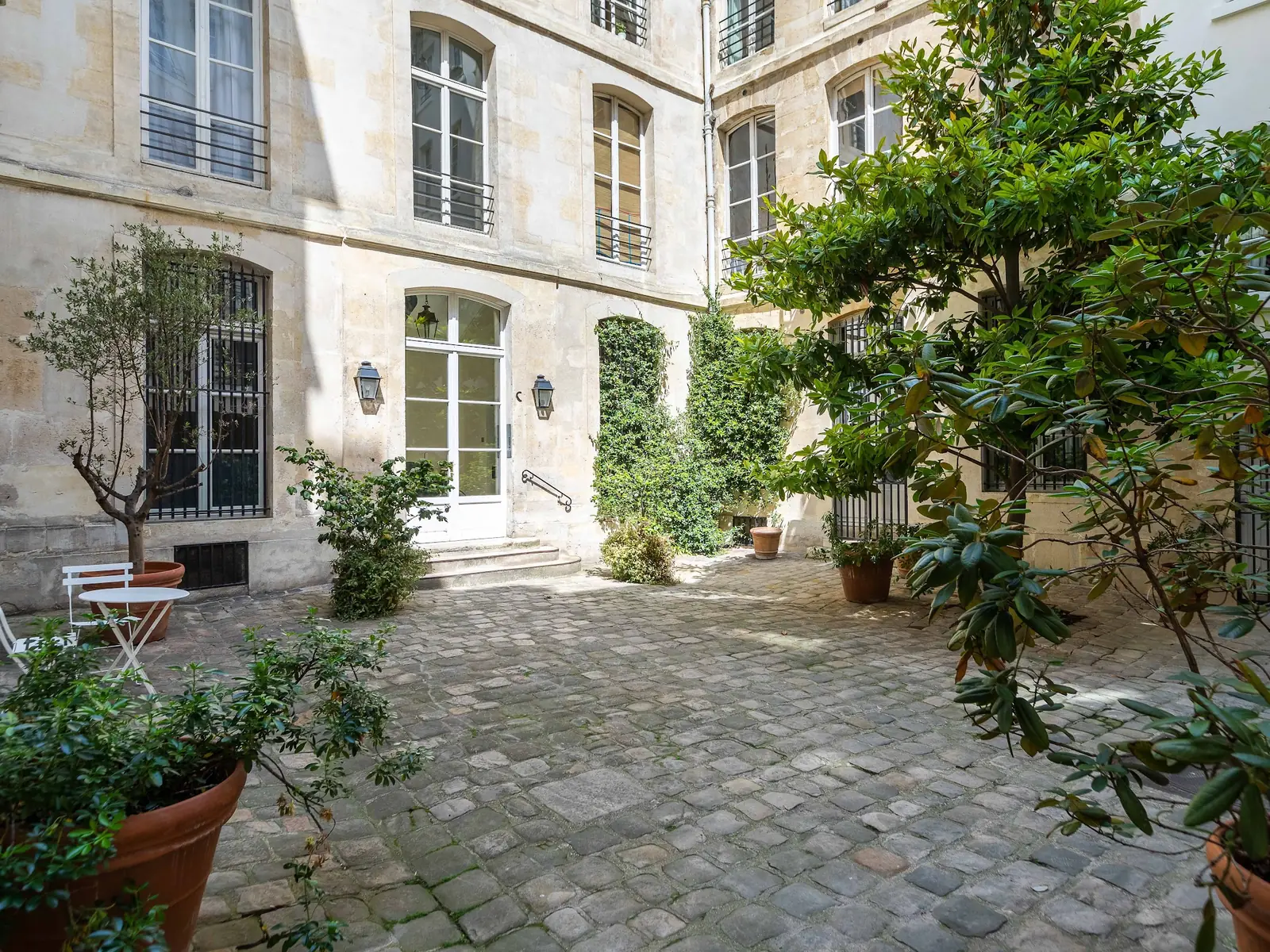
A courtyard-facing ground floor, quiet and bright, sees a gentler discount of 10 to 15%. The absence of street nuisance and the calm of the inner courtyard partly offset the structural drawbacks of the ground floor. How overlooked it feels depends on the size and shape of the courtyard.
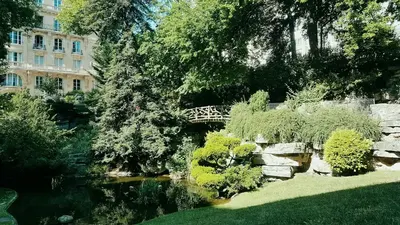
A ground floor with a private garden is a case apart. Here the ground floor discount is partly or wholly offset by the premium on outdoor space. In Paris, a private garden is a very rare asset: a few hundred square metres of greenery in a city of 2.1 million people across 105 sqkm. A ground floor with 25 to 40 sqm of well-kept garden can sell at upper-floor prices, or even above them in family arrondissements (11th, 12th, 14th, 15th, 20th).
A raised ground floor (a half-level, three to five steps above courtyard or street level) gains better light and is less overlooked. The discount is 8 to 15%, between a true ground-level floor and the first floor.
For the buyer who can read these nuances, the ground floor discount is a lever. For a 65 sqm apartment in the 10th arrondissement, the gap between the ground floor price and the third-floor price can be 50,000 to 100,000 euros: ample to cover security upgrades, any damp treatment and a full renovation.
What are the advantages of a ground floor apartment?
Five objective advantages: step-free access, ceilings often higher than the upper floors (3.20 to 3.50 m in Haussmann buildings), outdoor space larger than any balcony, scope for conversion in former commercial premises, and reduced lift charges. That last line is worth 500 to 1,500 euros a year, year after year.
Total accessibility. No stairs, no reliance on a lift that breaks down, no impossible furniture deliveries to a sixth floor with no lift. For people with reduced mobility, families with pushchairs, dog owners, or simply for the daily comfort of never carrying the shopping upstairs, the ground floor is unbeatable. It is also an increasingly valued selling point at resale as the population ages.
The proportions. Paris ground floor apartments often have higher ceilings than the upper floors: 3.20 m to 3.50 m in Haussmann buildings, sometimes more in former commercial premises converted to housing. Such volumes allow designs impossible higher up: mezzanines, internal glass walls, overhead light. Former artist’s workshops at ground level are among the most distinctive properties on the Paris market.
Outdoor space. Garden, small courtyard, ground-level terrace: outdoor spaces reached from a ground floor are larger and more usable than upper-floor balconies. For quality of life, a 30 sqm garden at ground level is worth far more than a 3 sqm balcony on the fifth floor. Families with children know this, and so do dog owners.
Scope for conversion. Former shops, workshops or concierge lodges at ground level offer design possibilities that conventional apartments do not. An 80 sqm former shop with a display window can become a loft with a glass wall facing the street, provided the change of use is permitted by the local development plan and the condominium rules.
Lower service charges. In many condominiums, lift charges are apportioned by floor, so the ground floor pays little or no lift charge. This saves 500 to 1,500 euros a year depending on the building, year after year.
What are the risks of a ground floor apartment in Paris?
Five real risks: light, rising damp, noise, security and overlooking. All of them are measurable and most are treatable: budget 3,000 to 8,000 euros for damp in a 60 sqm apartment and 5,000 to 10,000 euros for security, against a discount of 50,000 to 100,000 euros.
Light. This is often the first complaint. A street-facing ground floor on a narrow street with six-storey buildings opposite gets little direct sunlight. But a ground floor onto a wide, open courtyard, or south-facing with enough setback, can be as bright as a second floor. Brightness depends on orientation, the width of the street or courtyard, the height of the buildings opposite and the size of the windows. Visit at different times of day to judge.
A useful measure is the hours of direct sun. A ground floor that gets two hours of direct sun a day is liveable and pleasant. One that never gets any is hard to live with day to day, especially in winter.
Damp and rising damp. Older Paris buildings (pre-1900) are often built with no damp-proof barrier between foundations and walls. Groundwater rises by capillary action through the walls, damaging the lower sections: peeling paint, crumbling plaster, white saltpetre crystals, a musty smell. The problem is more pronounced in arrondissements near the Seine (4th, 5th, 6th, 7th, 12th, 13th, 15th, 16th) and in areas with a high water table.
Treatment exists: water-repellent resin injected into the walls (100 to 200 euros per linear metre), perimeter drainage (where it is feasible in a condominium), mechanical ventilation to clear residual moisture. The total cost for a 60 sqm apartment runs from 3,000 to 8,000 euros: a manageable outlay if the property was bought at the matching discount.
Signs to look for at viewings: peeling or blistering paint at the base of walls (up to 50-80 cm from the floor), white saltpetre marks, a musty smell even after airing, lifting floor coverings (a sign of moisture beneath), a cold feeling at floor level even with the heating on.
Noise. A street-facing ground floor is more exposed to traffic, passers-by, early-morning deliveries and café terraces. Window soundproofing is the main lever: high-performance acoustic double glazing (type 10/16/4 with acoustic laminate) cuts perceived noise by 35 to 40 dB, the difference between a normal conversation and a whisper. Replacement costs 800 to 1,500 euros per window installed.
A courtyard-facing ground floor is generally quiet, sometimes quieter than a sixth floor, since street noise fades less with height than people assume (it reflects off the facing facades).
Security. Burglary rates at ground floor level are statistically higher than on upper floors. That is a fact. But the security measures available are effective and their cost is modest against the saving on the purchase price. An A2P-certified reinforced door (1,500 to 3,000 euros installed), discreet bars or grilles on accessible windows (800 to 1,500 euros per window), security shutters and a connected alarm (500 to 1,500 euros) make for an effective deterrent. Total budget: 5,000 to 10,000 euros, set against a discount of 50,000 to 100,000 euros on the purchase price.
One point Home Select’s property hunters always check is the home insurance terms for a ground floor. Some insurers require specific security features (a certified lock, shutters on accessible windows) to cover theft. Without them, a claim may be refused.
Overlooking and privacy. A street-facing ground floor exposes daily life to passers-by. Solutions exist: privacy film on the windows (lets light through, blocks the view), net curtains, Venetian blinds, or planting on the window ledge. A courtyard-facing ground floor rarely has this problem: it is overlooked only by the building opposite, just as the lower floors are.
Every ground floor is a unique case. Home Select’s property hunters evaluate the specific advantages and risks of each property so that your decision is informed, not emotional. Entrust your project to Home Select
Who is a ground floor apartment right for?
Five profiles gain from it: families with young children, people with reduced mobility or planning ahead for old age, dog owners, first-time buyers on a tight budget, and professionals who need their own entrance. For every other profile, the ground floor stays a trade-off to justify property by property.
Families with young children. Pushchair, shopping, daily trips to the park: life for a family with children under six is a constant logistical exercise. The ground floor removes the stairs and the lift, and a private garden is an irreplaceable play area in the city. Families buying a ground floor with garden in the eastern and southern arrondissements (11th, 12th, 14th, 15th, 20th) are making a lifestyle choice many envy.
People with reduced mobility, or planning ahead for old age. Ground-level access is a daily comfort that comes into its own with age. Buying a ground floor at 50 means planning the next twenty or thirty years without stairs or a lift to depend on.
Dog owners. Three walks a day with a dog means six trips up and down. On the fifth floor with no lift, that is thirty floors a day. At ground level, you reach the pavement in thirty seconds.
First-time buyers on a tight budget. The ground floor discount opens up neighbourhoods or floor areas otherwise out of reach. A first-time buyer choosing between a studio on the third floor and a two-room flat at ground level in the same building sometimes rightly picks the ground floor, provided the drawbacks have been weighed and the necessary upgrades budgeted.
Professionals working from home. A ground floor with its own entrance can combine home and consulting room: doctor, architect, consultant. A partial change of use for the unit (mixed residential and professional) is subject to the condominium rules and the local plan, but is often permitted at ground level.
What does a property hunter check before recommending a ground floor?
Five points, in this order: light, damp, the noise environment, the security of the access, and the legal status of the unit. The last is the most often overlooked, yet private use of a garden recorded in the condominium rules carries asset value, while a mere tolerance can be overturned by a vote at the general meeting.
Light is measured, not just guessed at. The hunter notes the orientation, visits at different times where possible, and gauges the scope for improvement (windows that could be enlarged, partitions that could come down to let light through, the chance of a light well if the unit sits at the back of the courtyard).
Damp is always tracked. The hunter inspects the base of the walls in every room, checks behind furniture if the seller allows, runs a hand along the walls for cold and moisture, and notes any suspect smell. If in doubt, a damp survey is advised before making an offer.
The noise environment is assessed on site. The hunter notes the noise from the street or courtyard, identifies likely sources of nuisance (café terrace, bin store, stairwell just behind the wall), and judges the quality of the existing windows (single or double glazing, airtight seals).
Security is reviewed: access from the street or only through a secured courtyard (keypad, concierge), the presence of bars or grilles, the quality of the front door, the lighting at the entrance.
The legal status of the unit is verified: is the ground floor designated for residential use in the condominium rules? Has it been through a change of use (former shop converted to housing)? Is use of the garden private (attached to the unit) or merely tolerated by the condominium? This last point is crucial: private use recorded in the condominium rules has legal and asset value; a verbal tolerance can be overturned by a vote at the general meeting.
With its 16 property hunters, Home Select assesses every property with a rigour that protects your investment. Ground floor or upper floor, every purchase deserves a full analysis. Get a free callback
Should you buy a ground floor apartment in Paris?
Yes, on four conditions: at least two hours of direct sun a day or a wide, bright courtyard; no untreatable structural damp; an acceptable or improvable noise environment; and a price that genuinely reflects the discount and the cost of the necessary upgrades. Meet all four and the ground floor becomes one of the best quality-price-location ratios on the Paris market.
The ground floor in Paris is therefore a conditional opportunity, never a default choice.
When these conditions are met, the ground floor offers a quality-price-location ratio better than the upper floors, with distinctive merits (volume, garden, accessibility) the upper floors cannot match.
Home Select never recommends a ground floor by default or for convenience. The firm recommends it when a close analysis of the property shows the advantages outweigh the drawbacks and the price reflects that. It is an approach grounded in facts, not prejudice. Home Select has applied it across more than 1,200 transactions, and it has produced the best decisions for its clients.
Frequently asked questions
01 What is the average discount for a ground floor apartment in Paris?
The discount for a ground floor compared to a mid-floor apartment in the same building ranges from 10 to 25% depending on the neighbourhood, orientation, and nuisances. A quiet courtyard-facing ground floor with a private garden sees a 10-15% discount. A street-facing ground floor without visual protection can drop 20-25%. This discount makes it an opportunity for buyers who can evaluate the real drawbacks. Home Select, a property hunter in Paris since 2011, covers all 20 arrondissements and 68 municipalities of the Ile-de-France region with 16 hunters organised by sector.
02 Is a ground floor apartment with a garden in Paris a good investment?
A private garden at ground floor level is one of the most sought-after properties in Paris, and also one of the rarest. The ground floor discount is largely offset by the garden premium. For equivalent floor area, a ground floor with 30 sqm of garden in the 11th or 20th can sometimes sell for more than a third-floor apartment without outdoor space. Resale is excellent if the garden is in good condition and the apartment is well renovated.
03 Are dampness problems common in Parisian ground floor apartments?
Rising damp is a real risk in older Parisian buildings, especially those built before 1900 without a damp-proof course at foundation level. Signs to look for during viewings: peeling paint at the base of walls, musty smell, saltpeter marks. Treatment by resin injection costs 100 to 200 euros per linear meter of treated wall.
04 How do you secure a ground floor apartment in Paris?
Essential measures: A2P-certified reinforced door (1,500 to 3,000 euros installed), bars or grilles on windows facing the street or accessible courtyard (800 to 1,500 euros per window), security shutters, and a connected alarm system (500 to 1,500 euros). These investments are also a condition for insurance indemnification in the event of burglary.
05 Is a ground floor apartment suitable for families with children?
It is actually one of the best choices for a family in Paris. No stairs with a pushchair, no waiting for an elevator, direct garden access if the ground floor has one, less noise from neighbours above. Families with young children are a natural target for well-designed ground floors, and they constitute sustained demand at resale.