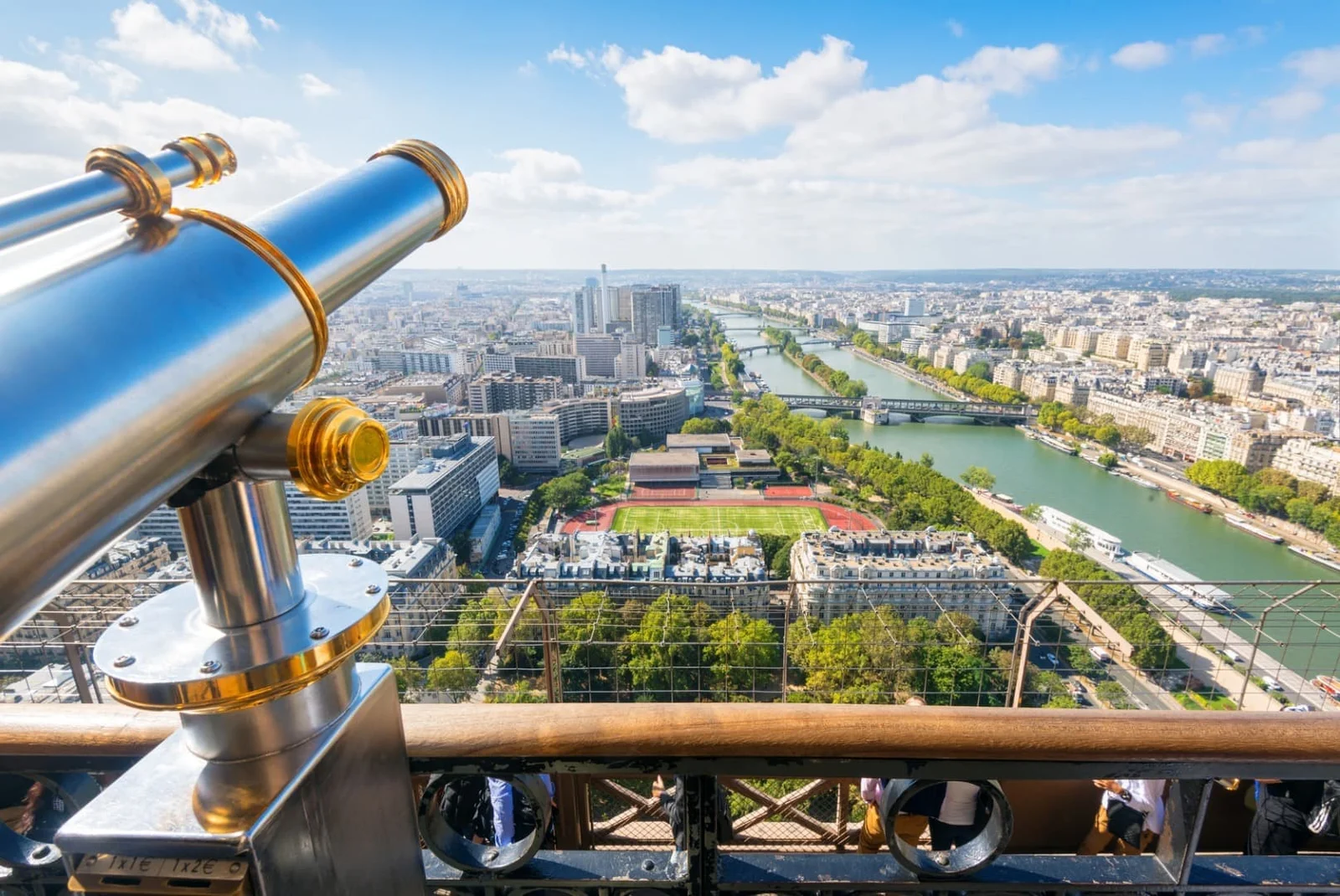


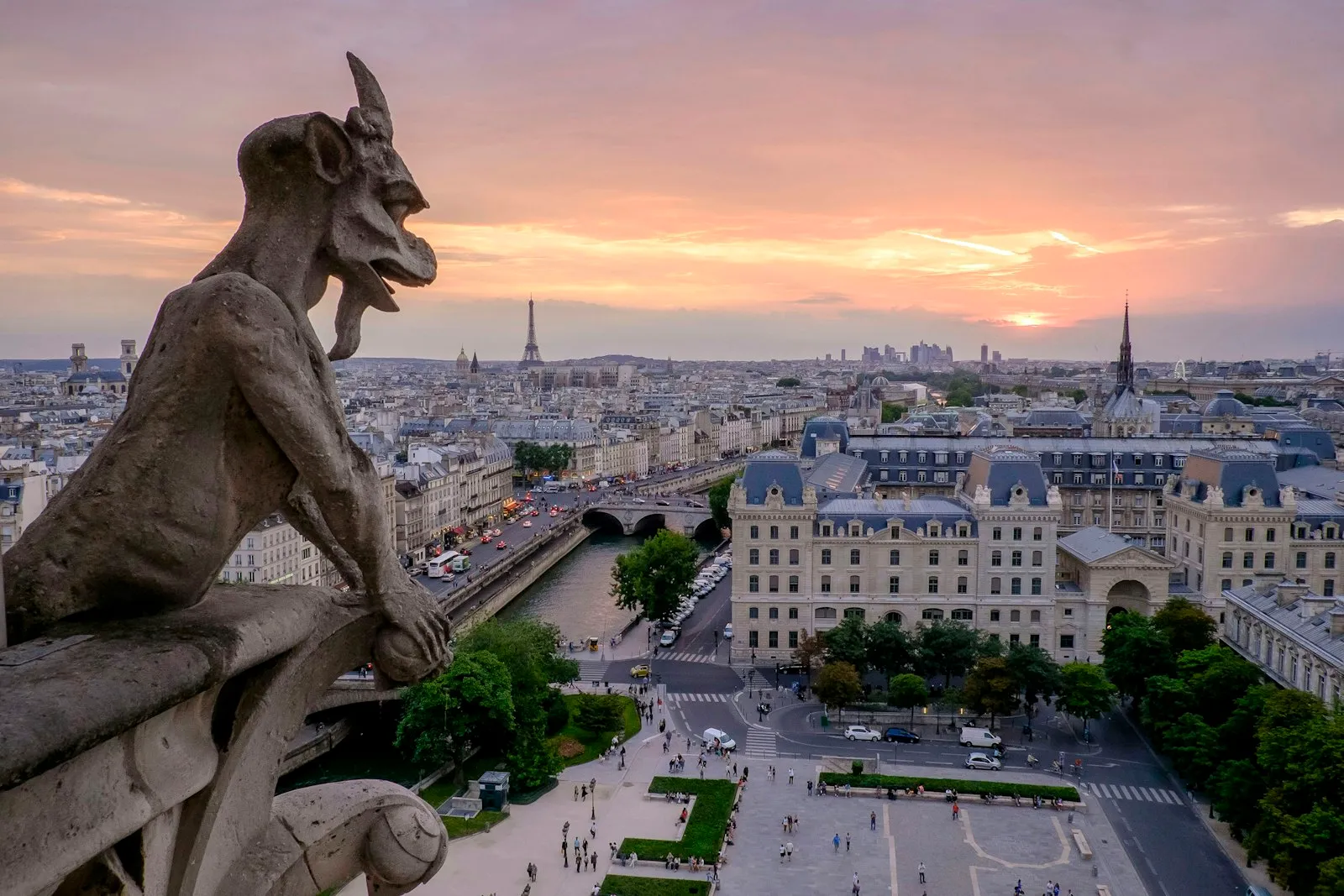
Left Bank or Right Bank? It is the first question non-Parisians ask when they arrive in Paris, and the last that Parisians ask themselves, because they have already chosen their side. The Seine divides Paris in two, and this geographical divide is also a cultural, sociological, and property divide. After 1,200 purchase mandates spread across both banks, I can state that the choice between Left Bank and Right Bank is the first real filter in a Parisian property search. It says more about a buyer than their budget.
This is not an article that will tell you which bank is “the best.” It is an article that will help you understand which one is made for you, because the answer depends entirely on who you are, how you live, and what you are looking for in a neighborhood.
What “Left Bank” truly means
The Left Bank is the south side of the Seine: the 5th, 6th, 7th, 13th, 14th, and 15th arrondissements. Six arrondissements, but in the collective imagination, “Left Bank” evokes above all the 5th-6th-7th triangle: the literary, academic, heritage-rich Paris.
The DNA of the Left Bank
The Left Bank was built around knowledge. The Sorbonne, the Ecole des Beaux-Arts, Sciences Po, ENS, the College de France, the great publishing houses on rue Jacob and boulevard Saint-Germain: this intellectual density has no equivalent on the Right Bank. It has shaped a temperament: the Left Bank is reflective, discreet, cultivated. It prefers bookshops to concept stores, galleries to showrooms, the Jardin du Luxembourg to the Parc des Buttes-Chaumont.
This identity has an architectural translation. The Left Bank is more homogeneous than the Right Bank. The Haussmann style is present but less dominant. The 6th and 7th are marked by pre-Haussmann architecture (17th and 18th centuries), lower, more intimate, with narrower streets and more secretive inner courtyards. The 5th retains medieval traces. The result is an urban landscape on a human scale, where the pedestrian takes precedence over the car.
Left Bank arrondissements in 2026
The 5th (Latin Quarter, Mouffetard, Jardin des Plantes) offers a unique blend of history and student life. Prices are around 11,500 euros/sqm. It is the most “village-like” of the central Left Bank arrondissements, with rue Mouffetard as its commercial epicenter.
The 6th (Saint-Germain-des-Pres, Odeon, Luxembourg) is the most expensive in Paris at 15,800 euros/sqm. The market is dominated by off-market sales and wealth-preservation buyers. It is the only Parisian arrondissement where the question “can I afford it?” comes before “do I like it?”
The 7th (Eiffel Tower, Invalides, rue Cler) combines monumental prestige with an authentic neighborhood feel. At 14,200 euros/sqm, it is the second most expensive. Its profile is more family-oriented than the 6th: large apartments are more common and daily life is better organized.
The 13th (Butte-aux-Cailles, Bibliotheque) is the popular and creative face of the Left Bank. At 9,000 euros/sqm, it is the most accessible arrondissement in the south. Butte-aux-Cailles offers a unique village charm, while the Bibliotheque district embodies contemporary Paris.
The 14th (Montparnasse, Denfert, Alesia) is the Left Bank’s best-kept secret. At 10,200 euros/sqm, it offers remarkable quality of life: Parc Montsouris, tree-lined residential streets, neighborhood life around rue Daguerre, at prices well below the neighboring 6th or 7th.
The 15th (Commerce, Convention) is the champion of families. The most populated in Paris and the most pragmatic. At 10,000 euros/sqm, it offers the largest floor areas for the budget and an authentic neighborhood feel, without pretension.
What the Left Bank offers at its best
Architectural heritage, first. Nowhere in Paris will you find such a density of listed buildings, monumental perspectives, and historic gardens. Living on the Left Bank means inhabiting an open-air museum, and unlike the Louvre, this one is free and open 24 hours a day.
Residential calm, next. The Left Bank is overall quieter than the Right Bank. Major traffic arteries are fewer (no equivalent of the Grands Boulevards or rue de Rivoli), and residential neighborhoods are deeply peaceful, even in the very center.
Walkability, finally. The Left Bank is covered on foot. From the 5th to the 7th, everything is accessible within a twenty-minute walk: universities, museums, gardens, shops. It is a pedestrian lifestyle that appeals to those wanting to slow down.
What the Left Bank will not give you
Energy. The Left Bank closes early. Restaurants stop serving at 10:30 PM, bars close at midnight, and on Sunday evenings, some neighborhoods resemble provincial towns. If you are looking for nightlife, spontaneity, the unexpected, this is not the place.
Social diversity. The Left Bank, especially in its central triangle, is sociologically homogeneous. The 6th and 7th are among the wealthiest arrondissements in France. The 5th retains student diversity, and the 13th genuine social mix, but the general impression is one of cultivated insularity.
Large affordable apartments. The Left Bank paradox is that its architectural heritage is magnificent but poorly adapted to contemporary families. Four and five-room apartments are rare in the 5th and 6th, kitchens are often tiny, and full renovations cost a fortune in listed buildings.
What “Right Bank” truly means
The Right Bank is the north side of the Seine: the 1st, 2nd, 3rd, 4th, 8th, 9th, 10th, 11th, 12th, 16th, 17th, 18th, 19th, and 20th arrondissements. Fourteen arrondissements, three times more than the Left Bank, and a diversity that defies any generalization.
The DNA of the Right Bank
If the Left Bank was built around knowledge, the Right Bank was built around commerce and power. The Louvre, the Tuileries, the Opera, the Bourse, the Grands Boulevards, the department stores, the Bastille, Republique: the centers of economic and political power sit on the Right Bank. And this mercantile, entrepreneurial energy can be felt in the atmosphere: the Right Bank is faster, noisier, more diverse, more unpredictable.
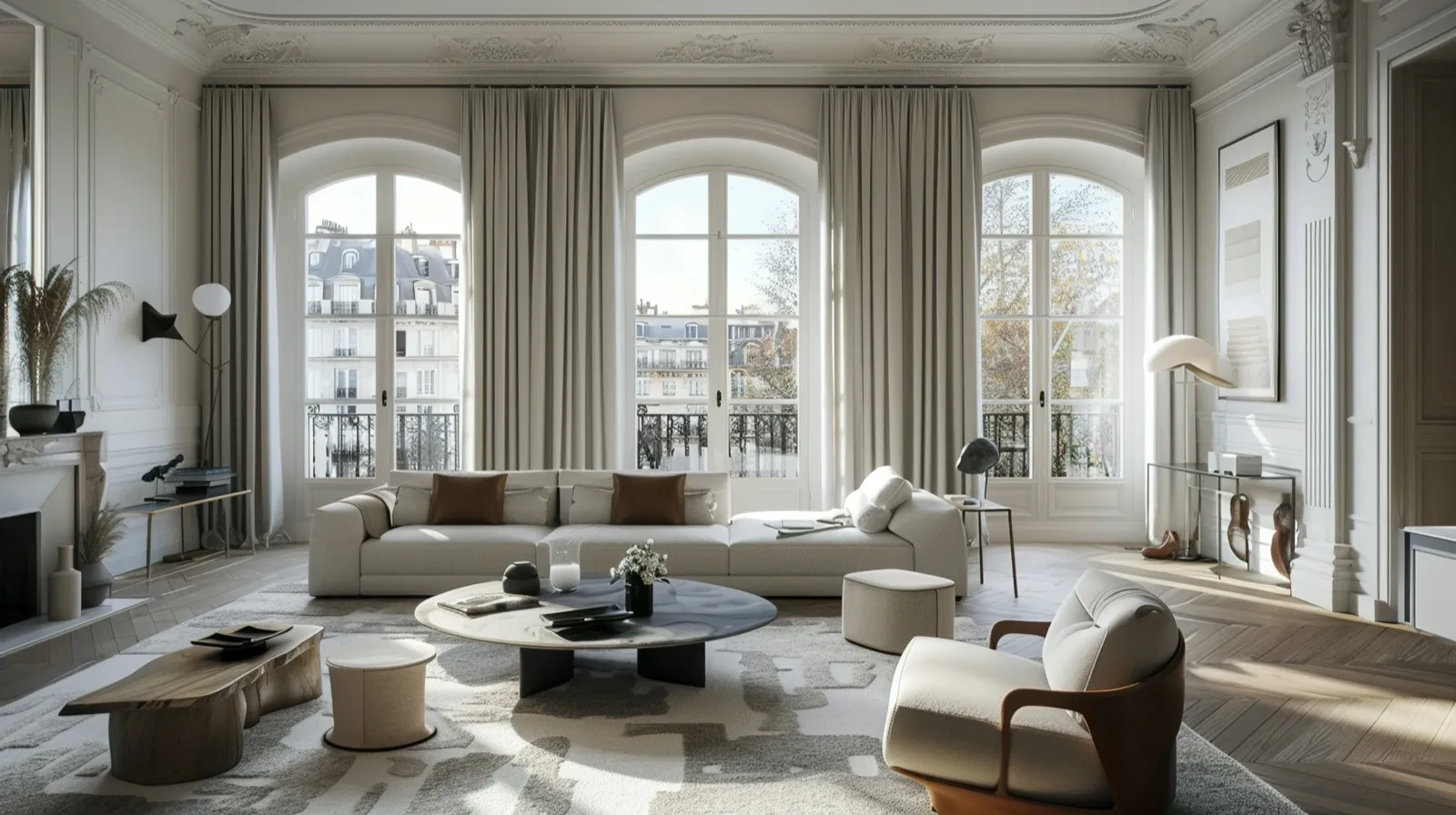
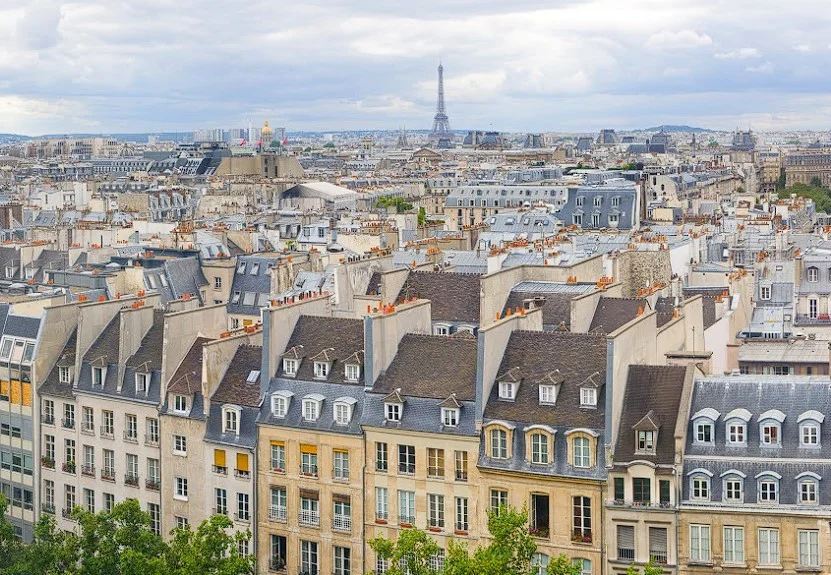
Architecturally, the Right Bank is Haussmann territory. It was Haussmann who redesigned the 8th, 9th, 10th, 16th, and 17th, tracing wide boulevards lined with monumental buildings. The result is spectacular: the perspectives of avenue de l’Opera, boulevard Haussmann, avenue Foch. But at a grander scale than the Left Bank. You feel small on the Right Bank. You feel at home on the Left Bank.
The major Right Bank hubs
The historic center (1st, 2nd, 3rd, 4th) offers Paris’s oldest heritage: the Marais, Les Halles, the Palais Royal, Ile de la Cite. Prices range from 11,000 euros/sqm (2nd) to 13,600 euros/sqm (4th). This is postcard Paris, dense and touristy, but also the most alive at night.
The western arc (8th, 16th, 17th) is the bourgeois Right Bank Paris. The 8th (12,100 euros/sqm) has become more of an office district than residential. The 16th (12,400 euros/sqm) remains the champion of affluent families. The 17th (10,600 euros/sqm) is transforming with Batignolles.
The eastern arc (9th, 10th, 11th, 12th) is the Paris that is on the move. The 9th (+3.2%) is the rising star. The 10th (Canal Saint-Martin) and 11th (Oberkampf, Bastille) attract thirty-somethings. The 12th offers the Bois de Vincennes to families.
The far north (18th, 19th, 20th) is working-class Paris in transformation. Montmartre (18th), Buttes-Chaumont (19th), Belleville (20th) offer the lowest prices in the center, and the strongest growth dynamics. This is the territory of first-time buyers and investors seeking yield.
What the Right Bank offers at its best
Diversity, first. In thirty minutes of metro, you go from Trocadero to Belleville, from the Champs-Elysees to Canal Saint-Martin, from the Opera to Montmartre. Each neighborhood has a distinct identity and a different population. The Right Bank is an archipelago of villages, each with its codes, its shops, its rhythm.
Energy and nightlife. If you enjoy going out, the Right Bank is your territory. The best bars are in the 9th, 10th, and 11th. The best neo-bistro restaurants too. Alternative cultural life (emerging galleries, pop-up spaces, rooftops) concentrates on the Right Bank.
Value for money. For the same budget, the Right Bank offers more square meters than the Left Bank. A 65 sqm 3-room apartment in the 9th costs the same as a 55 sqm 3-room in the 14th. For pragmatic buyers, this is a compelling argument.
What the Right Bank will not give you
Guaranteed calm. The Right Bank is noisier, more chaotic. The Grands Boulevards, Place de la Republique, Bastille: traffic is heavy and noise nuisance is real. You must seek out pockets of calm. They exist (Nouvelle Athenes, Charonne, Batignolles), but they are not the norm.
Architectural homogeneity. Where the Left Bank offers a coherent urban landscape, the Right Bank freely mixes Haussmann, faubourien, contemporary, and converted industrial styles. This is stimulating for some, unsettling for others.
The gentle art of Sunday living. On Sundays, the Right Bank can seem empty and dreary in certain neighborhoods (the 8th is a desert, as is part of the 2nd). The Left Bank, with its quays, gardens, and open bookshops, offers a more complete Parisian Sunday.
The match by buyer profile
Thirty-something couple without children
Right Bank wins. The 9th (SoPi, Nouvelle Athenes) and the 11th (Oberkampf, Charonne) offer the best compromise between a dynamic neighborhood, centrality, and accessible pricing. 3-room budget: 550,000 to 750,000 euros.
The Left Bank is not excluded: the 5th (Mouffetard) and the 14th (Alesia) appeal to couples who prefer calm to buzz. But for the same budget, the floor area will be 10 to 15% smaller.
Family with children
Left Bank wins, but not the one you think. The 15th and 14th are the real family champions, far ahead of the 6th or 7th (too expensive for large floor areas). Parc Andre-Citroen, Parc Montsouris, the shopping streets of rue du Commerce and rue Daguerre offer an ideal family setting.
On the Right Bank, the 16th (Passy, Auteuil) and the 12th (Nation, Bois de Vincennes) compete seriously. The 17th (Batignolles) is rising with the new park. The choice depends on the office location and school catchment.
Investor
Right Bank wins on yield. The eastern arrondissements (9th, 10th, 11th, 18th) offer the best purchase-price-to-rent ratios. The 18th (Jules Joffrin) and the 9th (Grands Boulevards) are particularly interesting for furnished rental.
The Left Bank wins on wealth security. The 6th and 7th will never significantly decline: they are the ultimate safe-haven investment. But rental yield there is the lowest in Paris (2 to 2.5% gross).
Expatriate or bi-resident
Draw. The Marais (Right Bank, 3rd-4th) and Saint-Germain (Left Bank, 6th) are the two most sought-after neighborhoods by international buyers, for different reasons. The Marais seduces with its nightlife and energy. Saint-Germain seduces with its prestige and refinement. Budget often decides: Saint-Germain is 20% more expensive than the Marais for equivalent floor area.
First-time buyer
Right Bank wins decisively. The most accessible entry points into central Paris are on the Right Bank: the 9th (Grands Boulevards), the 10th (outside the canal area), the 11th (Charonne), the 18th (Jules Joffrin), the 19th (Buttes-Chaumont). For a budget of 350,000 to 500,000 euros, the Right Bank offers a one-bedroom in a lively, well-connected neighborhood. On the Left Bank, the same budget seriously limits options: the 13th and the outer 15th are the only realistic choices.
Beyond the Seine: what the debate conceals
Jean Mascla’s advice: The real dividing line in Paris is not the Seine. It is the Peripherique ring road. An apartment in the 9th on the Right Bank and one in the 14th on the Left Bank have more in common than an apartment in the 9th and another in Saint-Denis. The Left Bank / Right Bank debate is a Parisian intellectual pleasure, but when it comes to buying, it is the precise neighborhood that counts, not the bank.
The best advice I can give a buyer hesitating between the two banks: do not choose from a map. Spend a full weekend in each neighborhood you are considering. Have morning coffee, lunch, walk aimlessly in the afternoon, dine. Do it on a weekday and at the weekend. The right bank is the one where you feel at home, and no property hunter, however experienced, can decide that for you.
What a property hunter can do, however, is broaden your horizon. Many of our clients arrive with a fixed idea, “I want the Left Bank” or “I want the Marais,” and end up buying in a neighborhood they had never even considered. Because a property hunter who knows all 20 arrondissements can suggest alternatives a solo buyer would not think of. The 14th instead of the 6th. The 9th instead of the 3rd. The 17th instead of the 16th. Same bank or opposite bank, the best neighborhood is the one that fits your life, not a geographical prejudice.
Our 16 hunters cover both banks and the inner suburbs. Whatever direction your project takes, we can guide you to the neighborhood, and the property, that fits you.
Frequently asked questions
Left Bank or Right Bank: which is more expensive?
The Left Bank is overall more expensive. The average price across Left Bank arrondissements (5th, 6th, 7th, 13th, 14th, 15th) stands at approximately 12,100 euros/sqm in 2026, compared to 10,900 euros/sqm on average for the Right Bank. But this average conceals considerable gaps: the 6th on the Left Bank (15,800 euros/sqm) is well above the 18th on the Right Bank (9,400 euros/sqm), while the 13th on the Left Bank (9,000 euros/sqm) is cheaper than the 8th on the Right Bank (12,100 euros/sqm). The Left Bank/Right Bank criterion is less relevant than the precise neighborhood.
Which bank is more dynamic in terms of price increases?
The Right Bank is growing faster in 2026. The arrondissements showing the strongest increases are predominantly Right Bank: the 9th (+3.2%), the 10th (+2.8%), the 18th (+2.6%), the 11th (+2.5%). Left Bank increases are more moderate: the 7th (+2.3%) and the 14th (+1.5%). The Right Bank is in a catching-up dynamic, while the Left Bank, already at high price levels, progresses more slowly.
Can you hesitate between Left Bank and Right Bank for the same budget?
Absolutely, and it is even common. With a budget of 800,000 euros, you can acquire a 55 sqm 3-room apartment in the 14th (Left Bank) or a 65 sqm 3-room apartment in the 9th (Right Bank), same budget, same neighborhood quality, but 10 sqm difference. This is why a property hunter who knows both banks is an asset: they can open the search beyond geographical assumptions.