

In brief
In 2026, the Left Bank of Paris (5th, 6th, 7th, 13th, 14th, 15th) averages around 11,400 euros/m2 against 10,200 euros/m2 on the Right Bank, with the 6th reaching 15,800 euros/m2 and the 7th 14,200 euros/m2. The Left Bank is distinguished by its residential calm and heritage, the Right Bank by its diversity and better value for floor space. At Home Select, about one client in three who starts with a strong preference for one bank ends up buying on the other side of the Seine.
Key takeaways
- The 6th arrondissement (Left Bank) averages 15,800 euros/sqm while the 14th offers 9,800 euros/sqm, making both banks accessible at different budgets
- About one in three Home Select clients who start with a strong preference for one bank end up buying on the other after viewings
- The 9th arrondissement (Right Bank) at 10,800 euros/sqm is considered one of Paris's best value central arrondissements in 2026
- The 17th arrondissement offers the widest diversity of atmospheres and budgets on the Right Bank at 10,600 euros/sqm average
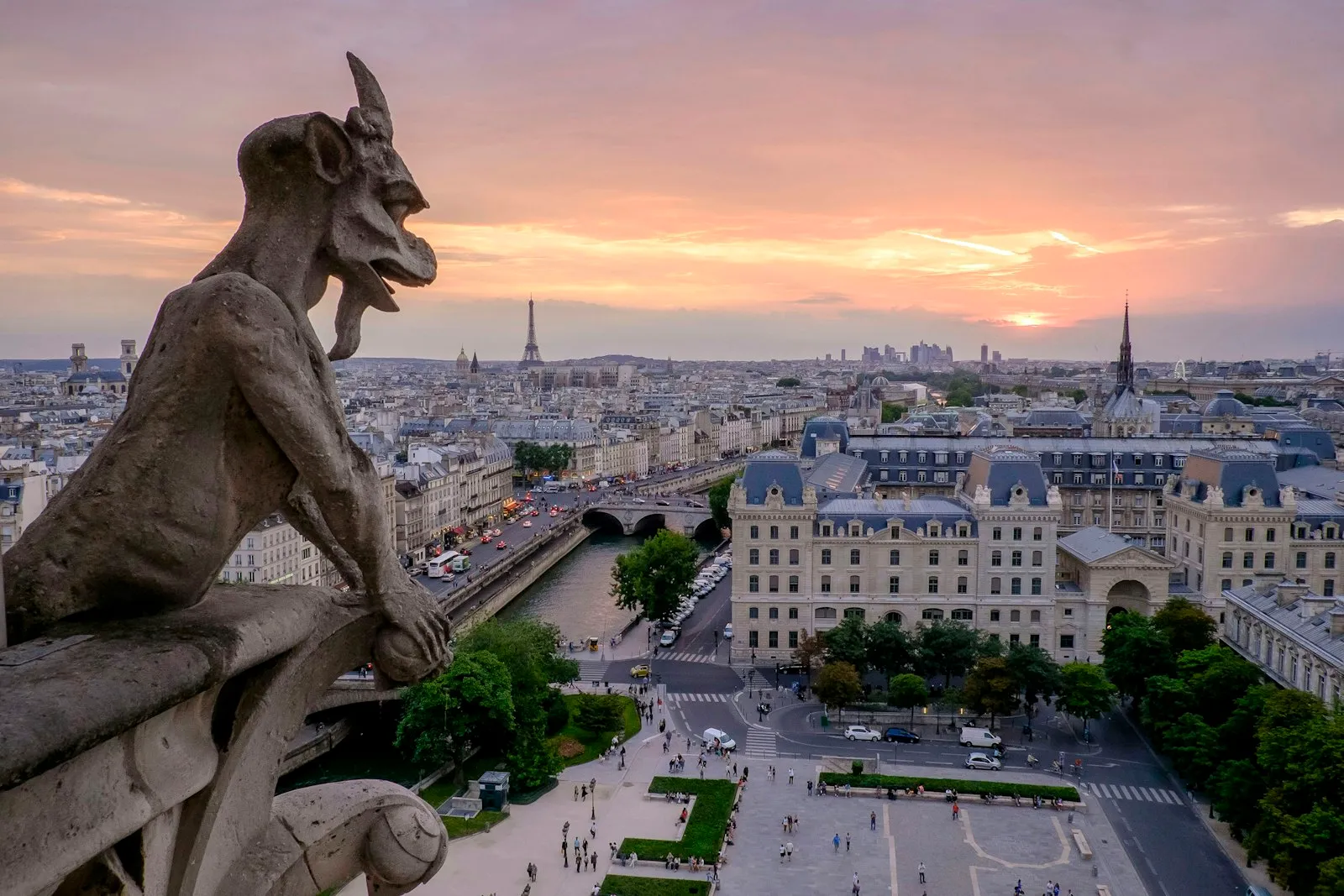
The Seine divides Paris in two. It is not merely a matter of geography: it is a dividing line between two ways of living, walking and being. On the Left Bank, footsteps echo on the cobbles of rue de Furstenberg at two in the afternoon, when the light falls at an angle across 17th-century facades and the galleries open their doors.
Left Bank: time suspended
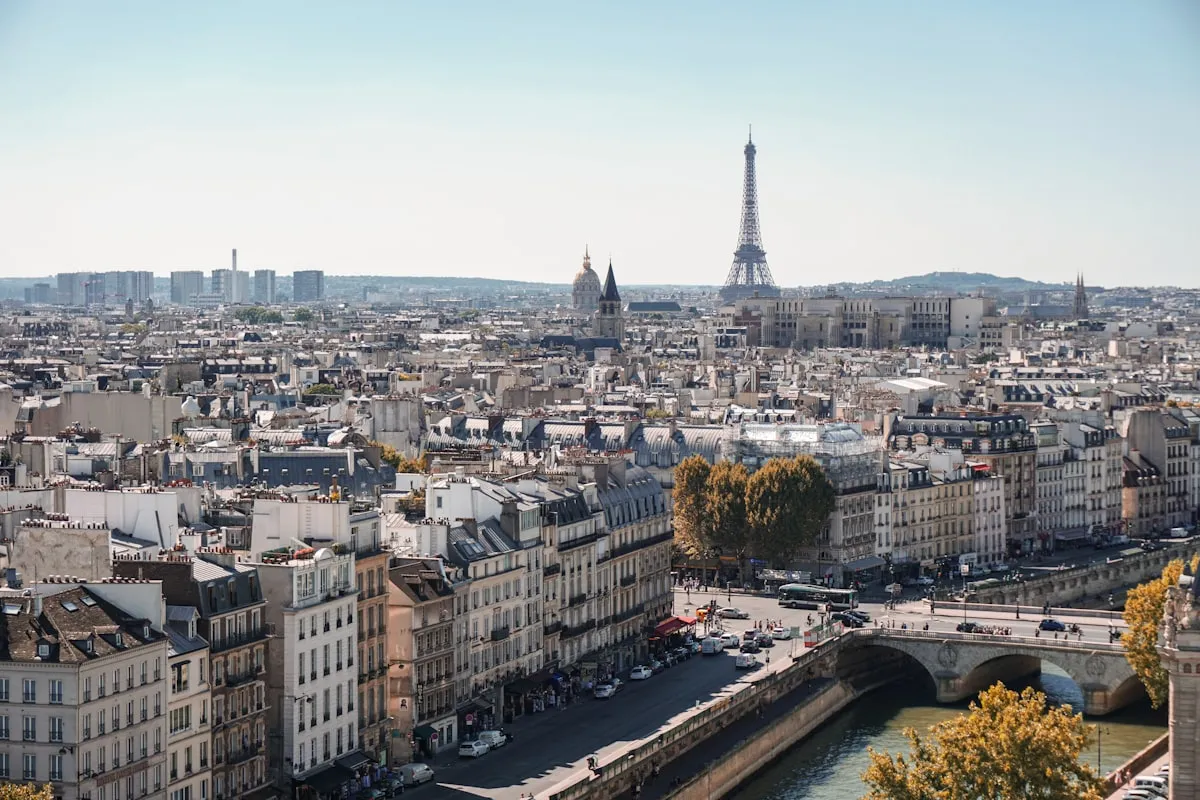
The Left Bank is the Paris you imagine before you know it. The Paris of bookshops, literary cafés, universities. A Paris where time seems to flow more slowly, where the streets are narrower, the buildings lower, the shop windows less showy.
The 6th arrondissement: the epicentre
Saint-Germain-des-Prés is the beating heart of the Left Bank, and one of the most expensive neighbourhoods in Paris. At 15,800 euros/sqm on average, the 6th is within reach only of substantial budgets. But the price buys something unique: a concentration of art galleries, bookshops, publishers and historic cafés found nowhere else.
Rue de Seine, rue Jacob, rue de Buci: every address in the 6th tells a century of Parisian intellectual life. Apartments here are often smaller than on the Right Bank: 17th and 18th-century buildings offer modest floor areas, offset by generous ceiling heights and a charm no photograph can capture.
The 7th arrondissement: discreet bourgeois elegance
The 7th is the Paris of ministries, embassies and private mansions. An arrondissement where silence is a tangible luxury: after 9pm, rue de Varenne is deserted, rue de Grenelle barely whispers. Stone facades, impeccably restored, catch the evening light with a mineral softness.
At 14,200 euros/sqm, the 7th is structurally expensive. Properties change hands slowly: many pass down within families, some never reach the open market. It is the home ground of off-market deals and notaire networks, terrain our property hunters have mastered for fourteen years.
The 5th arrondissement: the academic quarter
The Latin Quarter lives up to its name. The shadow of the Sorbonne, the Collège de France, the ENS and the Panthéon falls across streets that still smell of old books and strong coffee. The 5th is more accessible than the 6th (12,400 euros/sqm) while offering an exceptionally rich cultural setting.
Rue Mouffetard, Place de la Contrescarpe, the Arènes de Lutèce: the 5th arrondissement has a village character rare in central Paris. Families find excellent schools, retirees a preserved calm, intellectuals a world that mirrors their own.
The 14th arrondissement: the best-kept secret
Further south, the 14th is the Left Bank that Parisians know and tourists overlook. Montparnasse, Denfert-Rochereau, Alésia: fine residential neighbourhoods at prices (9,800 euros/sqm) that allow comfortable floor areas.
Parc Montsouris, the Cité Universitaire, the artists’ studios of rue Campagne-Première: the 14th arrondissement combines space and neighbourhood life with a discretion that appeals to families and those after peace and quiet.
Right Bank: the energy of the city
Cross a bridge, any bridge, and the mood changes. The Right Bank is more diverse, noisier, more commercial. It is the Paris on the move, opening restaurants, setting trends.
The Marais (3rd and 4th arrondissements): vitality
The Marais is perhaps the most coveted neighbourhood on the Right Bank. Its 17th-century private mansions, medieval alleyways, and hidden squares compose a setting that two million visitors a year come to photograph.
Living in the Marais means accepting this constant coexistence of residents and visitors. Prices reflect it: 12,800 euros/sqm in the 3rd, 13,600 euros/sqm in the 4th. The most sought-after apartments, with a view of the Place des Vosges, or a top floor with a rooftop terrace, trade well above these averages, often off-market.
The 9th arrondissement: the rising star
The 9th was long undervalued. Squeezed between the Opéra Garnier and Pigalle, it suffered from a hazy image. No longer. The Nouvelle Athènes quarter, with its Romantic-era buildings from the 1830s, its tree-lined squares and its good restaurants, has become one of the liveliest parts of Paris.
At 10,800 euros/sqm, the 9th offers remarkable value for such a central arrondissement. Buyers, often working thirty-somethings, couples with children, creative professionals, find an energy and diversity there that the classic Left Bank cannot match.
The 10th and 11th: Paris reinventing itself
The Canal Saint-Martin and Oberkampf embody the Right Bank in motion. Working-class neighbourhoods turned fashionable in twenty years, with a density of bars, restaurants and galleries that makes them the beating heart of Paris nightlife.
Prices remain reasonable: 9,800 euros/sqm in the 10th, 10,200 euros/sqm in the 11th. But the upward trend is clear. Buyers in the 10th in 2026 are making the same bet as those who bought in the Marais in 2005, with significant scope for appreciation.
The 17th arrondissement: the transformation
The 17th is two arrondissements in one. The western 17th (Ternes, Plaine Monceau) is an established bourgeois quarter with fine Haussmann buildings. The northern 17th (Batignolles, Épinettes) is undergoing a full transformation, driven by the Martin Luther King park and the new-build programmes of the ZAC Clichy-Batignolles development zone.
At 10,600 euros/sqm on average, the 17th offers a diversity of atmospheres and budgets that few arrondissements can match.
Find out how Home Select can assist you
Prices: a structurally more expensive Left Bank
The numbers speak. In 2026, the weighted average on the Left Bank (5th, 6th, 7th, 13th, 14th, 15th) stands at around 11,400 euros/sqm. On the Right Bank (1st to 4th, 8th to 12th, 16th to 20th), it is around 10,200 euros/sqm.
But this average hides sharply contrasting realities. On the Right Bank, the 1st arrondissement (13,500 euros/sqm) and the 4th (13,600 euros/sqm) rival the highest Left Bank prices. Conversely, on the Left Bank, the 13th (8,600 euros/sqm) and the 15th (9,600 euros/sqm) are more accessible than many Right Bank arrondissements.
The Left Bank owes its higher average to the 6th and 7th, the two arrondissements at the top of the Paris market. But it would be wrong to conclude that “the Left Bank is expensive” and “the Right Bank is affordable”. The Paris market is an archipelago of micro-markets where the price per square metre can vary by 3,000 euros between two parallel streets.
The profiles that choose
In fourteen years of property hunting and over 1,200 completed mandates, we have observed trends, not rules.
Literary and academic profiles: teachers, publishers, researchers, cultural journalists, gravitate naturally to the Left Bank. The 5th, 6th and 7th match a professional and social world familiar to them. They want calm, old stone, bookshops and gardens close at hand.
Entrepreneurial and creative profiles: startup founders, designers, architects, communications people, often prefer the Right Bank. The Marais, the 9th, the 10th and the 11th offer an energy, diversity and nightlife that suit their rhythm. They accept the noise in exchange for the vitality.
Families split according to their priorities. Those who put schools and calm first turn to the Left Bank (14th, 15th) or the residential Right Bank (16th, western 17th). Those wanting buzz and green space explore the 11th (Oberkampf, Bastille), the 12th (Aligre, Coulée Verte) or the northern 17th (Batignolles).
Expatriates are a case of their own. Many arrive with a romantic image of the Left Bank: Saint-Germain, Montmartre (which is on the Right Bank, as they will discover). Americans in particular are drawn to the 6th and 7th, a fascination going back to Hemingway and Fitzgerald. But when they realise their 800,000 euro budget buys 50 sqm in the 6th against 80 sqm in the 9th, priorities shift.
The change-of-mind phenomenon
This is one of the most striking observations from our work. About one client in three who starts their search with a firm preference, “I absolutely want the Left Bank” or “I only want the Marais”, ends up buying on the other side of the Seine.
This change of heart is not indecision: it is discovery. A client who dreamed of the 7th views a superb apartment in the 17th, with an open outlook, a terrace and 30% more floor area for the same budget. A couple who swore by the 10th alone falls for a ground floor with garden in the 14th arrondissement. Viewings on the ground reveal a feel that property portals cannot convey.
This is one reason our property hunters always advise viewing on both sides of the Seine, even when the client is “certain” of their preference. This deliberate open-mindedness has helped dozens of clients find an apartment they would never have considered on their own. The ranking of the most beautiful neighbourhoods in Paris is a good place to start broadening your thinking.
Beyond the Seine: what truly matters
The question “Left Bank or Right Bank?” is a good entry point into Parisian property thinking. But it should never be the endpoint.
What makes an apartment valuable in Paris is not which side of the Seine it sits on. It is the combination of a precise location (street, number, floor, orientation), condition (renovated or to renovate), a floor area suited to your plans, and a price in line with the market.
On the Left Bank, you can find a dark, badly laid-out, overpriced apartment on a noisy street in the 15th. On the Right Bank, you can find a light-filled gem with mouldings and parquet on a quiet courtyard in the 11th. And the reverse.
Since 2011, Home Select has supported buyers across all of Paris: 20 arrondissements, both banks, and Île-de-France. Our 16 property hunters know every neighbourhood, every micro-market, every street’s character. Their job is not to confirm a geographical prejudice but to find, Left Bank or Right Bank, the address that turns a plan into a home.
The Seine does not divide Paris. It joins it. And the finest apartments in the city are often the ones found just where you did not expect them.
Frequently asked questions
01 Is the Left Bank more expensive than the Right Bank in Paris?
On average, yes. The 6th (15,800 euros/sqm) and the 7th (14,200 euros/sqm) pull the Left Bank upward. But the Right Bank also includes very expensive arrondissements (1st at 13,500 euros/sqm, 4th at 13,600 euros/sqm). The best deals exist on both sides.
02 Which side of Paris is most suited to families?
Both offer family-friendly options. On the Left Bank, the 14th and 15th are popular with families for their calm and schools. On the Right Bank, the 17th (Batignolles) and 11th (around Place de la Republique) attract young parents with their energy and green spaces.
03 Do clients often change their mind between Left Bank and Right Bank?
Frequently. At Home Select, about one client in three who begins their search with a strong preference for one side ends up buying on the other. On-the-ground viewings reveal atmospheres and opportunities that one would not have suspected.
04 What are the differences in atmosphere between the Left Bank and the Right Bank?
The Left Bank (5th, 6th, 7th, 13th, 14th, 15th) is distinguished by its residential calm, its architectural heritage, its bookshops and its literary cafes, in a Paris where time seems to flow more slowly. The Right Bank offers more diversity, a richer nightlife, sharply contrasting neighbourhoods and better value for floor space. The choice depends on the lifestyle sought: intimacy and walkability on one side, energy and variety on the other. Many buyers discover their true preference by visiting both banks.