

The 16th arrondissement is the largest in Paris by area, the richest in green spaces, the one offering the largest apartment sizes, and the most mocked. “Bourgeois”, “sleepy”, “boring”: the cliches cling to the 16th like ivy to the facades of its Haussmann-era buildings. I have been supporting buyers in this arrondissement since 2011, and I can state one thing: those who criticise it have never lived there. And those who live there never want to leave.
The 16th is not one arrondissement. It is five distinct neighbourhoods stitched together by administrative chance, with atmospheres, prices and resident profiles so different that five separate articles could be written instead of one. This is precisely what makes the property search here particularly interesting, and a property hunter particularly useful.
Five neighbourhoods, five identities
Trocadero: international prestige
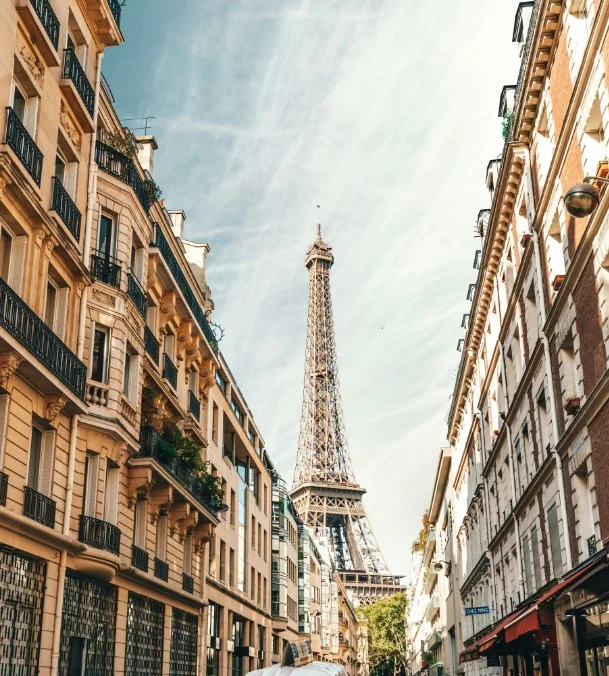
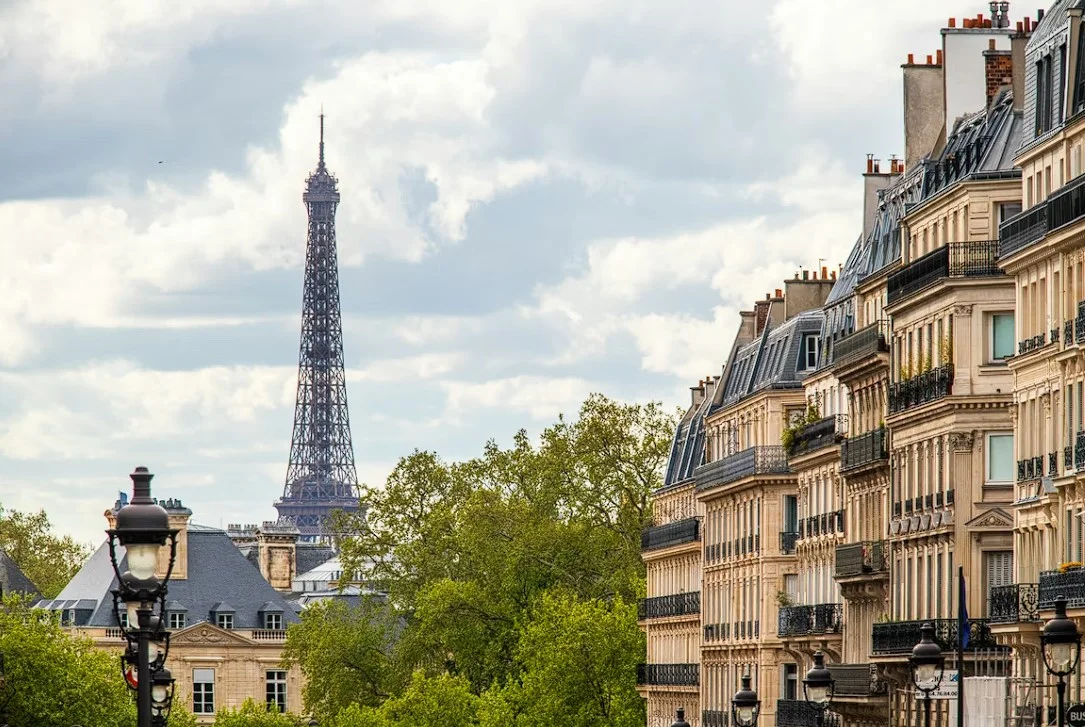
Trocadero is first and foremost a view. The Eiffel Tower from the esplanade, obviously, but also the Paris rooftops from the upper-floor apartments on avenue Kleber, rue de Longchamp or avenue Paul-Doumer. Living at Trocadero means living in a postcard, with the price tag to match.
The neighbourhood is the most cosmopolitan in the 16th. The embassies (twenty-three within a ten-minute walk), international institutions (OECD, UNESCO nearby), and bilingual schools attract a diplomatic and international corporate population. English is spoken as fluently as French in the cafes on Place du Trocadero.
Prices are the highest in the 16th: 14,000 to 16,000 euros/sqm for prime floors, with peaks above 20,000 euros/sqm for apartments with a direct view of the Eiffel Tower. The market is heavily international: a significant share of transactions involves foreign buyers, often for second homes.
Daily life is paradoxical. The Place du Trocadero itself is overrun by tourists and street vendors; residents avoid it. But just two streets away, residential calm resumes. Rue de la Pompe, rue de Passy, avenue Georges-Mandel offer a peaceful and elegant living environment.
Passy: the village within the city
If I had to introduce the 16th to someone who thinks the arrondissement is deadly dull, I would take them to Passy on a Saturday morning. Rue de Passy, partly pedestrianised, is a concentration of neighbourhood life: bakeries, cheese shops, an independent bookshop, the Passy market (covered, clean, well-stocked). Residents know each other, greet each other, stop to chat. It is the village Paris that everyone fantasises about without knowing it still exists.
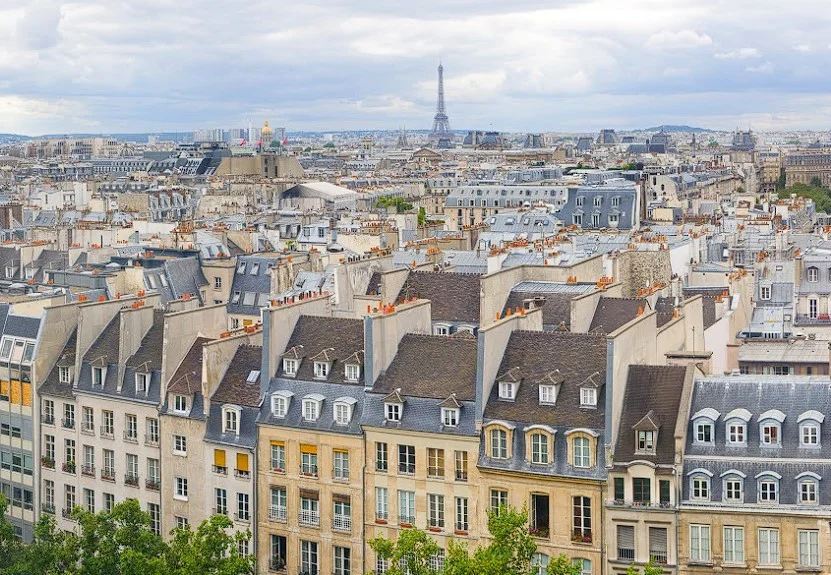
Passy’s architecture is a successful blend of classic Haussmann and very fine 1930s buildings: stone facades, ornate balconies, well-maintained entrance halls. The streets around rue de l’Annonciation and rue Raynouard offer family apartments with sizes not found in central Paris: 4-bedrooms of 100 sqm, 5-bedrooms of 130 sqm, sometimes with terraces or private gardens.
Prices run around 12,000 to 13,000 euros/sqm, placing it at the heart of the 16th’s market. For a family 4-bedroom of 95 sqm in good condition, count 1.1 to 1.3 million euros. Demand is constant, driven by families with school-age children, and for good reason: the Janson-de-Sailly secondary school, one of the most reputed in Paris, is a five-minute walk away.
The downside: Passy is a shopping neighbourhood, which also means morning noise (deliveries) and Saturday crowds. The streets perpendicular to rue de Passy are quieter and often more appealing to live on.
Auteuil: families and green spaces
Auteuil is the south of the 16th, and a world apart. Greener (the Bois de Boulogne literally begins at the end of the street), more residential, quieter; some would say sleepier. It is the arrondissement within the arrondissement, one that fully embraces its family vocation without trying to seduce trendy thirty-somethings.
What distinguishes Auteuil is the quality of housing. Townhouses can be found here, yes, houses, in Paris, in the private villas that wind between the main streets: Villa Montmorency (the most famous and most gated), Villa de la Reunion, Hameau Boileau. These residential enclaves offer an almost suburban setting in the heart of Paris, with gardens, hedges, and silence.
The apartments are equally impressive. Auteuil’s architecture blends Art Nouveau (Guimard built several buildings in the neighbourhood), Art Deco and late Haussmann. Floor areas are generous: 3-bedrooms regularly exceed 80 sqm, 4-bedrooms 100 sqm, and prices are the most reasonable in the 16th: 10,000 to 12,000 euros/sqm.
For families, Auteuil ticks every box: Roland-Garros stadium (children playing tennis just steps away), the Jardin des Serres d’Auteuil, the Bois de Boulogne for Wednesdays and weekends, and good schools. Lycee Moliere and Lycee Jean-Baptiste-Say round out the neighbourhood’s educational offering.
Jean Mascla’s tip: Auteuil is the 16th neighbourhood where good deals still exist. Apartments in 1960s-70s buildings, architecturally less prestigious, trade at 15 to 20% below period buildings, but often offer better layouts (open kitchens, decent bathrooms, storage) and lower charges. For a rational buyer who prioritises comfort over charm, the numbers add up.
La Muette: the discreet residential
La Muette is the least-known neighbourhood in the 16th, and that is precisely what its residents appreciate. Nestled between Passy to the north and Auteuil to the south, centred on the Jardin du Ranelagh and rue de la Muette, it is a neighbourhood that does not seek attention.
The atmosphere is that of a prosperous large provincial town: wide, tree-lined streets, well-maintained buildings, quality shops (rue de la Muette has its award-winning baker, fishmonger, wine merchant), and a stable population that sustains a discreet but active community life.
Prices fall in the 16th average: 11,500 to 13,000 euros/sqm. The Jardin du Ranelagh is a considerable asset for families: it is one of the most beautiful parks in Paris, with its carousels, shady paths and Guignol puppet theatre. Apartments overlooking the garden command a 10 to 15% premium.
La Muette is ideal for families who want the 16th without the ostentation of Trocadero or the remoteness of Auteuil. It is the happy medium, which explains why family properties here sell in under three weeks on average.
Victor Hugo: the 16th playing in the 8th
Place Victor-Hugo and its surroundings form the most “Parisian” part of the 16th, in the sense understood by those who associate Paris with bustle, grand avenues and proximity to the Champs-Elysees. Avenue Victor-Hugo leads directly to Place de l’Etoile, and the neighbourhood shares more DNA with the 8th and 17th than with Auteuil.
The Haussmann-era buildings on avenue Bugeaud, rue de la Faisanderie and adjacent streets are among the finest in Paris: high ceilings (3.20m and above), mouldings, chevron parquet, marble fireplaces. This is the 16th at its most classic and bourgeois, with prices reflecting this architectural excellence: 13,000 to 15,000 euros/sqm.
The resident profile is older and more established than in the other 16th neighbourhoods. Family successions are common, meaning fine apartments often come to market following a death or a move to a care home, sometimes in a condition requiring significant renovation. This is a point to note: a renovation project in a fine Victor Hugo building can be an excellent deal, provided you budget 1,500 to 2,500 euros/sqm for works.
The 16th for families: why it works
Families represent approximately 45% of our mandates in the 16th arrondissement. This is no accident. The 16th offers a combination that few Parisian arrondissements can match.
Schools: the real argument
The 16th has an exceptional density of reputed schools. In the public sector: Janson-de-Sailly (one of the five best secondary schools in Paris), La Fontaine, Moliere, Jean-Baptiste-Say. In the private sector: Saint-Jean de Passy, Notre-Dame des Oiseaux, Gerson. International and bilingual sections are more numerous here than elsewhere, attracting expatriate families.
I have supported dozens of families who chose the 16th primarily for the school catchment area. Their reasoning is simple: an apartment in the Janson-de-Sailly catchment is an investment in their children’s education AND in bricks and mortar. Both appreciate.
Green spaces: the ultimate luxury
The Bois de Boulogne (846 hectares), the Jardin du Ranelagh, the Jardin des Serres d’Auteuil, the Trocadero gardens: the 16th is the greenest arrondissement in Paris, by far. For a family with children, having a park within a five-minute walk changes everything: Wednesday afternoons, Sunday outings, morning jogs, cycling.
What the figures do not capture is the Bois de Boulogne’s effect on air quality. The 16th is regularly measured as one of the arrondissements with the lowest atmospheric pollution. For parents, that is an argument that carries weight.
Floor areas: the privilege
The 16th is the arrondissement offering the largest floor areas relative to price. A 100 sqm 4-bedroom that would cost 1.5 million euros in the 6th can be bought for between 1 and 1.2 million euros in Passy or Auteuil. For families who need children’s bedrooms, a study, a generous living space, the 16th is often the only realistic option in premium Paris.
The 16th north vs the 16th south: two markets
The 16th arrondissement is so vast that it functions as two distinct property markets.
The northern 16th (Trocadero, Victor Hugo, northern Passy) is more central, better connected, more expensive. It attracts buyers who want the 16th’s prestige with the proximity of the 8th. Prices are 15 to 25% higher than the southern 16th, and properties sell faster.
The southern 16th (Auteuil, La Muette, southern Passy) is more residential, greener, more family-oriented. Prices are more accessible and floor areas more generous. The trade-off: the relative distance from central Paris (it takes 25 to 30 minutes by metro to reach Chatelet from Auteuil).
The choice between the two depends fundamentally on your daily life. If you work at La Defense or in the 8th, the northern 16th is more practical. If you work from home or if your priority is space and parks, the southern 16th is unbeatable.
Jean Mascla’s tip: The 16th is the arrondissement of Paris where walking the neighbourhood on foot matters most. On a map, everything looks alike: fine buildings, wide streets. On the ground, the differences in atmosphere are spectacular. I always recommend that my clients spend a half-day strolling between Passy and Auteuil before defining their search area. A property hunter who knows the 16th will save you weeks by immediately targeting the right micro-neighbourhood.
Prejudices put to the test
”The 16th is boring”
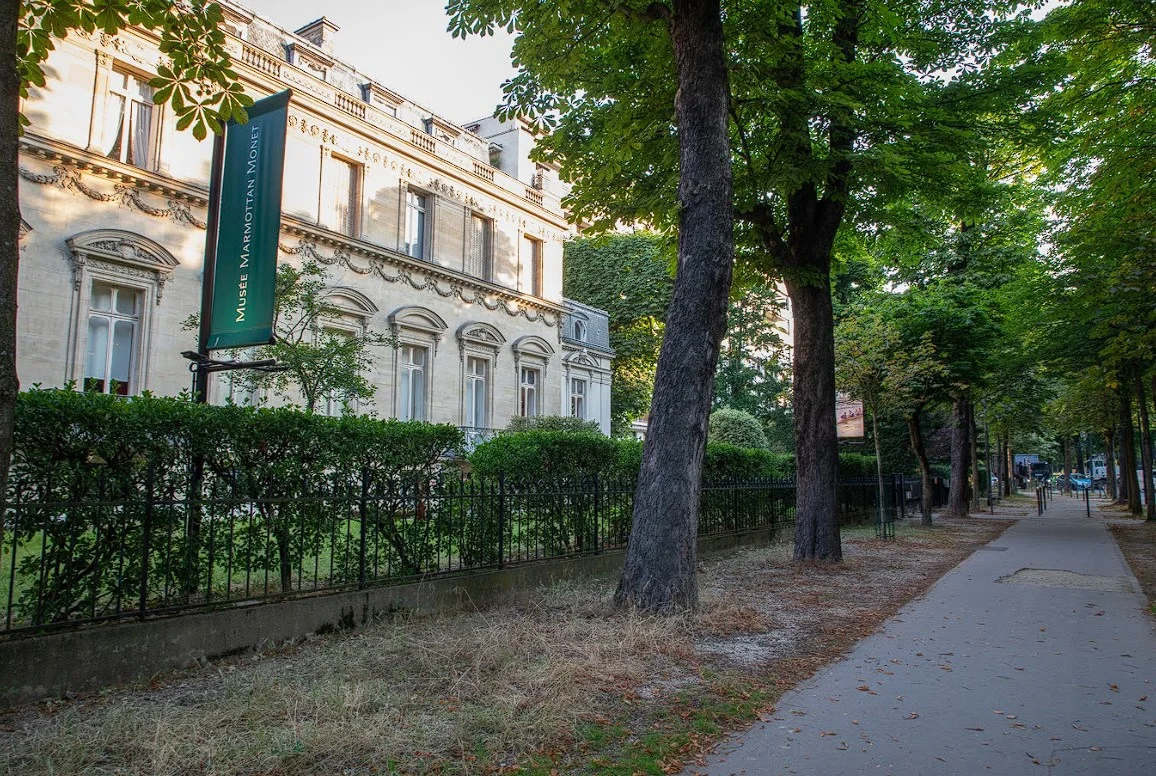
If “boring” means “no bars open at 2am”, then yes, the 16th is boring. If “boring” means “no cultural life”, that is false: the Palais de Tokyo, the Museum of Modern Art, the Fondation Louis Vuitton, the Maison de Balzac, the Musee Marmottan: the 16th is one of the arrondissements richest in cultural offerings.
The reality is that the 16th is not a going-out neighbourhood. It is a living neighbourhood. Residents go to restaurants (and there are excellent ones, from Comice to Astrance), entertain at home, enjoy the Bois de Boulogne. The rhythm is different, not inferior.
”The 16th is bourgeois and uniform”
Sociologically, the 16th is indeed one of the most affluent arrondissements in Paris. But “uniform” is inaccurate. The mix of diplomatic populations (more than twenty nationalities represented), established French families, young executives with children, and expats creates a diversity that the cliche does not capture. Auteuil is not Victor Hugo, and Passy is not Trocadero.
”The 16th is too expensive”
This is the most counter-intuitive prejudice, because it is wrong. The 16th is less expensive than the 6th, the 7th, and parts of the 8th and 4th. Its average price of 12,400 euros/sqm places it in the same bracket as the 9th or 17th, but with more generous floor areas. In terms of quality-price-space ratio, the 16th is one of the best investments in Paris for families.
”The 16th is poorly served”
The 16th is served by metro lines 2, 6, 9, 10, and the RER C. It is not the 1st or the 4th arrondissement in terms of connectivity, but the service is adequate, especially in the northern 16th. The real weak point is the southern 16th (Auteuil, Porte d’Auteuil) where the metro is further away. Lines 10 and 9 cover most of the area, but some Auteuil streets are 10-12 minutes from the nearest station.
Buying in the 16th: what you need to know
The 16th’s market is stable and readable. No speculative bubbles, no sharp corrections. Prices have been growing at 1.5 to 2% per year for five years, driven by steady demand from families and long-term investors.
The average time to sell is 50 to 60 days, slightly longer than the Parisian average, because budgets are higher and decisions more considered. Family properties (4-bedrooms and above) in good condition sell faster. Large apartments needing renovation take longer, creating negotiation opportunities.
Off-market exists in the 16th, but less than in the 6th or 7th arrondissement. The market is more transparent, with more properties listed on portals. A property hunter remains useful for two reasons: the volume of supply (the 16th is large, sifting listings takes considerable time) and knowledge of micro-neighbourhoods (two streets’ difference makes a real difference in quality of life).
The 16th arrondissement is not a neighbourhood you choose to impress. It is a neighbourhood you choose for quality of life, and once you have experienced it, you understand why its residents defend their arrondissement with as much conviction as Montmartre residents defend theirs. If the 16th interests you, our 16 property hunters know every micro-neighbourhood, every street, every building worth a detour.
Frequently asked questions
Is the 16th arrondissement boring?
This is the most persistent and most unjust cliche. The 16th has five micro-neighbourhoods with very different atmospheres: Trocadero (cosmopolitan and prestigious), Passy (a vibrant village with shops and a market), Auteuil (residential and green), La Muette (family-friendly and discreet), Victor Hugo (bourgeois and central). Nightlife is limited, that is true. But for daily quality of life, green spaces, calm, safety, shops and schools, the 16th is one of the most pleasant arrondissements in Paris.
What budget is needed to buy in the 16th arrondissement in 2026?
The average price is 12,400 euros/sqm but the range is significant. Trocadero and Victor Hugo command 14,000 to 16,000 euros/sqm for prime floors. Passy and La Muette are more accessible, around 11,000 to 13,000 euros/sqm. Auteuil offers the best opportunities, with family apartments at 10,000-12,000 euros/sqm. For a 4-bedroom of 90 sqm, count between 900,000 euros (Auteuil) and 1.4 million euros (Trocadero).
Is the 16th a good property investment?
The 16th is a quintessential long-term investment: low volatility, solvent clientele, constant demand (families, diplomats, expats). Price growth (+1.8% in 2026) is moderate but steady. Rental yield is however below the Parisian average (2.5 to 3% gross) due to high purchase prices. It is a safe-haven investment, not a yield play.