

In brief
In 2026, a parking space or enclosed garage in Paris sells for between 15,000 euros (19th, 20th) and 40,000 euros and above (8th, 16th), for a monthly rent of 100 to 250 euros, giving a gross yield of 5 to 8% with peaks at 10% in the most sought-after locations. With very low charges (200 to 500 euros/year) and a simple civil law lease with no rent control or winter eviction moratorium, it is the most profitable micro-investment on the Paris market, supported by the removal of more than 60,000 on-street spaces between 2014 and 2026. Home Select, a property hunter in Paris since 2011 (16 buying agents, 1,200+ buyers supported, 4.8/5 on Google), spots mixed parking-and-cellar lots that optimise the overall yield of the acquisition.
Key takeaways
- Parking spaces in Paris yield 5-8% gross with peaks at 10%, compared to 3-5% for residential studios
- Enclosed garages cost 15,000-40,000 euros and rent for 100-250 euros/month with virtually no management
- The City of Paris removed 60,000+ on-street parking spaces between 2014 and 2026, driving underground demand
- Parking rental uses a simple civil law lease with no rent control, no winter eviction moratorium and one-month notice
An enclosed garage in the 11th arrondissement, purchased for 22,000 euros, rented at 180 euros/month. Gross yield: 9.8%, one of those peaks close to 10% that the Paris market reserves for the best locations, above the usual 5 to 8% range. No tenant to manage in the traditional sense, no works, no rent control, no winter eviction moratorium. The parking space is the most profitable property investment in Paris, and the least known among individuals who only consider flats.
Does parking really pay better than a flat in Paris?
Yes, and the gap is structural: where a studio offers 3 to 5% gross, a parking space sits between 5 and 8%, with peaks at 10% in the most sought-after locations. This gap is explained by a structurally favourable price-to-rent ratio: the purchase price is very low in proportion to the rent the market will pay.
An enclosed garage in Paris ranges from 15,000 euros in the 19th or 20th to 40,000 euros and above in the 8th or 16th. Monthly rent oscillates between 100 euros for an open underground space in an outlying arrondissement and 250 euros for a secure enclosed garage in a central neighbourhood. A space at 20,000 euros rented at 150 euros/month generates a gross yield of 9%, a level no Parisian flat can structurally match.
Parking demand is driven by a growing imbalance. The City of Paris has removed more than 60,000 on-street parking spaces between 2014 and 2026 in favour of cycle lanes, restaurant terraces and urban greening. Paid parking has been extended and raised (up to 75 euros per day for an SUV in the first four arrondissements). Low emission zones restrict access for older vehicles but do not reduce overall parking demand; they shift it underground. Waiting lists for a basement space in certain buildings in the Marais, the 11th or the 6th stretch to several years.
What does a 22,000 euro garage in the 11th actually return?
A gross income of 2,160 euros a year against 480 euros of charges, so 1,680 euros net and a net yield of 6.86% on the 24,500 euros invested. After tax under the micro-foncier regime, 967 euros remain, or 3.95% net-net. Here is the calculation in detail.
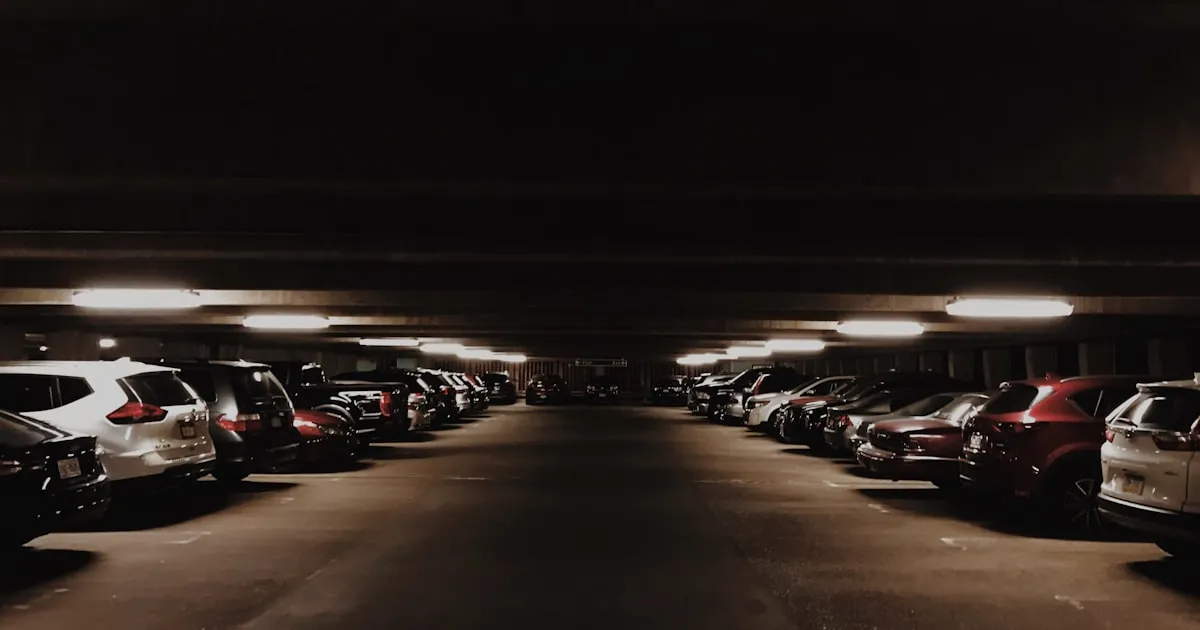
A 12 m² enclosed garage in a secure basement, in a co-ownership on boulevard Voltaire in the 11th arrondissement. Purchase price: 22,000 euros. Notaire fees on a property below 60,000 euros are proportionally higher than on a flat, because the notaire’s fixed fees (approximately 1,500 euros) weigh more heavily. Count approximately 2,500 euros, or 11%. Total investment: 24,500 euros.
The garage is rented at 180 euros/month to a local resident, with neither a commercial lease nor a residential lease. The rental contract for a parking space is a standard civil law lease, governed by the French Civil Code (articles 1709 and following). No 1989 housing law, no decency decree, no rent control, no winter eviction moratorium. Notice is one month from the tenant and two months from the landlord, a flexibility residential does not allow. The gross annual income is 2,160 euros.
Annual charges are minimal, and this is one of the major advantages of parking over housing. Co-ownership charges for parking (maintenance of basement common areas, lighting, ventilation, automatic door) cost between 200 and 500 euros/year. Take 350 euros for a basement with a motorised door and automatic lighting. Property tax on a parking space is very low: 80 to 150 euros/year depending on the arrondissement, take 80 euros for this lot. PNO insurance is virtually symbolic: 50 euros/year. No letting management to delegate, as turnover is low (a parking tenant stays on average 3 to 5 years, or longer) and the contractual relationship is simple (a one-page contract, a monthly bank transfer). No maintenance works needed: an enclosed garage requires no refreshment, no painting, no furniture replacement.
Total charges: 480 euros/year (350 + 80 + 50). Net income after charges is 1,680 euros, yielding a net return of 6.86%. That is nearly double the net yield of a studio in the same arrondissement. Under the micro-foncier regime (30% deduction on gross rental income, applicable if total rental income does not exceed 15,000 euros/year), the taxable income is 1,512 euros. At the 30% marginal tax rate plus 17.2% social contributions, the tax is 713 euros. The net-net yield reaches 967 euros, or 3.95%. Under the regime reel, if the investor holds other properties and deducts charges, the result can be further improved.
Which locations in Paris are the most profitable?
The outlying arrondissements (18th, 19th, 20th) show the highest gross yields, 7 to 10%, thanks to purchase prices of 15,000 to 20,000 euros. Central residential districts cost more but see virtually no vacancy.
Dense residential neighbourhoods with few co-ownership car parks offer the best price-to-demand ratio. The 3rd and 4th (Marais, Beaubourg), the 6th (Saint-Germain), the 11th (Bastille, République) are areas where residents struggle to park and waiting lists are long. Purchase prices are higher: 25,000 to 35,000 euros in the Marais and Saint-Germain, from 22,000 euros in the 11th. Vacancy is virtually non-existent and turnover minimal: a tenant who finds a space in the Marais does not let it go.
Office districts offer complementary demand. The 8th (Champs-Élysées, Madeleine), the 9th (Opéra) and La Défense attract professionals who rent a parking space monthly. Monthly rates reach 200 to 250 euros for a secure garage, sometimes more for company vehicles.
The outlying arrondissements (18th, 19th, 20th) offer the lowest purchase prices (15,000 to 20,000 euros) with rents of 100 to 140 euros/month. The gross yield is often the highest (7 to 10%), but demand is more sensitive to economic conditions and turnover more frequent.
Find out how Home Select can help you
What traps should you avoid before buying a parking space?
Four traps are enough to ruin the yield: a damp basement, a co-ownership with high charges (800 to 1,200 euros/year, or 2 to 3 points of yield lost), difficult access, and an uncovered outdoor space. All four can be spotted before signing.
A damp basement is the first trap. Parisian underground car parks often face water infiltration issues, especially in arrondissements close to the Seine (4th, 5th, 12th, 15th, 16th). A regularly flooded basement drives away tenants and damages vehicles. Before buying, review the co-ownership general meeting minutes to identify any waterproofing or pumping issues, and visit during rainy weather if possible.
Co-ownerships with high charges are the second trap. Some parking spaces in upmarket co-ownerships (building with concierge, CCTV, daily basement cleaning) carry charges of 800 to 1,200 euros/year for a single parking space. At this level, the net yield drops by 2 to 3 points and the investment loses its appeal. Target co-ownerships with charges below 500 euros/year, which covers the vast majority of Parisian basements without premium amenities.
Difficult access is the third discriminating factor. A narrow access ramp, a tight turn at the second basement level, a malfunctioning gate: these details make the difference between a parking space that rents in 48 hours and one that stays empty for two months. Test the access with a standard-sized vehicle (compact urban SUV type) before signing.
Uncovered outdoor spaces are a false friend. The low purchase price (10,000 to 15,000 euros) is tempting, but rental demand is significantly weaker. Parisians who pay 150 euros/month want shelter for their vehicle, not a space exposed to wind and rain.
What place should parking take in a wealth strategy?
That of a first investment, or that of a portfolio complement. With 15,000 to 25,000 euros, a parking space immediately generates positive cash flow, with no mortgage and no complex management.
Parking is an excellent first investment for a saver who does not yet have the budget for a flat. With 15,000 to 25,000 euros, it is possible to acquire a parking space that immediately generates positive cash flow, without a mortgage, without complex management. The experience as a landlord is directly transferable to residential investment: letting management, taxation, co-ownership.
It is also an ideal complement for an investor who holds flats. Parking diversifies risk (different tenant, different regulations, minimal charges), improves the overall portfolio yield and generates free cash flow. For investors who want to maximise the effect, buying mixed lots of parking space plus cellar offers even higher yield potential: Parisian cellars sell for 3,000 to 8,000 euros and rent for 50 to 100 euros/month, giving gross yields of 8 to 15% for the usual combinations (a 6,000 euro cellar rented at 75 euros/month returns 15% gross).
Where do you find a parking space for sale in Paris?
Parking spaces are not found on SeLoger. The four best sources are property management companies liquidating abandoned lots, notaires handling estates, notarial and court auction sales, and general meetings voting to sell communal lots.
Property management companies liquidate lots burdened with years of unpaid charges: these sales often happen at 50 to 70% of market price. Notaires handling estates offer parking spaces in lots, sometimes at a discount. Notarial and court auction sales offer attractive starting prices with limited competition, as few investors show up for a lot at 15,000 euros. Finally, co-ownership general meetings sometimes vote to sell communal lots (former technical spaces converted into parking), and an attentive co-owner can seize these opportunities first.
Is a property hunter worth engaging to buy a parking space?
Not for an isolated space at 20,000 euros: the fees would be disproportionate. Yes for a mixed parking-plus-cellar lot, or for a flat and a parking space in the same building.
Engaging a property hunter to buy an isolated parking space at 20,000 euros is therefore not worthwhile. However, our hunters get involved usefully when the investor is looking for a parking-plus-cellar lot sold as an ancillary lot during co-ownership sales, or when they are looking for a flat and a parking space in the same building. Across the 1,200+ mandates since 2011, we have learned to spot these mixed opportunities that optimise the overall yield of the acquisition.
The Parisian parking space will remain, in 2026 and beyond, the most efficient micro-investment in the Île-de-France market. Accessible entry ticket, unbeatable gross yield, virtually no management: it is the investment every investor should have in their portfolio, even before venturing into residential.
Sources
Frequently asked questions
01 What yield can you expect from a parking space in Paris in 2026?
The gross yield on a Parisian parking space ranges between 5 and 8% depending on the arrondissement and type (enclosed garage or open space). The net yield remains high thanks to very low charges, between 4 and 6% for a well-located enclosed garage.
02 What does it cost to buy a parking space in Paris?
Prices range from 15,000 euros for a space in the 19th or 20th arrondissement to 40,000 euros and above for an enclosed garage in the 8th or 16th. Enclosed garages rent for 15 to 25% more than open spaces.
03 What are the advantages of a parking space compared to a flat?
Virtually no management, no rent control, no winter eviction moratorium, no works, a simple civil law lease. The entry ticket of 15,000 to 40,000 euros makes it accessible without a mortgage.
04 How do you find a parking space to buy in Paris?
Property management companies liquidating abandoned lots, notaires handling estates, notarial auction sales, and co-ownership general meetings voting to sell communal lots. Mainstream portals only list a minority of these properties.