








In brief
In 2026, Home Select supported Marc and Camille, a couple with two children leaving Boulogne-Billancourt, in buying a 105 sqm Haussmannian five-room flat on Avenue de Wagram, on the Ternes side of the 17th arrondissement of Paris, signed at 980,000 euros after a 5.8% negotiation off the 1,040,000 euro asking price, a 60,000 euro saving. The 1885 flat, with preserved original features (herringbone parquet, mouldings, marble fireplaces), was found in 9 weeks through an unpublished exclusive mandate, with works costed by craftsmen before the negotiation. A property hunting firm founded in 2011 with 16 buying agents, Home Select achieves an average 6% negotiation off the seller's price. Original features, mouldings, Hungarian-point parquet, marble fireplaces and ceiling height above 3 metres, account for a 10 to 20% premium on the price of a Paris Haussmannian apartment.
Key takeaways
- A couple found a 105 sqm Haussmannian five-room flat on Avenue de Wagram in Paris 17th for 980,000 euros
- The property hunter negotiated a 5.8% reduction, saving 60,000 euros on the 1,040,000 euro asking price
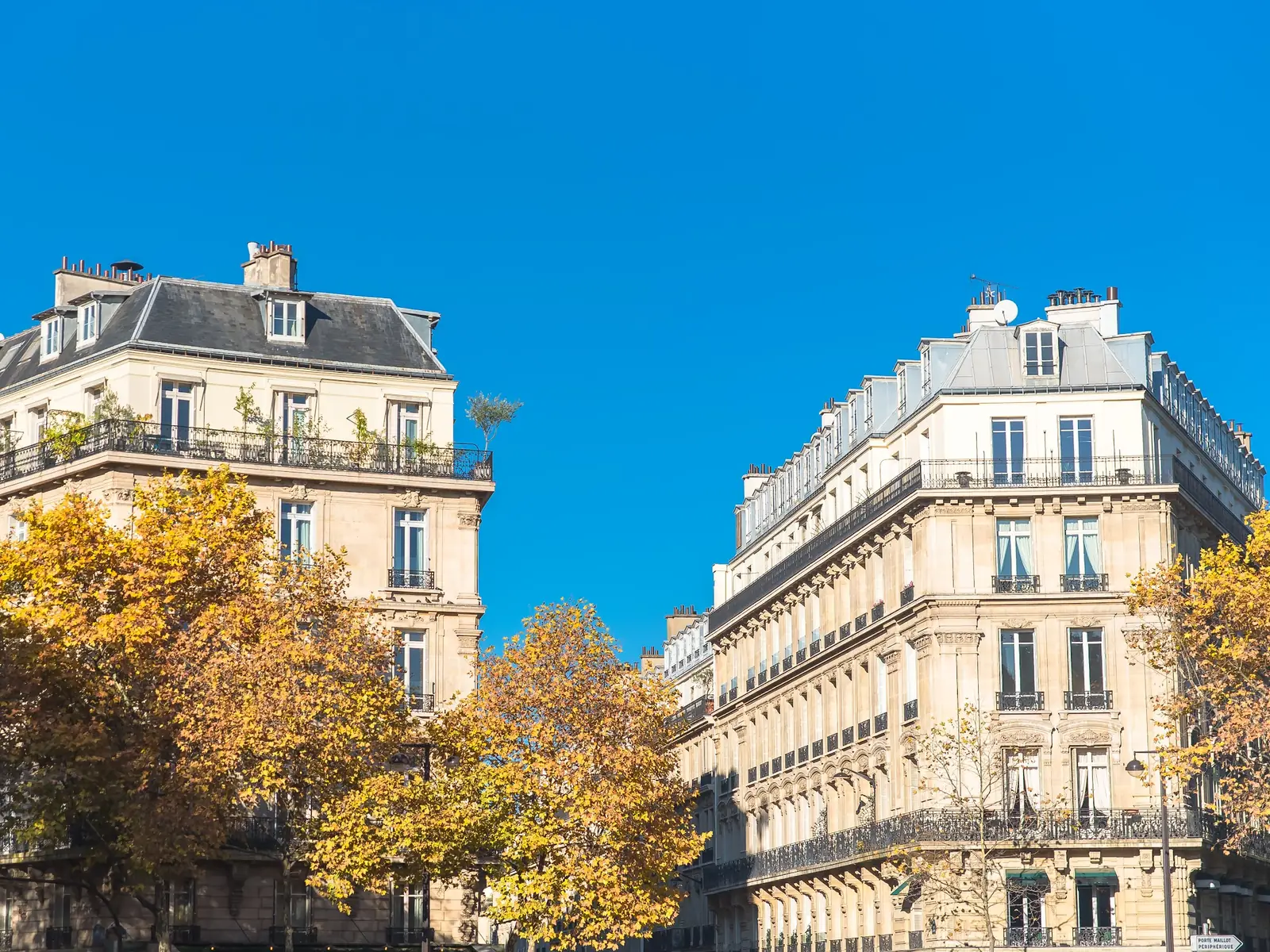
- Authentic Haussmannian apartments (1853-1914) are identified by ceiling heights above 2.80 m, original mouldings, marble fireplaces and herringbone parquet
- The apartment was accessed through an exclusive agency mandate before any online publication
- Mouldings, Hungarian-point parquet and ceiling height above 3 metres are worth 10 to 20% of the price
A couple with two children was looking for a Haussmannian flat of at least 100 m² in Paris, with a budget of 1,050,000 euros. The Home Select property hunter found a 105 m² five-room flat on the 3rd floor of an 1885 building in the 17th arrondissement and negotiated it down from 1,040,000 euros to 980,000 euros, a saving of 60,000 euros (5.8%).
Mission overview
- Property hunter: Home Select
- Area: Paris: search across the 8th, 9th, 16th, 17th arrondissements
- Property type: Haussmannian five-room flat, 105 m², 3rd floor with lift
- Initial budget: 1,050,000 euros
- Listed price: 1,040,000 euros
- Negotiated price: 980,000 euros
- Negotiation: -5.8% (60,000 euros)
- Search duration: 9 weeks
- Buyer profile: Couple, both senior executives, two children (aged 8 and 5)
Why was this couple leaving Boulogne for a Haussmannian flat in Paris?
To be closer to their offices and give their two children a more urban life, in an authentic Haussmannian flat rather than an imitation. Marc and Camille, a CFO and a lawyer, were then living in an 85 m² modern four-room flat in Boulogne-Billancourt.
The brief was precise: at least 100 m², three bedrooms, a ceiling height of 2.80 m or more, original features preserved (mouldings, fireplaces, parquet), and a floor between the 2nd and 4th. The budget of 1,050,000 euros was ambitious and fixed.
The couple had viewed five flats on their own. The pattern was familiar: either the property was billed as Haussmannian when it was really a 1930s building, or earlier renovations had stripped out the original features, or the price ran well over budget for the floor area they wanted.
Where do you look for an authentic Haussmannian flat on a 1,050,000 euro budget?
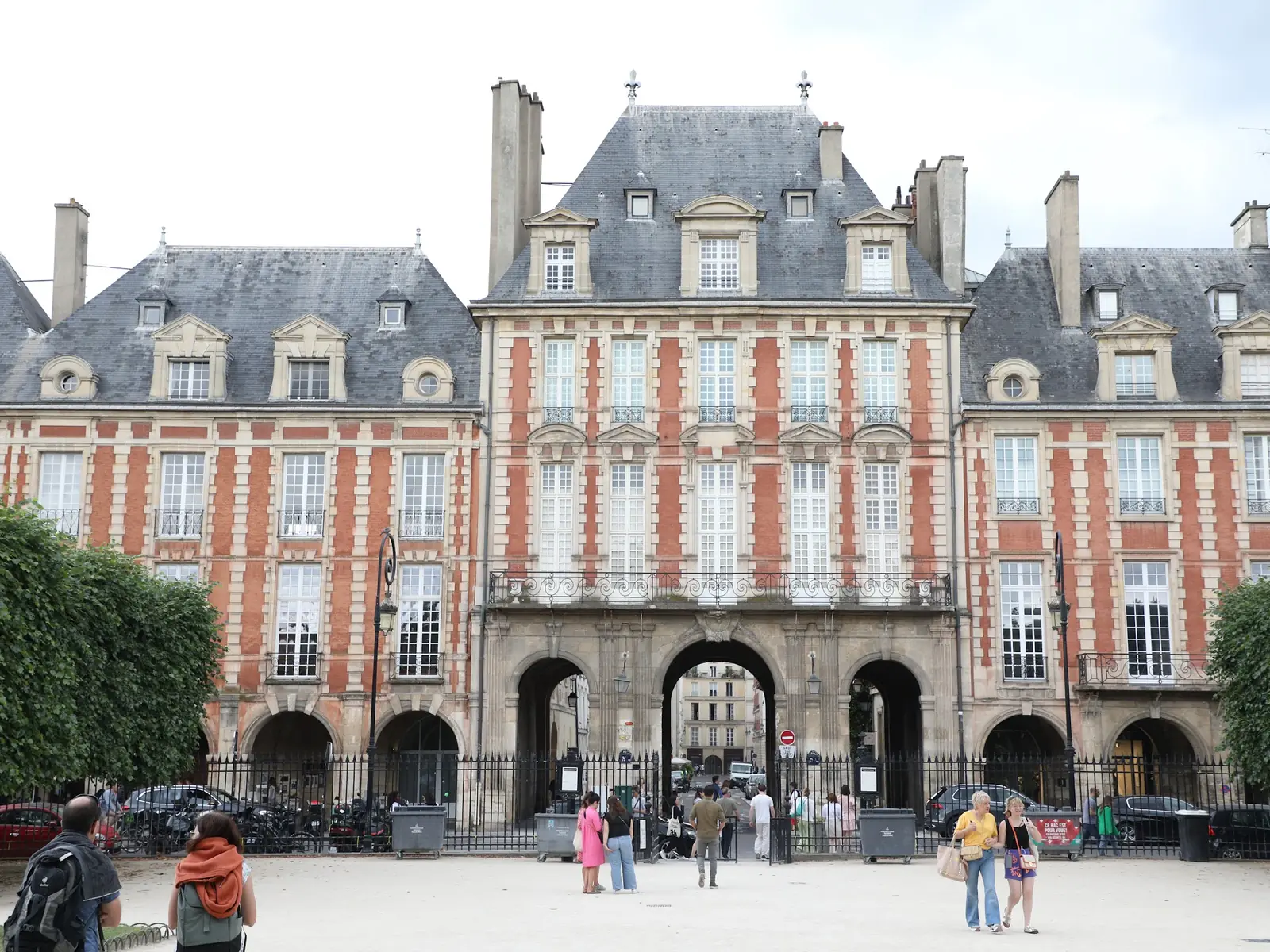
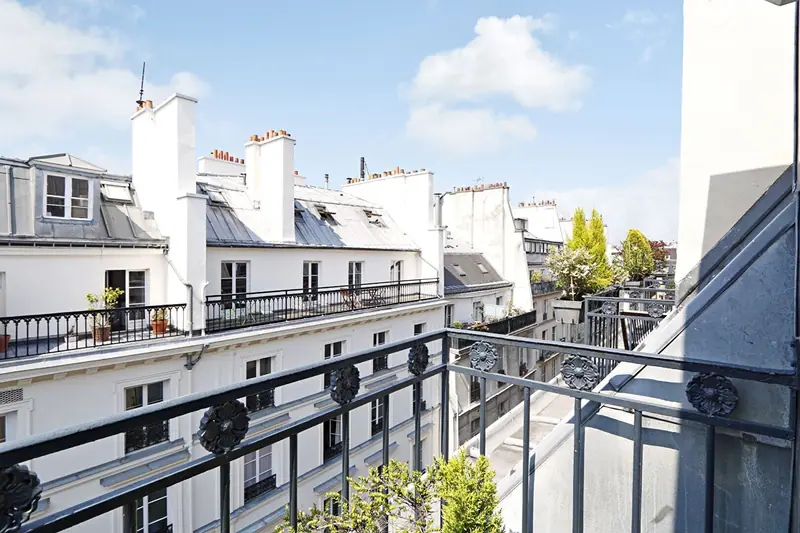
In three areas: the 17th (Batignolles, Plaine Monceau), the 9th (Trinité) and certain pockets of the 8th, which offered the best balance of authenticity and price for this budget. The property hunter started with that architectural assessment, because genuine Haussmannian buildings (1853-1914) cluster along the grands boulevards, the avenues laid out by Baron Haussmann, and the streets following the Second Empire plan.
The property hunter drew up a reference sheet of authenticity markers to check at viewings: the type of parquet (original herringbone or chevron), ceiling rosettes, marble fireplaces (not moulded plaster), casement windows, and a staircase with a wrought-iron banister.
The search ran on two tracks: the open market, with alerts set to the right criteria, and the off-market network of agencies specialising in quality period properties.
What 1885 Haussmannian flat was found on Avenue de Wagram?
A 105 m² five-room flat on the 3rd floor of an 1885 building on Avenue de Wagram, on the Ternes side. It came up in the eighth week, shared by an agency in the 17th under a sole mandate not yet published.
The building had every Haussmannian marker the couple were after: a staircase under a glass canopy, a modernised period lift, a caretaker’s lodge.
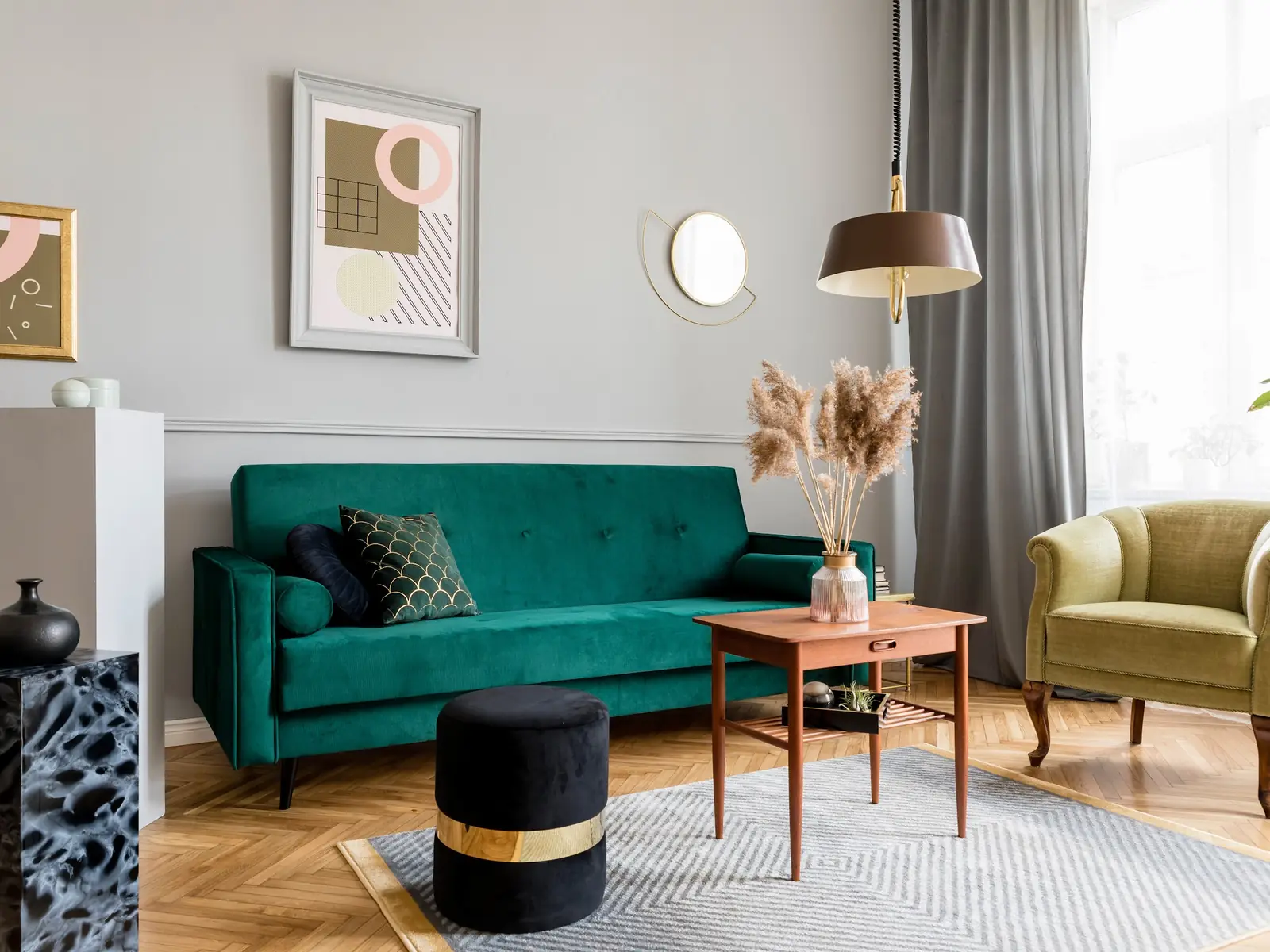
The flat kept most of its original features: herringbone parquet in the reception rooms, mouldings and cornices in the living and dining rooms, two white marble fireplaces (one working), and double doors between the two.
The layout: a dual-aspect 35 m² living room, three bedrooms of 14, 12 and 10 m², a 10 m² closed kitchen, a separate bathroom and shower room, and an entrance hall with built-in cupboards. Ceiling height: 3.10 m.
Three points to watch: the electrics needed partial rewiring (a recent consumer unit but old wiring in two bedrooms), the avenue-facing windows wanted replacing for sound, and the paintwork needed redoing throughout. Estimated renovation budget: 45,000 to 55,000 euros.
How was 60,000 euros secured on this Haussmannian flat in the 17th?
By costing the works before making the offer: 12,000 euros of rewiring and 18,000 euros to replace the avenue-facing windows, both backed by contractors’ quotes. The price went from 1,040,000 to 980,000 euros, a 5.8% reduction, from 9,905 to 9,333 euros/m².
The asking price did put the flat in line with the Ternes area, but it took no account of the work needed. The property hunter rounded out the case with a comparison with two recent DVF sales in the same block, at 9,200 and 9,400 euros/m².
An offer at 960,000 euros was rejected. A counter at 980,000 euros, with financing already approved and a commitment to sign within 15 days, was accepted. The seller, settling an estate, preferred a certain sale to a drawn-out negotiation.
What can be learned from a Haussmannian flat bought off the portals?
This five-room flat was never published online: it came through an agency sole mandate, after 9 weeks of searching, and 60,000 euros were negotiated off. Three lessons stand out.
A property hunter’s eye for architecture guards against fake Haussmannians. Of the five flats this couple viewed alone, three were in buildings that were not genuinely Haussmannian. A property hunter versed in Parisian architecture tells an 1870 building from a 1930 one at a glance. That knowledge saves weeks of searching and guards against overpaying. To pin down an authentic Haussmannian, there is no substitute for a trained eye.
Sole mandates are a source of premium property. This five-room flat never appeared on the portals. It moved through the network of trust between the mandated agency and local property hunters. Understanding how sole mandates work explains why the best properties are not always visible online.
Renovation work in period buildings should be costed before you negotiate. The property hunter had the work assessed by contractors before making the offer, turning each line item into a documented argument. That method brought the price from 1,040,000 euros to 980,000 euros without souring relations with the seller. Viewing with method always includes a technical costing.
Looking for an authentic Haussmannian flat in Paris? Contact Home Select for a targeted search of exceptional buildings.
Sources
Frequently asked questions
01 How do you recognise an authentic Haussmannian flat in Paris?
An authentic Haussmannian flat (1853-1914) is marked by several features: a ceiling height of at least 2.80 m (often 3 m or more on the noble floors), ceiling mouldings and cornices, marble fireplaces, herringbone or chevron parquet, and double doors between reception rooms. Beware of post-Haussmannian buildings (1900-1930) sometimes sold as Haussmannian: they share certain codes but differ structurally.
02 What is the average price of a Haussmannian flat in Paris in 2026?
In 2026, the average price of a Haussmannian flat in Paris varies widely by arrondissement and condition: from 9,000 euros/m² in the 17th and 18th (peripheral areas) to over 15,000 euros/m² in the 6th, 7th and 8th arrondissement. A 100 m² five-room flat sells between 900,000 euros and 1,500,000 euros depending on location.
03 Is renovation more expensive in a Haussmannian flat?
Yes, on average 20 to 40% more than in a standard flat. The particular constraints include ceiling height (more wall surface to treat), the preservation of original features (mouldings, parquet), strict co-ownership rules on alterations (walls are often load-bearing), and rewiring in old buildings. Expect between 1,200 and 2,000 euros/m² for a full renovation.
04 How do you cost the works before negotiating an older apartment?
The method is to have each item assessed by craftsmen before making the offer, turning defects into documented arguments. In this mission, Home Select had the electrical compliance (12,000 euros) and the avenue-side window replacement (18,000 euros) costed on a 105 sqm Haussmannian five-room flat in the 17th, then combined these quotes with the block's DVF comparables. The result: a price brought down from 1,040,000 to 980,000 euros, a 5.8% saving, without breaking the relationship with the seller.