

The average price per square meter in the 6th arrondissement of Paris reaches 15,800 euros in 2026. It is the highest in the capital, ahead of the 7th (14,200 euros) and the 4th (13,600 euros). But reducing Saint-Germain-des-Pres to a number would be a mistake. This neighborhood is not expensive because it is fashionable: it is expensive because it is irreplaceable. And after fifteen years of searching for apartments there for my clients, I measure every day the distance between the neighborhood’s reputation and its daily reality, which is richer, more complex, and more endearing than the shopfronts suggest.
Saint-Germain-des-Pres is the literary myth (Sartre, Beauvoir, the jazz cellars) superimposed on a ruthless property reality: few properties, strong demand, and a market where the usual rules do not quite apply. To buy here, having the budget is not enough. You must understand the neighborhood’s codes.
The geography of the 6th: three neighborhoods in a handkerchief
The 6th arrondissement measures 2.15 sqkm. It is tiny: you can cross it on foot in twenty minutes. But those twenty minutes traverse three worlds.
Saint-Germain-des-Pres proper
The heart of the 6th is the triangle formed by boulevard Saint-Germain, rue Bonaparte, and the Seine. This is where you find the art galleries of rue de Seine and rue des Beaux-Arts, the bookshops of rue de l’Odeon, the antique dealers of the Carre Rive Gauche, and the mythical terraces of Cafe de Flore and Les Deux Magots.
The architecture is a blend of 17th and 18th-century buildings, some of them listed historic monuments, with stone facades, carriage entrances, paved inner courtyards, and wooden staircases that have been creaking for three centuries. Ceilings are often spectacular (3 meters and above on the noble floors), period fireplaces omnipresent, and original Versailles-pattern parquet throughout.
Prices here are the highest: 16,000 to 20,000 euros/sqm for the finest floors on the most sought-after streets. Rue de Seine, rue Jacob, rue de Verneuil (technically in the 7th, but the atmosphere is pure Saint-Germain), rue des Saints-Peres: each address carries a prestige that Parisian market connoisseurs instantly recognize.
The buyer profile: a predominantly wealth-preserving clientele, French and international, buying to pass on. Many established liberal professionals, inheritors, art collectors. The average buyer age is higher than elsewhere in Paris: you do not buy in Saint-Germain at 30 (unless through inheritance); you buy at 50 after building wealth.
Odeon and the Monnaie quarter
Odeon is the most vibrant face of the 6th. The Odeon crossroads, the theater of the same name, the Saint-Germain market (rebuilt, somewhat commercial, but still useful), the immediate proximity of the Luxembourg: this is a neighborhood that breathes intellectual and cultural activity.
The streets around Odeon are among the most pleasant in Paris for daily life. Rue Monsieur-le-Prince, rue Racine, rue de l’Ancienne-Comedie offer a balance between animation (restaurants, cinemas, bookshops) and residential tranquility on the upper floors. Prices are slightly below the Saint-Germain core: 14,000 to 16,000 euros/sqm, making it, all things considered, somewhat more accessible.
The proximity of the Sorbonne and the grandes ecoles gives the neighborhood a student energy that is lacking in the rest of the 6th. This is the corner of the 6th that appeals to intellectuals, academics, and publishers. Books are still published in the streets around Odeon, and you can feel it.
Luxembourg: the residential 6th
The south of the 6th, around the Jardin du Luxembourg, is the most residential part of the arrondissement. Fewer galleries, fewer boutiques, more family-sized buildings with spacious apartments. Rue d’Assas, rue Guynemer, rue de Vaugirard (in its 6th arrondissement section) offer direct views of the garden, and the prices that go with them.
An apartment with Luxembourg views is the holy grail of Parisian property. Prices can exceed 22,000 euros/sqm for a top floor with terrace and open views over the garden. These properties never sell on the open market: they circulate from notaire to property hunter, by word of mouth, in a completely closed circuit.
For families, the Luxembourg quarter is paradoxically more suitable than the Saint-Germain core. Streets are calmer, apartments larger, and the Jardin du Luxembourg is the finest playground in Paris. Lycee Henri-IV and Lycee Louis-le-Grand, two of the most prestigious schools in France, are a few minutes’ walk away.
What you actually find at each budget level
Let us be concrete. Here is what the Saint-Germain market offers at different budget levels in 2026, based on our recent searches.
With 800,000 to 1 million euros
A 40 to 55 sqm 2-room apartment on a secondary street, in good condition. Mid-floor (2nd or 3rd), no exceptional view. This is the entry ticket to Saint-Germain, and it is contested. Quality studios (30-35 sqm) can still be found below 600,000 euros, but for investment or pied-a-terre purposes, not for year-round living.
A concrete example: a 48 sqm 2-room apartment on the 3rd floor, rue du Dragon, no elevator, kitchen refitted, bathroom adequate, sold for 920,000 euros (19,150 euros/sqm). The price may seem high, but rue du Dragon is one of the most charming streets in the neighborhood, and tenants for this type of property are found within days.
With 1 to 1.5 million euros
A fine 60-70 sqm 2-room apartment or a 55-65 sqm 3-room in good condition. Possibility of an upper floor on a good street. This is the most active price range in the Saint-Germain market, where senior executives, liberal professionals, and childless couples seeking the best of the 6th converge.
In this range, the choice between renovated and to-renovate is crucial. An apartment requiring renovation trades 10 to 15% below the renovated price, but works in the 6th are expensive (specialist craftsmen, Batiments de France constraints, demanding condominiums). Budget 2,000 to 3,000 euros/sqm for a quality full renovation.
With 1.5 to 2 million euros
A proper 70-85 sqm 3-room apartment in a good location, or a 70 sqm 4-room on a less prime street. This is the budget that opens the doors to the finest addresses: rue de Seine, rue Jacob, rue du Cherche-Midi, with an apartment where you can genuinely live as a family (with one child, perhaps two young ones).
This is also the price range where off-market begins to dominate. Sellers putting a property of this value on the market in Saint-Germain do not want public viewings. They call their notaire, who calls two or three trusted property hunters, and the property sells in a week without ever being listed.
Above 2 million euros
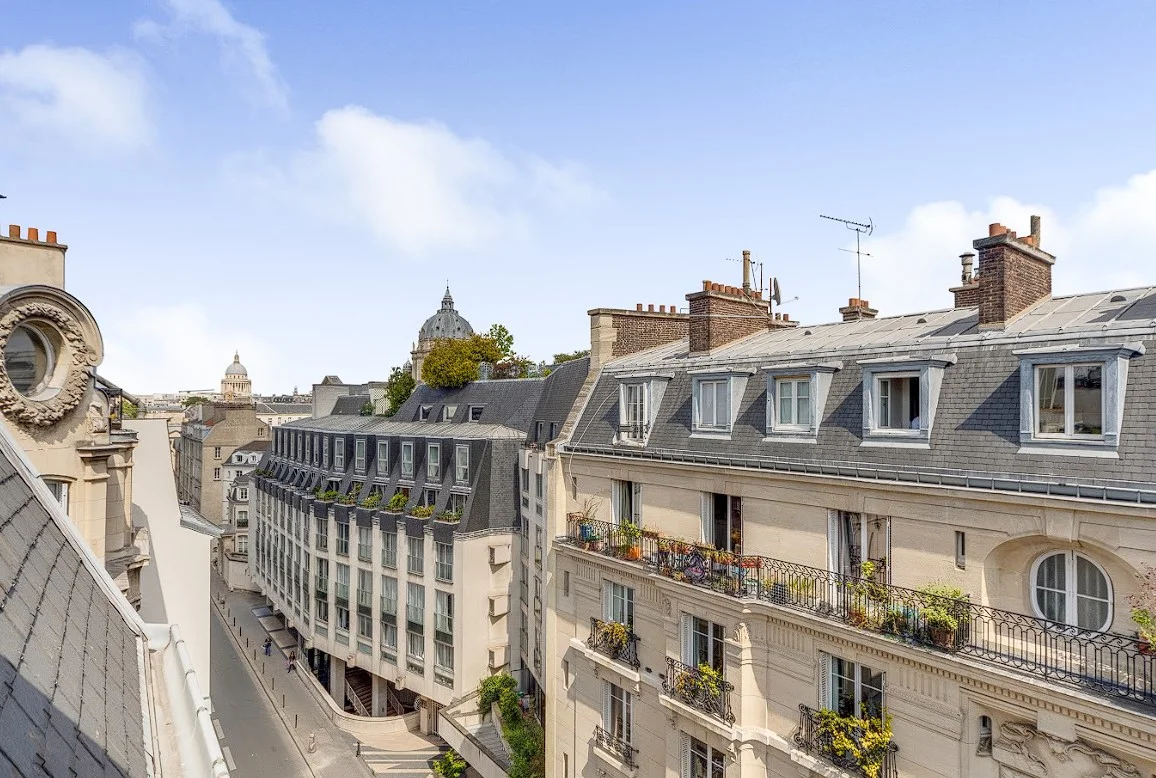
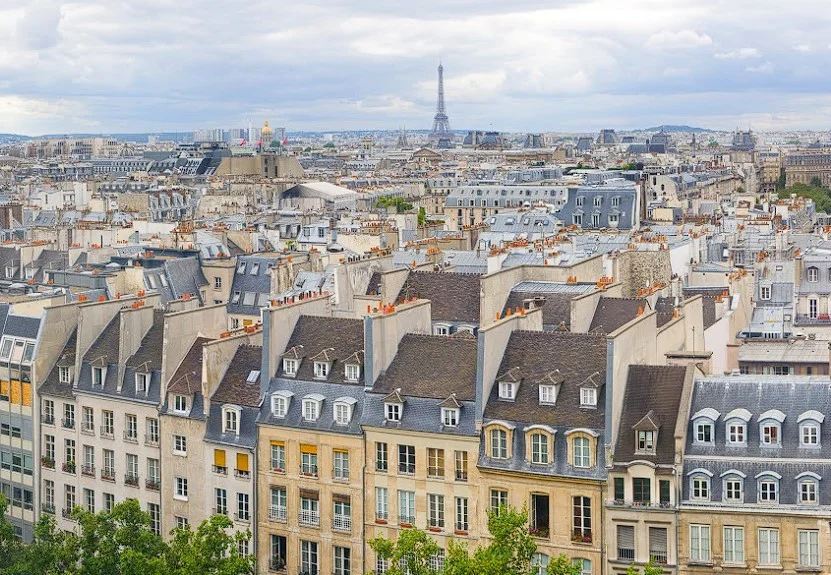
Exceptional properties: top floors with views over the rooftops of Paris, duplexes with terraces, reception apartments with double living rooms of 50 sqm, private mansions. The market is confidential, transactions rare (a few dozen per year across the entire 6th), and prices follow no logic per square meter: it is the price of emotion.
At this level, a property hunter in Paris is not an optional intermediary. It is the condition of access. The finest properties in Saint-Germain are never visible to a buyer searching alone, regardless of their budget.
Off-market: the rule, not the exception
Saint-Germain-des-Pres is the epicenter of the Parisian off-market. By our estimate, 40 to 50% of transactions in the 6th take place without publication, two to three times the Parisian average.
The reasons are structural. Sellers in the 6th are often elderly individuals from established families who want neither publicity nor a parade of visitors in their apartment. The family notaire contacts a few trusted professionals, two or three viewings are arranged, and the sale concludes discreetly.
For a buyer, this means one simple thing: if you are searching in Saint-Germain-des-Pres without being connected to the off-market network, you are missing half the supply. And not just any half: the best half. Properties listed on portals are those that did not find a buyer off-market, either because the price is too high or because the property has a defect that insiders have spotted.
Our article on accessing off-market properties in Paris details the mechanisms of this parallel market. In the case of Saint-Germain, access primarily runs through three channels: neighborhood notaires (around ten of them handle 80% of transactions), the historic 6th arrondissement agents (Vaneau, Daniel Feau, Junot), and property hunters who maintain long-term relationships with these contacts.
Jean Mascla’s advice: If you are targeting Saint-Germain, never start by looking at online listings. Start by engaging a property hunter, explain your project, your budget, and your timeline. Your hunter will activate their 6th arrondissement network, and the first properties they present will probably be ones you would never have seen otherwise. At Home Select, our hunters have been active in the 6th arrondissement since the company’s founding in 2011: fifteen years of relationships with the neighborhood’s notaires and agents.
The secret streets of Saint-Germain
Everyone knows rue de Seine, rue Bonaparte, boulevard Saint-Germain. But neighborhood residents know that the best addresses are often the least famous.
Rue de Buci: not the market section (noisy), but the upper part, toward rue de l’Ancienne-Comedie. 17th-century buildings with secret inner courtyards.
Rue Git-le-Coeur: a tiny medieval alley between rue Saint-Andre-des-Arts and Quai des Grands-Augustins. Apartments are small but the charm is unrivaled. This is Hemingway’s Paris, literally (the Beat Hotel was at number 9).
Rue du Cherche-Midi: a long street crossing the 6th from north to south. The northern section (toward rue de Sevres) is commercial and lively. The central section, between rue de Vaugirard and rue du Regard, is a well-kept secret: noble buildings, flower-filled courtyards, silence.
Cour du Commerce-Saint-Andre: this 18th-century covered passage, accessible from boulevard Saint-Germain or rue de l’Ancienne-Comedie, houses a few apartments above the shops. Living there means inhabiting a period film set, with the inconveniences (no elevator, limited floor area) and the absolute charm.
Rue Ferou: a small street connecting Place Saint-Sulpice to the Jardin du Luxembourg. On one wall, a Rimbaud poem engraved in stone by Dutch artist Jan Willem Bruins. One of the most poetic spots in Paris, and the apartments overlooking this street enjoy a striking calm.
Daily life in Saint-Germain
The advantages nobody tells you about
Walkability is exceptional. Everything is done on foot in the 6th: shopping, restaurants, cinema, museums, a stroll in the Luxembourg. It is one of the rare Parisian neighborhoods where owning a car is not only unnecessary but cumbersome (parking is a permanent nightmare).
The density of bookshops and galleries creates an intellectual atmosphere that is felt daily. This is not a cliche: conversations in the 6th’s cafes are genuinely different from those in the 8th or 16th. People discuss literature, art, and politics on terraces with an ease that only a neighborhood steeped in culture for centuries can produce.
Seine proximity is an underestimated asset. The Left Bank quays, between the Pont-Neuf and the Pont Royal, offer one of the most beautiful walks in Paris, and it is free, daily, five minutes from any point in the 6th.
The disadvantages nobody admits
Mass tourism has transformed certain streets into commercial corridors. Rue de Buci on weekends, boulevard Saint-Germain between Saint-Germain-des-Pres and Odeon, Place Saint-Sulpice during events: the crowds can be oppressive.
Local shops are thinning out. Bakeries give way to luxury boutiques, hardware stores to concept stores. Daily shopping in Saint-Germain requires organization that residents of the 15th or 17th cannot imagine. The rue de Buci market has lost its authenticity (too touristy, too expensive), and the neighborhood supermarkets are small and poorly stocked.
Noise, finally. Boulevard Saint-Germain is a major traffic artery, and adjacent streets suffer from overflow traffic. Interior streets are calm, but you must know them: this is the added value of a property hunter with fifteen years of practice in the neighborhood.
Saint-Germain in ten years
The 6th arrondissement will not fundamentally change. That is its strength and its limitation. Heritage protections prevent any densification, the absence of available land prohibits new construction, and the neighborhood’s sociology evolves slowly.
What will change is the composition of the clientele. The share of international buyers is steadily increasing: it now represents a quarter of significant transactions in the 6th. The appeal of Saint-Germain for wealthy American, Middle Eastern, and Asian buyers has only grown in recent years, driven by the neighborhood’s symbolic power and the relative weakness of the euro.
For French buyers, this means increased competition for fine properties and structural upward pressure on prices. My conviction: Saint-Germain-des-Pres will be more expensive in ten years than today. Not because the Parisian market will rise overall, but because demand for this type of neighborhood, historic, central, cultural, rare, will never cease to exceed supply.
Jean Mascla’s advice: If Saint-Germain-des-Pres is your dream, do not wait for prices to fall. They will not fall. Not in this neighborhood. History proves it: even during the 2008-2009 crisis, even during the 2012-2015 trough, the 6th fell less than all other arrondissements and was the first to recover. It is the most resilient market in Paris, and probably in France.
If you have the budget and the project, the time to buy in Saint-Germain is always now. And the best way to find the right property in this opaque market is to entrust it to a property hunter who knows every stone of the neighborhood. This has been our profession since 2011.
Frequently asked questions
Why is Saint-Germain-des-Pres the most expensive neighborhood in Paris?
Three factors combine. Scarcity first: the 6th arrondissement is small (2.15 sqkm) and the built environment does not change. There is no new construction, and turnover is slow because many properties stay in the same families for generations. Quality next: the architecture is homogeneous and exceptional, with 17th, 18th-century and Haussmann buildings impeccably maintained. Demand finally: Saint-Germain attracts a wealthy international clientele for whom the address has symbolic value as much as financial.
What can you buy in Saint-Germain-des-Pres with 1 million euros?
With a budget of 1 million euros in Saint-Germain-des-Pres in 2026, you can acquire a 55 to 65 sqm 2-room apartment in good condition on a secondary street, or a 50-55 sqm 3-room apartment requiring renovation. For a fine upper floor with a view or a spacious 3-room in good condition, budget 1.3 to 1.5 million euros. Exceptional properties (Luxembourg view, top floor, terrace) start above 2 million euros.
Is it possible to buy in Saint-Germain without going through the off-market?
It is possible but restrictive. By our estimate, 40 to 50% of transactions in the 6th are off-market, the highest rate in Paris. Saint-Germain sellers are often discreet, do not want multiple viewings, and prefer to sell through their network (notaire, property hunter, trusted agent). Without access to this channel, you see only half the supply, and rarely the best half.