


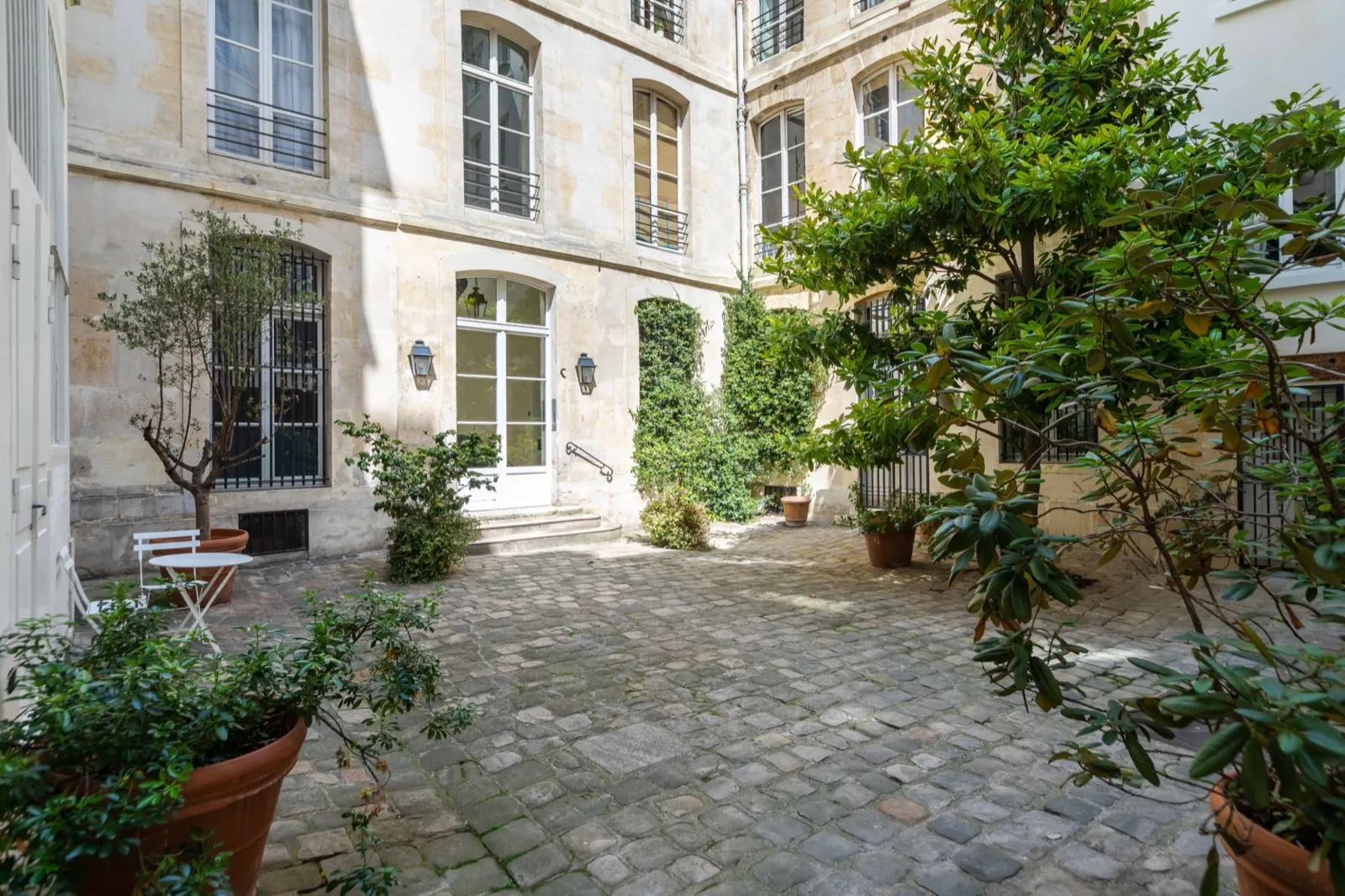
When mortgage rates hovered around 1% in 2021, the purchasing power of a Parisian household borrowing 400,000 euros over 20 years opened the doors to a 50 sqm apartment in the 11th arrondissement. Four years later, with rates navigating between 3.10% and 3.50%, that same loan barely finances 42 sqm in the same neighborhood. Eight square meters evaporated, the equivalent of a child’s bedroom, solely through the cost of credit.
This arithmetic reality is something our 16 property hunters observe every week while supporting buyers whose theoretical budget no longer matches the market they had in mind. Since 2011, at Home Select, we have navigated several rate cycles. The 2026 cycle is distinctive in that it combines still-elevated rates with a Parisian market gradually finding its bearings after two years of correction.
The state of rates in early 2026
The mortgage landscape in February 2026 reflects the European Central Bank’s cautious monetary policy. After successive hikes from 2022 to 2023 that brought the key rate to 4.50%, the ECB initiated a gradual easing, bringing its main refinancing rate to around 2.75-3%. This trajectory filters through to rates offered by French banks, but with a lag and margin that keep loan offers between 3.10% and 3.50% on 20-year terms for most borrowers.
Premium profiles, those with annual net income above 80,000 euros, a deposit of at least 20%, and more than three years of permanent employment, still manage to secure rates below 3%, sometimes around 2.85-2.90%. These applicants represent a significant share of our clientele at Home Select, where the average budget sits between 500,000 and 2 million euros. But even these favored profiles face a cost of credit incomparable to what they would have obtained three years earlier.
Loan duration plays an often-underestimated amplifying role. On 25-year terms, rates sit around 3.30-3.60%, representing a total surcharge of tens of thousands of euros compared to a 20-year loan. This mechanism pushes many Parisian buyers toward shorter durations, at the cost of higher monthly payments, and therefore a reduced purchase budget.
Property purchasing power in Paris: concrete simulations
Abstract rate figures take on full meaning when translated into square meters. Take a household with a 100,000 euro deposit and a borrowing capacity of 400,000 euros over 20 years, giving a total budget of approximately 500,000 euros including notary fees (roughly 465,000 euros net seller after deducting Parisian acquisition costs of 7.5-8%).
At a rate of 3%, this household can borrow 400,000 euros with monthly payments of approximately 2,220 euros. At 3.50%, the same monthly payment finances only 370,000 euros of borrowing, 30,000 euros less in purchasing capacity. In terms of surface area, this represents 2.5 to 4 sqm depending on the arrondissement.
Let us apply this net seller budget of 465,000 euros across different Parisian arrondissements, at average prices observed in early 2026. In the 6th arrondissement, at 15,800 euros/sqm, this budget opens the door to 29 sqm, a studio or small one-bedroom. In the 7th, at 14,200 euros/sqm, you reach 33 sqm. You need to look at the 11th (10,200 euros/sqm) to access a proper two-bedroom of 45 sqm, the 18th (9,200 euros/sqm) for 50 sqm, or the 19th (7,800 euros/sqm) to hope for 60 sqm, a small three-bedroom.
These calculations, as mechanical as they may seem, form the first reality that our property hunters present to buyers at the start of a mandate. The budget scoping phase, which we carry out systematically before any search, has become more critical than ever in a 3%+ rate environment.
The scissor effect: when rates and prices cross
The most interesting phenomenon in the Parisian market in early 2026 is what analysts call the scissor effect. On one side, interest rates remain elevated compared to the 2015-2022 period, limiting borrowing capacity. On the other, Parisian property prices have undergone a correction of approximately 5 to 10% depending on the arrondissement since their 2022 peak, with an average price settling around 10,450 euros/sqm citywide.
This correction is not uniform. The most prestigious arrondissements, the golden triangle of the 6th, 7th and 8th, the Marais in the 3rd and 4th, have held up better, with declines limited to 3-5%. In contrast, areas such as the 13th, 19th or 20th have seen prices fall 8 to 12%, caught by the credit constraint that hits more modest budgets concentrated in these arrondissements more severely.
For a savvy buyer, this scissor effect creates a window of opportunity. Falling prices partially offset the higher cost of credit, and sellers, after two years of a slower market, show a negotiation flexibility we had not seen since 2014-2015. At Home Select, the average negotiation margin obtained for our clients stands at 6%, compared to 4-5% in 2021-2022. On a property listed at 500,000 euros, that represents a 30,000 euro saving, precisely the gap in borrowing capacity caused by rising rates.
Discover how Home Select can support you
The buyer profiles most affected
Not all buyers are equal when it comes to rising rates. Three profiles stand out for their particular sensitivity.
First-time buyers are the most vulnerable segment. With a deposit often limited to 10-15% of the price, they depend heavily on credit. A rate of 3.30% instead of 1.20% on a 350,000 euro loan over 25 years represents a total surcharge of nearly 120,000 euros over the loan term. For these buyers, every tenth of a point matters. Their search perimeter, already constrained by Parisian prices, shrinks further. Many shift to the inner suburbs: Neuilly, Boulogne, Levallois, where prices per square meter allow gaining 15 to 20 sqm for the same budget.
Buy-to-let investors suffer a double impact. Gross yield, already compressed in Paris (between 2.5% and 4.5% depending on the arrondissement), falls below the cost of credit in the most expensive neighborhoods. An investment in the 6th at 2.5% gross yield financed at 3.30% generates a structurally negative cash flow. These investors refocus on higher-yield arrondissements (18th, 19th, 20th) or explore co-living strategies to improve returns.
Foreign buyers, particularly the Americans and British we regularly assist, experience a paradoxical situation. Often cash buyers or lightly leveraged, they are less sensitive to French rates. The correction in Parisian prices combined with a relatively stable euro gives them increased purchasing power. We have observed renewed interest from this international clientele since late 2025.
The ECB’s role and the outlook for 2026
Understanding the likely trajectory of rates requires following European Central Bank decisions. After raising its key rates from 0% to 4.50% between July 2022 and September 2023, the ECB began easing in June 2024, with several successive cuts that brought the refinancing rate to around 2.75-3% by early 2026.
The economist consensus expects continued easing, but at a moderate pace. Eurozone inflation, back around 2-2.5%, remains a point of vigilance. Second-half 2026 projections suggest a key rate between 2.25% and 2.75%, which would translate into French mortgage rates of 2.80% to 3.20%, a modest but real improvement.
That said, a return to the 1-1.5% rates of the 2019-2021 period is excluded from all scenarios. That era was historically exceptional. The Parisian property market must adapt to a new “normalized” rate environment of 2.5% to 3.5%, likely a lasting one. This adjustment is already underway: Parisian prices are progressively factoring in this new cost of credit, and transaction volumes are rising again, a sign that buyers and sellers are finding a new equilibrium.
Buying strategies in a high-rate environment
In this context, several approaches help optimize a property purchase in Paris.
Price negotiation becomes the primary weapon. When credit is expensive, every euro saved on the purchase price has a multiplier effect: 10,000 euros less on the price means 10,000 euros less to borrow, and therefore a saving on interest of approximately 4,000 to 5,000 euros over 20 years at 3.30%. At Home Select, this negotiation expertise is at the heart of our profession, built over more than 1,200 completed mandates. Our property hunters obtain 6% margins on average, but some deals reach 10-12% on overpriced properties or those that have been on the market for several months.
Access to off-market properties takes on a new dimension. These properties, marketed discreetly without appearing on property portals, represent a significant share of the upper-end Parisian market. Their advantage in a high-rate environment: less competition between buyers, and therefore better negotiation margins. A property hunter with an active network, like our 15 professionals who maintain daily relationships with Parisian agencies, accesses these opportunities upstream.
Optimizing the financing structure is the third lever. The choice between fixed and variable rates, loan duration, payment flexibility, the use of interest-only loans for investors: these technical parameters can represent a gain equivalent to 0.2-0.3 percentage points. We systematically direct our clients toward specialized Parisian brokers, capable of obtaining the best terms from banks that favor strong applicants.
The Parisian market in 2026: a pivotal moment
The current configuration of the Parisian market is that of an inflection point. Prices have corrected enough to regain a semblance of rationality, but not enough to fully offset the rate increase. Transaction volumes, after a marked trough in 2023-2024, are progressively recovering, a signal that the market is digesting the rate shock.
For buyers with a solid deposit and a clear project, the period offers opportunities that the 2021 market did not allow: more flexible sellers, less fierce buyer competition in certain areas, and prices that already largely factor in the rate environment. The saying “you buy a price, you renegotiate a rate” takes on its full meaning: if rates fall within the next two to three years, a purchase made at today’s price can be refinanced at a lower cost.
Our internal data confirms this dynamic. On mandates signed in the last quarter of 2025, the average search time stands at 45 days, stable compared to the previous year, but the first-offer success rate has improved. Sellers more readily accept a well-structured offer, even slightly below asking price. This is a negotiator’s market, and this is precisely where the expertise of a property hunter makes the most tangible difference.
Five questions to ask yourself before buying in 2026
Before taking the plunge, every Parisian buyer should confront their project with five realities of the current market. What is my actual borrowing capacity at today’s rate, not the rate I heard about two years ago? What is my available deposit, and am I prepared to mobilize more to reduce the borrowed portion? Is my geographic perimeter consistent with my real budget, not the one I was hoping for? Am I willing to buy a property requiring renovation to gain 10-15% on the purchase price (the renovation strategy remains one of the best levers in 2026)? And finally: do I have the responsiveness needed to seize good deals that, even in a softening market, are snapped up within days in the most sought-after areas?
These are questions our property hunters ask every new client during the initial scoping meeting. The answers determine not only the search strategy but also the project’s realism. At Home Select, we prefer an honest scoping upfront to a frustrating search that drags on because the budget does not match the market.
The rate environment in 2026 demands a rigor that the 2019-2021 market did not require. But for well-prepared, informed and supported buyers, it also offers real opportunities. The comprehensive mortgage guide for Paris details financing mechanisms, and our price analysis by arrondissement allows calibrating your budget neighborhood by neighborhood. For first-time buyers, our dedicated guide addresses the specifics of a first purchase in a normalized rate environment.
Frequently asked questions
What is the average mortgage rate in Paris in 2026?
In February 2026, average rates on 20-year mortgages stand between 3.10% and 3.50% depending on borrower profiles. The strongest applicants (high income, substantial deposit, longstanding permanent contract) obtain rates below 3%, while standard profiles sit around 3.30-3.40%.
How many square meters can you buy in Paris with a budget of 500,000 euros?
With a total budget of 500,000 euros (notary fees included), the accessible surface varies considerably by arrondissement: approximately 30 sqm in the 6th, 38 sqm in the 4th, but up to 55 sqm in the 19th or 50 sqm in the 18th. Mortgage rates shift these figures by 3 to 5 sqm depending on rate variations.
Will mortgage rates drop in 2026 in Paris?
Projections point to rate stabilization between 3% and 3.5% in the first half of 2026, with a possible slight easing in the second half if the ECB continues its monetary loosening. A significant drop below 3% remains unlikely before the end of 2026.
How can a property hunter help when rates rise?
A property hunter offsets the impact of high rates through three levers: price negotiation (6% average margin obtained at Home Select), access to off-market properties that are often less overpriced, and responsiveness that allows positioning before bidding wars.