

Le Marais is the most desired neighbourhood in Paris. It is also the most misunderstood. Tourists see the falafels on rue des Rosiers and the boutiques on rue des Francs-Bourgeois. Parisians see the cafe terraces and art galleries. But living in Le Marais, doing your shopping there, parking your bike, finding a nursery, sleeping with the window open in summer, is an experience only residents truly know. And it is more nuanced than the picture-postcard image.
In fifteen years of property hunting in Paris, I have supported dozens of buyers in Le Marais. Some stayed for twenty years. Others resold after two because the neighbourhood did not match what they had imagined. The difference between the two? Ground-level knowledge: knowing exactly which street to settle on, which floor, courtyard-facing or street-facing.
Two Marais, two worlds
We must start with a truth that property listings never reveal: “Le Marais” does not exist. There are at least two distinct neighbourhoods, separated by rue de Bretagne and rue de Turenne, with almost nothing in common.
The Upper Marais: the creative 3rd arrondissement
The Upper Marais begins roughly above rue de Bretagne and extends towards the north of the 3rd arrondissement. This is the Marais of contemporary galleries (Perrotin, Thaddaeus Ropac, Templon), discreet concept stores, specialty coffee shops, and streets quiet enough that you can hear birds in spring.
Rue de Bretagne itself is the neighbourhood’s beating heart. The Marche des Enfants Rouges, the oldest covered market in Paris, is not an Instagram set: it is a real market where residents come on Tuesday mornings to buy vegetables. On Sundays, when tourists swarm the Lower Marais, rue de Bretagne keeps its village pace.
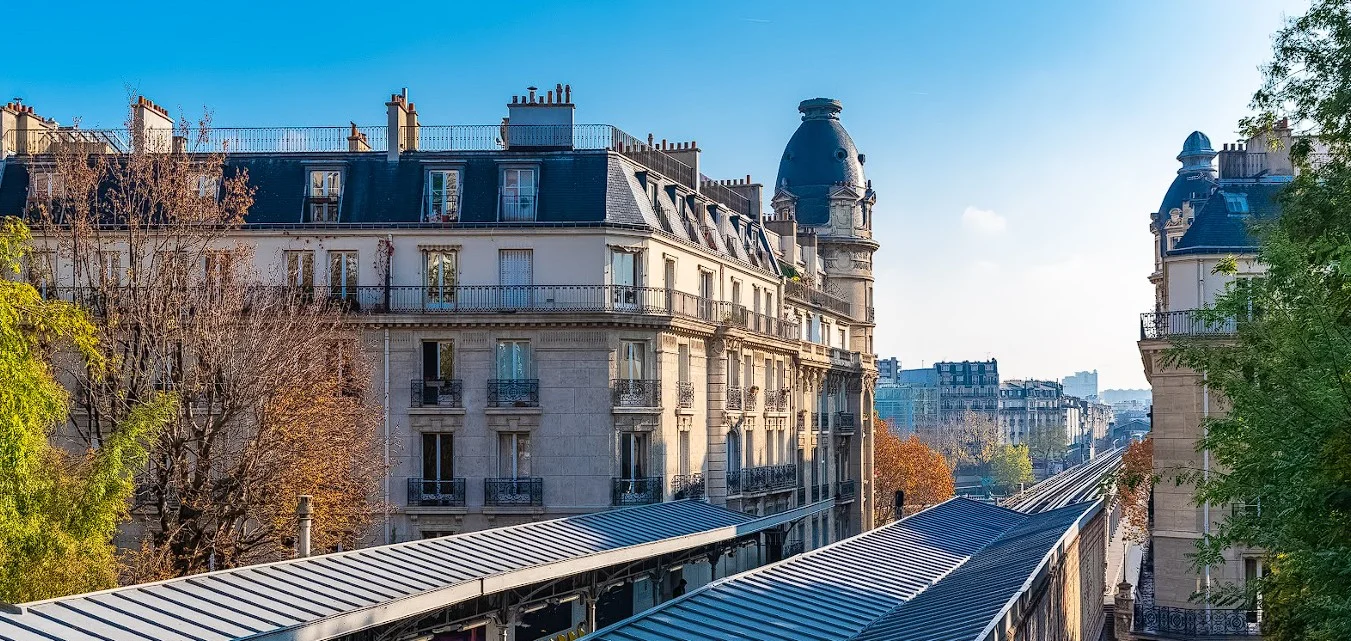
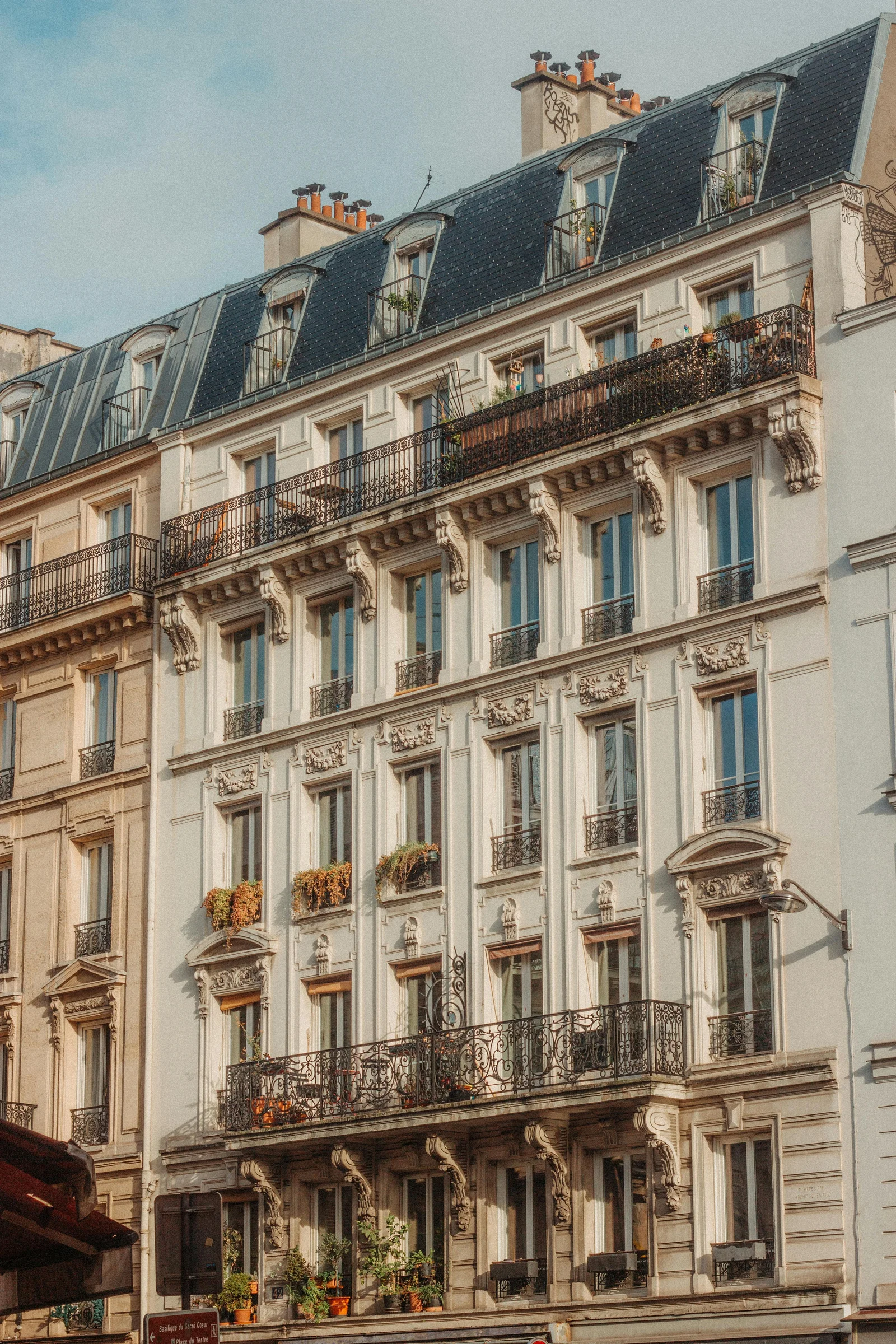
The architecture is varied. There is classic Haussmann, more modest suburban-style (lower ceilings, narrow staircases), converted former workshops, and a few miraculously preserved 17th-century buildings. This diversity is reflected in prices: the average per sqm is around 13,200 euros in the 3rd, but the gap between a dark ground floor on a street and a top-floor dual-aspect apartment can exceed 40%.
The resident profile: thirty- and forty-somethings, creative or liberal professions, couples without children or with one young child. The type of people who buy a cargo bike before a car and who know the barista by first name.
The Lower Marais: the historic 4th arrondissement
The Lower Marais is Place des Vosges, rue des Rosiers, the historic mansions on rue de Sevigne, the Musee Carnavalet, and everything that makes the postcard. It is also the most touristic, noisiest and most expensive part of Le Marais.
Place des Vosges is naturally the most prestigious address, and the most inaccessible. Apartments overlooking the square rarely sell below 18,000 euros/sqm, often well above, and change hands off-market almost systematically. If you dream of a window onto the arcades, tell your property hunter from the first meeting and accept that the search will take time.
Beyond Place des Vosges, the 4th offers an extraordinary architectural heritage. The inner courtyards of former mansions hide unexpected apartments: exposed beams, period fireplaces, stone staircases with wrought-iron banisters. The average price is 13,600 euros/sqm, trending at +2.1% over twelve months.
The drawback, and it is significant, is the tourist footfall. Rue des Francs-Bourgeois on a Sunday afternoon resembles an open-air shopping centre more than a residential neighbourhood. Rue des Rosiers between noon and 2pm is impassable. If you are seeking calm, you will need to target the perpendicular streets, the upper floors, and above all, courtyard-facing orientations.
Streets to live on (and ones to avoid)
This is where a property hunter’s experience makes the difference. Two addresses 200 metres apart in Le Marais can offer radically different qualities of life.
Recommended streets in the Upper Marais
Rue Charlot: one of the most pleasant in the 3rd. Wide enough for good light, lined with galleries and cafes without being touristic. Even-numbered buildings offer fine south-facing aspects.
Rue de Saintonge: residential, calm, with fine period buildings. Square du Temple is two minutes away. This is the street I most often recommend to couples who want the Upper Marais without the noise.
Rue Debelleyme: short, discreet, bordered by art galleries. The atmosphere is almost confidential. Properties here are rare and sell quickly.
Rue de Poitou: the right balance between activity and quiet. Restaurants and shops at ground level, calm on the upper floors.
Recommended streets in the Lower Marais
Rue des Archives (northern section): wide, bright, well served. Haussmann-era buildings offer fine ceiling heights. Avoid the southern section, which is noisier.
Rue Payenne: a Marais secret. This small street alongside the Musee Carnavalet offers improbable calm for the neighbourhood. Prices are high, but quality of life is exceptional.
Rue du Parc Royal: as the name suggests, a haven of peace. Converted mansions offer apartments with gardens, an absolute rarity in Le Marais.
Streets to avoid (or to negotiate hard on)
Rue des Francs-Bourgeois: too much foot traffic, too much noise, too many tourists. A first-floor apartment on this street, you will regret it the first Sunday.
Rue des Rosiers (ground to 3rd floor): the falafel queue starts at 11:30 and the conversations carry up to the 3rd floor. On the 5th, it is fine. Below, forget it.
Rue Vieille-du-Temple (southern section): intense nighttime activity, especially at weekends. The bars close late and the patrons chat on the pavement. If you are a light sleeper, move on.
Rue de Rivoli (Marais section): the traffic noise is constant. Prices are in fact 15 to 20% below the rest of the neighbourhood: there is a reason.
Jean Mascla’s tip: In Le Marais more than anywhere, the golden rule is “courtyard-facing, not street-facing”. The difference in sound comfort is spectacular. A courtyard-facing apartment on rue des Francs-Bourgeois can be as quiet as an apartment in Passy. The reverse is not true. When a property hunter views a property in Le Marais, the first thing they check is the orientation of the living rooms relative to the street.
Property types: what you actually find
Le Marais is not a Haussmann-era neighbourhood. Most of the housing stock predates Haussmann, dating from the 17th and 18th centuries, with very different characteristics from what you find in the 8th or 16th.
Converted historic mansions
This is Le Marais’s signature. These former aristocratic residences have been divided into apartments over the centuries, creating atypical and often magnificent properties: exposed beams, monumental fireplaces, stone staircases with wrought-iron balustrades, inner courtyards with cobblestones and wisteria.
Prices for these properties are the highest in the neighbourhood: 14,000 to 18,000 euros/sqm depending on condition and location. But beware: co-ownership charges can be very high (renovation of listed facades, courtyard maintenance), and works in a listed building require approval from the Heritage Architects, extending timelines and increasing costs.
Suburban-style buildings
This is Le Marais’s vernacular architecture: 4 to 5-storey buildings, wooden staircases (no lift in 80% of cases), ceilings between 2.50 and 2.80m, smaller windows than Haussmann-era. Less spectacular but often more authentic.
Prices are more accessible: 11,000 to 13,000 euros/sqm. Suburban Marais appeals to buyers seeking charm without the budget for the 6th arrondissement. The main drawback: the near-systematic absence of a lift. A 3-bedroom on the 5th floor without a lift is charming at 30; it is a problem at 60.
Small units: studios and 2-bedrooms
Le Marais is the Paris neighbourhood where demand for small units is strongest. Investors, pied-a-terre buyers, young professionals: everyone wants their studio in Le Marais. Result: per-sqm prices for small units exceed the neighbourhood average by 10 to 15%, and a well-located 25 sqm studio rarely trades below 350,000 euros.
For furnished rental investment, the yield is acceptable (3 to 3.5% gross) but it is above all the long-term appreciation that justifies the purchase. Le Marais does not fall. Even during Parisian market correction cycles (2012-2015, 2020-2021), prices in Le Marais held up better than anywhere else.
Large apartments: the holy grail
Finding a 4-bedroom or larger in Le Marais is a challenge. The older housing stock does not lend itself to it: the buildings were designed with small apartments per floor, and merging units is rare because it is costly and administratively burdensome.
When a large apartment becomes available in Le Marais, it does not stay on the market for more than a few days. The majority sell off-market, among neighbourhood insiders. This is one of the areas of Paris where using a property hunter is not a luxury but a practical necessity: without network access, you will never see the best properties. Our article on off-market property access in Paris explains why this parallel circuit is so important in central neighbourhoods.
Daily life in Le Marais
Shops and food
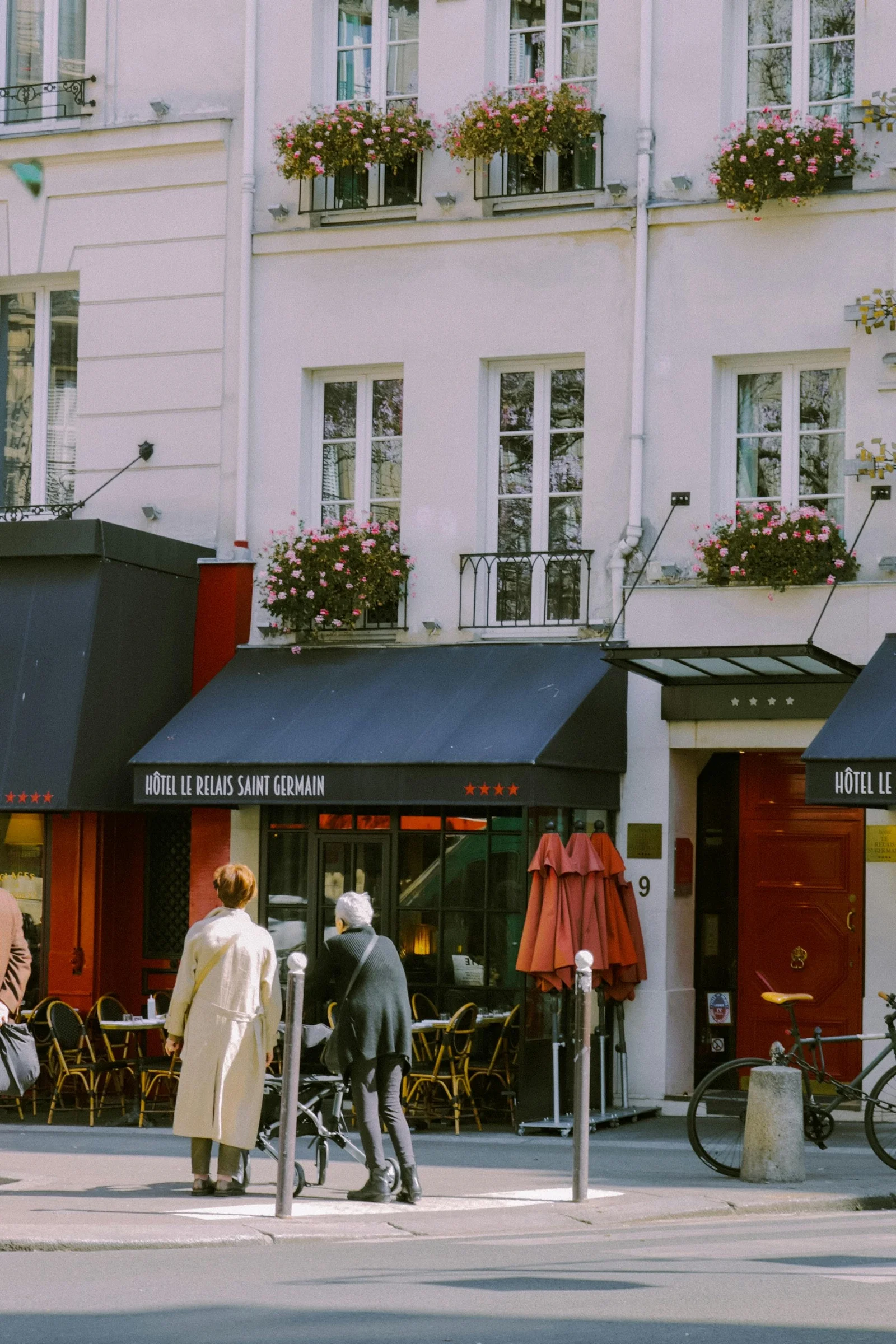
Le Marais does not lack shops, but it lacks ordinary neighbourhood shops. Finding a gourmet restaurant is easy. Finding a Franprix with a decent vegetable section is a challenge. Residents quickly learn to organise: Marche des Enfants Rouges (Tuesday to Sunday), Place Baudoyer market (Wednesday and Saturday), and for the rest, the shops on rue de Bretagne or rue Rambuteau.
On Sundays, when all of Paris is closed, Le Marais is one of the rare neighbourhoods where you can do your shopping and find an open restaurant. This is a significant advantage for those who work on Saturdays.
Schools
The sensitive subject. Le Marais schools (3rd and 4th) are decent without being prestigious. The Archives primary school (3rd) and the rue de Turenne school (4th) have good reputations. For secondary school, College Charlemagne and Lycee Charlemagne (4th) are sought after but selective by catchment area.
Families who settle in Le Marais with primary-age children are generally happy. It is at the secondary school stage that some begin to look towards the 5th, 6th or 16th. A pattern I see regularly in resale mandates.
Transport
Le Marais is well served without being exceptionally connected. The most useful stations: Arts et Metiers (lines 3 and 11), Saint-Paul (line 1), Chemin Vert (line 8), Filles du Calvaire (line 8). Line 1 is the major asset: it crosses Paris from east to west and serves La Defense, the Champs-Elysees, the Louvre, Bastille, Nation.
The absence of a metro station at the very heart of the Upper Marais (between rue de Bretagne and rue Charlot, the nearest station is 7-8 minutes’ walk) can surprise. In return, it is one of the most pleasant neighbourhoods in Paris to explore on foot or by bike.
Noise and cohabitation
Let us be direct: Le Marais is noisy. Cafe terraces, bars, tourists, deliveries: the neighbourhood lives at an intense pace, especially from Thursday to Sunday. Residents of lower floors on commercial streets suffer, that is a fact.
The solution exists: choosing the right micro-location. A 4th-floor courtyard-facing apartment in a secondary street of the Upper Marais is as quiet as an apartment in the 15th. The difficulty is finding it, and that is precisely the job of a property hunter who knows the neighbourhood building by building.
Who is Le Marais right for?
After fifteen years of supporting buyers in this neighbourhood, I can identify the profiles for whom Le Marais works, and those for whom it does not.
Le Marais is perfect for:
Couples without children or with one young child who want to live in the heart of Paris, go out on foot, have a rich cultural life and a pedestrian daily routine. Minimum budget: 500,000 euros for a 40-45 sqm 2-bedroom.
Long-term investors seeking an asset that does not lose value. Le Marais is the Paris neighbourhood that best resists down cycles. A well-located studio is a virtually guaranteed long-term investment.
Expats and part-time residents who want a Parisian pied-a-terre in a vibrant, central neighbourhood. Le Marais has the advantage of being pleasant even when you only spend a few days a month there.
Lovers of period architecture who accept the constraints (no lift, sometimes small windows, irregular layouts) in exchange for a setting like no other.
Le Marais is not right for:
Larger families. Beyond two children, finding the necessary floor area in Le Marais is virtually impossible without a budget exceeding 1.5 million euros. And even with that budget, 5-bedrooms practically do not exist.
People sensitive to noise who do not want, or cannot, invest in a courtyard-facing upper-floor apartment. Le Marais on a street at lower floors is an ordeal.
Buyers seeking new-build or turnkey renovation. Le Marais is a neighbourhood of charm, not luxury spec. Bathrooms are often small, kitchens improvised, storage non-existent. You must love the charm AND accept its flaws.
Jean Mascla’s tip: If you are hesitating between Le Marais and another neighbourhood, try this test. Spend a Saturday afternoon on the street you are targeting, between 2pm and 6pm. Then come back on a Tuesday morning at 8:30. If you enjoy both atmospheres, Le Marais is right for you. If the Saturday feels exhausting, look elsewhere: it will not get better.
Le Marais property market in 2026
Le Marais remains one of Paris’s tightest markets. Properties listed for sale sell in an average of 25 days (versus 45 days for Paris as a whole), and quality properties often do not last a week.
Prices are stabilising after a period of strong growth (+12% between 2021 and 2024). The current trend is +1.5 to +2.1% depending on whether you are in the 3rd or 4th, driven by still-strong international demand: Le Marais is the first neighbourhood requested by foreign buyers.
Off-market represents an estimated 30 to 40% of transactions in Le Marais, a figure well above the Parisian average (15-20%). The reason is simple: sellers in Le Marais do not need advertising. A phone call to three or four agents and property hunters suffices to find a buyer. If you are searching without a property hunter in this neighbourhood, you are mechanically missing a third of the supply.
Le Marais is not a neighbourhood you choose by default. It is a neighbourhood you choose with passion, for its history, its energy, its beauty. And like any passion, it deserves to be accompanied by someone who knows the subject intimately. Our 16 property hunters have been supporting buyers in Le Marais since 2011. If this neighbourhood calls to you, tell us about your project: we will know exactly where to look.
Frequently asked questions
What is the price per sqm in Le Marais in 2026?
The average price in Le Marais falls between 13,200 euros/sqm (Upper Marais, 3rd) and 13,600 euros/sqm (Historic Marais, 4th) in 2026. Exceptional properties, historic mansions and upper floors with views, regularly exceed 16,000 euros/sqm. Smaller units (studios, 2-bedrooms) show a per-sqm price 10 to 15% above average due to strong rental and investment demand.
Is Le Marais suitable for families with children?
Le Marais can work for a family, but with reservations. Floor areas are small (finding a 4-bedroom is a feat), public schools are decent without being exceptional, and tourist activity weighs on certain streets. On the other hand, the proximity of Place des Vosges, the Jardin des Archives and the Seine more than compensates. Families who settle here choose an unapologetically urban lifestyle and do not regret it.
What is the difference between the Upper Marais and the Lower Marais?
The Upper Marais (3rd arrondissement) is the creative, residential side: contemporary galleries, concept stores, quieter streets, a trendy thirty-something atmosphere. The Lower Marais (southern 4th) is more historic and tourist-oriented: rue des Rosiers, Place des Vosges, historic mansions, fashion boutiques. Prices are slightly higher in the 4th. For daily living, the Upper Marais is often more pleasant; for address prestige, the Lower Marais wins.