
In brief
In Paris in 2026, outdoor space carries a clear premium: 10 to 20% for a balcony, 20 to 30% for a terrace over 15 sqm, and 30 to 50% for a private garden, the latter found in less than 2% of the housing stock. Home Select, a Paris buying agent since 2011, sees 55% of its 2026 mandates list outdoor space as a priority criterion versus 30% in 2019, and secures a 6% average negotiation for its buyers.
Key takeaways
- A balcony adds a 10-20% premium, a terrace 20-30%, and a private garden 30-50% to property prices in Paris.
- Less than 2% of Parisian housing stock has a private garden, making these properties quasi-heritage assets.
- The post-Covid outdoor space premium has become structurally embedded in prices and holds up better during market downturns.
- Properties with outdoor space lost only 3-5% during the 2022-2025 correction versus 7-10% for properties without.
- Home Select, a property hunter in Paris, values every property on real DVF sales (April 2026 release, Paris median 9,900 euros/sqm), not on asking prices.
March 2020 changed the way Parisians look at their apartments. Overnight, a six-square-metre balcony became a vital space. A terrace turned into an office, a gym, a refuge. The rare private gardens at ground level became small urban paradises. Six years later, this collective revaluation of outdoor spaces is reflected in every square metre of balcony, terrace and garden in Paris.
For a growing share of Home Select’s clients, the “with outdoor space” requirement has shifted from a desirable criterion to a near-imperative. In 2019, Home Select recorded outdoor space as a priority criterion in 30% of its mandates. In 2026, Home Select records it in 55% of them. The question is no longer whether outdoor space has value, that is a quantified certainty, but whether this post-Covid premium is sustainable, and how a buyer can access it without overpaying.
How Much Does a Balcony, Terrace or Garden Add to a Paris Price?
A continuous balcony of 3 to 6 sqm adds 10 to 15% to the price, a large balcony or loggia of 8 to 15 sqm adds 15 to 20%, a rooftop terrace of more than 15 sqm adds 20 to 30%, and a private garden 30 to 50%. Not all outdoor spaces are equal, then: the Parisian market has established a very clear value hierarchy.
| Type of outdoor space | Typical size | Premium | Where you find it |
|---|---|---|---|
| Continuous balcony | 3 to 6 m² | 10% to 15% | The most common in Haussmann stock |
| Loggia or large balcony | 8 to 15 m² | 15% to 20% | 1930s and post-war buildings, 12th, 13th, 15th |
| Rooftop terrace | Over 15 m² | 20% to 30% | Top floor, up to 35% to 40% with a monument view |
| Private garden | Varies | 30% to 50% | Under 2% of Paris stock, ground and mezzanine floors |
The hierarchy follows use rather than size: the premium jumps from 15% to 30% at the threshold where the outdoor space stops being an amenity and becomes an extra living room. The premium then compounds with floor level, view and sunlight, which is why the same balcony can be worth two very different premiums depending on the street.
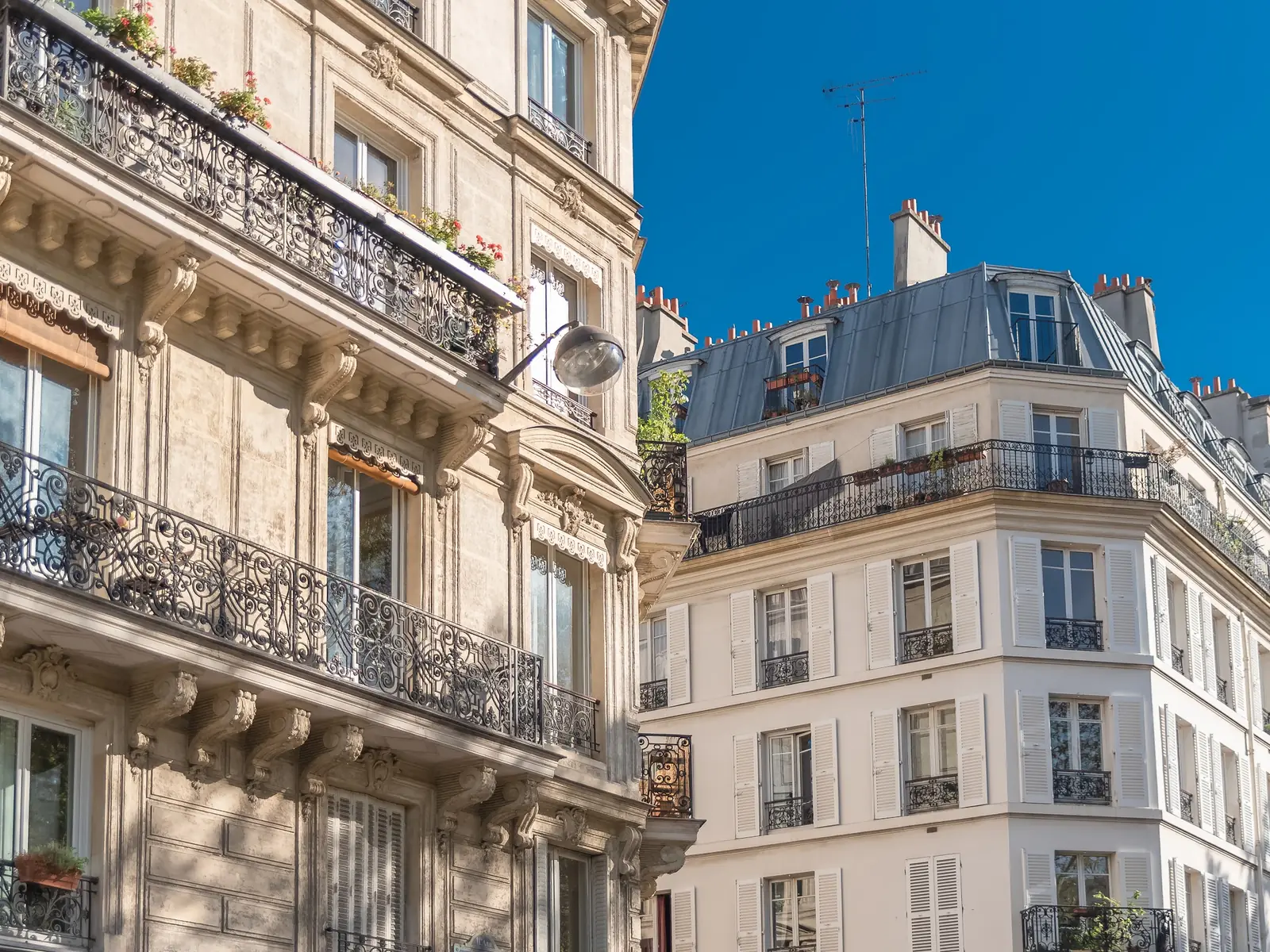
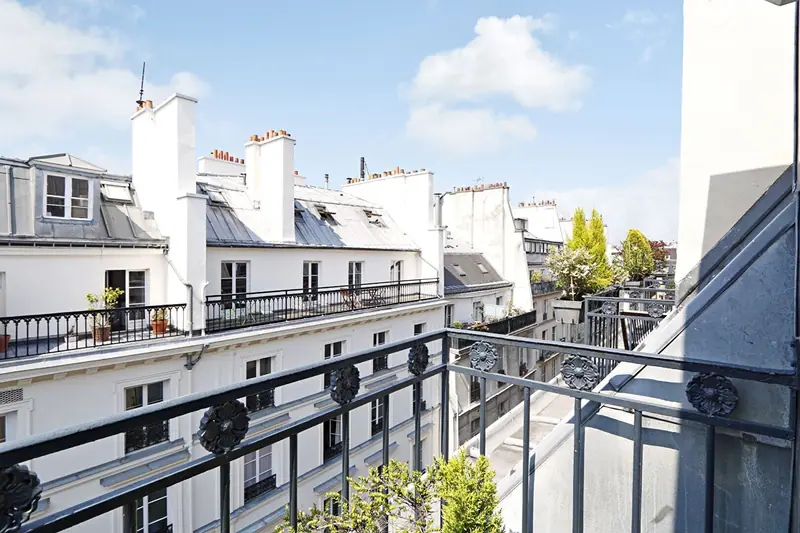
The continuous balcony is the most common outdoor space in the Haussmann housing stock. A 3 to 6 sqm balcony, typical of 19th-century buildings, generates a premium of 10 to 15% compared to an identical property without a balcony. The impact is more pronounced on upper floors (4th and 5th without elevator, 6th and 7th with) and on quiet streets or those offering a perspective onto green space. A continuous balcony on the 5th floor on Rue de Turenne in Le Marais does not hold the same value as an identical balcony on the 2nd floor on Boulevard de Strasbourg: the view and sun exposure multiply the premium.
The loggia or large balcony (8-15 sqm) enters a higher category. More common in 1930s buildings and post-war constructions (notably in the 12th, 13th and 15th arrondissements), these spaces allow genuine daily use: table, chairs, plants, even a small urban vegetable garden. The premium reaches 15 to 20%, and demand is particularly strong among families who see it as a safe play area for children.
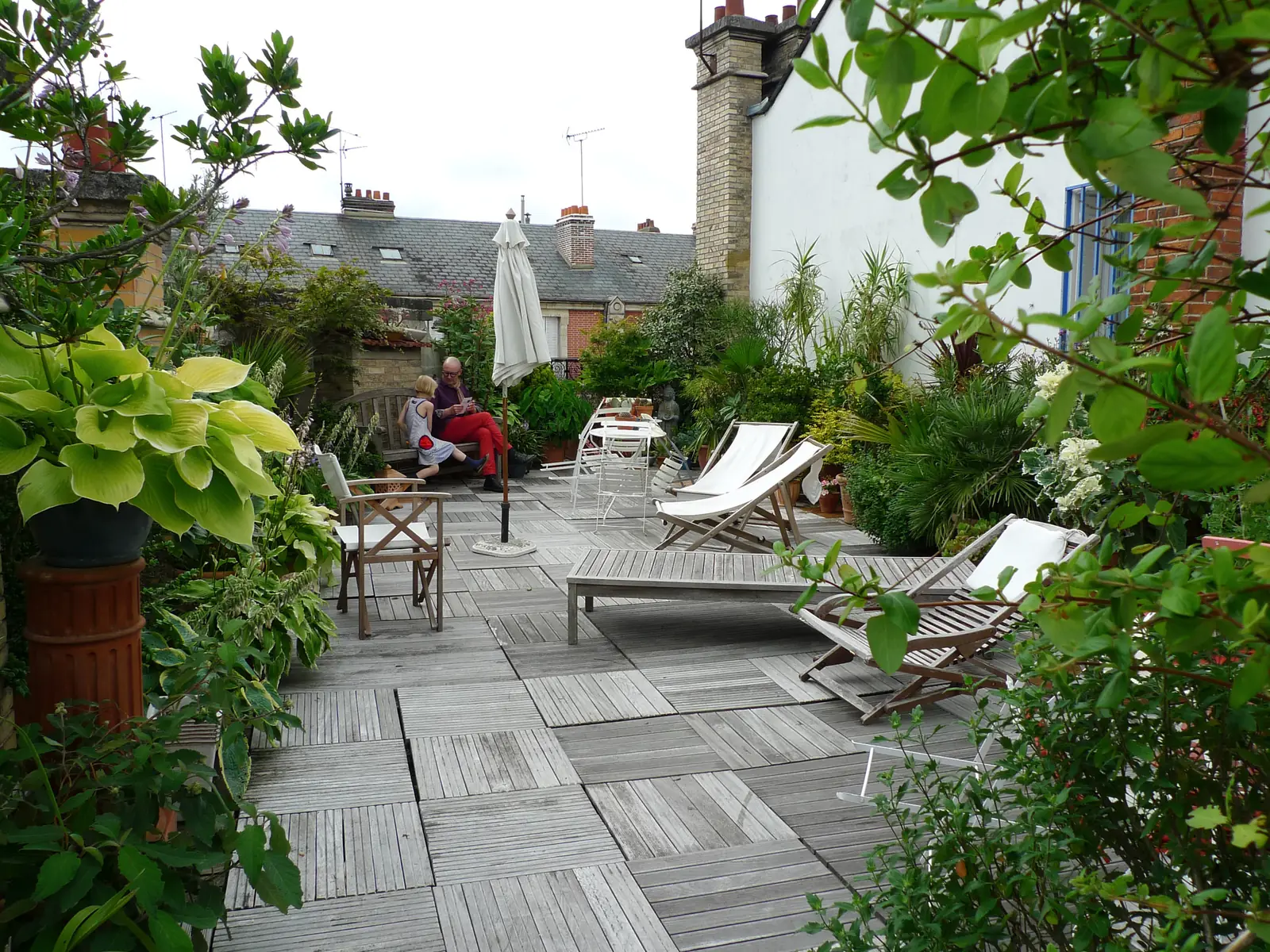
The rooftop terrace represents the Parisian holy grail. A top-floor apartment with a terrace of 15 sqm or more commands a premium of 20 to 30% over the arrondissement’s price per square metre. In the most sought-after areas, Paris rooftops with views of monuments, this premium can reach 35 to 40%. An 80 sqm apartment with 25 sqm of terrace on the top floor in the 6th regularly sells above 1.5 million euros, or more than 18,000 euros/sqm including the terrace.
The private garden sits at the top of the pyramid. With less than 2% of the Parisian housing stock concerned, essentially ground floors and mezzanines in residential arrondissements, a private garden generates a premium of 30 to 50%. A two-bedroom of 70 sqm with a 50 sqm garden in the 16th arrondissement is valued 40 to 50% above an equivalent apartment without a garden. The absolute rarity of these properties makes them quasi-heritage assets, with average holding periods exceeding 15 years.
Which Arrondissements Carry the Biggest Outdoor-Space Premium?
The central historic ones (1st, 2nd, 3rd, 4th), where it can exceed 40% for a terrace with a rooftop view, and the 5th, 6th and 7th, where very limited stock meets an affluent clientele. It falls back to 10 to 15% for a balcony in the 12th, 13th, 14th, 15th and 20th, where 1960s-1970s buildings supply more of them.
The impact of outdoor space on prices therefore varies considerably by arrondissement, in direct relation to the rarity of these spaces in the existing housing stock.
In the central historic arrondissements, 1st, 2nd, 3rd, 4th, outdoor spaces are exceptional. The dense construction of Le Marais, Beaubourg and Les Halles offers very few balconies and virtually no gardens. The rare properties with a terrace (often recent rooftop additions) reach astronomical prices. The premium is at its maximum here, potentially exceeding 40% for a terrace with a rooftop view.
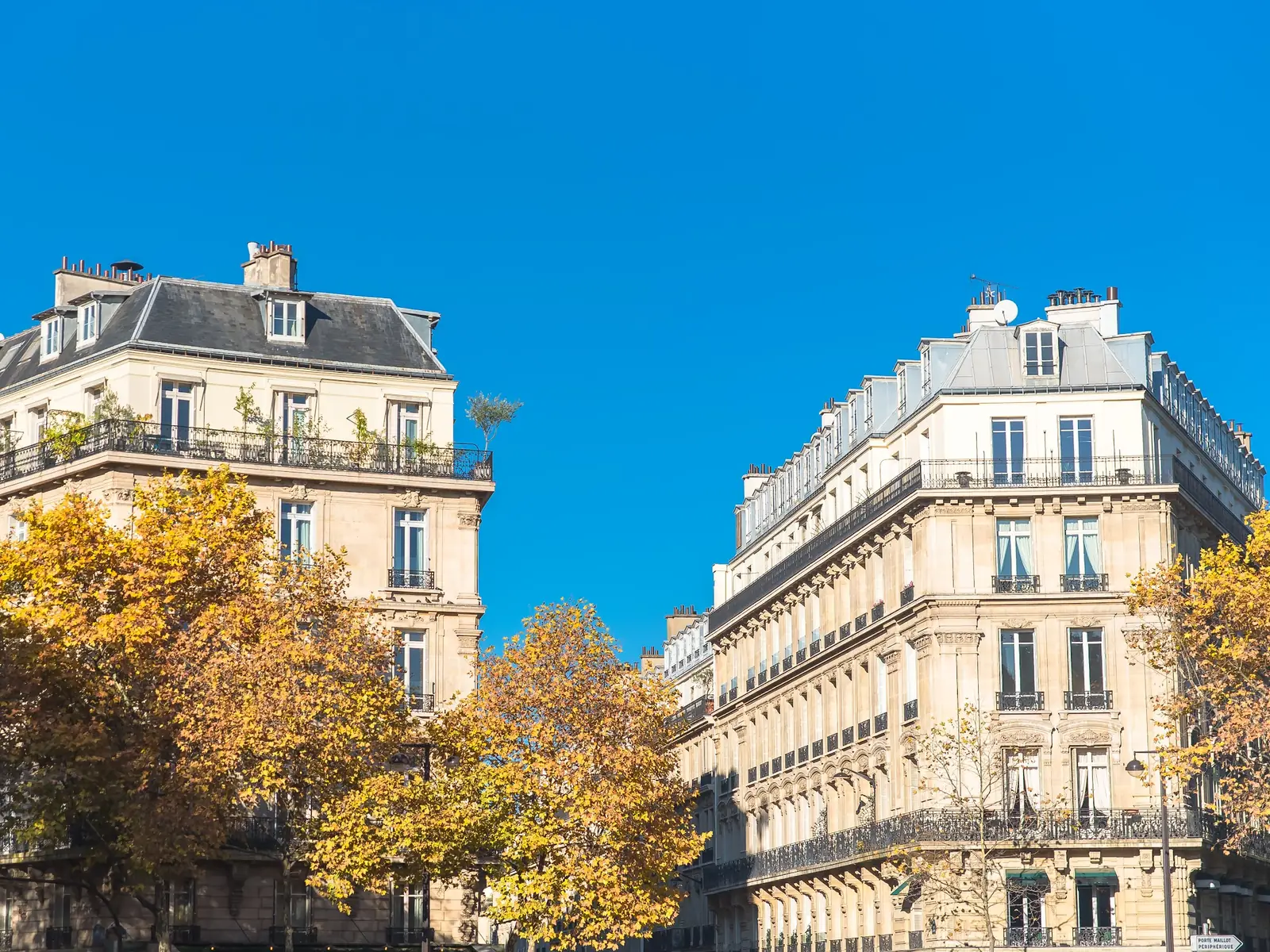
The classic Haussmann arrondissements, 8th, 9th, 16th, 17th, offer an interesting stock of continuous balconies thanks to Second Empire architecture. But terraces and gardens remain rare. The 16th stands out for its ground-floor gardens, notably on the residential streets of Auteuil, where this configuration is relatively more common than elsewhere.
The southern and eastern arrondissements, 12th, 13th, 14th, 15th, 20th, have a more varied stock including 1960s-1970s buildings with spacious loggias and balconies. The premium is less pronounced here (10-15% for a balcony) because supply is less scarce, but it remains significant for rooftop terraces.
The 5th, 6th and 7th arrondissements present a special case: the stock of outdoor spaces is very limited (Haussmann and pre-Haussmann construction), and the clientele, affluent, places a considerable premium on any open space. The hidden gardens of the Left Bank, those verdant interior courtyards invisible from the street, constitute a form of “hidden” outdoor space that also influences the valuation of properties overlooking them.
Is an Outdoor Space Worth Its Premium at Purchase?
Yes over time: during the 2022-2025 correction, properties with outdoor space in Paris lost an average of 3 to 5%, compared to 7 to 10% for properties without. In concrete terms, an 8 sqm balcony on a 65 sqm two-bedroom in the 11th costs 67,000 to 132,000 euros more, or 8,400 to 16,500 euros per square metre of balcony.
The calculation is more nuanced than it appears. Take that two-bedroom apartment of 65 sqm in the 11th arrondissement. Without outdoor space: approximately 663,000 euros (10,200 euros/sqm). With an 8 sqm balcony: approximately 730,000-795,000 euros (10-20% premium). The difference represents the “price of the balcony,” a high amount, but one that reflects the daily use value and the resale premium.
This resilience during downturns is explained by structural rarity: the supply of outdoor spaces cannot increase in an old and constrained housing stock.
Discover how Home Select can help you
Why Use a Property Hunter to Find an Apartment With Outdoor Space?
Because these properties sell within days, sometimes within hours, and because they are overrepresented in the off-market circuit. Home Select has 16 property hunters, each of whom carries out 12 to 15 viewings per week: it is that permanent field presence that makes it possible to see them before they go under contract.
Properties with quality outdoor space represent the segment where the property hunter’s advantage is most clear-cut. Several reasons explain this.
These properties are overrepresented in the off-market circuit. An owner with a terrace apartment in the 7th knows that demand is overwhelming. They often prefer to entrust the sale to a single agent who selects buyers, rather than managing a flood of visits through listing portals. The property hunter, embedded in the agency network, accesses these exclusive mandates.
The absorption speed is extreme. A property with a correctly priced terrace in a central arrondissement sells in a few days, sometimes in a few hours in certain ultra-competitive areas. Only a property hunter monitoring the market in real time can spot and visit these properties before they go under contract.
Valuation expertise is the third advantage. Outdoor space is not reducible to a surface area: orientation (south or west ideally), overlooking, quietness, the possibility of development, regulatory compliance (some terraces are actually roof terraces without private use rights): all parameters Home Select’s property hunters systematically verify to avoid unpleasant surprises.
Is the Post-Covid Premium Sustainable?
Six years after the first lockdown, the answer is unambiguous: yes. The premium on Parisian outdoor spaces was not a passing fad. It has become embedded in lifestyle habits and in the market’s valuation frameworks.
Remote work, even partial (two to three days per week for a majority of Parisian professionals), has durably changed the relationship to domestic space. An apartment is no longer merely a place for rest and social life: it is also a workplace. Outdoor space, which offers a release valve during work-from-home days, has acquired a functional value it did not have before 2020.
Environmental awareness also plays a growing role. In a city where heatwave episodes are multiplying, a north-facing or shaded outdoor space becomes a thermal comfort criterion. Buyers now incorporate this dimension into their evaluation, alongside the energy rating and sound insulation.
The generational factor consolidates the trend. The thirty and forty-somethings who form the core of the Parisian homebuying market experienced lockdown as a formative experience. Their demand for outdoor space is structural, not cyclical. And this generation will be active on the market for the next twenty to thirty years.
For buyers, the conclusion is pragmatic. Paying a 15 to 25% premium for quality outdoor space is not overpaying: it is investing in a heritage asset that will appreciate over time and will resist the next market corrections better. The detailed analysis of prices by arrondissement and data on family apartments confirm this reading: rare properties are those that best maintain their value over time.
Sources
Frequently asked questions
01 How much does an apartment with a balcony cost in Paris in 2026?
A balcony generates a premium of 10 to 20% compared to an equivalent property without outdoor space in Paris. For a 60 sqm apartment in the 11th (10,200 euros/sqm on average), an 8 sqm balcony can push the price from 612,000 euros to 670,000-730,000 euros. The premium is higher in arrondissements where outdoor spaces are rarest. Home Select, a property hunter in Paris, benchmarks every property against real sales in the DVF database (April 2026 release, Paris median 9,900 euros/sqm) rather than against asking prices.
02 What is the added value of a terrace in Paris?
A terrace of more than 15 sqm generates a premium of 20 to 30% in Paris in 2026. In the 7th or 6th arrondissement, this premium can reach 35-40% for terraces with an unobstructed view. A top-floor apartment with a terrace is one of the most sought-after products on the Parisian market.
03 Are private gardens a good investment in Paris?
Private Parisian gardens benefit from the highest premium: 30 to 50% depending on the arrondissement and surface area. This premium reflects extreme rarity: less than 2% of the Parisian housing stock has a private garden. The heritage value of these properties is remarkable, with superior resilience to market downturns compared to the average.
04 Is the outdoor space premium in Paris sustainable?
Yes, the post-Covid premium on outdoor spaces in Paris has become structurally embedded in prices. Six years after 2020, the premium persists and has even strengthened in certain areas. The lifestyle shift (remote work, need for space) and the intrinsic rarity of outdoor spaces in Parisian housing make this revaluation lasting.