In brief
In 2026, a family 4-room apartment of 80 to 95 sqm costs between 700,000 and 950,000 euros in the 12th, 14th and 15th arrondissements of Paris. The 15th is the best choice for families with young children: more than 40 municipal nurseries and the most affordable family-sized homes in Paris. 40% of Home Select mandates involve families, making it the primary buyer profile we support.
Key takeaways
- 40% of Home Select mandates involve families, making it the primary buyer profile
- The 15th arrondissement offers the best surface-to-price ratio for families, with 4-bed flats from 780,000 euros
- School catchment areas should be checked before starting a property search, as the address determines the school
- The 5th arrondissement houses France's two most prestigious lycees: Henri-IV and Louis-le-Grand
- Families searching alone take an average of 6 months and 40+ viewings versus 45 days and 3 viewings with a property hunter
Forty per cent of our mandates at Home Select involve families. It is our primary buyer profile, and also the one for which the choice of neighbourhood is most decisive. A couple without children can adapt to a two-room flat in a lively neighbourhood. A family with two children at primary school cannot afford to pick the wrong arrondissement: the park too far away, the school below par, the flat too small, and daily life becomes an obstacle course.
After fifteen years of supporting Parisian families, I have one conviction: there is no “best arrondissement for families” in the absolute. There are arrondissements that suit certain types of families, depending on the children’s ages, the budget, the workplace and the non-negotiable priorities. This ranking is organised by these criteria, not by an abstract score.
Which criteria really matter for a family in Paris?
Four criteria decide it almost every time: surface area, school catchment, proximity to a park and commuting time. Surface area comes first, because an 85 m² three-bedroom flat costs 1.3 to 1.5 million euros in the 6th against 780,000 to 950,000 euros in the 15th.
Before talking about arrondissements, we need to clarify what a family is looking for in Paris, and what it almost always sacrifices.
Surface area: the crux of the matter
The first challenge for a family in Paris is surface area. A couple with two children needs at minimum a 4-room flat (three bedrooms), meaning 75 to 95 m² to live comfortably. What seems ordinary in the provinces is a luxury in Paris. In the 6th, an 85 m² three-bedroom flat costs 1.3 to 1.5 million euros. In the 15th, the same flat can be found between 780,000 and 950,000 euros. The price gap often dictates the neighbourhood choice.
The pattern I observe among my clients: families who want to stay in central Paris (1st to 11th) accept smaller surface areas or higher budgets. Those who want space without breaking the bank look at the outer arrondissements (12th, 14th, 15th, 17th, 20th) or the inner suburbs.
Schools: the invisible criterion
The school catchment area is the criterion that never appears in property listings but determines many choices. In Paris, state schools operate by catchment: your address determines your children’s school. A flat in the right catchment area is mechanically worth more than a comparable flat in a less well-regarded neighbouring catchment.
What I systematically recommend to my clients with children: check the school catchment area BEFORE looking for a flat. The Paris education authority website allows you to find the designated schools by address. A good property hunter integrates this data into the search. At Home Select, it is one of the first filters we apply.
Green spaces: the daily luxury
Paris is the major European city with the least green space per capita. Families living next to a park do not realise what a privilege it is. A 6-year-old who can walk to the playground after school, a teenager who can run in a park on Wednesdays, parents who can take the pushchair under the trees on Sundays: that is everyday life in some arrondissements, and a fantasy in others.
The best-endowed arrondissements: the 16th (Bois de Boulogne, Jardin du Ranelagh), the 12th (Bois de Vincennes), the 6th-5th (Jardin du Luxembourg), the 19th (Parc des Buttes-Chaumont), the 15th (Parc André-Citroën, Parc Georges-Brassens), the 17th (Parc Martin-Luther-King). The least well-endowed: the 2nd, the 3rd, the 9th, the 10th, the 11th.
Transport and commuting
An underestimated criterion: the commuting time between school, home, the office and after-school activities. Parisian families spend a considerable amount of time travelling, more than suburban families who have a car. The metro with a pushchair, the bus when it rains, the school-office-nursery run: optimising these journeys changes the quality of life for the whole family.
My advice: place your workplace and target school on a map, and look for the flat at the intersection. A magnificent flat 45 minutes from the office means an hour and a half of daily commuting added to the family’s mental load.
Which arrondissement should you choose for your children’s ages?
The 15th for ages 0-5, with more than 40 municipal nurseries; the 17th Batignolles for ages 6-10; the 5th or the 16th for teenagers; the 15th again for large families. The children’s ages shift the dominant criterion: first the nursery, then the school catchment, then the lycée, then surface area.
Family with young children (0-5 years): the nursery and the playground
For young parents, the number one criterion is proximity to a nursery or childminder. In Paris, securing a place in a municipal nursery is something of a miracle: the coverage rate varies considerably by arrondissement.
The 15th is the best choice. It is the arrondissement with the most municipal nurseries (over 40), the most neighbourhood playgrounds, and the most affordable family-sized surface areas. The Commerce quarter offers a perfect setting for young families: the rue du Commerce is a village, playgrounds are plentiful, and 3-4 bedroom flats can be found between 780,000 and 950,000 euros.
The 14th is an excellent alternative. Fewer nurseries than the 15th but an even calmer environment, with Parc Montsouris nearby and the rue Daguerre as a shopping street. Comparable budget: 750,000 to 900,000 euros for an 80 m² three-bedroom flat.
The 12th combines the Bois de Vincennes (an inexhaustible playground for children) and some of the most reasonable prices in Paris: an 85 m² three-bedroom flat can be found between 700,000 and 850,000 euros. The Nation quarter is well-served by transport and offers pleasant neighbourhood life.
Family with primary school children (6-10 years): the school and the neighbourhood
Starting primary school changes the equation. The school catchment area becomes the dominant criterion, and neighbourhood life takes on new importance: children start going out on their own, friends live in the same area, after-school activities multiply.
The 17th, Batignolles is my strong recommendation for this profile. We regularly support families there, such as the couple of doctors who found a 3-room Haussmann flat. Martin-Luther-King park has transformed the neighbourhood into a family paradise: children play there after school, parents meet there on Wednesdays. Local schools are of a good standard, the organic Batignolles market livens up Saturdays, and prices (10,600 euros/m2) allow the purchase of a genuine four-bedroom flat under one million euros.
The 15th remains essential. The Convention and Vaugirard quarters offer a residential setting perfectly suited to school-age families. The Buffon and Brassens schools have good reputations, the streets are calm, and surface areas are generous.
The 16th, Passy enters serious consideration at this stage. Families aiming for Janson-de-Sailly for secondary school have an interest in settling in the area from primary school onward. The budget is higher (1 to 1.3 million euros for a 90 m² three-bedroom flat), but the educational investment is hard to match.
Jean Mascla’s advice: If you are targeting an elite secondary school for your children (Janson, Henri-IV, Louis-le-Grand), buy in the catchment area BEFORE they start secondary school. The school map is played out at that stage, and that is when the address matters most. A strategic move when the eldest is 9-10 years old is a pattern I regularly see among my most forward-thinking clients.
Family with teenagers (11-17 years): the secondary school and independence
Teenagers change the equation. They want independence, transport to see their friends, and a neighbourhood that is not “dead”. Parents want a good secondary school and a safe environment. Reconciling the two is not always easy.
The 5th (Latin Quarter) is the arrondissement of elite secondary schools. Henri-IV and Louis-le-Grand are the two most prestigious schools in France, and the proximity of the Jardin du Luxembourg, cinemas and bookshops creates a stimulating environment for teenagers. The price is high (11,500 euros/m²), but families who invest here do so for 6 to 8 years (from year 7 to the final year).
The 16th offers an exceptional range of secondary schools (Janson-de-Sailly, La Fontaine, Molière in the state sector; Saint-Jean de Passy in the private sector) in a secure setting that reassures parents. Teenagers in the 16th sometimes regret the lack of nightlife, but the Bois de Boulogne, sports facilities and proximity to the Champs-Élysées compensate.
The 11th, Charonne is the surprise of this ranking. The neighbourhood offers a vibrant, connected setting (lines 8 and 9, proximity to Bastille and Nation) that teenagers love, family-sized flats at reasonable prices (9,800 euros/m²), and authentic neighbourhood life. The schools are decent without being exceptional: that is the trade-off. But for families who want to stay in the vibrant heart of Paris without breaking the bank, Charonne is a smart choice.
Large family (3 children and more): surface area above all
With three children, you need at minimum a 5-room flat (100 m²+). In Paris, this configuration is rare and expensive. Realistically, few central arrondissements offer five-bedroom flats at bearable prices.
The 15th is the undisputed champion for large surface areas. You can find 110-130 m² four-bedroom flats between 1 and 1.3 million euros: a budget that would only buy a three-bedroom in the 6th. The 1960s-70s buildings offer rational layouts with proper bedrooms, built-in storage, and often underground parking.
The 16th, Auteuil is the second option. Large flats exist, particularly in the Art Deco buildings and 1930s residences that line the Bois de Boulogne. Prices are higher (1.2 to 1.6 million euros for a five-bedroom), but the architectural quality and green spaces justify the investment.
The inner suburbs naturally come into play for large families. Boulogne-Billancourt (8,400 euros/m2), Vincennes (8,700 euros/m2), and Levallois-Perret (9,200 euros/m2) offer larger surface areas at lower prices, with fast transport links to Paris. Our article on the premium inner suburbs details these alternatives.
Which arrondissements should you avoid with children?
Four arrondissements should be ruled out first: the 2nd, the 8th, the 10th outside the Canal Saint-Martin area, and the 18th outside Montmartre and Jules Joffrin. None is bad in itself: they are simply misaligned with what a family needs, namely a park, nurseries, surface area and neighbourhood life.
The 2nd lacks everything a family is looking for: no park, few nurseries, tiny surface areas, and a neighbourhood life oriented towards commerce and offices. It is an excellent arrondissement for young professionals, not for children.
The 8th has become a business district. Families are rare, local shops are dwindling, and the weekend atmosphere is that of an urban desert. Schools exist but the family fabric is too thin to create a community.
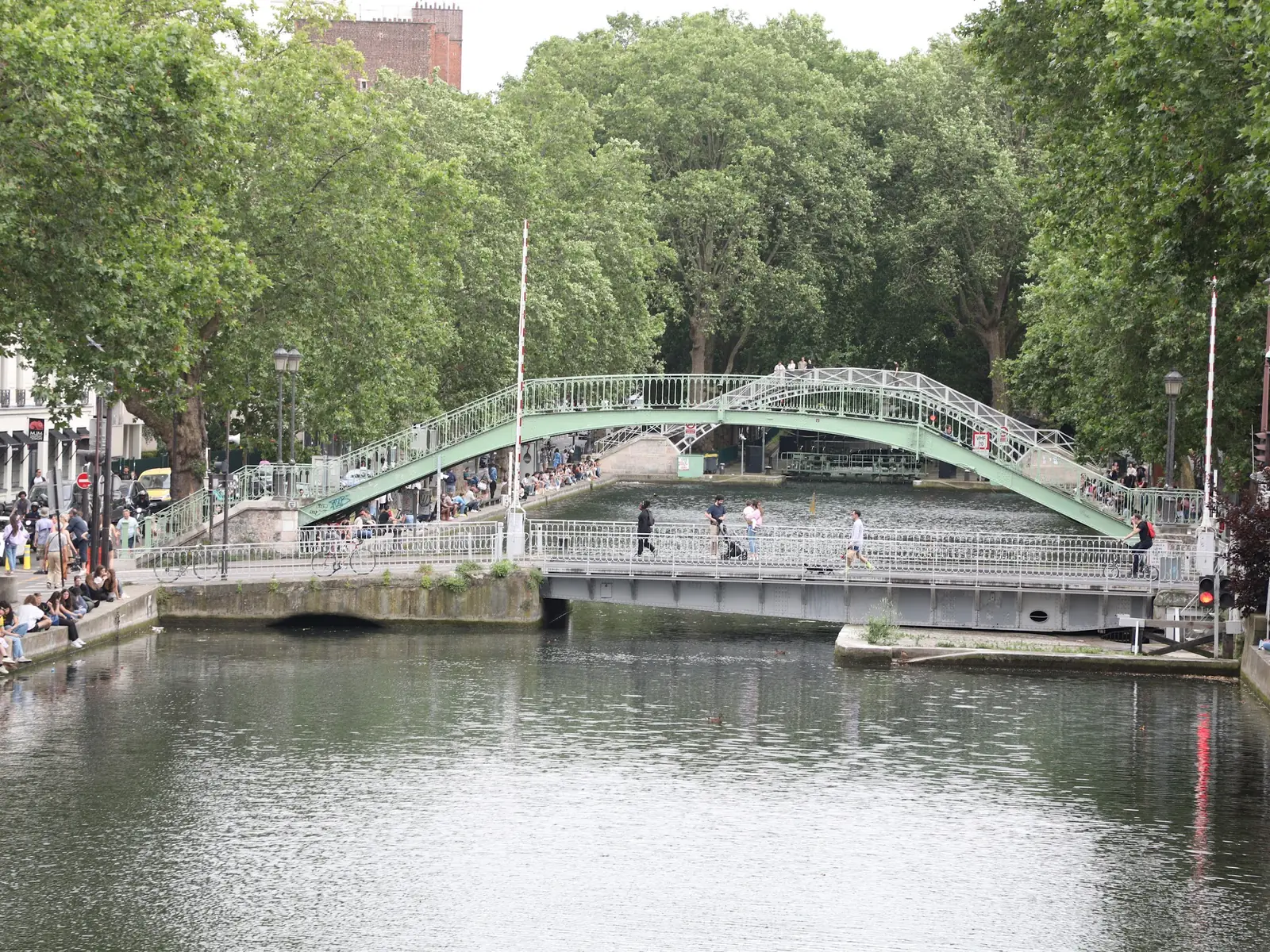
The 10th (outside the Canal Saint-Martin area) raises perceived safety concerns around the Gare du Nord and Gare de l’Est. The canal quarter appeals to trendy young parents, but daily reality with school-age children is less rosy than the Instagram image.
The 18th (outside Montmartre and Jules Joffrin) is very uneven. Some pockets are perfectly suited to families, others are inadvisable. The Goutte d’Or, Barbès and Château-Rouge areas require good local knowledge: this is an arrondissement where the choice of street makes all the difference.
What budget for a family flat in Paris in 2026?
Expect 700,000 to 1,000,000 euros for an 80 to 95 m² three-bedroom flat in decent condition in the 12th, 14th, 15th, 17th and 11th, and 900,000 to 1,500,000 euros in the 16th, 5th and 7th. The table below breaks these ranges down arrondissement by arrondissement in 2026:
| Arrondissement | Budget 4-bed (80-95 m²) | Main asset |
|---|---|---|
| 15th (Commerce) | 780,000 to 950,000 euros | Surface area + neighbourhood life |
| 12th (Nation) | 700,000 to 850,000 euros | Bois de Vincennes + price |
| 14th (Alésia) | 750,000 to 920,000 euros | Calm + Parc Montsouris |
| 17th (Batignolles) | 800,000 to 1,000,000 euros | MLK park + dynamism |
| 11th (Charonne) | 750,000 to 900,000 euros | Neighbourhood life + centrality |
| 16th (Passy) | 1,000,000 to 1,300,000 euros | Schools + green spaces |
| 16th (Auteuil) | 900,000 to 1,200,000 euros | Surface area + Bois de Boulogne |
| 7th (rue Cler) | 1,200,000 to 1,500,000 euros | Prestige + village feel |
| 5th (Latin Quarter) | 950,000 to 1,200,000 euros | Secondary schools + Luxembourg |
These ranges include properties in decent condition but not necessarily fully renovated. For a fully renovated flat, add 10 to 15%. For a property needing renovation, subtract 10 to 15% but budget 1,500 to 2,500 euros/m² in works.
Jean Mascla’s advice: Families often make the mistake of searching in only one arrondissement. By expanding to two or three comparable neighbourhoods, you multiply opportunities and accelerate the search. A property hunter who knows all 20 arrondissements can suggest alternatives you would not have considered. The 15th and 14th are interchangeable for many families. The 17th (Batignolles) is a credible alternative to the 16th (Auteuil). The 12th rivals the 15th for families wanting space and greenery.
What mistakes do families make most often?
Five come up again and again: banking on a single school when the catchment map is revised every year, underestimating weekday noise, overlooking the absence of a lift, forgetting storage, and accepting a facing building less than ten metres away. Fifteen years of advising buyers have let us identify them.
School catchment that changes
The catchment map is revised each year by the City of Paris education department. A property bought in 2026 can be re-zoned in 2027. The risk is low in stable districts, but real in arrondissements undergoing change (13th, 19th, 20th). Our recommendation: check the catchment, but do not bet everything on a single school. Favour a district where several good schools coexist.
Underestimated noise
Families often view at the weekend, when the street is quiet. Yet noise levels during the week can be radically different. Major boulevards, shopping streets with early-morning deliveries, and proximity to bars and restaurants are sources of noise you will not detect on a one-off viewing. Our hunters systematically visit on weekdays, at varied times, to assess real acoustic comfort.
The absence of a lift
In a Haussmann building, upper floors without a lift are a trap for families. With a pushchair, shopping and a tired child, climbing to the fifth floor without a lift quickly becomes unliveable. This criterion seems obvious, but many families are seduced by the charm of a top-floor through flat and forget the reality of daily life.
Forgotten storage
Families accumulate: pushchairs, bicycles, scooters, suitcases, sports gear, bulky toys. A flat with no cellar and no pushchair room in the building creates a chronic storage problem. Remember to check whether the cellar exists and what condition it is in, whether bicycles can be parked in the courtyard or in a dedicated room, and whether there is storage in the communal areas.
Overlooking and natural light
A family flat has to be bright. Children spend a lot of time there and homework gets done in the living room or the bedrooms. A building directly facing you less than ten metres away forces you to live with the curtains closed. Favour flats on a quiet courtyard with some distance, or upper floors on the street side.
What does a property hunter bring to a family?
Five things, on a segment where properties of 80 m² and above account for less than 15% of transactions and sometimes sell within days: verification of school catchment, a noise assessment, a reading of the layout, negotiation and time saved. Our hunters find the property in 45 days on average, with 3 viewings on the client’s side, against 6 months for a solo search.
Verifying school catchment
At Home Select, every shortlisted property is checked against the catchment map in force. We contact the arrondissement town hall directly to confirm the catchment school. This work, tedious for a private buyer, is built into our filtering process.
Noise and environmental assessment
Our hunters visit properties at varied times and assess noise levels, actual sunlight and the feel of the district. They also check ongoing planning projects (building permits filed, works scheduled) that could affect quality of life in the medium term.
Optimising the layout
An experienced hunter can spot properties whose layout can be optimised for a family: a partition to remove in order to create a third bedroom, a kitchen to open onto the living room, a redundant corridor to reclaim. These opportunities often go unnoticed in listing photos.
Negotiating on family properties
Large flats are negotiated differently from studios or one-bedroom flats. Sellers are often families themselves, working to a constrained timetable (the start of the school year, a job relocation). At Home Select we achieve 6% average negotiation on the seller’s price, which represents a saving of 48,000 to 78,000 euros on a family property between 800,000 and 1,300,000 euros.
Time saved
A solo family search takes 6 months on average in Paris and requires more than 40 viewings, many of them unproductive. Our hunters find the property in 45 days on average, with only 3 viewings on the client’s side. For working parents, that time saving is considerable.
Since 2011, our team of 16 property hunters has supported more than 1,200 clients, with a 4.8/5 rating on Google and a 96% satisfaction rate. We are members of the FCI (Federation des Chasseurs Immobiliers), a guarantee of professional ethics and transparency.
How do you choose your family arrondissement, step by step?
In four steps: list two non-negotiables, eliminate the arrondissements that fail them, walk the two or three that remain, then engage a property hunter. At Home Select, family mandates complete in 45 days on average with 3 viewings, against 6 months and more than 40 viewings when searching alone.
After supporting several hundred families, here is how I run that method.
Step 1: list your non-negotiables. Every family has two or three. For some, it is the school (catchment area of a specific secondary school). For others, it is the park (a large green space within ten minutes). For yet others, it is the office-school commute (under thirty minutes door to door). Identify your two absolute criteria: the ones on which you will not compromise.
Step 2: eliminate. The non-negotiables naturally remove half the arrondissements. If the park is essential, the 2nd, 3rd and 9th come off the list. If the target is Henri-IV secondary school, only the 5th remains. If the budget is limited to 850,000 euros for a four-bedroom flat, the 6th, 7th and Trocadéro are excluded.
Step 3: visit. The remaining two or three arrondissements need to be walked. Not as a tourist, but as a future resident. A Wednesday afternoon (to see the children in the playgrounds), a Saturday morning (to see the market and the shops), a Monday at 8.30am (to evaluate the school-to-office commute). Three half-days are enough to know whether a neighbourhood suits you.
Step 4: engage a property hunter. Once the area is defined, the search can begin in earnest. A property hunter specialised in family purchases knows exactly what works: the right buildings, the right angles (a four-bedroom created from merging units, a three-bedroom with extension potential), the right opportunities. At Home Select, family mandates are completed in an average of 45 days, with 3 targeted viewings. Families searching on their own take an average of 6 months and view more than 40 properties.
Paris with children is a demanding choice. But families who find the right neighbourhood, the one where the children walk to school, where the park is at the end of the street, where the neighbours know each other, would not trade their Parisian life for anything in the world. The right arrondissement is the one that transforms the constraint into an art de vivre.
Sources
Frequently asked questions
01 What is the best arrondissement in Paris?
There is no single best arrondissement: the right choice depends on your profile. Families favour the 15th, 12th, 16th and 17th for space and schools; young professionals the 11th and 10th; lovers of prestige the 6th, 7th and 8th. Each arrondissement has its own identity.
02 What budget for a family flat in Paris in 2026?
For a 3-4 bedroom family flat (70 to 95 m²), budgets vary considerably. The 15th and 12th offer the best surface-to-price ratios, with 4-room flats of 85 m² between 750,000 and 950,000 euros. The 17th (Batignolles) is in the same range. The 16th (Passy, Auteuil) rises to 1 to 1.3 million euros for an equivalent surface. The 7th and 6th are the most expensive: expect 1.3 to 1.8 million euros for a quality 4-room flat. The 14th and 11th (Charonne) offer intermediate options around 800,000 to 1 million euros.
03 Which arrondissements have the best schools in Paris?
For outstanding state secondary schools, the 5th (Henri-IV, Louis-le-Grand), the 6th (Lycée Fénelon), the 16th (Janson-de-Sailly, Molière, La Fontaine) and the 4th (Charlemagne) lead the way. For primary and middle school, quality is more evenly distributed: the 15th, 14th, 12th and 17th offer excellent standards without the selective pressure of elite lycees. The 16th stands out for its density of private and bilingual schools, which attracts expat families.
04 Can a property hunter help choose the right neighbourhood for a family?
This is actually one of the cases where a property hunter adds the most value. At Home Select, 40% of our mandates involve families, and the first meeting is dedicated to understanding priorities: children's ages, target school catchment area, need for green spaces, acceptable commute time, budget. From this analysis comes a shortlist of two to three neighbourhoods, which avoids months of scattered searching. Our 16 property hunters know the school catchment areas, the parks, the nurseries, the activities: everything that makes up a family's daily life.