

Haussmann apartments represent approximately 60% of the housing stock in the central arrondissements of Paris. In 2026, a Haussmann apartment is negotiated between 9,500 and 16,000 euros/sqm depending on the arrondissement, the floor and the condition, a considerable price range that only a thorough knowledge of the market can decode.
When I say “Haussmann,” I am not referring to a marketing label slapped onto any old building with moldings. A genuine Haussmann apartment has precise characteristics, a fascinating architectural history, and specific pitfalls that every buyer should know. In fourteen years of property hunting in Paris, I have visited thousands of Haussmann apartments, from intact Second Empire masterpieces to disasters masked by clever home staging. This guide gives you the keys to tell one from the other.
What a Haussmann Building Really Is
The term “Haussmann” refers to the transformation of Paris led by Baron Georges-Eugene Haussmann, Prefect of the Seine under Napoleon III, between 1853 and 1870. But the architectural codes he imposed continued to guide Parisian construction well after his departure, until the eve of World War I. There are actually three periods to distinguish.
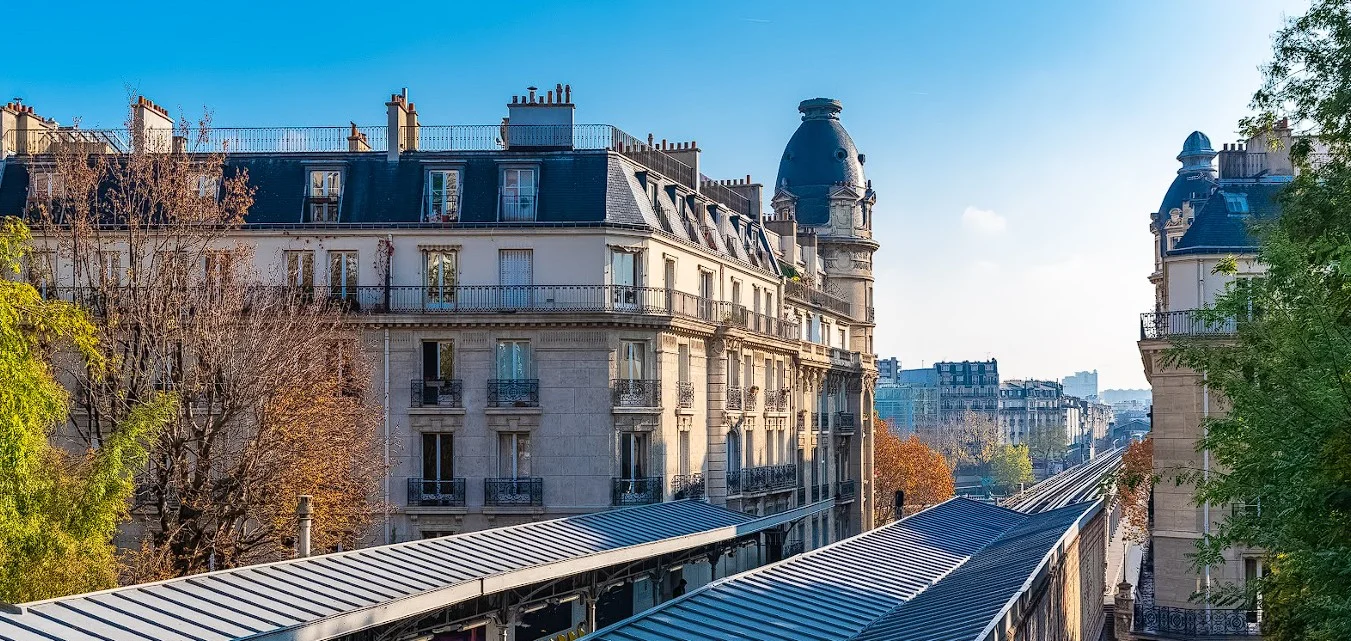
Strict Haussmann (1853-1870) corresponds to buildings constructed during the grand works: the boulevards cut through by Haussmann himself, the major arteries of the 8th, 9th, 1st and 2nd arrondissements. These buildings follow a rigid specification: cut stone facade, continuous balcony on the second floor (the noble floor), cornice, imposed height. The interior follows a codified plan: an enfilade of reception rooms facing the street, bedrooms and service rooms facing the courtyard, a service corridor.
Post-Haussmann (1870-1900) extends the style with more decorative freedom. Facades become more ornate, bow windows appear, ironwork grows more complex. Apartments are often larger and better laid out than their strict Haussmann counterparts. This category contains the most spectacular buildings in the 16th, 7th and 8th arrondissements.
Neo-Haussmann or “1900 style” (1900-1914) integrates Art Nouveau elements into the Haussmann vocabulary. Facades gain in creativity, interior plans modernize (dedicated bathrooms appear, built-in closets). These buildings, often in excellent structural condition, represent some of the best value on the market.
Anything prior (18th-century buildings, pre-Haussmann) or later (1930s, 1960s) is not Haussmann, even if creative real estate agents describe “Haussmann charm” for virtually any apartment with parquet flooring and a single molding.
The Features That Drive Price
Not all Haussmann apartments are equal. Certain architectural elements have a direct and measurable impact on price per square meter.
Ceiling Height
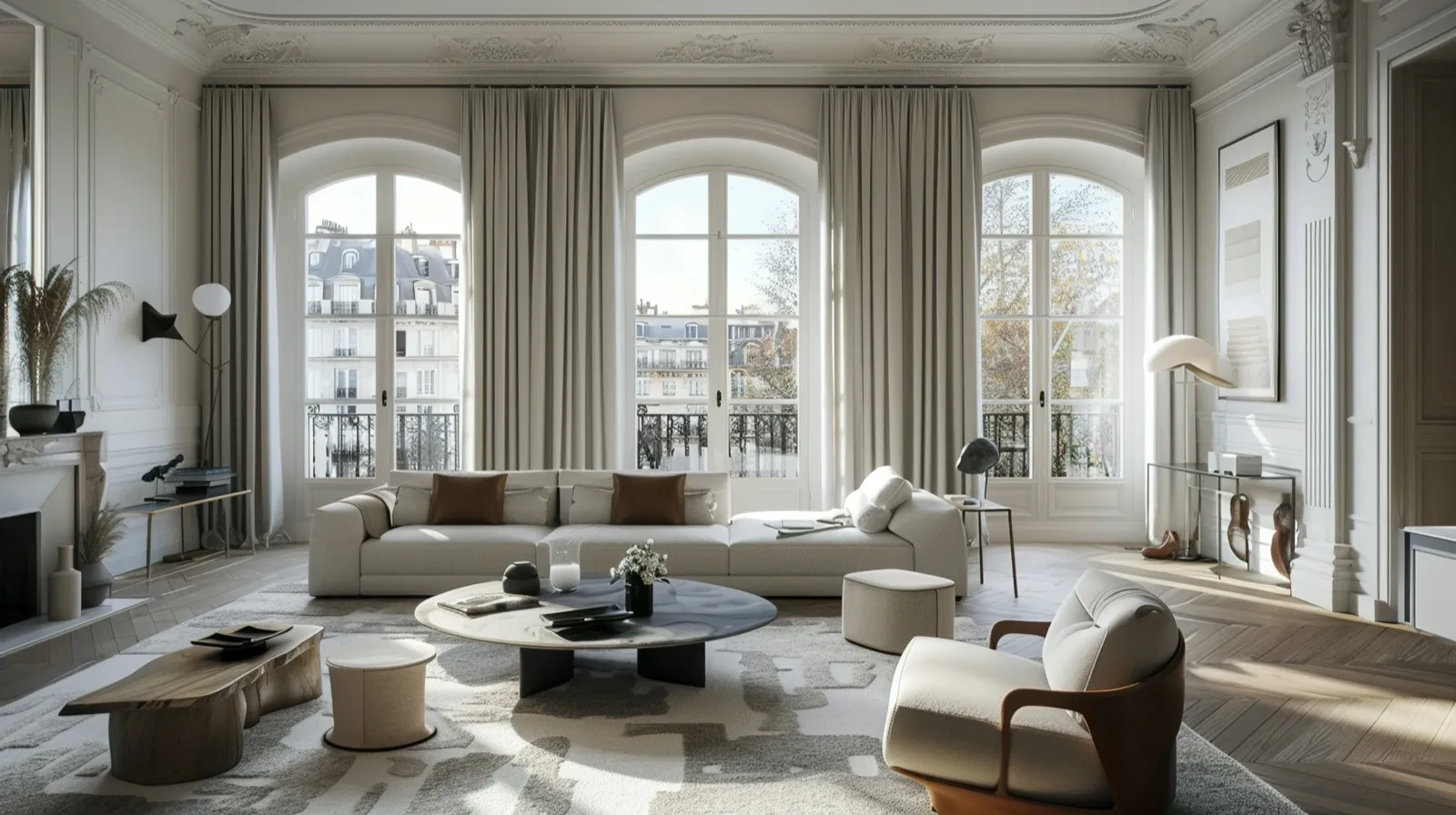
This is the most immediately perceptible element. A genuine Haussmann offers between 2.80 m and 3.20 m ceiling height on the noble floors (second and third), and up to 3.50 m in certain exceptional buildings on Boulevard Haussmann or Avenue Kleber. Upper floors (fifth, sixth) drop to 2.50-2.70 m, which still exceeds most modern construction.
Ceiling height transforms the experience of a space. A 50 sqm apartment with 3.10 m ceilings is incomparably more pleasant to live in than a 60 sqm apartment with 2.50 m. It is a parameter that many buyers underestimate, and that Haussmann property owners never discount.
Parquet Flooring
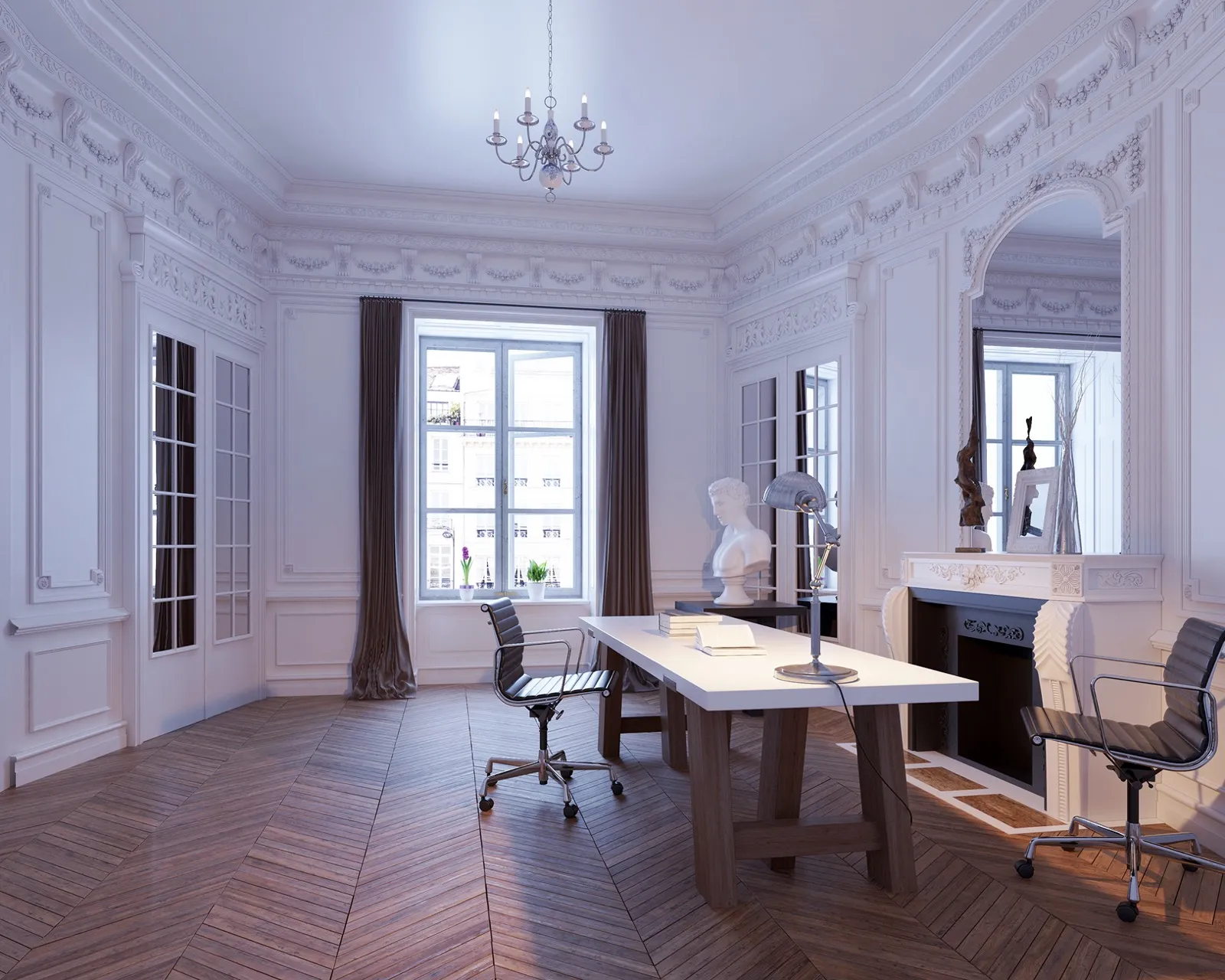
Haussmann parquet is a marker of authenticity and value. Three types coexist: Hungarian point (chevron, the most prized), Versailles (geometric panels, rare and precious) and straight planks (common, less valued). An original solid oak Hungarian point parquet, sanded and varnished, adds perceptible value to the property. Replacing it with new flooring would cost between 120 and 200 euros/sqm in material alone, and the result would never have the patina of the original.
During visits, check the actual condition of the parquet under rugs and furniture. A parquet that creaks slightly is normal in a century-old building. A parquet that sinks or shows loose planks over large areas signals a joist problem, a heavy and costly repair.
Moldings and Cornices
Ceiling moldings, cornices, rosettes around light fixtures: this entire decorative vocabulary of the Haussmann apartment has value. Original plaster moldings are irreplaceable as-is: recreating them identically costs between 80 and 150 euros per linear meter. When they are intact, they testify to an apartment that has been respected over the decades.
Beware of polystyrene moldings glued to a flat ceiling, a common trick to “Haussmannize” an apartment that is not one. The difference is visible by touch and in the fineness of detail.
Fireplaces
Marble fireplaces are the soul of the Haussmann apartment. They no longer heat (most are sealed), but their presence structures the rooms and anchors the apartment in its era. An original white or black marble fireplace is worth between 2,000 and 8,000 euros on the reclamation market, an indicator of its heritage value.
Some owners have removed them to gain space. This is an error that costs at resale: a Haussmann living room without a fireplace immediately loses character.
Floor and Exposure
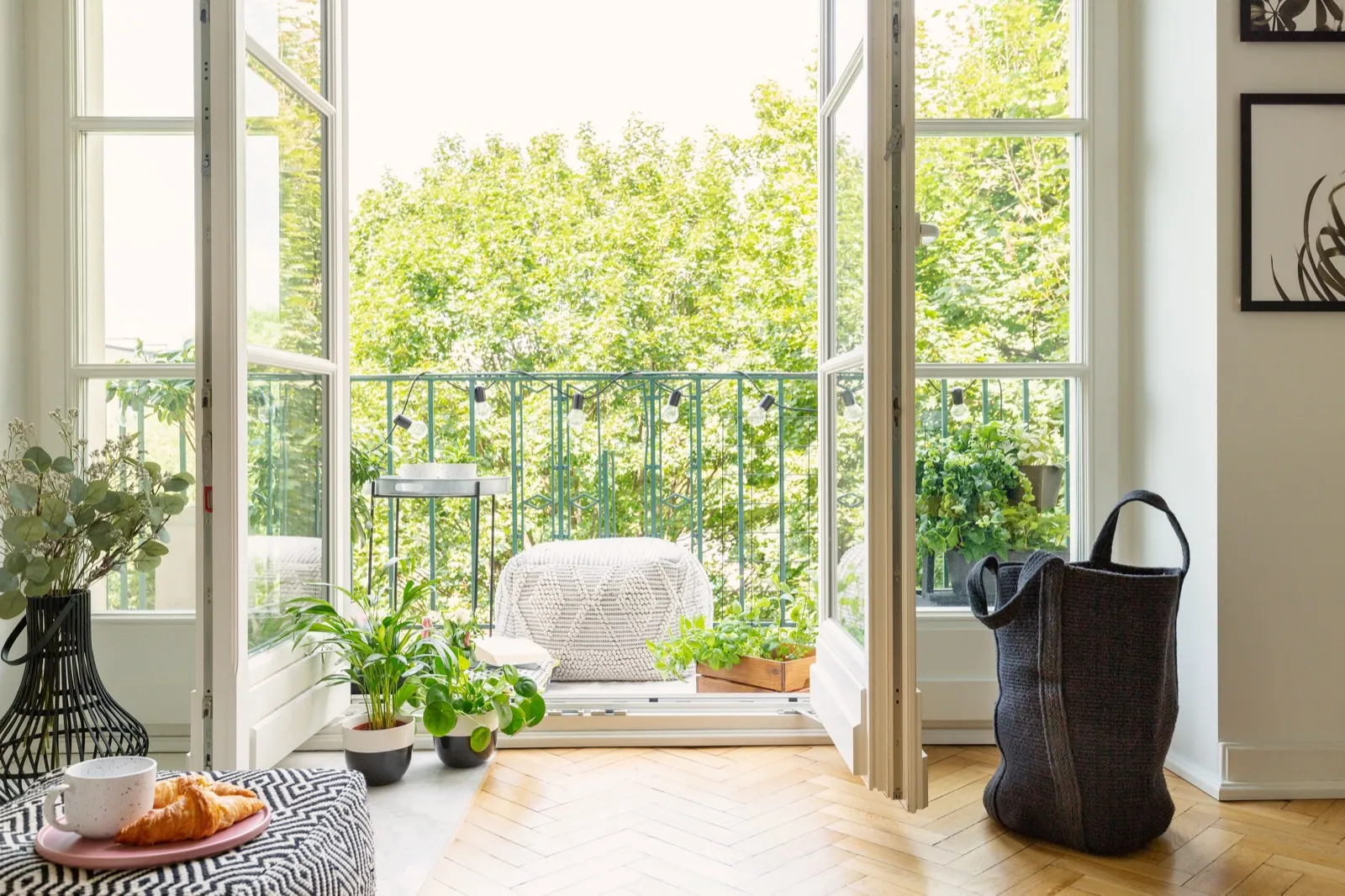
In a Haussmann building, the hierarchy of floors is readable in the architecture itself. The second floor (the noble floor) has the highest ceilings, the finest moldings, often the continuous balcony. It is traditionally the most expensive floor, commanding a 5 to 10% premium over standard floors.
The top floor, if it offers an unobstructed view, also commands a significant premium. Former servants’ rooms on the sixth floor, combined and renovated, can make for charming atypical apartments, but watch for ceiling height (often 2.20-2.40 m) and the absence of an elevator.
The elevator, incidentally, is a decisive criterion. An apartment on the fifth floor without an elevator suffers a 10 to 15% discount compared to the same property with an elevator. Conversely, a raised ground floor overlooking a planted courtyard can be a rare and sought-after product, depending entirely on the natural light and surroundings.
Haussmann Prices by Arrondissement in 2026
Haussmann buildings are not evenly distributed across Paris. The arrondissements that concentrate the finest Haussmann buildings are also those with the highest prices, unsurprisingly. But opportunities exist in less obvious locations.
The 6th arrondissement (Saint-Germain-des-Pres, Odeon) has the highest prices for Haussmann: 14,500 to 17,000 euros/sqm for a fine floor with preserved character. Stock is scarce, demand constant, negotiations tight.
The 7th arrondissement (Invalides, rue Cler, Saint-Thomas d’Aquin) sits between 13,000 and 16,000 euros/sqm. This is the arrondissement of the Parisian upper bourgeoisie, with buildings often impeccably maintained. Family apartments of 100 sqm or more are highly sought after.
The 8th arrondissement (Triangle d’Or, Monceau) offers Haussmann sometimes more opulent than the 7th, in a range of 11,500 to 14,500 euros/sqm. The Monceau neighborhood in particular contains post-Haussmann buildings of exceptional architectural quality.
The 16th arrondissement (Trocadero, Passy, Victor Hugo) is the territory of the grand family Haussmann. Prices run from 11,000 to 14,000 euros/sqm, with more abundant supply than the previous arrondissements. This is often where families find the large units they are looking for.
The 9th arrondissement (Nouvelle Athenes, SoPi, Grands Boulevards) is, in my view, one of the best character-to-value ratios in Paris. Haussmann buildings there are magnificent. The streets around Place Saint-Georges or Rue des Martyrs feature sumptuous facades, and prices remain between 9,500 and 12,000 euros/sqm. The discount compared to the 6th or 7th reaches 30 to 40% for comparable architectural character.
The 10th arrondissement, in its western part (Grands Boulevards, Chateau d’Eau), offers authentic Haussmann starting at 8,500 euros/sqm. Buildings along Boulevard de Strasbourg or Rue du Faubourg-Saint-Denis are sometimes undervalued relative to their actual quality.
The 17th arrondissement (Ternes, Batignolles) is an interesting entry point to western-district Haussmann, with prices between 9,000 and 12,000 euros/sqm.
The Five Pitfalls of Haussmann
Every property type has its structural weaknesses. Haussmann buildings are no exception, and the pitfalls are all the more costly because they often involve elements invisible during a standard visit.
Lead
Buildings constructed before 1949 may contain lead, in old paint (white lead) and in water pipes. The lead diagnostic (CREP) is mandatory for sales and must be included in the technical diagnostic file.
A positive diagnostic is not a dealbreaker in itself: as long as lead paint is in good condition and not degraded, it presents no immediate health risk. However, if you plan renovation work that involves scraping or sanding painted surfaces (walls, woodwork, windows), the treatment cost skyrockets: lead decontamination adds 20 to 40% to the renovation budget for the affected surfaces.
Lead pipes must be replaced, this is a health obligation. Replacing the water mains is a condominium project; replacing the internal distribution is the owner’s responsibility (expect 3,000 to 6,000 euros for a 70 sqm apartment).
Asbestos
Asbestos was widely used in Haussmann building renovations between 1950 and 1997: vinyl-asbestos floor tiles, adhesives, ceiling insulation, chimney flues. The asbestos diagnostic is mandatory.
As with lead, the presence of asbestos is not a problem in itself if the materials are in good condition and non-friable. But any renovation touching these elements requires removal by a certified company, an expense that can double the cost of certain work. Systematically check the diagnostic before budgeting your renovation.
Energy Performance Rating: The Haussmann Achilles’ Heel
This is the burning topic of the moment. Haussmann buildings, with their single glazing, poorly insulated stone walls and aging collective heating, are rarely energy performance champions. The majority are rated D, E or F, and a significant number are rated G (thermal sieves).
In 2026, G-rated properties are banned from the rental market. F-rated properties will follow in 2028, E-rated in 2034. If you are buying to live in, the energy rating is a matter of comfort and heating costs. If you are considering renting someday, it is a strategic criterion.
The good news: a poor energy rating is a formidable negotiation lever. The observed discount in 2026 for an F or G-rated property is 10 to 20% compared to an equivalent property rated C or D. A buyer who purchases a Haussmann with a mediocre energy rating, negotiates the discount, and invests in energy renovation can achieve excellent value.
The cost of improving the energy rating varies enormously by building. Window replacement (1,500 to 3,000 euros per window in custom-made to comply with ABF requirements in certain arrondissements), floor and attic insulation, heating system replacement: each item must be evaluated individually. Globally, expect 400 to 800 euros/sqm to gain one to two rating letters on a Haussmann apartment.
Facade Renovation and Condominium Works
A facade renovation costs between 80 and 150 euros/sqm of facade, or 200,000 to 500,000 euros for a typical Haussmann building. Divided among co-owners by share proportion, the contribution can represent 10,000 to 25,000 euros per unit.
Facade renovation is mandatory every ten years in Paris (municipal order). Before buying, check the date of the last renovation and review the general meeting minutes to determine if one has been voted or scheduled. It is a foreseeable expense that must be factored into your financial calculation.
Beyond facade work, Haussmann buildings may require major work on common areas: roof replacement (zinc), elevator replacement, stairwell renovation, network upgrades. Special assessment calls for condominium work are the most common unpleasant surprise for Haussmann buyers. Read the general meeting minutes. I repeat this because it is fundamental.
Condominium Fees
A Haussmann building with concierge, collective heating, elevator and collective hot water can generate fees of 5 to 8 euros/sqm/month. For an 80 sqm apartment, that represents 400 to 640 euros per month, or 5,000 to 7,700 euros per year. This is a recurring expense that many buyers underestimate.
Collective oil or gas heating in particular is a variable expense whose cost can fluctuate significantly from one year to the next. Request the fee history over three years for a realistic picture.
Jean Mascla’s advice. Before each visit to a Haussmann apartment, I ask my property hunters to obtain three documents: the last three general meeting minutes, the building maintenance log and the pre-sale condominium statement. These documents reveal 80% of potential unpleasant surprises. A seller who refuses to provide them before the visit is a red flag. At Home Select, we never present a property to a client without having analyzed the state of the condominium.
Renovating a Haussmann Apartment: Actual Costs in 2026
Renovation is at the heart of buying Haussmann. Properties that need no work at all are rare, and those command top prices. For the rest, the question is not “should you renovate?” but “how much will it cost?”
The Three Levels of Renovation
A refresh concerns an apartment in good structural condition that simply needs updating. Paint, parquet sanding and varnishing, replacement of some fixtures. Budget: 500 to 800 euros/sqm. For 80 sqm, expect 40,000 to 64,000 euros.
An intermediate renovation involves redesigning the kitchen and bathroom, bringing the electrical system up to code, and replacing some finishes. The structural layout remains intact. Budget: 1,200 to 1,800 euros/sqm. For 80 sqm: 96,000 to 144,000 euros.
A complete high-end renovation means redoing everything while respecting the character of the space: redistributing rooms, new networks (electrical, plumbing, heating), insulation, bespoke kitchen, premium bathroom, restoration of character elements (moldings, fireplaces, parquet). Budget: 2,000 to 3,000 euros/sqm. For 80 sqm: 160,000 to 240,000 euros.
These budgets include architect fees (8 to 12% of the work total) if you hire a professional, which I strongly recommend for any renovation exceeding 80,000 euros.
Renovation Mistakes to Avoid
Three errors come up constantly in Haussmann renovations.
Destroying the character to “modernize.” Replacing a Hungarian point parquet with polished concrete, removing moldings for a flat ceiling, replacing fireplaces with closets: all choices that destroy the heritage value of the property. A Haussmann apartment should be renovated, not stripped of its identity. The most sophisticated buyers seek precisely that blend of authentic and contemporary: period moldings, restored parquet, and an open kitchen with modern equipment.
Underestimating timelines. In Paris, a complete renovation takes between 4 and 8 months, and that is an optimistic scenario. Delays are the norm: material procurement, coordinating trades, structural surprises (a wall you thought was load-bearing is not, or vice versa). Plan for a 30% margin on the announced timeline.
Forgetting regulatory constraints. In certain Paris sectors (ABF perimeters around historic monuments), window replacement requires specific models approved by the Architecte des Batiments de France. The cost of an ABF-compliant window is 2 to 3 times that of a standard window. Check BEFORE budgeting.
Buying a Haussmann Apartment: The Winning Strategy
After more than 1,200 supported transactions, the vast majority in Haussmann properties, here is the strategy I recommend.
Aim for Potential, Not Perfection
“Turnkey” Haussmann apartments, beautiful, well-located, perfectly renovated, are rare and very expensive. Competition is fierce and negotiation margins virtually nonexistent. The savviest buyers look for potential: a fine building, a good floor, beautiful volumes, original character, in a condition that deters hurried buyers.
An 80 sqm Haussmann in the 9th, needing a complete renovation, can be negotiated at 8,500 euros/sqm (680,000 euros). Add 150,000 euros for a high-end renovation. You obtain a premium apartment for 830,000 euros, when an equivalent renovated property sells for 950,000 to 1,000,000 euros in the same neighborhood. The renovation effort creates value.
Work with a Specialist
Haussmann has its codes, its pitfalls, its subtleties. A property hunter who knows this market can read a building in five minutes: the quality of the stone, the condition of the staircase, the solidity of the floors, the redistribution potential. They also know which buildings have good reputations on the condominium side, and which ones are problem magnets.
At Home Select, our 16 property hunters each have intimate knowledge of the Parisian Haussmann stock. It has been our daily work since 2011, with more than 1,200 completed projects, 96% client satisfaction, 4.9/5 on Google. When an off-market property becomes available in a fine Haussmann building, we are often the first to know.
Jean Mascla’s advice. My number one criterion when evaluating a Haussmann is not the apartment. It is the building. An apartment can be renovated. A poorly maintained building, with a dysfunctional condominium and overdue structural work, is a financial sinkhole you will not escape. Look at the staircase, the facade, the common areas. Talk to the concierge. Read the meeting minutes. The building tells the whole story.
Haussmann in Paris: A Living Heritage
A Haussmann apartment is not just a piece of real estate. It is a piece of Paris history, a space designed 150 years ago to be beautiful, luminous and well-proportioned. The high ceilings, the enfilade of rooms, the parquet singing underfoot, the light streaming through tall windows: all of this creates a quality of life that modern construction struggles to replicate.
It is also a solid heritage investment. The Parisian Haussmann has survived two world wars, financial crises, architectural trends, and its value has only grown over the long term. In 2026, with prices corrected from the 2022 peak, Haussmann offers an entry point that may not come again for a long time.
If you have a purchasing project in Parisian Haussmann, our property hunters are here to guide you. Describe your project and your dedicated property hunter will call you back within 24 hours, with no obligation. Tell us about your project
Frequently asked questions
How much does a Haussmann apartment cost in Paris in 2026?
Haussmann apartment prices in Paris range from 9,500 euros/sqm in the 10th arrondissement to over 16,000 euros/sqm in the 6th or 7th. A 2-bedroom of 70 sqm in a fine Haussmann building costs between 665,000 euros in the 9th and over 1,100,000 euros in the 7th. Upper floors with elevator and continuous balcony command a 15 to 25% premium.
What are the pitfalls to avoid when buying a Haussmann apartment?
The five main pitfalls are lead (old paint, pipes), asbestos (vinyl floor tiles, insulation), a poor energy performance rating (many Haussmann buildings are rated E or F), a voted or upcoming facade renovation (10,000 to 25,000 euros per unit), and high condominium fees linked to collective heating. Always have these points checked before signing.
How much does it cost to renovate a Haussmann apartment?
A refresh (paint, floors) costs 500 to 800 euros/sqm. An intermediate renovation (kitchen, bathroom, electrical) runs between 1,200 and 1,800 euros/sqm. A complete high-end renovation (full refurbishment preserving the character) reaches 2,000 to 3,000 euros/sqm. For an 80 sqm unit, expect between 40,000 and 240,000 euros depending on the scope of work.