

In brief
In Paris, the material and colour of a facade directly influence the price per square metre. Limestone, dominant from the 1st to the 9th and in the 16th arrondissement, sells on average 10 to 15% more than a rendered building in the same neighbourhood, while Art Deco buildings command a 5 to 8% premium. Facade renovation, mandatory every 10 years since the 1994 prefectoral decree, costs between 15,000 and 30,000 euros per co-ownership unit in 2026, and a deteriorated facade can reduce the sale price by 5 to 8%. Home Select has helped buyers read these quality signals since 2011.
Key takeaways
- Limestone buildings in Paris sell for 10 to 15% more than rendered buildings in the same neighbourhood, and 20 to 30% more than exposed concrete.
- Facade renovation is mandatory every 10 years in Paris and costs 15,000 to 30,000 euros per co-ownership unit for Haussmann-era limestone buildings.
- Red brick HBM buildings from the 1920s-1930s age well, require minimal maintenance, and are now highly sought after in the 12th and 13th arrondissements.
- Art Deco white buildings in the 16th, 15th, and 7th arrondissements command a 5 to 8% price premium for their architectural quality and generous proportions.
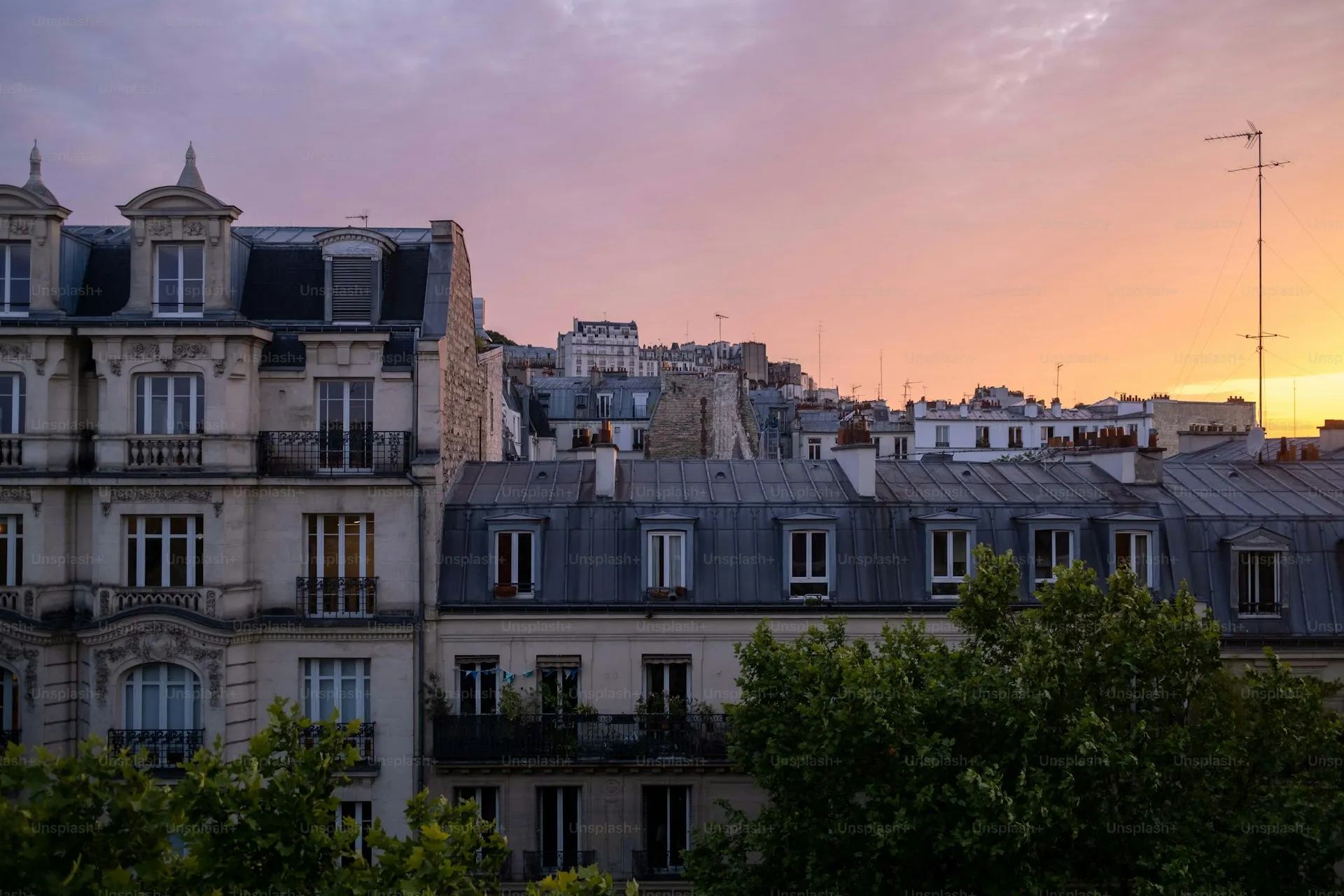
Paris is not grey. This is a persistent misconception, fed by rainy days and black-and-white postcards. In reality, Paris is golden. The Lutetian limestone, once quarried from the pits of the Bièvre, Montrouge, and Bagneux, gave Haussmann-era buildings their warm hue, somewhere between cream and honey, that lights up at the slightest ray of sunshine. And around this dominant gold, the city unfolds a palette far richer than commonly imagined: red brick in the 12th, ochres and yellows in the Marais, brilliant white of Art Deco, and concrete grey in the 13th.
Does a limestone building sell for more in Paris?
Yes: on average 10 to 15% more than a rendered building in the same neighbourhood, all else being equal. Limestone signals a higher construction investment, ages better than render, and needs a less radical facade renovation.
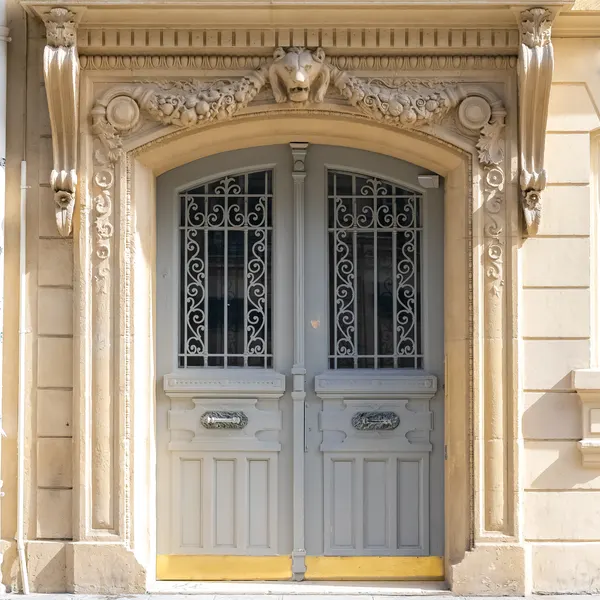
Cut limestone is the king of Parisian building materials. Used since the Middle Ages and systematised by Haussmann in the Second Empire buildings, it forms the facade of most buildings in the 1st through 9th arrondissements, the 16th, and large sections of the 14th, 15th, and 17th.
Its colour, that warm, slightly golden blond, is the result of a specific mineral composition: miliolite limestone from the middle Lutetian period, rich in microscopic fossils that give it its granular texture and its capacity to capture light. Freshly cut, the stone is almost white. Over time, it develops a patina, absorbs pollution, and takes on tones ranging from cream to light grey depending on exposure and maintenance.
In property terms, limestone is a measurable value driver. A limestone building sells on average for 10 to 15% more than a rendered building in the same neighbourhood, all else being equal. This premium is explained by several factors: limestone signals higher construction investment (plaster rendering was cheaper in the 19th century), it ages better than render (less prone to cracking and water infiltration), and it requires less radical facade renovation (cleaning rather than full resurfacing).
The most beautiful Haussmann-era buildings are all limestone. It is a necessary, though not sufficient, condition for architectural standing. A rendered Haussmann building, even with fine interior mouldings, will always be perceived as a step below a limestone building.
What are Paris’s red brick buildings worth?
They track their arrondissement median, with neither premium nor discount: around 9,100 euros/m2 in the 12th and 8,800 euros/m2 in the 13th. These 1920s-1930s buildings, born of the low-cost housing programmes, are solidly built and need little upkeep.
Red brick is Paris’s second colour, and its most overlooked. It appeared in large numbers in the 1920s and 1930s with the low-cost housing programmes (HBM) built on the site of the former Thiers fortifications.
The belt of brick that surrounds Paris, visible along the boulevards des Maréchaux in the 12th, 13th, 19th, and 20th arrondissements, is an architectural heritage in its own right. The HBM architects (Henri Sauvage, Joseph Bassompierre, Paul de Rutte) designed buildings of great quality: reinforced concrete structures, facing brick facades, cross-ventilated apartments with balconies, and planted inner courtyards.
Red brick ages beautifully. It needs no full resurfacing, simple cleaning being enough to satisfy the ten-yearly renovation obligation, withstands the weather, and develops a patina over time that enhances its character. Brick buildings in the 12th and 13th arrondissements are now highly sought after by buyers drawn to the social architecture of the early 20th century.
Prices in these buildings generally track their arrondissement median, around 9,100 euros/m2 in the 12th and 8,800 euros/m2 in the 13th, without the limestone premium but without a discount either. Brick’s charm is recognised and valued.
Why are the facades of the Marais so colourful?
Because the 17th and 18th-century buildings, which predate Haussmannian standardisation, carry lime-based renders tinted with natural oxides. Since 1996, the Safeguard and Enhancement Plan for the Marais has required these original colour schemes to be restored at every facade renovation.
The Marais is the most colourful neighbourhood in Paris. The 17th and 18th-century buildings, constructed before Haussmannian standardisation, display renders in a variety of hues: yellow ochre, ox-blood red, blue-grey, almond green, off-white.
This palette is the result of ancient artisan traditions. Lime-based renders, tinted with natural oxides, gave facades warm and vibrant tones that recent renovations have worked to rediscover. The Safeguard and Enhancement Plan for the Marais, established in 1996, mandates respect for original colour schemes during facade renovation, helping to restore this polychromy that decades of pollution had dulled.
For buyers, a Marais building with its original facade restored in period tones has a visual appeal that the more uniform Haussmann limestone cannot match. Property values in the Marais (a median 12,200 euros/m² in the 3rd, 13,000 euros/m² in the 4th) factor in this unique character, though the facade colour is just one element of a broader heritage package.
Do Art Deco buildings command a higher price?
Yes, with a modest but real premium of 5 to 8% over standard buildings in the same neighbourhood. It pays for the architectural quality, ceiling heights of 2.70 to 3.00 m, and amenities that were rare at the time: balconies, loggias, underground parking.
The Art Deco buildings of the 1920s-1930s, with their facades in concrete rendered and painted white or cream, trace another colour of Paris. They are found mainly in the 16th (Passy and Auteuil side), the 15th (Convention, Vaugirard), and the 7th (École Militaire).
Art Deco white is a particular white, slightly warm, matte, with shadows cast by geometric cornices and bow windows that animate the facade. Art Deco architects (Michel Roux-Spitz, Henri Sauvage, Pierre Patout) used white as a material in itself, playing with volumes and light to create depth effects.
These buildings sell at a modest but real premium, in the range of 5 to 8%, compared to standard buildings in the same neighbourhood. The premium reflects the architectural quality, generous proportions (ceiling heights of 2.70 to 3.00 m, spacious reception rooms), and amenities (balconies, loggias, underground parking).
Is it worth buying in a concrete tower in the 13th?
Exposed concrete divides opinion, and it shows in the prices: the Olympiades towers trade at 7,500 to 8,500 euros/m², below the 13th’s median of 8,800 euros/m². In exchange, the buyer gets generous volumes, panoramic views across all of Paris, and direct metro access.
The 13th arrondissement displays the most contrasting palette in Paris. Alongside the red brick HBM buildings and contemporary constructions in the ZAC Paris Rive Gauche, the towers and blocks of the 1960s-1970s, the Olympiades quarter and Front de Seine (technically the 15th), impose their grey concrete on the landscape.
Exposed concrete divides opinion. For some buyers, it is a cold, impersonal material associated with mass housing. For others, particularly fans of brutalist architecture, it is an expressive, honest, photogenic material. The towers of the Olympiades platform, with panoramic views across all of Paris, attract a young, international clientele who appreciate the generous spaces, the prices (7,500 to 8,500 euros/m²), and direct metro access.
Discover how Home Select can support you
How does facade material rank Paris prices?
Within the same arrondissement, a limestone building sells for 10 to 15% more than a rendered one and 20 to 30% more than an exposed concrete one, for comparable sizes and floors. Grey limestone and quality facing brick sit in between.
The hierarchy of facade materials in Paris is clear in buyers’ minds, even if not always conscious.
At the top: golden limestone, a hallmark of Haussmann-era quality, permanence, and prestige. It is the material that inspires confidence and commands the highest prices.
In second place: grey limestone (from Oise or Burgundy quarries, used in certain 20th-century buildings) and quality red brick. These materials signal solid construction without reaching the prestige of golden stone.
In third place: plaster render (secondary Haussmann buildings) and concrete render (1950s-1970s buildings). Render ages less gracefully than stone and requires more frequent and costly renovation.
In last place: untreated exposed concrete and prefabricated panels of social housing blocks. These materials suffer from a negative image that weighs on prices, even when apartments are spacious and views are remarkable.
This hierarchy translates directly into prices. In the same arrondissement, a limestone building will sell for 10 to 15% more than a rendered building, and 20 to 30% more than an exposed concrete building, for comparable sizes and floors.
How much does a facade renovation cost in Paris?
Between 15,000 and 30,000 euros per co-ownership unit for a Haussmann-era limestone building, and 10,000 to 20,000 euros for a rendered one, which must however be redone more often. Scaffolding alone accounts for close to half the bill.
In Paris, facade renovation (ravalement) is mandatory every 10 years. This obligation was imposed by the City under a 1994 prefectoral decree, regularly reinforced by injunctions to co-ownerships that fall behind.
The cost of renovation varies considerably depending on the material and the facade’s condition. For a Haussmann-era limestone building, expect 15,000 to 30,000 euros per co-ownership unit, a significant budget item that can represent several years’ worth of works provisions. The cost includes scaffolding (often half the bill), stone cleaning, repointing, restoration of sculpted elements, and final protective treatment.
For a rendered building, renovation costs between 10,000 and 20,000 euros per unit, but must be repeated more frequently (paint on render deteriorates faster than bare stone).
For a buyer, the facade’s condition is an important indicator. A recently renovated building (less than 5 years) is a positive sign: the co-ownership is functioning, the owners are investing, and the facade is in good condition. A building whose renovation dates back more than 15 years, or that has never been renovated, is a warning: works are to be expected, potentially costly, and the delay may indicate a struggling co-ownership.
What does a property hunter read on a facade?
The era and original standing in the material, the maintenance in the condition of the stone, the co-ownership’s budget in the quality of the last renovation. A building renovated less than five years ago is a positive signal; one last renovated more than fifteen years ago announces capital calls.
At Home Select, the facade is our first source of information about a building. Before even consulting diagnostics, general meeting minutes, or co-ownership accounts, we look at the facade.
The colour and material tell us the era and the original standing. The condition of the stone tells us about maintenance. The quality of the renovation tells us about the co-ownership’s budget. The windows tell us whether individual owners are investing (recent double glazing) or enduring (original single glazing). The balconies tell us whether the wrought iron is maintained or rusting. The sign of the ground-floor shop tells us about the neighbourhood.
This instant reading of the facade is the fruit of fifteen years of experience and over 1,200 completed mandates. It is a skill that cannot be learned from books: it is acquired building by building, street by street, arrondissement by arrondissement.
The remarkable staircases of Paris tell the story of a building’s interior. The facade tells its exterior story. Contemporary buildings reinvent this vocabulary with new materials. But the principle has remained the same since Haussmann: the facade is the face of a building. And like every face, it tells the truth to those who know how to read it.
Sources
Frequently asked questions
01 Does a limestone building sell for more than a rendered building in Paris?
Yes, on average 10 to 15% more in the same neighbourhood. Limestone is perceived as a guarantee of construction quality, standing, and durability. It ages better than render and requires less frequent facade renovation.
02 How much does a facade renovation cost in Paris?
Facade renovation of a Haussmann-era building costs between 15,000 and 30,000 euros per co-ownership unit, depending on the facade surface, the condition of the stone, and the complexity of ornamental features. It is mandatory every 10 years in Paris.
03 Are Paris's red brick buildings well built?
The brick buildings from the 1920s-1930s (HBM, low-cost housing) are solidly constructed and well maintained. They offer an appreciated industrial charm and attractive prices (12th, 13th, 19th arrondissements). Brick ages well and requires little maintenance.
04 Does the condition of the facade affect an apartment's value?
Yes, significantly. A recently renovated facade reassures the buyer about the overall condition of the building and the co-ownership. Conversely, a dirty or deteriorating facade is a warning sign that can reduce the sale price by 5 to 8%.