



In brief
In Paris, the premium for a Seine view or a front-row quayside position is 20 to 30% over a property set one street back. Quai Voltaire (7th) exceeds 16,000 euros/m2 and Quai d'Orleans, on Ile Saint-Louis, reaches 18,000 euros/m2, while the Canal Saint-Martin offers a waterside experience at roughly half the price, around 9,500 to 11,000 euros/m2. In 2026, Home Select buying agents check the PPRI flood zoning and the history of floods before any quayside purchase.
Key takeaways
- A direct Seine view adds a 20 to 30% price premium compared to a property one street back
- Quai Voltaire and Quai d'Orleans are among the most expensive addresses, exceeding 16,000 to 18,000 euros per square metre
- Canal Saint-Martin offers a waterside experience at 9,500 to 11,000 euros per square metre, roughly half the central quay prices
- The Seine crosses Paris over 13 kilometres, with quayside frontage permanently limited and never expandable
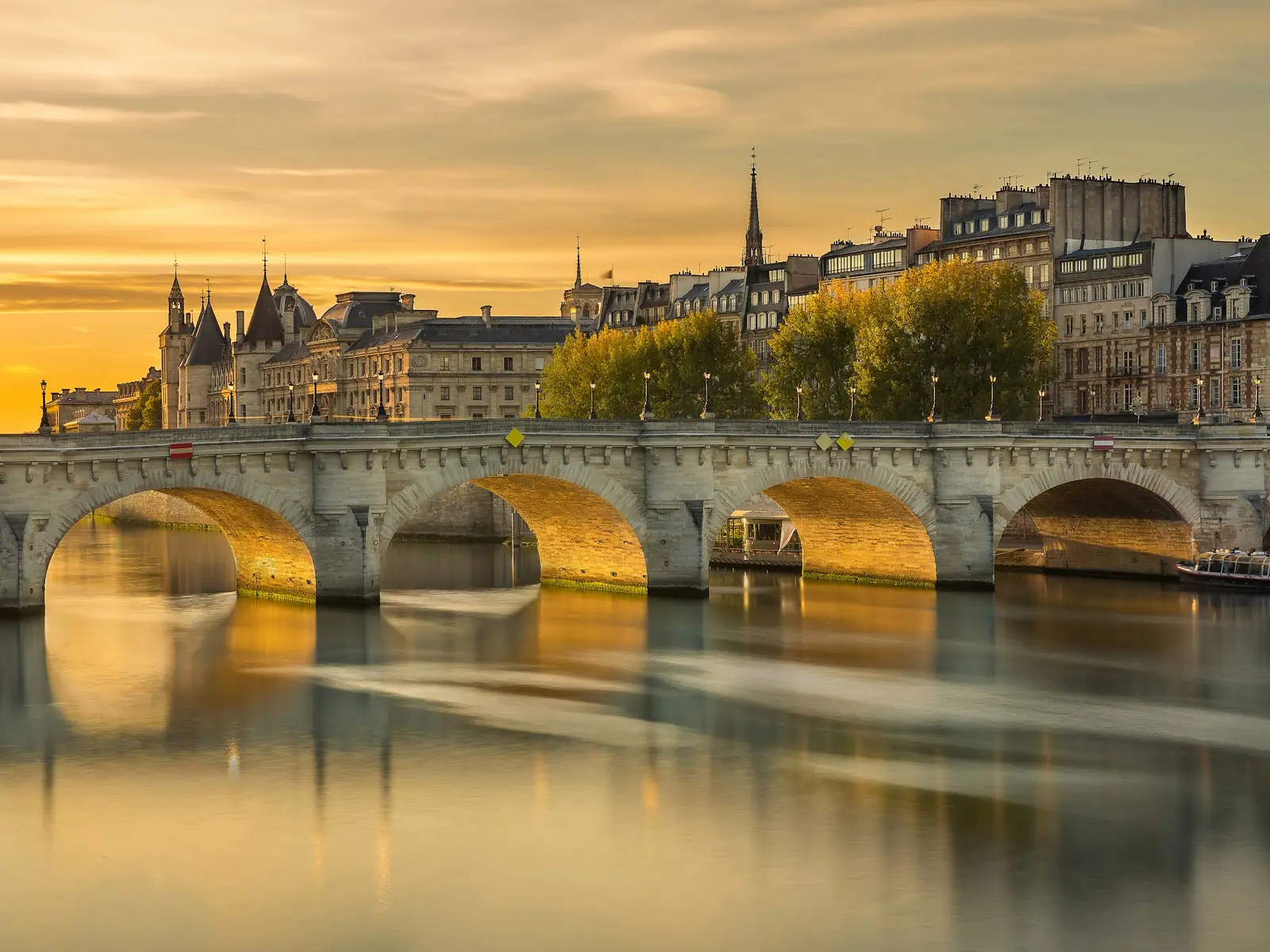
In the evening, when the streetlamps on the Pont-Neuf come on and the light reflects on the Seine in long golden streaks, Paris becomes a different city. Water changes everything. It opens up space, extends perspectives, softens noise. From an apartment on Quai Voltaire, your gaze carries to the facade of the Louvre, to the arches of the Pont des Arts, to that skyline that nothing will ever block. Living by the water in Paris is an ancient, coveted privilege, and it comes at a high price.
What premium does a Seine view add?
Between 20 and 30% compared with a similar property one street back. The premium rests on three factors: rarity, since the quayside frontage is fixed along the 13 kilometres of the Parisian Seine, the guaranteed open aspect, and the prestige of the address.
The Seine crosses Paris over 13 kilometres, from east to west, tracing wide meanders. Along its banks, the quays form a ribbon of addresses whose prestige has not faded in four centuries. Henri IV built the Pont-Neuf and Place Dauphine to magnify Paris’s relationship with its river. Haussmann developed the riverside roads to open them to traffic. Today, the pedestrianised Left Bank riverbanks and the Right Bank cycle paths have returned the Seine to Parisians.
For the property market, the Seine is a value multiplier. The “Seine view” or “front row on quay” premium ranges between 20 and 30% compared to a comparable property set one street back. This premium rests on three factors: rarity (the total quayside frontage is fixed and limited), guaranteed open aspect (no construction will ever block the water view), and the prestige of the address.
Which are the most expensive Left Bank quays?
Quai Voltaire (7th) leads the hierarchy, above 16,000 euros/sqm, ahead of Quai des Grands-Augustins (6th) at 15,000-17,000 euros/sqm. Quai de la Tournelle and Quai de Montebello (5th), facing Notre-Dame, follow at 13,000-15,000 euros/sqm.
Quai Voltaire (7th)
Quai Voltaire, between Pont Royal and Pont du Carrousel, is one of the most exclusive addresses in Paris. From its windows, you contemplate the Cour Carree of the Louvre, the Pont des Arts and, in the distance, the towers of Notre-Dame. Voltaire died there in 1778, at number 27. Wagner composed there. Baudelaire stayed there.
Apartments on Quai Voltaire sell above 16,000 euros/sqm, and often well above for upper floors with open views. A 120 sqm apartment on the third floor, with three windows overlooking the Seine, can reach 2 to 2.5 million euros. These properties are absolutely rare: owners on Quai Voltaire virtually never sell.
Quai des Grands-Augustins (6th)
Further east, Quai des Grands-Augustins is the oldest quay in Paris, dating from the 14th century. The buildings lining it, rebuilt in the 17th and 18th centuries, present ashlar stone facades of sober elegance. Picasso had his studio at number 7, where he painted Guernica.
Prices range from 15,000 to 17,000 euros/sqm, continuing the Saint-Germain-des-Pres neighbourhood of which the quay forms the northern boundary.
Quai de la Tournelle and Quai de Montebello (5th)
Facing the Ile Saint-Louis and Notre-Dame, these two quays offer perhaps the most beautiful views in Paris. The apse of the cathedral, its flying buttresses, its gargoyles, the reconstructed spire: everything is there, within sight, on the other side of the water.
Prices are high (13,000 to 15,000 euros/sqm) but remain below those of the 6th and 7th arrondissement quays. The 5th arrondissement, whose median price reaches 12,000 euros/sqm for an average of 13,400 euros/sqm, pulls these addresses upward without reaching the peaks of the western Left Bank.
What are the Right Bank quays worth?
From 11,000 to 20,000 euros/sqm depending on the area: the Ile Saint-Louis regularly exceeds 16,000 to 18,000 euros/sqm, with peaks at 20,000, Quai des Celestins (4th) trades at 13,000 to 15,000 euros/sqm, and the 16th arrondissement quays (Passy, Louis-Bleriot) come down to 11,000-13,000 euros/sqm.
Quai de Bethune and Quai d’Orleans (Ile Saint-Louis)
The Ile Saint-Louis is a world apart. This 900-metre-long stone vessel, anchored at the heart of the Seine, harbours some of the most confidential addresses in Paris.
Quai de Bethune, on the south side, offers a view over the Left Bank and the Jardin des Plantes in the distance. Quai d’Orleans, on the east side, looks out at the apse of Notre-Dame, a panorama that appears in every photography book devoted to Paris. Prices on the Ile Saint-Louis regularly exceed 16,000 to 18,000 euros/sqm, with peaks at 20,000 euros/sqm for exceptional properties.
The island’s distinctive feature: its village life. Four streets, a few shops, an ice cream parlour (Berthillon), a church (Saint-Louis-en-l’Ile), and absolute calm after the shops close. Living on the Ile Saint-Louis means being at the centre of Paris while being cut off from the world.
Quai des Celestins (4th)
Quai des Celestins, between Pont Marie and Pont de Sully, is the natural extension of the Ile Saint-Louis on the Right Bank. The 17th and 18th century buildings there are magnificent, the views over the Seine and the island generous. Prices (13,000 to 15,000 euros/sqm) remain below those of the island itself, making it a compelling alternative for buyers drawn to this area.
Quai de Passy and Quai Louis-Bleriot (16th)
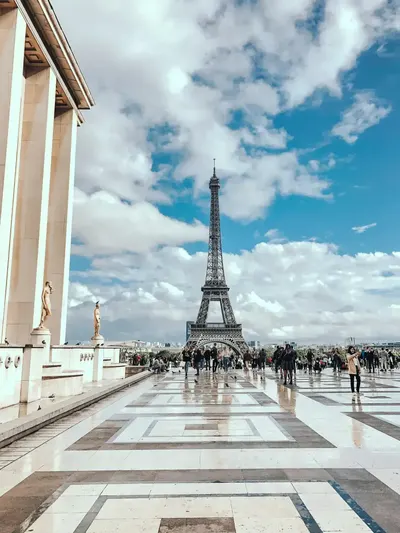
Further west, the 16th arrondissement quays offer remarkable value for money. Quai de Passy, facing the Maison de la Radio and the Eiffel Tower in the distance, features spacious apartments in buildings from the 1930s to 1970s, with panoramic views over the Seine and the Ile aux Cygnes.
Prices (11,000 to 13,000 euros/sqm) are significantly lower than those of the central quays, for surfaces that are often larger and modern amenities (parking, concierge, lift). This is an area Home Select regularly recommends to families who want to live by the water without the budget required for the historic quays.
Find out how Home Select can help you
Do bridges influence property prices?
Yes, as landmarks for micro-sectors: the addresses visible from the Pont-Neuf (Quai de Conti, Quai des Orfevres, Quai de l’Horloge) are among the most expensive in the city, while the Passerelle Debilly opens Eiffel Tower views at lower prices. A bridge does not serve buildings: it frames a view, and it is the view that is paid for.
The bridges of Paris are not just feats of engineering: they structure the property market by delineating micro-sectors.
The Pont-Neuf, despite its name (“New Bridge”), is the oldest bridge in Paris (1607). It links the Left Bank to the Right Bank via the tip of the Ile de la Cite. The apartments visible from the Pont-Neuf, on Quai de Conti (6th), Quai des Orfevres (1st), and Quai de l’Horloge (1st), are among the most photographed and most expensive in the city.
The Pont Alexandre III, with its gilded candelabras and winged Renommees, is the most spectacular bridge in Paris. It does not directly serve residential buildings, but its proximity enhances the neighbouring quays, Quai d’Orsay (7th) and Cours Albert-Ier (8th).
The Pont des Arts, a pedestrian footbridge linking the Institut de France to the Louvre, is the most romantic bridge in the city. The apartments on Quai de Conti and Quai Malaquais overlooking it benefit from an exceptional view, and prices to match.
The Passerelle Debilly, more discreet, links Quai de New-York (16th) to Quai Branly (7th). Neighbouring buildings offer views of the Eiffel Tower and the Trocadéro at prices below more central addresses.
How much do prices fall as you move away from the Seine?
By around 20% over 300 metres in the 7th: Quai Voltaire, at 16,000 euros/sqm and above, against Rue de Grenelle at 13,500 euros/sqm. The gap is far more modest in the 16th, between Quai de Passy (12,000 euros/sqm) and Rue de Passy (11,500 euros/sqm).
The Seine does not merely separate two banks: it creates a price gradient. The quays are the most expensive addresses in each arrondissement they cross. Moving away from the water, prices decrease, gradually in the central arrondissements, more sharply on the periphery.
In the 7th arrondissement, an apartment on Quai Voltaire (16,000 euros/sqm and above) costs around 20% more than an apartment on Rue de Grenelle (13,500 euros/sqm), just 300 metres away. In the 16th, the gap between Quai de Passy (12,000 euros/sqm) and Rue de Passy (11,500 euros/sqm) is more modest but real.
The Left Bank versus Right Bank comparison shows that Left Bank quays are generally more expensive than Right Bank ones, a difference that reflects the historic prestige of the arrondissements concerned (6th and 7th vs 4th and 12th) rather than the intrinsic quality of the quays themselves.
What accessible alternatives are there for waterside living in Paris?
The two canals: the Canal Saint-Martin (10th) at 9,500-11,000 euros/sqm and the Canal de l’Ourcq (19th) at 7,500-9,000 euros/sqm, the lowest prices along the entire Parisian waterfront. That is close to half the price of the central Seine quays.
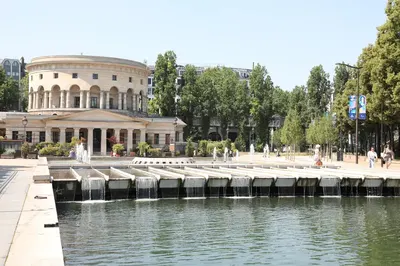
Not all Parisians have the budget for the Seine quays. But the connection to water is not limited to the river. Paris has two canals, the Canal Saint-Martin (10th) and the Canal de l’Ourcq (19th), which offer a waterside lifestyle at incomparably more accessible prices.
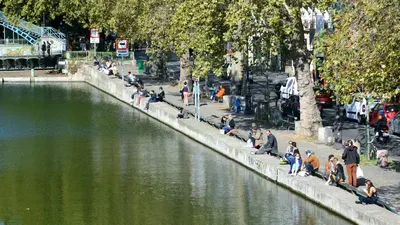
The Canal Saint-Martin, with its locks, cast-iron footbridges and rows of plane trees, has become one of the most desirable neighbourhoods in Paris. Apartments overlooking the canal sell between 9,500 and 11,000 euros/sqm, and up to 12,000 euros/sqm for the best front-row positions: close to half the price of the central Seine quays.
The atmosphere is radically different from the Haussmannian quays. Here, no ashlar stone or monumental facades: 19th century suburban buildings, converted former workshops, moored houseboats. The neighbourhood lives at a different pace, younger, more creative, more laid-back.
The Canal de l’Ourcq, in the 19th arrondissement, is the last frontier of waterside Paris. The former warehouses and factories lining the canal are gradually being transformed into housing, offices and cultural spaces. Prices (7,500 to 9,000 euros/sqm) are the lowest along the entire Parisian waterfront, and the appreciation potential is significant.
The Parisian luxury property market is concentrated on the Seine quays, but savvy buyers also look at these alternatives. Home Select assists clients across all segments of the Parisian waterside market, from Quai Voltaire to the Canal de l’Ourcq, from the absolute dream to the smart purchase.
What are the drawbacks of a quayside apartment?
Three: traffic noise, which double glazing mitigates without eliminating; humidity, which mostly affects ground and lower floors; and floods, the Seine overflowing on average once per decade. The PPRI precisely delineates the flood-prone zones, and it is the first document to check before buying on a quay.
Living by the water is not a dream without trade-offs. These three realities must be considered.
Noise is the first. The Seine quays, despite the partial pedestrianisation of the riverbanks, remain major traffic arteries. Quai des Tuileries, Quai Henri-IV, and Quai de Bercy carry dense road traffic. Upper floors are less affected, but background noise is a daily reality that double glazing mitigates without eliminating.
Humidity is the second. Proximity to water generates higher humidity levels, which can affect walls, woodwork and thermal comfort. Ground floors and lower floors on the quay are the most exposed.
Floods are the third. The Seine overflows on average once per decade (last major episode: June 2016). Ground floors and cellars of quayside buildings are in flood zones. The PPRI (Flood Risk Prevention Plan) for Paris precisely delineates the affected areas. It is a document Home Select systematically consults for any property near the Seine.
These constraints do not negate the charm of living by the water: they temper it. An informed buyer is a serene buyer. And serenity, when contemplating the Seine from your window on a June evening, is priceless.
Sources
Frequently asked questions
01 What is the price premium for an apartment with a Seine view in Paris?
An apartment with a direct view of the Seine commands a premium of 20 to 30% compared to a comparable property set one street back. This premium is explained by rarity, the guaranteed open aspect, and the prestige of the address.
02 Which are the most expensive quays in Paris?
Quai Voltaire (7th) and Quai d'Orleans (Ile Saint-Louis) are among the most expensive addresses, with prices that can exceed 16,000 to 18,000 euros per square metre. Quai des Grands-Augustins (6th) and Quai de Bethune (4th) are in the same range.
03 Are apartments along the Canal Saint-Martin a good alternative to the Seine quays?
Yes, the Canal Saint-Martin and the Canal de l'Ourcq offer a comparable waterside experience at half the price. Expect 9,500 to 11,000 euros per square metre along the Canal Saint-Martin (10th) versus 14,000 to 18,000 euros per square metre on the central Seine quays.
04 Does buying by the Seine carry a flood risk?
Yes, some sections of the quays are located in flood-prone zones. The Paris Flood Risk Prevention Plan (PPRI) delineates these areas along the Seine and regulates the use of ground floors and basements. Before buying a quayside property, it is essential to check the PPRI zoning, the history of floods and the home insurance. Upper floors are not affected by direct flooding, but can suffer the consequences on the building, notably cellars, car parks and utility networks.