
In brief
In 2026, the most expensive streets in Paris, led by Avenue Montaigne (8th) and Quai d'Orleans (4th), reach 25,000 to 30,000 euros/m², two to three times the Paris average. As across Paris, around 15% of transactions are concluded off-market, and on these addresses the average search time reaches 8 months. Home Select, a Paris property hunter and buying agent since 2011 with 16 hunters and 1,200+ buyers supported, finds 15% of its clients' properties off-market through its network, and 25% above 2 million euros.
Key takeaways
- Avenue Montaigne (8th) tops the ranking at 25,000-30,000 euros/sqm, followed by Quai d'Orleans on Ile Saint-Louis at 23,000-28,000 euros/sqm
- The top 15 most expensive streets represent less than 0.5% of Paris housing stock but approximately 3% of total transaction value
- Around 15% of Paris transactions are concluded off-market, and on the most prestigious streets, where supply is scarce, the network matters all the more
- The 7th arrondissement places five streets in the top 15, confirming Left Bank dominance in prime Parisian property
- Average price per sqm on top streets is 2.3 times the average of the arrondissement in which they are located
- Home Select, a property hunter in Paris since 2011, covers the 20 arrondissements and 68 Ile-de-France municipalities with 16 hunters.
Avenue Montaigne at 28,000 euros/sqm, Quai d’Orléans at 26,000 euros/sqm, Place des Vosges at 24,000 euros/sqm: the most exclusive addresses in Paris reach prices two to three times the Paris average. These streets are not merely expensive: they embody a history, an art de vivre and a scarcity that make them unique property assets worldwide. Here is the 2026 ranking, based on Home Select’s observations on the ground and actual transaction data. The short-form ranking, address by address, is in the article on the most expensive streets in Paris.
What are the most expensive streets in Paris?
Avenue Montaigne (8th) leads the ranking at 25,000-30,000 euros/sqm, ahead of Quai d’Orléans on the Île Saint-Louis (4th) at 23,000-28,000 and Place des Vosges (3rd-4th) at 22,000-26,000. The 7th arrondissement alone places five streets in the top 15, making it the best represented.
This ranking draws on transaction prices observed over the past three years, supplemented by Home Select’s professional estimates for addresses where sales are too infrequent to form a statistically reliable sample. The prices listed are for quality properties: a good floor, good condition, features befitting the address.
1. Avenue Montaigne (8th) : 25,000 to 30,000 euros/sqm
The haute couture avenue is also the most expensive property street in Paris. Between Place de l’Alma and the Rond-Point des Champs-Élysées, the buildings hold reception apartments with exceptional volumes: 4-metre ceilings, interconnecting salons, views of the Seine or the gardens. The clientele is almost entirely international: family offices, major fortunes, diplomats. Sales are rare, five to eight a year, and often handled discreetly through the network.
2. Quai d’Orléans, Île Saint-Louis (4th) : 23,000 to 28,000 euros/sqm
The southern quay of the Île Saint-Louis looks straight onto the chevet of Notre-Dame and the Seine. It is the most romantic address in Paris, and one of the most exclusive. The stock dates from the 17th century, with apartments of exposed beams, period fireplaces and windows over the Seine. Fewer than ten sales a year across the whole island. Buying here means acquiring a piece of history.
3. Place des Vosges (3rd-4th) : 22,000 to 26,000 euros/sqm
The oldest square in Paris, built under Henri IV. The brick-and-stone buildings that frame it hold apartments of generous proportions with views over the arcades and the central garden. The prestige of the address, where Victor Hugo once lived, draws a cultivated, often Franco-international clientele. The catch: the condominiums are often complex (listed buildings, architectural constraints) and the charges are high.
4. Rue de l’Université (7th) : 20,000 to 25,000 euros/sqm
The grand residential thoroughfare of the 7th, between the Musée d’Orsay and the Invalides. Impeccable Haussmann buildings, discreet private mansions and absolute residential calm despite the central position. It is the address of choice for old Parisian families and the upper bourgeoisie. The price reflects that blend of features, calm and prestige that is the hallmark of the 7th.
5. Quai Voltaire (7th) : 20,000 to 25,000 euros/sqm
Facing the Louvre, Quai Voltaire offers one of the most iconic views in Paris: the Seine, the Pavillon de Flore, the Passerelle des Arts. Baudelaire, Wagner and Oscar Wilde stayed here. The quay is short (a few hundred metres), the buildings are few, and sales are exceptionally rare. When a property comes free, it is negotiated in the most restricted circles of the Paris market.
6. Avenue Foch (16th) : 18,000 to 24,000 euros/sqm
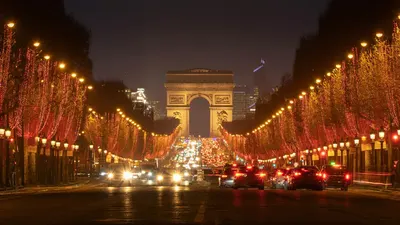
The widest avenue in Paris links the Arc de Triomphe to the Bois de Boulogne. The Haussmann buildings along it hold some of the largest apartments in the capital: 200, 300, sometimes 500 sqm. Avenue Foch is the historic address of the Parisian grande bourgeoisie and of a Middle Eastern clientele. Prices vary considerably with the odd or even side and proximity to the Étoile or the Bois.
7. Rue du Bac (7th) : 17,000 to 22,000 euros/sqm
A chic shopping street of the 7th, rue du Bac combines neighbourhood life and prestige. Le Bon Marché, galleries, literary cafés: the whole Left Bank spirit is concentrated here. Upper-floor apartments with rooftop views reach the area’s highest prices.
8. Rue de Grenelle (7th) : 17,000 to 22,000 euros/sqm
Parallel to rue de l’Université, rue de Grenelle is home to ministries, embassies and private mansions. The residential stretch offers apartments of remarkable calm for so central an address. Properties with a private garden, rare but found in former private mansions, exceed 25,000 euros/sqm.
9. Quai de Béthune, Île Saint-Louis (4th) : 18,000 to 23,000 euros/sqm
The south-eastern quay of the island, with views over the Right Bank. Less famous than Quai d’Orléans, but just as exclusive. Apartments here are often larger and better laid out. Pompidou lived here: the address remains bound up with power and prestige.
10. Rue de Varenne (7th) : 16,000 to 21,000 euros/sqm
The Musée Rodin, the Hôtel Matignon (the Prime Minister’s residence) and a succession of private mansions make rue de Varenne one of the most prestigious in the Faubourg Saint-Germain. The residential segment is limited, as many buildings are occupied by institutions, which sharpens scarcity.
The ranking continues with rue Jacob (6th) at 16,000-20,000 euros/sqm, Place du Palais-Royal (1st) at 17,000-22,000 euros/sqm, rue de Seine (6th) at 16,000-20,000 euros/sqm, avenue de Ségur (7th) at 15,000-19,000 euros/sqm, and boulevard Saint-Germain (6th-7th) at 15,000-19,000 euros/sqm along its most residential stretches.
Key figure: the 15 most expensive streets in Paris account for less than 0.5% of the capital’s housing stock but around 3% of total transaction value. Their average price per sqm is 2.3 times the average of the arrondissement they sit in.
Why are some Paris streets so expensive?
Five factors stack up: the prestige of the name, architectural quality, the view, quiet and scarcity. The view is the most powerful multiplier, an apartment with a direct view of the Seine being worth 30 to 50% more than the same property without one at an equivalent address.
It is this combination that makes Avenue Montaigne worth more than double the average price of the 8th arrondissement.
The prestige of the name. Some addresses carry a symbolic weight beyond their objective property value. Place des Vosges means four centuries of history. Quai Voltaire means French literature. Avenue Foch means power and space. This symbolic capital has a price: it draws a global clientele for whom the address is a social marker as much as a place to live.
Architectural quality. The most expensive streets are lined with exceptional buildings: high-end Haussmann, listed private mansions, 17th and 18th-century buildings. The interior volumes (3.5 to 4.5 metre ceilings), period parquet, mouldings, fireplaces and monumental staircases create a way of living impossible to recreate in new build.
The view. The Seine is the most powerful price multiplier in Paris. An apartment with a direct river view is worth 30 to 50% more than the same property without, at an equivalent address. Views over gardens (Luxembourg, Tuileries, Champ de Mars) and monuments (Eiffel Tower, Invalides, Notre-Dame) command comparable premiums.
Calm. Paradoxically, the most expensive streets in Paris are often the quietest. Rue de l’Université, rue de Varenne, Quai de Béthune: these addresses are shielded from noise by their residential character, light traffic and distance from transit routes. Silence, in Paris, is a luxury wealthy buyers pay dearly for.
Scarcity. The decisive factor. The Île Saint-Louis has 900 homes. Avenue Montaigne has around fifty residential apartments. Place des Vosges has fewer than 200 units. When supply is this constrained and demand is global, prices have, in effect, no ceiling.
Which Paris streets are rising fastest?
Four addresses are clearly gaining ground: rue des Martyrs (9th) at 11,000-14,000 euros/sqm, rue de Turenne (3rd-4th) at 12,000-16,000, avenue de Breteuil (7th-15th) at 14,000-18,000 and quai de la Loire (19th) at 7,500-9,500. Rue des Martyrs has doubled in fifteen years, from 6,000 euros/sqm.
Beyond the historically most expensive addresses, these streets are experiencing a revaluation that could propel them into the upper ranks within ten years.
Rue des Martyrs (9th) : 11,000 to 14,000 euros/sqm. Long a working-class street, rue des Martyrs has become the most desirable in the 9th arrondissement. Its food shops, designer boutiques and village energy draw a young, affluent crowd. The upper floors of its Haussmann buildings, with views of Montmartre, reach prices unthinkable ten years ago.
Rue de Turenne (3rd-4th) : 12,000 to 16,000 euros/sqm. The central axis of the Haut-Marais is riding the neighbourhood’s move upmarket. Art galleries, concept stores, Michelin-starred restaurants: rue de Turenne has become the address of international creatives. Lofts in former workshops reach 15,000 euros/sqm and beyond.
Avenue de Breteuil (7th-15th) : 14,000 to 18,000 euros/sqm. This broad, tree-lined avenue with views of the Invalides offers an exceptional residential setting at prices still 20-30% below nearby rue de l’Université. It is the family address par excellence of the southern 7th, and prices are gradually closing on the arrondissement’s core.
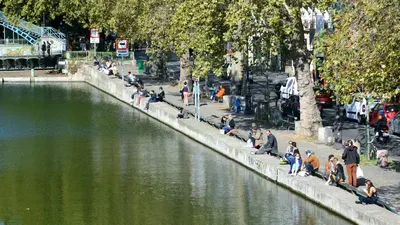
Quai de la Loire (19th) : 7,500 to 9,500 euros/sqm. A surprising outsider. The Bassin de la Villette and the Canal de l’Ourcq have turned this formerly working-class area into a prized urban promenade. Recent buildings facing the basin reach prices unthinkable for the 19th just five years ago. It is not (yet) the prestige of the Seine quays, but the direction of travel is clear.
Jean Mascla’s advice: buying on a street still revaluing is the most profitable long-term strategy in Paris. Rue des Martyrs was worth 6,000 euros/sqm fifteen years ago; it is worth double today. Spotting these streets before the rise is priced in takes ground-level knowledge only a property hunter can provide. This has been Home Select’s daily work for fifteen years.
Is prestige the same on the Left Bank and the Right Bank?
No: the Left Bank dominates the ranking, with the 7th arrondissement alone placing five streets in the top 15, on a discreet residential prestige. The Right Bank, led by avenue Montaigne and avenue Foch, offers a more ostentatious prestige, a more international clientele and often larger properties.
This dominance of the 7th is no coincidence.
The Left Bank embodies discreet residential prestige. Old Parisian families, diplomats and senior civil servants have lived there for generations. The architecture is more homogeneous (pure Haussmann or 18th-century private mansions), the calm deeper, the relationship with luxury more inward. Wealth is not displayed on the Left Bank: it is lived in.
The Right Bank offers a more ostentatious prestige. Avenue Montaigne and Avenue Foch are addresses of display as much as of residence. The clientele is more international, more visible, and the properties are often larger and more spectacular. The Triangle d’Or (8th) is the neighbourhood of visible opulence: palace hotels, haute couture, jewellery, and the property reflects that identity.
The Île Saint-Louis stands apart. Neither truly Left Bank nor truly Right Bank, the island floats above the codes, literally and figuratively. Its prestige is that of the timeless, the confidential, the exceptional. It is the address for those with nothing left to prove.
For the long-term buyer, this geography of prestige has been stable for decades and is unlikely to change fundamentally. The 7th arrondissement addresses will still be the most expensive in Paris in ten years, just as they were ten years ago. It is this stability that makes them first-tier wealth investments.
How do you buy on the most expensive streets in Paris?
Through the network as much as the portals: as everywhere in Paris, around 15% of transactions are concluded off-market, and on these streets, where supply is so scarce, the network makes all the difference. Allow an average of 8 months between the start of the search and signing at the notaire, a long timescale explained by the scarcity of supply and the discretion of sellers.
Reaching Paris’s most exclusive addresses therefore does not happen on property portals alone. Here is how the process really works.
Off-market sales on these streets follow their own logic. Sellers of properties worth 3, 5 or 10 million euros who choose discretion do not want their apartment listed on a portal. The reasons are many: personal discretion, tax considerations, a complex estate, or simply the wish to deal only with qualified buyers.
For the buyer, this means patience and a network are the two prerequisites. Home Select’s hunters keep long-standing relationships with building concierges on these streets, notaires at the leading firms in the 7th and 8th, and agents specialising in prime property. When a property comes free, the word circulates first within this closed network, and that is where Home Select steps in.
The process is also longer than on the open market. Finding an exceptional property on a specific street can take six months, sometimes a year. Buyers at this level know and accept it: they are not buying an apartment; they are acquiring an address.
Key figure: on the streets in this top 15, Home Select observes an average time of 8 months from the start of the search to signing at the notaire. That is twice the Paris average, but buyers with the patience to wait for the right property on the right street never regret it.
The prices in this ranking are indicative ranges based on Home Select’s observations on the ground, DVF data and the transactions the firm has handled. Actual prices vary considerably with the floor, orientation, condition, view and features of each property. This ranking does not claim to be exhaustive: Paris has several dozen streets where prices exceed 15,000 euros/sqm.
The finest addresses in Paris are found behind the scenes. Home Select’s property hunters open the doors you will not find online. Speak to an expert
Sources
Frequently asked questions
01 What is the most expensive street in Paris in 2026?
Avenue Montaigne (8th arrondissement) and Quai d'Orleans on the Ile Saint-Louis (4th) vie for the title with prices reaching 25,000 to 30,000 euros/sqm for exceptional properties. By volume of transactions above 20,000 euros/sqm, Place des Vosges (3rd-4th) and rue de l'Universite (7th) complete the podium.
02 Why are some Paris streets so much more expensive than their arrondissement average?
A Parisian address's price depends on five factors that combine: the historical prestige of the street name, the architectural quality of the buildings, the view (Seine, monuments, gardens), residential calm, and the scarcity of available properties. A street can command prices 50 to 100% above its arrondissement average when it combines several of these factors.
03 Is it possible to buy on the most expensive streets of Paris?
Yes, but many of the finest properties never reach the portals. As across Paris, around 15% of sales are concluded off-market, and on the most prestigious streets, where supply is so scarce, access to that network matters all the more. Working with a property hunter who has a strong network is virtually essential to access these properties. Home Select, a property hunter in Paris, finds 15% of its clients' properties off-market, and 25% above 2 million euros.
04 How long does it take to find a property on the most expensive streets of Paris?
The average time from the start of the search to signing at the notaire on these exceptional addresses is around 8 months, twice the Paris average. The scarcity of supply, the weight of off-market sales and the demand for quality explain this long timeline. The top 15 most expensive streets represent less than 0.5% of housing stock but approximately 3% of total transaction value. A property hunter with an established network remains the best way to access these properties before they reach the open market.