

In brief
In Paris's most competitive zones in 2026 (south 9th, Le Marais, 6th, 7th), the supply/demand ratio reaches 1 property for every 8-10 buyers and the negotiation margin falls to 0-2%, versus 5-6% across Paris on average. Off-market accounts for 20 to 25% of transactions in these sectors. Home Select, a property hunter and member of the FCI since 2011, fields 16 buying agents: 40% of properties bought by its clients in competitive zones come from the off-market circuit, rising to 50% in the 6th and 7th arrondissements.
Key takeaways
- The most competitive zones in Paris include the south 9th, Le Marais, 6th Saint-Germain, 7th Invalides and upper 11th
- In ultra-competitive zones, the negotiation margin drops to 0-2% versus 5-6% across Paris as a whole
- Off-market transactions represent 20 to 25% of sales in competitive sectors, rising to 50% in the 6th and 7th
- Quality properties in the south 9th sell in under 10 days, with a supply/demand ratio of 1 property for every 8-10 buyers
- Owner retention in premium sectors averages 12 to 15 years per transaction versus 7-8 years in accessible arrondissements
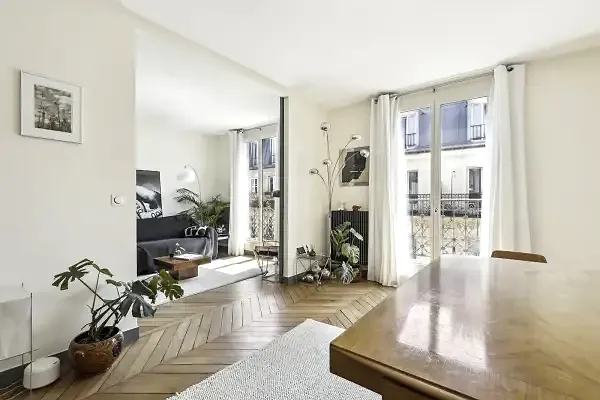
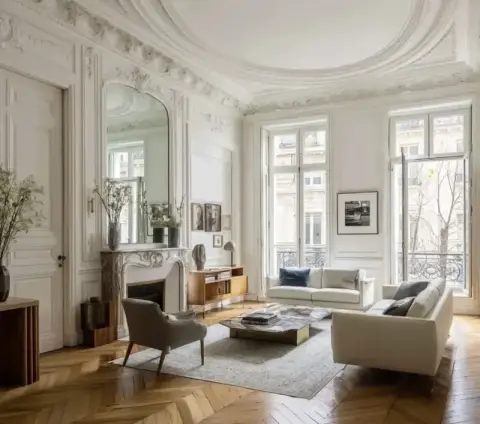
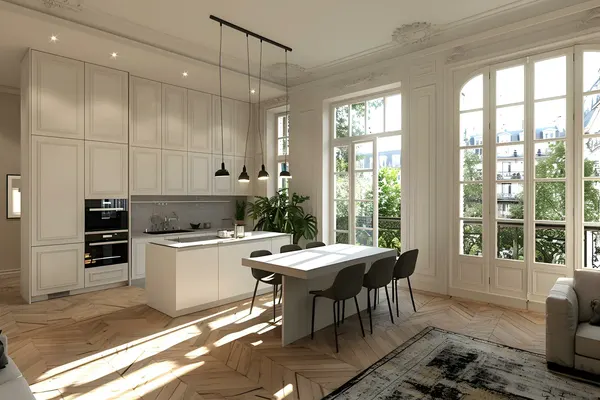
Rue des Martyrs, 9th arrondissement. A 68 sqm three-room apartment on the 4th floor, dual aspect, chevron parquet, original mouldings. Listed on Tuesday morning at 11,500 euros/sqm, i.e. 782,000 euros. By Tuesday evening, the agency had received twelve calls. On Wednesday, five viewings were organised. On Thursday, three offers at the asking price were on the table. On Friday, the preliminary contract was signed, at the asking price, with no negotiation, by a buyer who had viewed the property 48 hours earlier.
This scenario, unthinkable in the 13th or 19th arrondissement at the same time, is the daily reality in certain Parisian micro-markets. Zones where the imbalance between available supply and solvent demand reaches proportions such that the normal rules of property negotiation no longer apply. Understanding this map of market tension is essential for any Parisian buyer, and vital for those targeting these sectors.
Why does supply fail to keep up with demand in Paris?
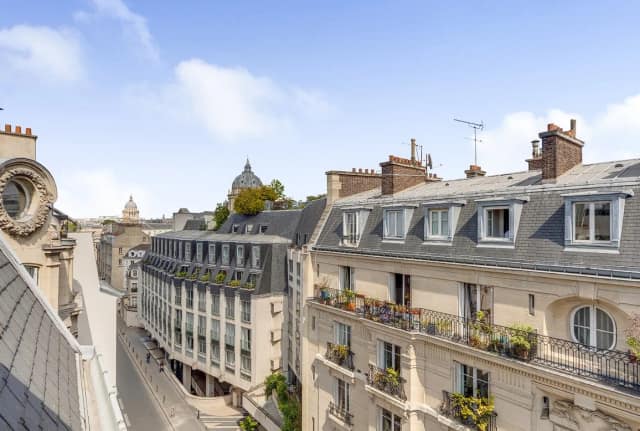
Three structural factors compound: a frozen stock, since inner Paris has all but stopped building, owner retention, which stretches holding periods to 12-15 years in the 6th versus 7 to 8 years in the 19th, and demand concentrated on the same few neighbourhoods. In the 6th, the 7th or Le Marais, there will never be more apartments than there are today: supply is capped by history.
Property market tension is therefore not a uniform phenomenon. It results from the conjunction of structural factors that, in certain micro-markets, create a lasting imbalance between supply and demand.
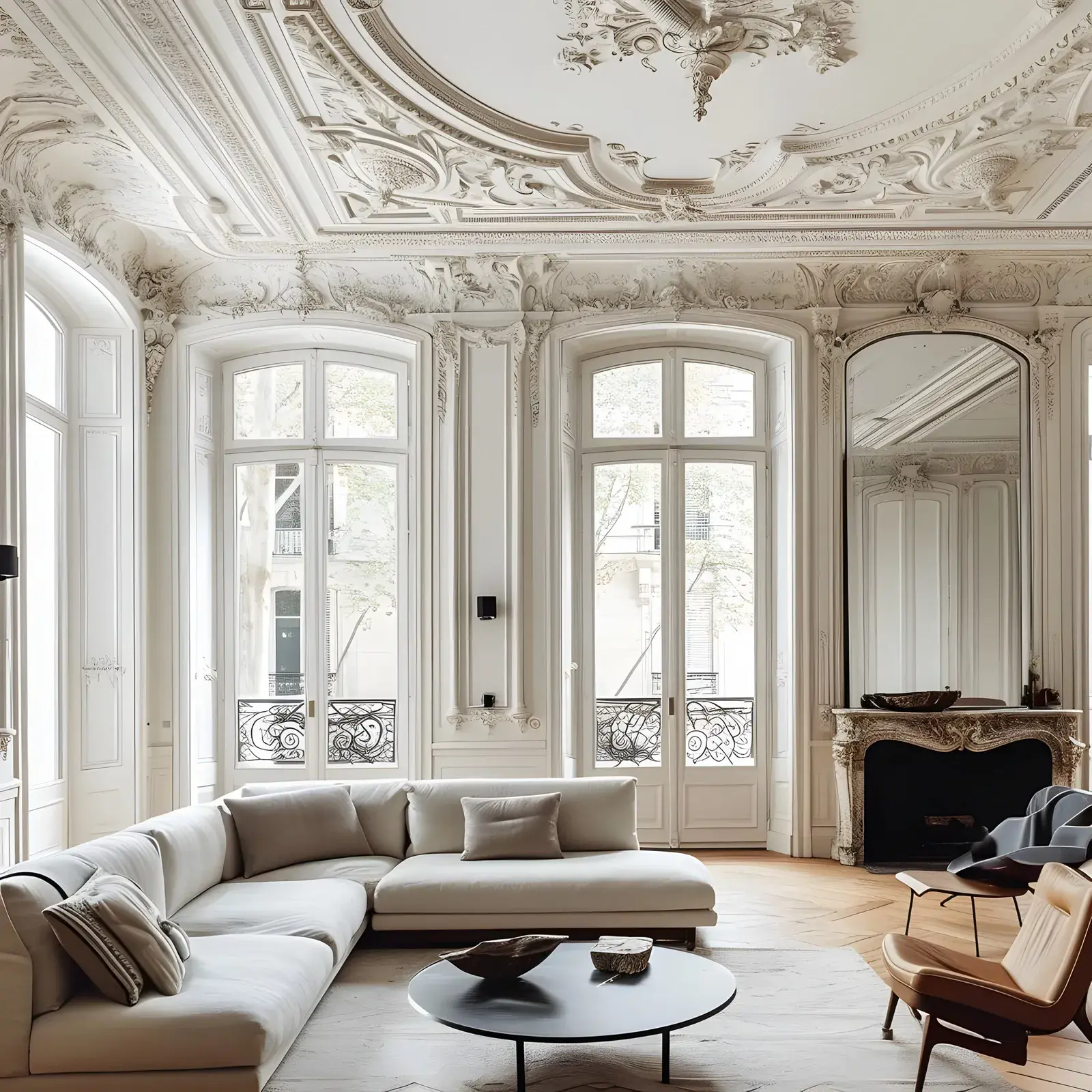
A frozen stock is the first factor. Inner Paris builds virtually no new housing: a few hundred per year, mainly on industrial wastelands in the 13th and 19th, or in loft conversions in the 12th and 15th. The housing stock is essentially composed of Haussmann-era buildings (60% of the built environment in central arrondissements) whose number is finite and immutable. In the 6th, 7th or Le Marais, there will never be more apartments than there are today. Supply is capped by history.
Owner retention amplifies the shortage. In premium sectors, the stock rotation rate is exceptionally low: an apartment changes hands every 12 to 15 years on average in the 6th, versus 7 to 8 years in the 19th. Owners of fine, well-located apartments have no incentive to sell: their property appreciates, their living environment is excellent, and they know they would not find the equivalent.
Concentrated demand is the third factor. Certain neighbourhoods attract multiple competing buyer profiles: Le Marais draws young executives, affluent families, investors and international clients simultaneously. The south of the 9th concentrates demand from high-earning thirty-somethings. Saint-Germain-des-Pres combines French wealth demand and international appeal. These overlapping demands multiply the pressure on a stock that cannot expand.
Which Paris neighbourhoods are the most competitive in 2026?
Five sectors concentrate the pressure: the south of the 9th (Martyrs, Trudaine, Saint-Georges, Notre-Dame-de-Lorette), the heart of Le Marais (3rd-4th), the 6th Saint-Germain, the 7th Invalides-Breteuil and the upper 11th (Oberkampf-Parmentier). The south of the 9th comes first, with a ratio of 1 quality property for every 8 to 10 buyers and time on market below 10 days.
Our 16 property hunters, who cover all 20 arrondissements of Paris daily, have established this map of the most competitive micro-markets in 2026.
The south of the 9th arrondissement (Martyrs, Trudaine, Saint-Georges, Notre-Dame-de-Lorette) is the most competitive zone in Paris for quality residential properties. The supply/demand ratio reaches 1 to 8-10: for every quality property listed for sale, eight to ten buyers are in competition. Prices exceed 11,500-12,000 euros/sqm for fine Haussmann-era apartments, and time on market drops below 10 days for correctly positioned properties. The rise of the 9th makes it the capital’s most contested sector.
The heart of Le Marais (3rd-4th arrondissements) operates in a comparable mode, with a more pronounced international component. Character properties, exposed beams, stone, view onto a planted courtyard, trade above 14,000 euros/sqm and find buyers within days. The stock is microscopic: at any given time, fewer than 40 quality properties are available for sale in this micro-market.
The 6th arrondissement (Saint-Germain-des-Pres, Odeon, Luxembourg) is the “historic” competitive zone of Paris. Prices here are the highest in the capital (a median 14,500 euros/sqm and an average 16,400 euros/sqm, but 17,000-20,000 euros/sqm for exceptional properties), and the stock is infinitesimal. The Saint-Germain-des-Pres guide details the realities of this micro-market.
The 7th arrondissement (Invalides, Breteuil, Ecole Militaire) combines high prices (a median 14,400 euros/sqm, average 15,900) and extremely limited supply. The clientele, both wealth-oriented and international, often buys with cash, which eliminates financing uncertainties and further accelerates transactions.
The upper 11th arrondissement (Oberkampf, Parmentier, northern Republique) constitutes a more recent competitive zone, driven by gentrification and the appeal to young couples. At 10,500-11,000 euros/sqm, quality properties sell quickly, even if the pressure is slightly less than in the 9th or Le Marais.
Discover how Home Select can support you
Can you still negotiate in Paris’s most competitive neighbourhoods?
Barely: the negotiation margin falls to 0-2% on average in these sectors, versus 5 to 6% across Paris as a whole. The asking price is no longer a starting point but a floor price, and the buyer hoping for a 5% discount is eliminated by a competitor offering the full price.
In ultra-competitive zones, the usual mechanisms of property negotiation are therefore profoundly altered.
The negotiation margin is virtually nil: 0 to 2% on average, versus 5 to 6% across Paris as a whole. In the most competitive situations, properties sell at the asking price or above. Bidding wars, where multiple buyers push offers beyond the asking price, are reappearing in these sectors: a phenomenon that had disappeared during the 2023-2024 correction but is returning in 2026 in the most coveted zones.
The asking price is not the sale price, but the floor price. This is a complete reversal of the usual logic, where the asking price is a starting point that the buyer negotiates downward. In a competitive zone, the buyer who hopes to negotiate 5% finds themselves eliminated by a competitor offering the full asking price.
For buyers, this reality demands a change of mindset. In a competitive zone, the strategy is not to negotiate the price: it is to access the property. The property hunter’s added value lies not in their ability to obtain a discount, but in their ability to position their client on a property ahead of the competition.
How do you access off-market properties in a competitive zone?
Through the network, the only channel that opens the 20 to 25% of transactions completed outside listing portals in these sectors. On our mandates in ultra-competitive zones in 2025-2026, 40% of the properties bought by our clients came from the off-market circuit, rising to 50% in the 6th and 7th.
The off-market, those properties marketed discreetly outside listing portals, represents approximately 20 to 25% of transactions in Paris’s ultra-competitive zones. This is a proportion well above the Parisian average (15-18%), and it reflects a specific market logic.
In competitive sectors, sellers and their agents benefit from limiting exposure: a confidential sale allows them to select buyers, avoid the circus of multiple viewings, and control the sales process. An agent who has a fine apartment in Le Marais does not need to publish it on SeLoger: a few phone calls to colleagues and property hunters suffice to find a qualified buyer.
For the property hunter, off-market is the natural playing field in competitive zones. Our 16 professionals at Home Select maintain daily relationships with several hundred Parisian agencies. When an off-market property matching one of our clients’ profiles is flagged, the viewing is organised within 24 hours and the offer made within 48 hours. This responsiveness, combined with the reliability of our files (verified financing, qualified buyer profile), allows us to complete transactions our clients could never have achieved alone.
The data speaks for itself: on our mandates in ultra-competitive zones in 2025-2026, 40% of properties purchased by our clients came from the off-market circuit. This rate rises to 50% in the 6th and 7th arrondissements.
How does a property hunter work in a competitive zone?
Through speed and through the network: evaluating a property in a few hours instead of a few days, making an evidenced offer on the day of the viewing, securing the transaction before the competition appears. At Home Select, a viewing of an off-market property is organised within 24 hours and the offer made within 48 hours.
The search methodology in competitive zones indeed differs fundamentally from that applicable in relaxed sectors.
In a relaxed sector, the property hunter takes their time: they identify properties, analyse them, visit them, compare them, then recommend the best choice to their client. Reflection takes precedence.
In a competitive zone, speed takes precedence. The hunter must be able to evaluate a property in a few hours (not a few days), formulate an evidenced offer on the same day as the viewing, and secure the transaction before the competition manifests itself. This demands encyclopaedic knowledge of the micro-market, recent transaction prices (DVF), co-ownership condition, building quality, renovation potential, which enables rapid decision-making without sacrificing analytical rigour.
The network is the other decisive lever. A property hunter who regularly handles mandates in a competitive sector builds trust with local agents. These agents, when they receive a sales instruction in their area, think of contacting as a priority the hunters who are reliable and responsive counterparts. At Home Select, some of our hunters are identified by agencies as the reference point for their sector: when a property arrives, they are among the first three to be called.
This reading of the Parisian market by zones of competition is a strategic tool for any buyer. The ranking of the most expensive streets in Paris gives an indication of price geography, and the analysis of prices by arrondissement provides the quantitative benchmarks. But it is the fine understanding of micro-markets, neighbourhood by neighbourhood, street by street, that makes the difference between a successful purchase and a frustrating search in the capital’s most sought-after sectors.
Sources
Frequently asked questions
01 Which are the most competitive neighbourhoods in Paris for buying?
The most competitive areas are the south of the 9th (Martyrs, Trudaine), the heart of Le Marais (3rd-4th), the 6th Saint-Germain, the 7th Invalides-Breteuil, and the upper 11th (Oberkampf-Parmentier). In these areas, quality properties sell in under a week, often before being listed on portals.
02 Can you still negotiate in Paris's most competitive neighbourhoods?
The negotiation margin is virtually zero in ultra-competitive zones: 0 to 2% on average, versus 5-6% across Paris as a whole. In some cases, properties sell above the asking price. The strategy is not to negotiate the price but to access the property before the competition, particularly through the off-market circuit.
03 How do you access off-market properties in Paris?
Off-market represents 20 to 25% of the market in Paris's competitive sectors. Access comes primarily through a long-term agency network. A property hunter maintains daily relationships with hundreds of agencies and receives information on properties before they are listed. This is the most effective lever in competitive zones.
04 Why are certain Paris neighbourhoods so competitive?
The competition results from the combination of structurally limited supply (finite Haussmann-era stock, little new construction, owner retention) and sustained demand driven by quality of life, architecture and the prestige of these neighbourhoods. The supply/demand ratio can reach 1 property for every 8-10 potential buyers.