|
|
Home Select
The Sunday
Notebook
No. 20 · Sunday 4 October 2026
|
|||||||||||||||
|
|||||||||||||||
|
01 · The editorial
This week, a signal that no vendor has genuinely taken on board. The decree of 19 August 2026 alters the way energy performance diagnoses (DPE) are calculated from 1 January next. A single figure changes within a formula. Roughly three hundred thousand homes in France will move up a band without a plug being touched. In Paris, where the older stock concentrates the E, F and G labels and where electric heating dominates in smaller units, the adjustment is not neutral. It opens, for buyers signing this autumn, a narrow window: the opportunity to negotiate now on a property displayed as F or G, knowing it will be reclassified a few weeks later. In this issue, Home Select wanted to set out soberly what is coming, for whom, and to what extent. And what a well-advised buyer can make of it, without giving in to haste or to the easy narrative of the bargain. |
|||||||||||||||
|
|||||||||||||||
|
|
|||||||||||||||
|
02 · Article of the week
Three months to negotiate: the discreet window opening before 1 January 2027
Negotiation · DPE · 5 min read
|
|||||||||||||||
|
|||||||||||||||
|
|||||||||||||||
|
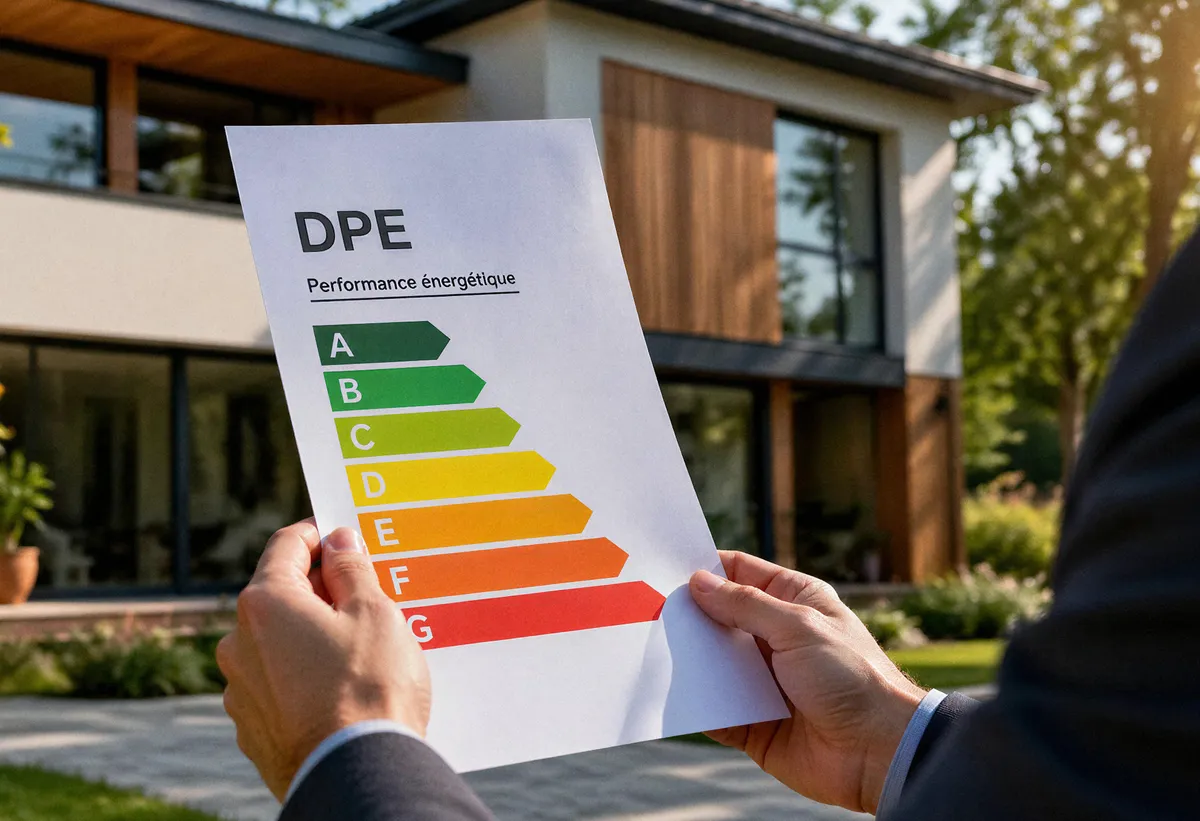
A decree published in late August alters the DPE calculation from 1 January 2027. For a buyer signing this autumn, two things change: how to read a label displayed today, and the negotiating margin to ask for on a property that will re-rate itself without any works. A couple views a sixty-square-metre Haussmann apartment, electric heating, DPE F. The agent talks of works, of renovation, of uncertainty over value. The couple hesitates. What they do not know, nor does the vendor, is that this precise property will change energy band on 1 January 2027 without a radiator being replaced. The decree of 19 August 2026 lowers the electricity-to-primary-energy conversion factor in the DPE from 1.9 to 1.7. One line in a formula, and the label moves. The mechanism is technical but readable. The DPE compares a home's consumption against thresholds expressed in primary energy, not in final energy. For electricity, actual consumption was until now multiplied by 1.9 to obtain the primary consumption displayed. From 1 January 2027, that coefficient falls to 1.7. For an all-electric home, this amounts to a 10.5% reduction in displayed primary consumption, with no works whatsoever. Combined with the 2026 reform, the total reduction reaches around 26% compared with the 2025 DPE. Enough to shift many apartments up one band. The order of magnitude is significant. The impact study submitted to the Conseil supérieur de l'énergie estimates that some 300,000 homes will exit the F and G bands on 1 January 2027 by virtue of this calculation alone, of which 125,000 are occupied by tenants. In Paris, INSEE recorded around 326,000 principal residences rated F or G in 2018, out of 567,000 labelled E, F or G: more than half the stock. All-electric heating is common there, especially in smaller units and in certain Haussmann buildings refurbished in recent decades. The Parisian over-representation is mechanical. One clarification is in order: the reform concerns electricity alone. The conversion factor is 1 for gas, oil and wood, and does not move. A gas-heated apartment will keep exactly the same label. Another safeguard, this one in the favourable direction: the regulatory change cannot cause any downgrade. A band improves or stays the same, never falls back. Finally, DPEs still within their validity period will be recalculated without a fresh visit: a certificate will be generated free of charge via the ADEME's Observatoire DPE-Audit and will become the official reference from 1 January 2027. This is where the information asymmetry sits. On the vendor's side, the F label weighs on the sales pitch and on pricing. On the informed buyer's side, it becomes leverage on a property that will re-rate itself within weeks. The question is therefore no longer simply: is this apartment an energy sieve? It becomes: will this home shift favourably on 1 January, and if so, at what price can I sign today, while the displayed letter is still F or G? Three factors guide the answer: the main heating source, the date of the current DPE, and the margin between displayed consumption and the threshold of the band above. The honest counterpart is twofold. On one hand, the Paris market discounts energy sieves only moderately, depending on segment. The re-rating effect on price, once the label has improved, therefore remains contained. The real gain lies elsewhere: in the negotiating margin secured today on a property still shown as F. On the other hand, the effect is temporary by nature. Once diagnosticians have widely issued the new certificates, once listings display the new letter, the informational edge closes. Three months, then, to position oneself on properties that will quietly change status. Nothing spectacular: a negotiating window in a Paris market that is, moreover, firming up. The Notaires du Grand Paris recorded a 20% rise in sales in Paris in the second quarter of 2026, and apartment prices stood at €9,570 per square metre in January, up 1% year on year. In this context, every point of negotiation matters, and knowing how to read a DPE beyond its letter earns a few of them. Note: DPE (Diagnostic de Performance Énergétique) is France's mandatory energy rating for residential property, ranging from A (most efficient) to G (least efficient). |
|||||||||||||||
|
Electricity conversion coefficient and change in primary energy consumption displayed on the DPE
|
|||||||||||||||
|
|||||||||||||||
|
|||||||||||||||
|
|||||||||||||||
|
|||||||||||||||
|
03 · Buyer's advice
Faced with an F or G rated property this autumn, read the DPE before the letterThe trap comes down to an image: the red or orange colour displayed on the listing. It causes concern, steers the discussion towards works, lets the vendor defend the price on the sole promise of a property to renovate. Yet if the home is electrically heated, it will mechanically shed 10.5% of its displayed primary consumption on 1 January 2027, and may shift band without a single element having been touched. Provided one looks at the right information. During the viewing, ask the vendor or the agent for three items: the full DPE, not just the first page; the exact date it was carried out, to check that it is less than ten years old; and the main heating source, precisely. On the DPE itself, two figures matter: consumption in primary energy, expressed in kWh per square metre per year, and the distance from the threshold of the band above. If the property is all-electric, mentally apply a reduction of around 10% to that consumption: you will immediately know whether it crosses the E band, or even the D. What this changes for your decision is concrete. On a property that will shift, you negotiate today on the current label, knowing that resale will take place under the new letter. You also avoid walking away from an apartment that will, within weeks, cease to be an energy sieve. Conversely, on a gas, oil or wood-heated property, the label will not move: negotiation then plays out on the works, not on the calendar. |
|||||||||||||||
|
|||||||||||||||
|
|||||||||||||||
|
See you next Sunday.
In the meantime, if a project is taking shape, Home Select remains at your disposal for an initial conversation: its hunters assess your brief against the market and deliver an unvarnished reading.
|

|
Home Select
Property hunters since 2011
|
|||||
|
|||||
|
60 rue François 1er, 75008 Paris · 01 78 76 78 10 Member of the Federation of Property Hunters (FCI) |
|||||
|
|
|||||
|
You are receiving this email because you shared your contact details with Home Select as part of a property project or an information request. Under the General Data Protection Regulation (GDPR), you have rights of access, rectification, erasure, objection, portability and restriction over the data concerning you. To exercise these rights, write to contact@homeselect.paris.
Data controller: Jean Mascla, Home Select, 60 rue François 1er, 75008 Paris. Your data is kept for three years after our last contact, then deleted. In case of disagreement, you may lodge a complaint with the CNIL (www.cnil.fr). |
|||||
|
© 2026 Home Select. All rights reserved.
|