|
|
Home Select
The Sunday
Notebook
No. 13 · Sunday 16 August 2026
|
|||||
|
|||||
|
01 · The editorial
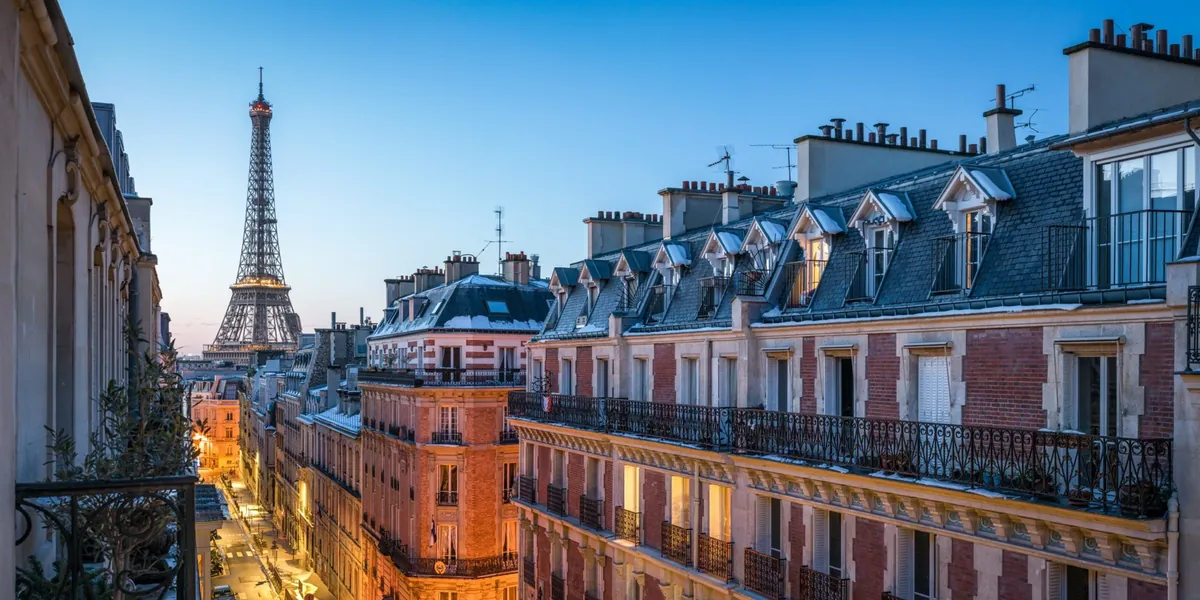
This August Sunday, the windows stay open. Paris reads best from above, and the zinc gleams with a light that is a little white, a little grimy, and altogether beautiful. In December 2024, UNESCO inscribed the craft of the Paris roofer-zinc workers and ornamentalists on its list of intangible cultural heritage. Recognition was long in coming: Delphine Bürkli, mayor of the 9th arrondissement, had launched the application a decade earlier. This summer, Home Select wanted to talk about what happens on the rooftops of Paris. Not to celebrate a backdrop already praised a thousand times over, but to describe what its hunters look at, precisely, when a top-floor apartment beneath the zinc enters a shortlist. There is the craft and there is the material. The craft is now UNESCO-listed. The material, meanwhile, reaches 80 degrees in full sun. Both statements are true at once, and a private-client advisory firm has to hold both ends of the rope. |
|||||
|
|||||
|
|
|||||
|
02 · Article of the week
Zinc: UNESCO-listed, and 80 degrees in the sun
Rooftops · UNESCO · Summer comfort · 5 min read
|
|||||
|
|||||
|
|||||
|
Eight months after UNESCO inscribed the craft of the Paris zinc roofer, the summer of 2026 is a reminder that a top-floor apartment under zinc is also a thermal equation. A brief owner's tour, between affection and lucidity. Zinc covers close to 80% of Paris rooftops. The city has 128,000 roofs across a total surface of 32 million square metres, according to the Atelier parisien d'urbanisme. This silver landscape is not immemorial: it emerged in the nineteenth century, when Haussmann, appointed prefect of the Seine in 1853, made slate and zinc roofs the norm, both materials having become more affordable thanks to the industrial revolution. Before him, Paris rooftops were a more disparate affair. After him, the city took on the grey tone that still defines it today. Zinc made something else possible: the mansard. From the 1850s, this ultra-light metal allowed thousands of homes to be fitted under the roofs, initially intended for the domestic staff of the bourgeois families living on the noble floors below. Julien Bigorgne, an engineer at the Apur, puts it this way: in the nineteenth century there were no truly rich or poor neighbourhoods in Paris, social segregation ran mostly vertically. Those former servants' rooms have become, a century and a half on, the most sought-after studios on the market. The UNESCO recognition of December 2024 honours a living craft, passed down from workshop to workshop, and drawn upon in particular for the rebuilding of Notre-Dame. Good news for heritage and good news for the economy: the Paris hand is protected, valued and celebrated. Home Select welcomes it. The fact remains that this same zinc, so handsome from the street, can reach 80 degrees in the sun, according to the Drieat, the regional and interdepartmental directorate for the environment, planning and transport of Île-de-France. That heat travels down into the attic space wherever roof insulation is old or thin. The memory of the summer of 2003 remains vivid: roughly 15,000 excess deaths in France in under three weeks, with an excess mortality of 100 to 130% in Île-de-France, the great majority of them elderly people living directly under the roof. On 25 July 2019, Paris-Montsouris recorded 42.6 degrees, against 40.4 in 1947. The equation is a Paris equation, and therefore a particular one. Elsewhere, buildings are insulated from the outside: more effective, less intrusive. Here, the Architectes des Bâtiments de France prohibit external insulation across the heritage zones, which cover a great part of Paris intra-muros. Any thermal upgrade therefore has to be carried out from the inside, with all that this implies: a few centimetres of habitable surface lost, careful attention to mouldings and ceiling heights, a longer job than one would face in the provinces. A well-insulated top floor comes at a price, both at purchase and at works. This is where the new-generation DPE (energy rating) proves its worth. Since its most recent reforms, it carries a dedicated summer-comfort score, which assesses a home's ability to withstand extreme heat without air conditioning. For a buyer, this indicator becomes a valuable reading tool, especially on the top floor. Home Select looks at it systematically, cross-referenced with orientation, cross-ventilation, the quality of existing insulation and the date of the last interventions on the roof. Celebrating heritage does not exempt one from measuring it. Home Select still loves mansards, the light that falls through skylights, the view that opens above the chimney pots. The firm's advice to clients is to look twice, to visit in slippers on an August Sunday rather than a February Tuesday, and to treat roof insulation as a budget line in its own right within the acquisition envelope. Paris is meant to be lived in, not merely admired. |
|||||
|
|||||
|
|||||
|
|||||
|
|||||
|
03 · Buyer's advice
Visit a top-floor apartment in August rather than in FebruaryA mansard flat should be judged in full heat, not in mid-winter. Ask to visit in the afternoon, windows shut, and place your hand on the sloping walls. Ask the seller about the date of the last roof works and the thickness of the insulation beneath the zinc. The DPE's summer-comfort score gives an initial bearing; the visit settles the matter. |
|||||
|
|||||
|
|||||
|
See you next Sunday.
In the meantime, if a project is taking shape, Home Select remains at your disposal for an initial conversation: its hunters assess your brief against the market and deliver an unvarnished reading.
|

|
Home Select
Property hunters since 2011
|
|||||
|
|||||
|
60 rue François 1er, 75008 Paris · 01 78 76 78 10 Member of the Federation of Property Hunters (FCI) |
|||||
|
|
|||||
|
You are receiving this email because you shared your contact details with Home Select as part of a property project or an information request. Under the General Data Protection Regulation (GDPR), you have rights of access, rectification, erasure, objection, portability and restriction over the data concerning you. To exercise these rights, write to contact@homeselect.paris.
Data controller: Jean Mascla, Home Select, 60 rue François 1er, 75008 Paris. Your data is kept for three years after our last contact, then deleted. In case of disagreement, you may lodge a complaint with the CNIL (www.cnil.fr). |
|||||
|
© 2026 Home Select. All rights reserved.
|