

In brief
Paris has several hundred private mansions, some estimates reaching 800 to 1,000 if larger townhouses are included, yet the open market records only 1 to 5 transactions a year. In 2026, prices range from 2 to 5 million euros for a townhouse to renovate (14th, 16th on the Auteuil side) up to 20 to 50 million euros and beyond for a furnished, renovated mansion in the 7th or Le Marais. As everywhere in Paris, around 15% of sales close off-market, and in such a narrow segment access to the network matters all the more. Home Select has supported buyers in this confidential market since 2011, through its network of notaires and specialist agents.
Key takeaways
- Grand private mansions in the 7th arrondissement sell for 20 to 50 million euros; smaller townhouses in the 14th or 16th start from 2 to 5 million euros
- As everywhere in Paris, around 15% of sales close off-market, without a public listing; in such a narrow segment, the network matters all the more
- Only 1 to 5 private mansions trade per year across all of Paris, making it an extremely rare market segment
- Works on listed or registered historic monuments require ABF approval, extending timelines by several months
- The 14th arrondissement (Montsouris) offers townhouses at 10,000 to 12,000 euros/m², an accessible alternative for inner Paris
- Home Select, a property hunter in Paris: 15,000 partners and more than 100 properties flagged each day before any listing.
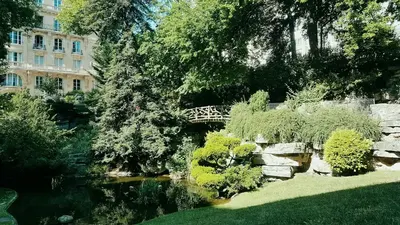
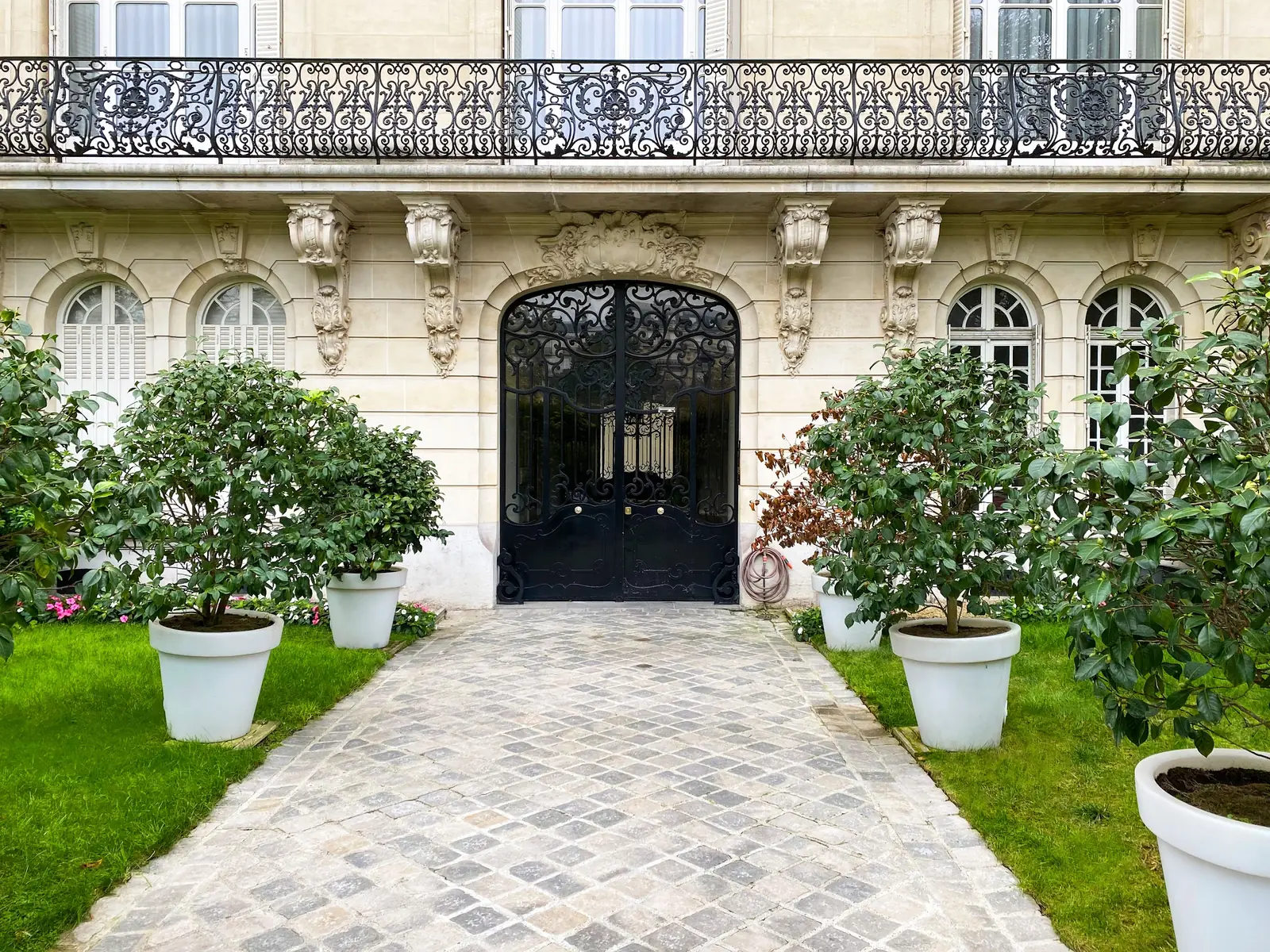
Behind the porte cochère at 47 rue de Varenne, a garden. Not a small garden, not a courtyard with two planted shrubs: a real garden, with century-old trees, a lawn, a pond. At the far end of the garden, the pale stone facade of an 18th-century private mansion, with its tall windows, sculpted pediments and double-flight steps. This is the heart of the 7th arrondissement, 200 metres from boulevard Saint-Germain, and yet the silence is absolute. The Parisian private mansion is this paradox: a private estate in the middle of Europe’s densest city.
How many private mansions remain in Paris?
Paris has several hundred private mansions, yet the open market sees only one to five change hands each year. The question seems simple, the answer is not: some estimates go as high as 800 or 1,000 if you include large townhouses and the smaller mansions of Le Marais, but the vast majority are not for sale. They never have been. And they probably never will be.
The private mansions of Paris fall into three categories of occupation. The first groups mansions that have become institutional headquarters: embassies (the Hôtel de Monaco on the quai d’Orsay is the Polish embassy), ministries (the Hôtel de Roquelaure houses the Ministry for Ecological Transition), foundations (the Hôtel Salomon de Rothschild hosts exhibitions), museums (the Hôtel de Sully, the Hôtel Biron/Musée Rodin). These mansions are off the market, permanently.
The second category comprises mansions still held by private families. Some occupy them, others lease them to companies or international organisations. These mansions change hands once or twice a century, on the occasion of an inheritance, a divorce or a reversal of fortune.
The third category, the most interesting for a buyer, groups mansions and townhouses that sell occasionally on the market. They represent one to five transactions per year across all of Paris: a microscopic volume that explains the ultra-confidential nature of this segment.
How much does a private mansion in Le Marais cost?
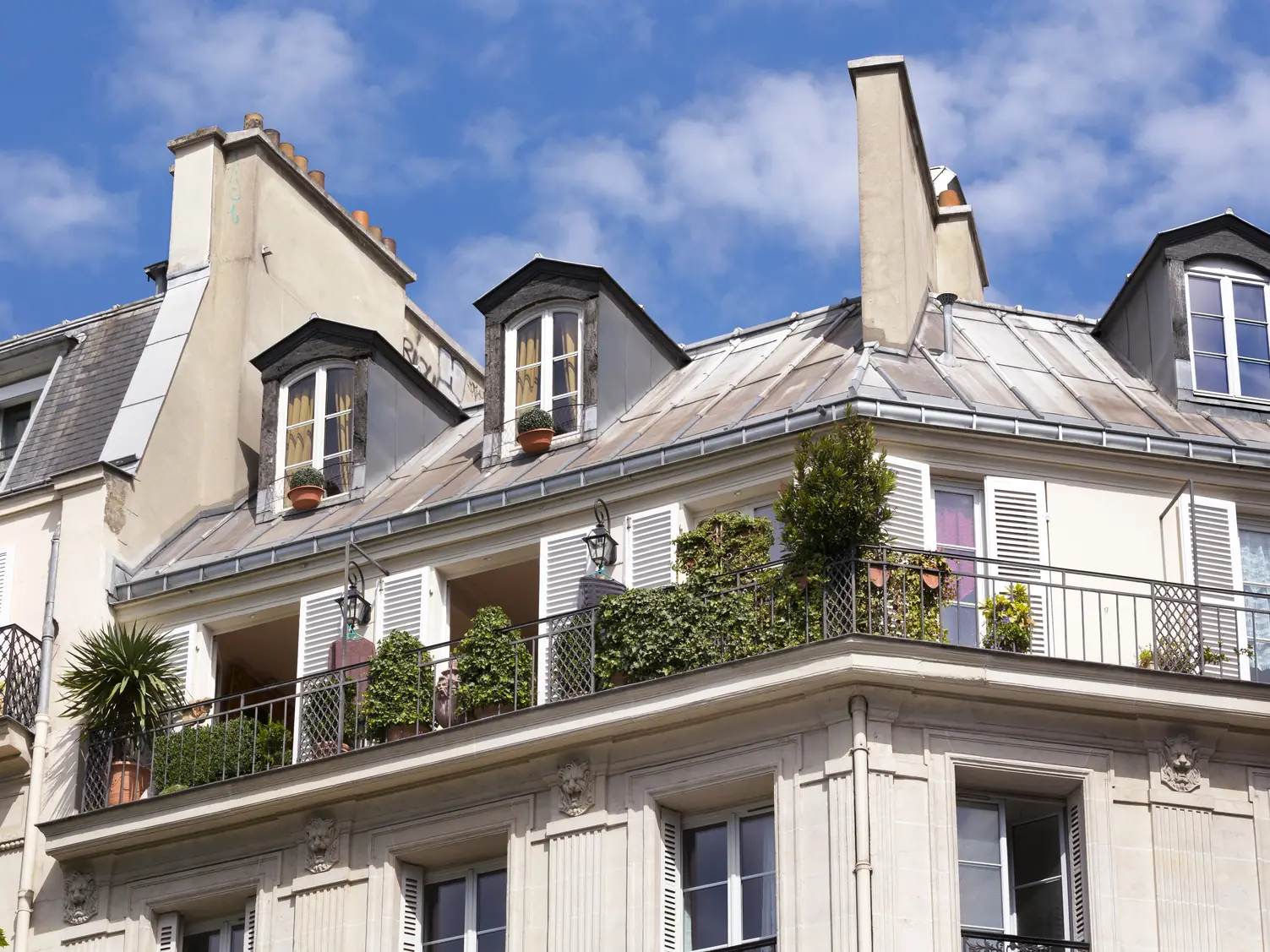
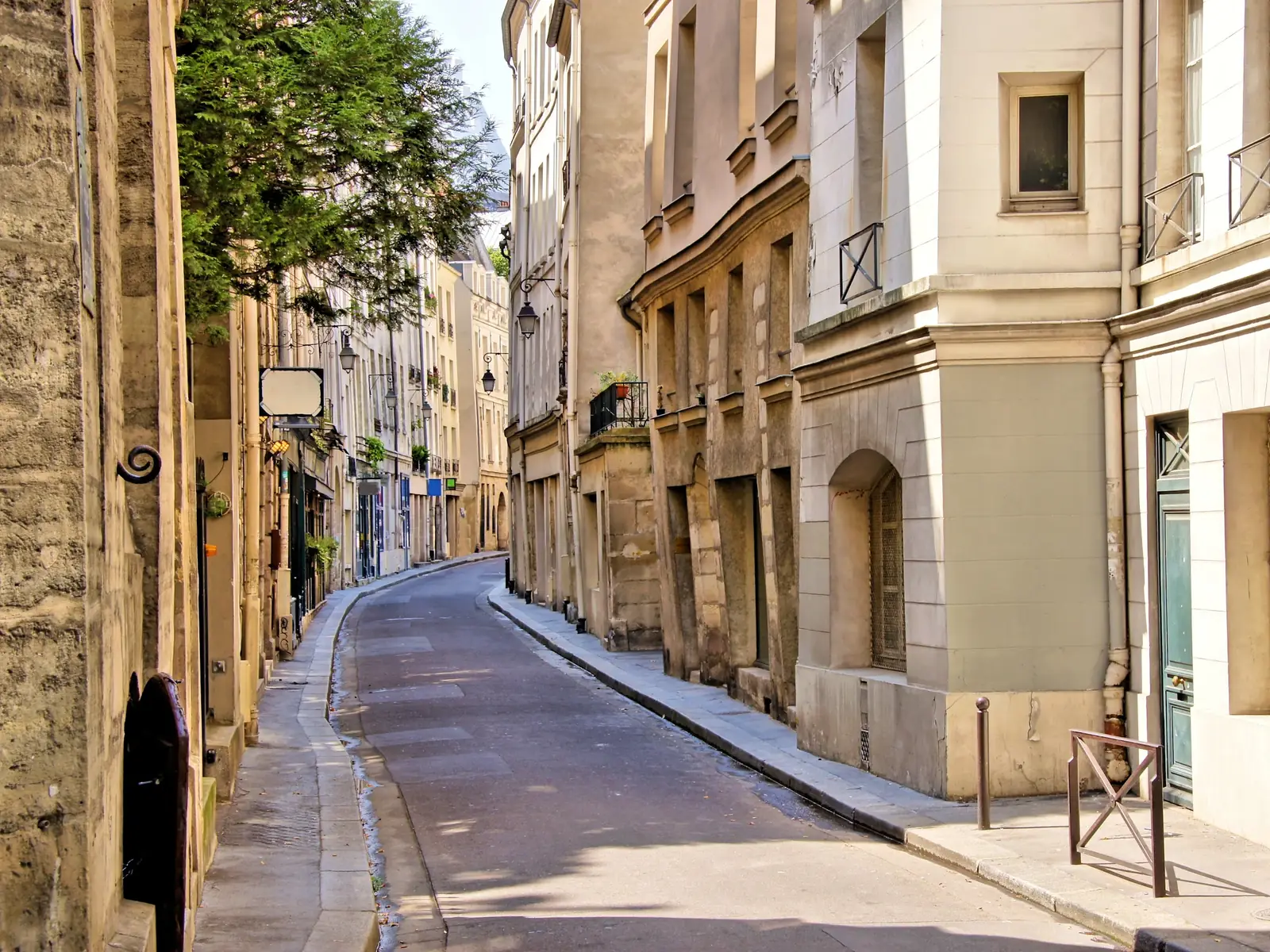
Between 5 and 15 million euros for a “smaller” mansion of 300 to 500 m² with an inner courtyard, before renovation works. Le Marais has the highest concentration of private mansions in Paris. Built between the 16th and 18th centuries, they line rue des Francs-Bourgeois, rue de Turenne, rue du Temple and their side streets.
The “smaller” Marais mansions, 300 to 500 m² of living space, inner courtyard, sometimes a pocket garden, trade between 5 and 15 million euros. These are not the monumental mansions of place des Vosges or rue de Sévigné (those are museums or institutions), but more modest residences that retain extraordinary charm: stone staircase, painted beam ceilings, vaulted cellars.
The main challenge with these properties is their condition. Many require major renovations, roofing, utilities, facade work, the cost of which can reach 30 to 50% of the purchase price. The ABF (Architectes des Bâtiments de France) constraint applies to virtually all of Le Marais, a listed conservation area: every external modification, every facade renovation must be approved by the ABF, which extends timelines by several months.
Living in Le Marais is a unique experience. Owning a private mansion there is a collector’s dream.
Why is the 7th arrondissement the top of the market?
Because it concentrates the most imposing residences in Paris, sold for 20 to 50 million euros once furnished and renovated. The 7th arrondissement is the heart of the market for grand private mansions. Rue de Varenne, rue de Grenelle, rue de l’Université, rue du Bac: these streets house the most imposing and expensive residences in Paris.
A furnished and renovated private mansion in the 7th sells for between 20 and 50 million euros, sometimes more for exceptional properties with a 500 m² or larger garden. Buyers are international fortunes, family offices, art collectors seeking a setting worthy of their collections.
The market operates with great discretion: few listings, rarely an agency window display or an online portal. Transactions are negotiated between family notaires, prestige agents with exclusive mandates, and property hunters with the highest-level networks. The luxury property market in Paris is a world apart, and the private mansion segment is its most closed segment.
Can you buy a house with a garden in Paris for 2 to 5 million?
Yes: townhouses of 200 to 300 m² of living space with a garden sell for between 2 and 5 million euros, in the 14th, the 16th on the Auteuil side, the 12th or the 20th. The dream of the private mansion is therefore not reserved for the ultra-wealthy, even if these houses remain more modest than the grand mansions.
The 16th arrondissement, Auteuil side
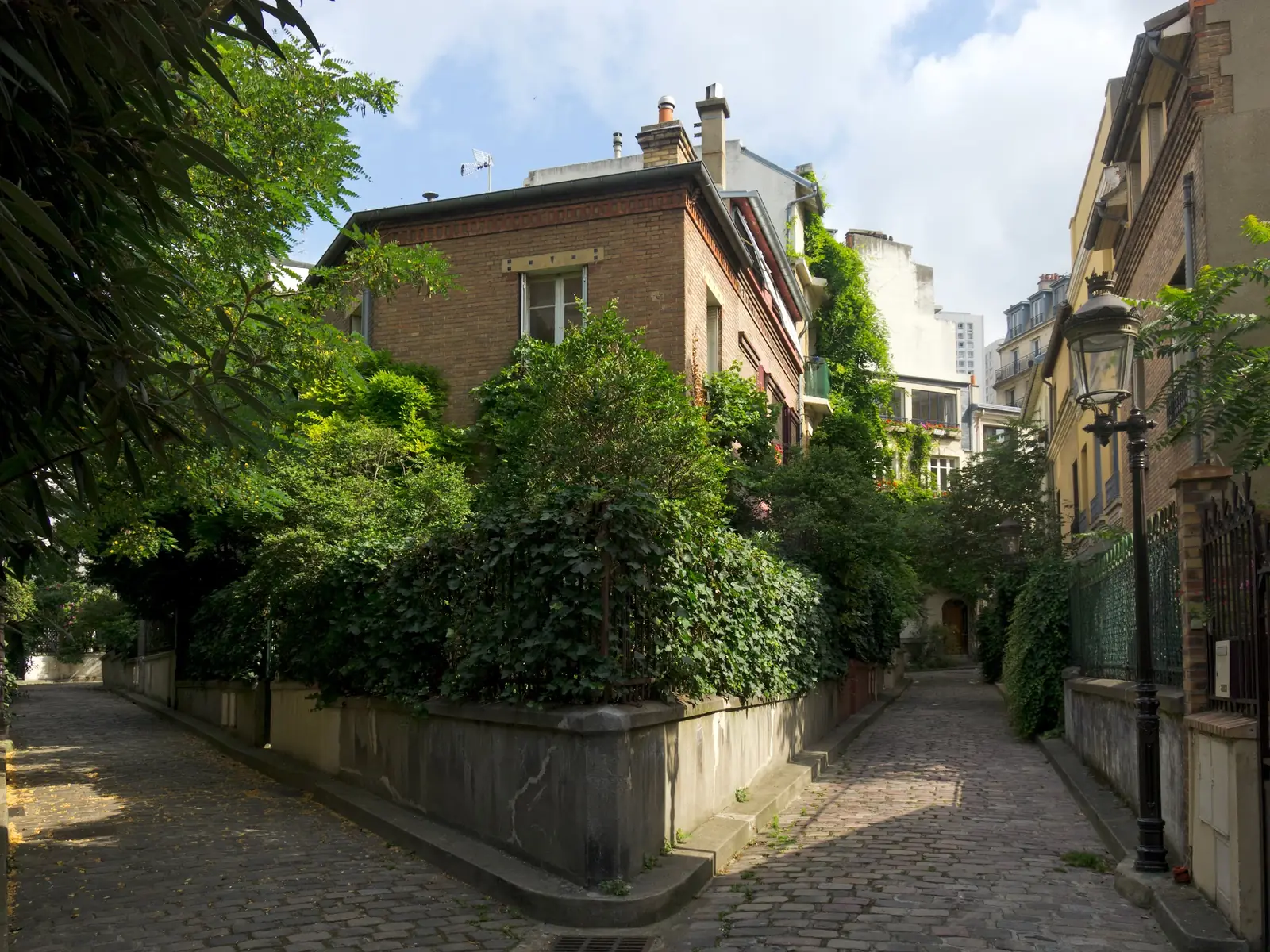
The Auteuil neighbourhood, in the southern part of the 16th, retains a fabric of individual houses inherited from the era when Auteuil was a village on the edge of Paris. Rue Boileau, rue Chardon-Lagache, Villa Montmorency: these addresses house 200 to 400 m² homes with 100 to 300 m² gardens, in absolute calm.
Prices range from 3 to 5 million euros for 200 to 300 m², and exceed 6 million for the largest houses of the Villa Montmorency: considerably less than a Marais or 7th arrondissement mansion. The charm is different: no 18th-century dressed stone, but late 19th or early 20th century constructions in meulière, brick, or Art Nouveau style, with tree-lined gardens that make you forget the city.
The 14th arrondissement: Montsouris and the artists’ enclaves
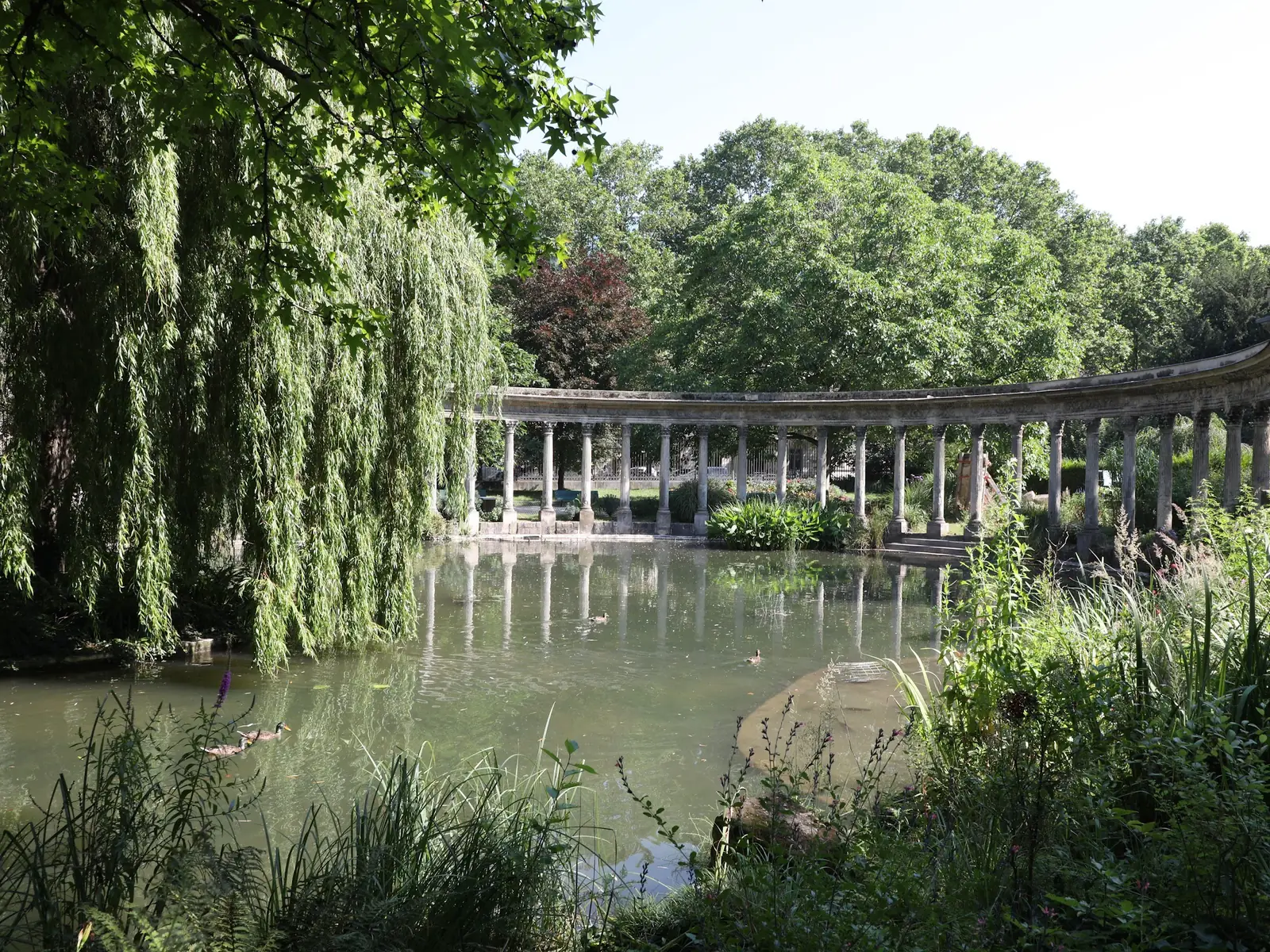
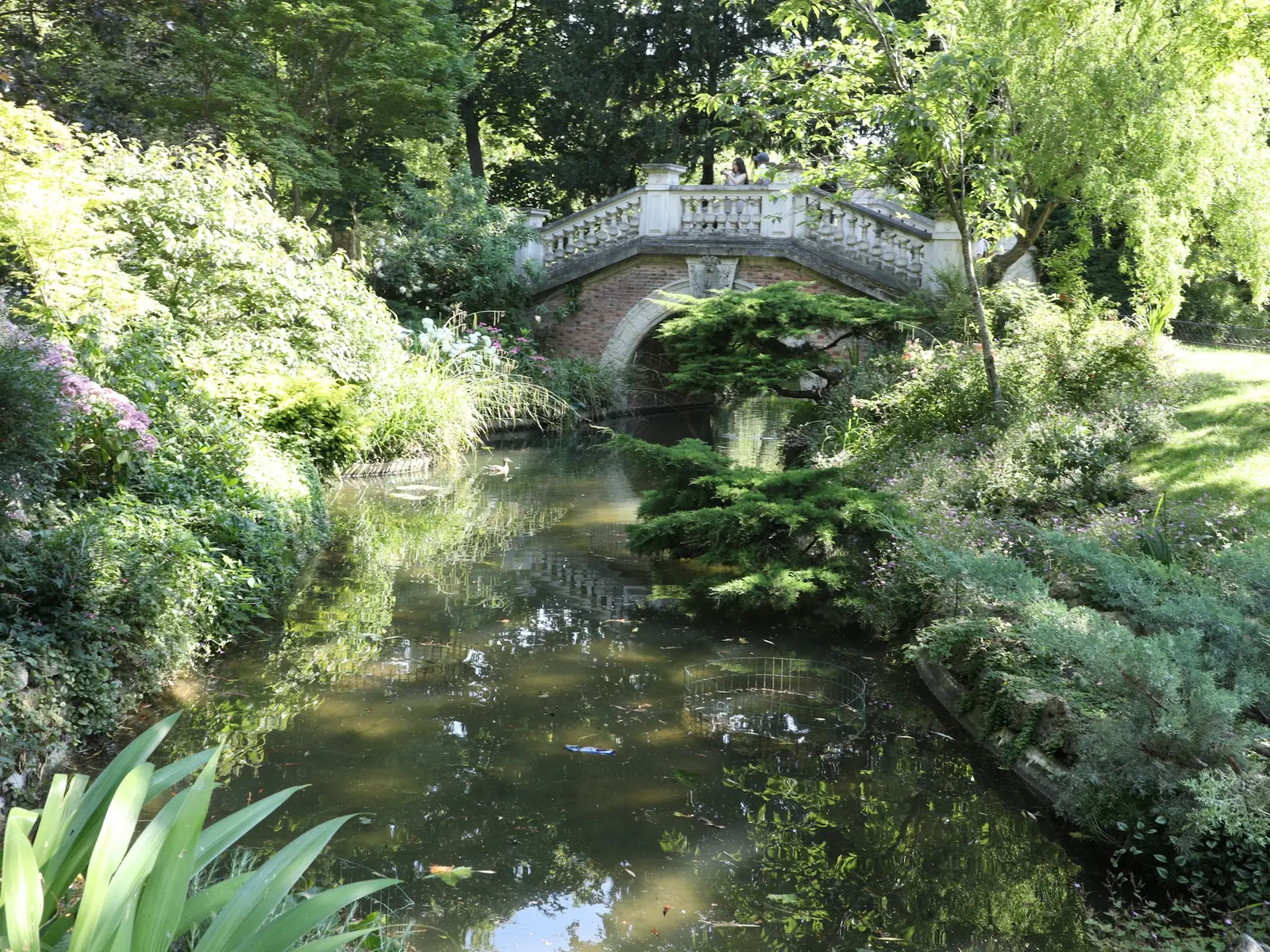
The 14th harbours little-known treasures. Around parc Montsouris, Art Deco architect-designed villas and 1920s-1930s artist houses offer generous volumes and private gardens. Rue Georges-Braque, villa Seurat, square Montsouris: these confidential addresses attract buyers seeking space and calm without leaving Paris.
Prices run around 10,000 to 12,000 euros/m² for houses, meaning 2 to 3.5 million euros for 200 to 300 m²: an exceptional value proposition for inner Paris.
The 12th and 20th: the surprises
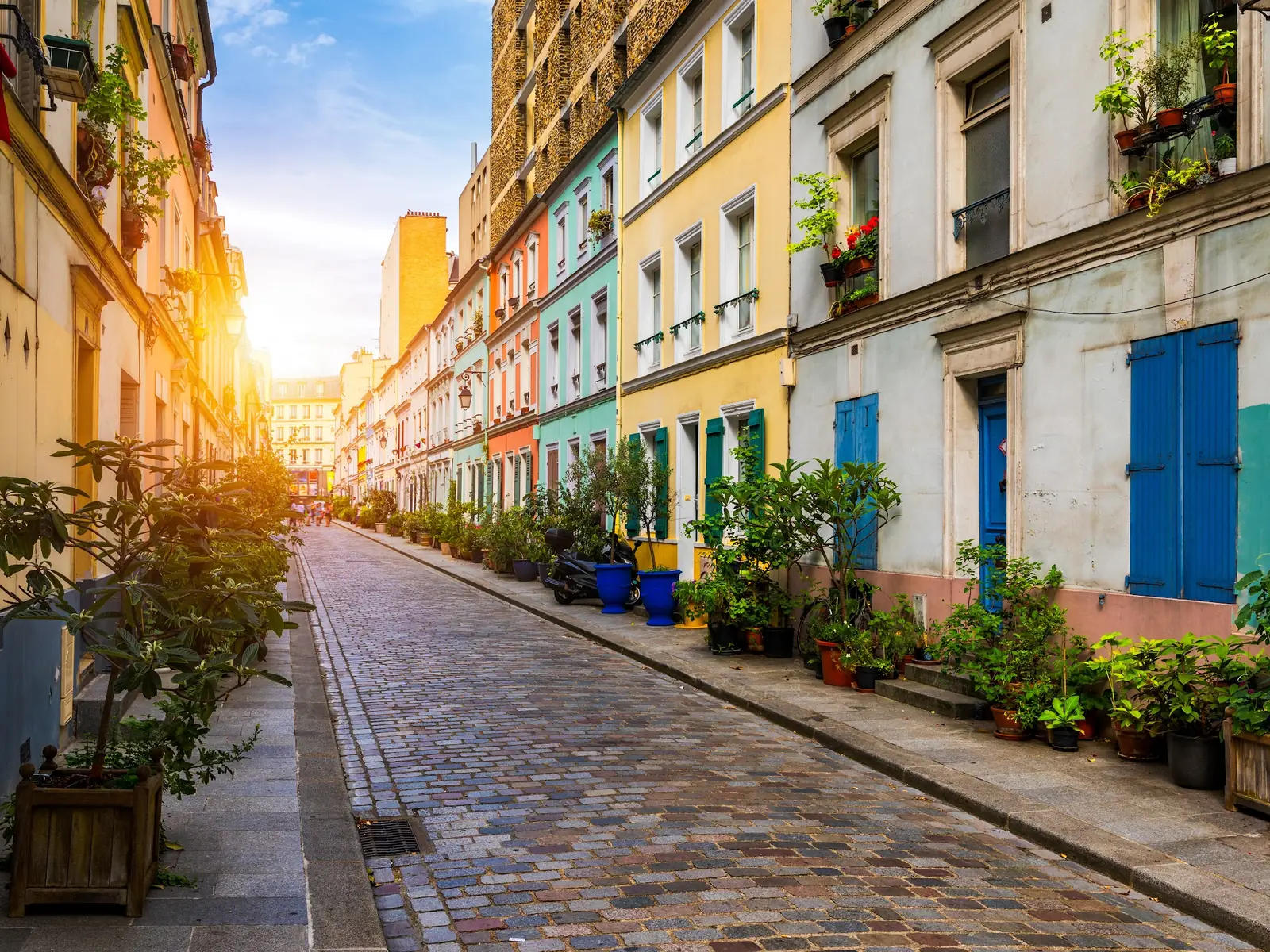
You do not instinctively think of the 12th or 20th arrondissement when buying a house in Paris. That is a mistake. The 12th, around the Coulée verte and the Bois de Vincennes, retains some townhouses from the 1900-1930 era. The 20th, in the Charonne neighbourhood, conceals passages and dead-end streets where modest but characterful houses sell for between 1.5 and 3 million euros.
These properties are not private mansions in the historical sense. But they offer what the private mansion offers at a different scale: a private space, a garden, silence. For a family that wants to live “like in the countryside” without leaving Paris, it is an option that Home Select’s property hunters know and recommend.
Discover how Home Select can support you
Why is this market so discreet?
Because owners refuse publicity and no more than ten intermediaries master the segment. As everywhere in Paris, around 15% of sales close without a public listing, but on such a small volume, access to the network matters all the more. The market for private mansions and townhouses in Paris is the most opaque segment of Parisian real estate, for multiple reasons.
Owners of these properties generally do not want publicity. A public listing of a private mansion attracts the curious, voyeurs, journalists: everything except serious buyers. Discretion protects the seller and filters the buyers.
Intermediaries are few and highly specialised. A handful of Parisian agents, no more than ten, master this segment. Succession notaires play a central role: when a private mansion passes through inheritance, it is often the family notaire who identifies the buyer, before the property is even technically “listed.”
Off-market therefore carries extra weight in this segment: a sale completed without a public listing, without online publication and without open viewings is visible only to that network.
What does a property hunter add in this segment?
A buyer who wants to purchase a private mansion in Paris without a specialist intermediary faces two risks: never finding one, or overpaying.
The first risk is the most common. The properties are hard to see: they rarely appear on SeLoger, on LeBonCoin or in local agency windows. Only a network, notaires, specialist agents, concierges, owners approached directly, provides access to information.
The second risk is more insidious. The private mansion market is so narrow that comparisons are difficult. Each property is unique, and the lack of recent references makes valuation hazardous. An experienced property hunter, who has seen hundreds of exceptional properties over fifteen years, is able to compare, value and negotiate, with the legitimacy that experience provides.
Home Select has supported buyers on properties ranging from a 14th arrondissement townhouse to a Marais private mansion. Since 2011, Home Select has completed more than 1,200 mandates and built a network that gives the firm access to opportunities that the isolated buyer would never see. It is precisely in this type of search, rare, confidential, demanding, that the property hunter (the French equivalent of a buyer’s agent) delivers the most value.
What constraints apply to a listed private mansion?
Every exterior work requires approval from the Architectes des Bâtiments de France, with processing times of up to six months, and listed properties require a chief architect of historic monuments. Owning a private mansion in Paris is a privilege as much as a responsibility: the constraints match the prestige.
The Architectes des Bâtiments de France (ABF) supervise all exterior works within protected perimeters, which includes virtually all of historic Paris. Facade renovation, joinery, roofing, garden landscaping: everything must be submitted for ABF approval. Processing times can reach six months, and the requirements imposed (materials, colours, techniques) significantly increase the cost of works.
Mansions classified or listed as historic monuments are subject to even stricter obligations. Works must be carried out under the supervision of a chief architect of historic monuments (ACMH), using traditional materials and techniques. In return, owners of historic monuments benefit from significant tax advantages: deduction of restoration costs from overall income, with no cap for classified buildings.
The works themselves are often colossal. A private mansion that has not been renovated for thirty years may require 2 to 5 million euros of work: roofing, facade, utilities upgrades, interior decor restoration, garden landscaping. It is a long-term investment: an investment that buyers in this segment understand and accept, because the heritage appreciation more than compensates for the expenditure.
Is the dream accessible?
The answer is nuanced: no for a grand private mansion in the 7th or Le Marais, which remains the preserve of a handful of global fortunes; yes for a house with a garden, accessible from 2 million euros in certain neighbourhoods of the 14th or the 16th, and from 1.5 million in the 20th. The dream of living in a house of your own in Paris, with a tree, a stone wall, silence, is therefore not out of reach.
These are properties you do not find by searching: they are found by being found. Through word of mouth, through networks, through a property hunter who knows that a house is becoming available in the passage in the 12th where nobody thinks to look. It is a market of patience and connections: a market where the most beautiful neighbourhoods of Paris are not always the ones you might expect.
Sources
Frequently asked questions
01 How much does a private mansion cost in Paris in 2026?
The range is enormous: from 2 to 5 million euros for a small mansion or townhouse requiring renovation in the 14th or the 16th on the Auteuil side, up to 20 to 50 million euros and beyond for a furnished and renovated private mansion in the 7th or Le Marais.
02 How do you access the market for private mansions in Paris?
This market is extremely discreet and public listings are rare. Transactions go through the network of succession notaires, specialist agents and property hunters with contacts among the major landowning families.
03 Are there affordable alternatives to the grand Parisian private mansions?
Yes, townhouses in the 14th (Montsouris), the 16th on the Auteuil side, the 12th or the 20th offer 200 to 300 m² with a garden for 2 to 5 million euros. These are not private mansions in the historical sense, but the lifestyle is similar.
04 What are the constraints of a private mansion listed or registered as a historic monument?
Works must be approved by the Architectes des Batiments de France (ABF), which extends timelines and requires materials and techniques compatible with the building's historic character. In return, significant tax advantages exist for owners of historic monuments. Home Select, a property hunter in Paris since 2011, has a network of 15,000 partners (agencies, notaries, managing agents, building concierges) and is alerted to more than 100 properties a day before any listing is published.