

In brief
The Paris luxury market concentrates in eight areas, whose observable entry point is the top decile of their arrondissement's DVF transactions over the 12 months to end of June 2026: Saint-Germain-des-Pres (6th, €23,200 per sqm), Faubourg Saint-Germain and Les Invalides (7th, €22,600), the Golden Triangle and Parc Monceau (8th, €20,600), Palais-Royal (1st, €18,300), Ile Saint-Louis (4th, €17,200), the Haut-Marais (3rd, €16,000) and Passy, La Muette and Trocadero (16th, €15,500). These areas differ less by price than by the type of property they hold and the weight of the network in reaching sales that never go to a public listing. Home Select, a Paris buying agent since 2011, supports its buyers across these areas with 16 property hunters and a 4.8/5 rating on Google.
Key takeaways
- Eight areas hold most sales above €2 million: the Golden Triangle (8th), Saint-Germain-des-Pres (6th), Faubourg Saint-Germain (7th), Ile Saint-Louis (4th), Passy and Trocadero (16th), Palais-Royal (1st), Parc Monceau (8th) and the Haut-Marais (3rd)
- The observable luxury threshold is each arrondissement's DVF top decile: €23,200 per sqm in the 6th, €22,600 in the 7th, €20,600 in the 8th, €15,500 in the 16th
- The address does not make the apartment: floor, light, outlook and the state of the building often weigh more on resale value than the arrondissement
- Access to never-listed property matters most where stock is rarest, on Ile Saint-Louis and in the Golden Triangle
- About 15% of transactions in Paris close off-market, in the premium arrondissements as everywhere else
- Home Select, a property hunter in Paris, works with 15,000 partners and receives more than 100 off-market properties every day before publication.
Introduction
Eight areas hold most luxury apartment sales in Paris: the Golden Triangle in the 8th, Saint-Germain-des-Pres in the 6th, Faubourg Saint-Germain and Les Invalides in the 7th, Ile Saint-Louis in the 4th, Passy and Trocadero in the 16th, Palais-Royal in the 1st, Parc Monceau in the northern 8th and the Haut-Marais in the 3rd.
Published rankings all look alike, because they draw on the same price databases. This guide adds what price grids leave out: the type of property actually available in each area, the buyer it suits, what can and cannot be negotiated there, and above all how much the network weighs in reaching property that is never listed. That last point decides, in practice, what a buyer will and will never see.
Contents
- The eight prime areas of Paris, and what sets them apart
- The Golden Triangle and Faubourg Saint-Honore (8th)
- Saint-Germain-des-Pres (6th)
- Faubourg Saint-Germain and Les Invalides (7th)
- Ile Saint-Louis and Ile de la Cite (4th)
- Passy, La Muette and Trocadero (16th)
- Palais-Royal, Place Vendome, Parc Monceau and the Haut-Marais
- How to choose between these neighborhoods
- Why the best apartment is not in the most expensive neighborhood
- What off-market changes, area by area
The eight prime areas of Paris, and what sets them apart
The Paris luxury segment starts at €2 million and accounts for 3% to 5% of transactions in the city. It concentrates in a narrow perimeter, summarised below.
| Area | Arr. | Top decile per sqm | Dominant property type |
|---|---|---|---|
| Saint-Germain-des-Pres | 6th | €23,200 | Small, very high-standing units, 17th and 18th century |
| Faubourg Saint-Germain, Les Invalides | 7th | €22,600 | Large reception apartments, private mansions |
| Golden Triangle, Faubourg Saint-Honore | 8th | €20,600 | Haussmann reception floors, 200 to 400 sqm |
| Parc Monceau | 8th | €20,600 | Haussmann family apartments, staffed buildings |
| Palais-Royal, Place Vendome | 1st | €18,300 | Rare garden-facing units, classical volumes |
| Ile Saint-Louis, Ile de la Cite | 4th | €17,200 | Divided private mansions, Seine views |
| Haut-Marais | 3rd | €16,000 | Studios, lofts, 17th century mansions |
| Passy, La Muette, Trocadero | 16th | €15,500 | Very large family flats, running balconies, views |
The top decile is the threshold above which the most expensive 10% of an arrondissement’s sales take place: it is the observable entry point to the segment, measured on transactions actually recorded rather than on asking prices. Source: the French government’s DVF database via data.gouv.fr, transactions over the 12 months to end of June 2026, October 2026 release.
One point on how to read it. The decile is computed per arrondissement, not per street: inside the 8th, Avenue Montaigne trades far above the figure shown, and a secondary street in the same arrondissement below it.
The full price grid, median and decile across the ten prime arrondissements, sits on the buying a luxury apartment in Paris page. This article picks up where that one stops: what each area actually holds, and how you buy there.
Home Select, a Paris buying agent since 2011, supports its buyers across these eight areas with 16 property hunters and a 4.8/5 rating on Google. Home Select finds 15% of its clients’ properties off-market, and 25% above 2 million euros.
The Golden Triangle and Faubourg Saint-Honore (8th)
Streets and micro-areas. The triangle formed by Avenue Montaigne, Avenue George V and the Champs-Elysees, extended by Rue du Faubourg Saint-Honore and Avenue Matignon.
Pricing. Top decile in the 8th: €20,600 per sqm, against a median of €12,000. In relative terms, the gap between the two is the widest in Paris, and it tells you what the area is: Avenue Montaigne and the Faubourg Saint-Honore pull the tail far above the threshold, while the rest of the arrondissement stays an ordinary market.
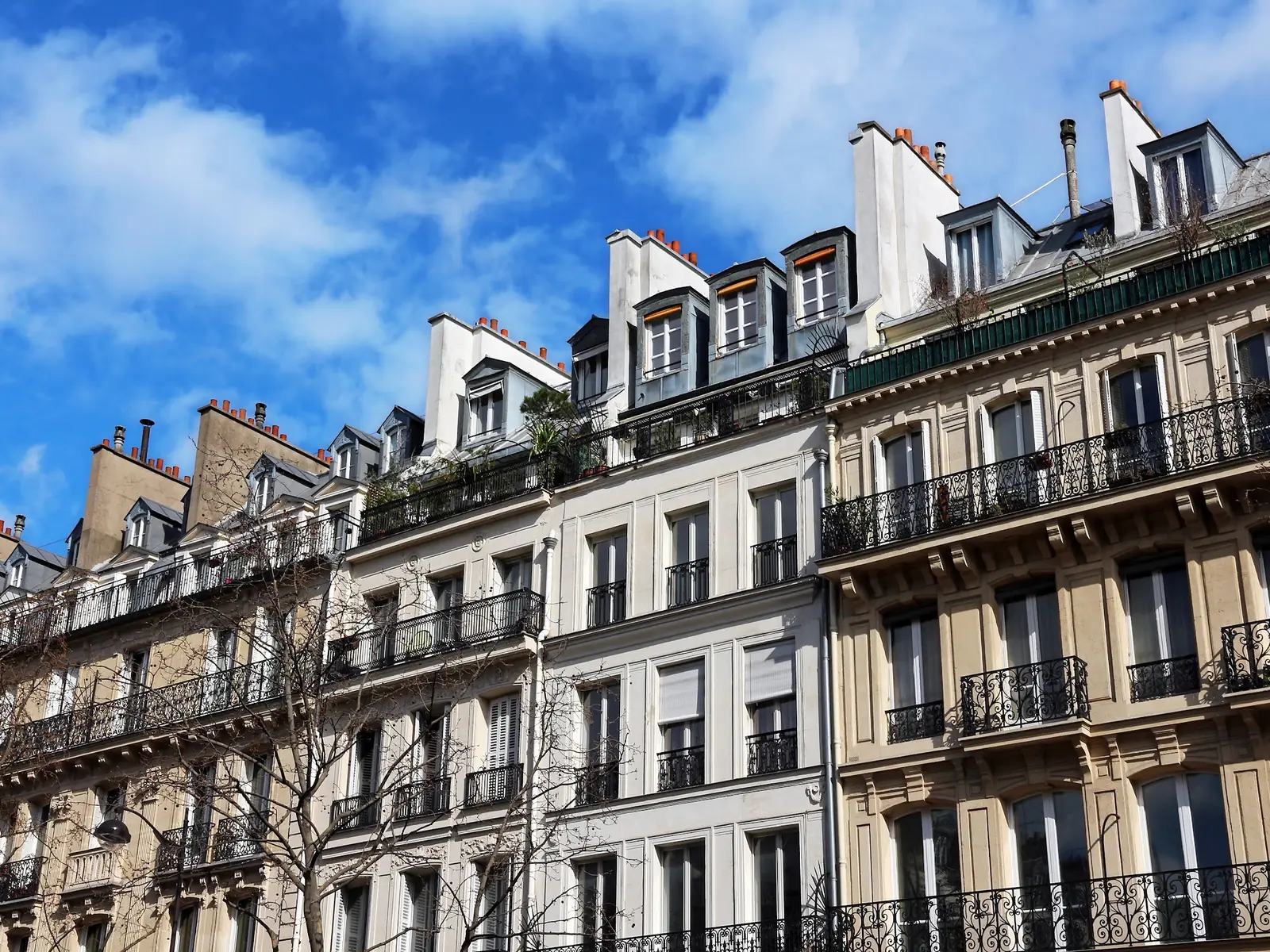
Property type. Large Haussmann reception apartments, ceiling heights above 3.5 metres, noble floors, buildings with a concierge and often a full service desk. Floorplans of 200 to 400 sqm are more common here than anywhere else inside Paris.
Buyer profile. International buyers, prestige second homes, representative addresses. This is the area least exposed to French residential cycles, because its demand is global.
What can be negotiated. Little on the asking price when the property is genuinely rare. Terms, on the other hand, do move: timing, furniture, works carried out before completion, refurbishment costs. Average negotiation here falls well below the 6% Home Select obtains across its assignments.
Off-market access. The network weighs heavily here. Sellers in this area have personal, wealth or tax reasons for keeping their address unpublished, and a buyer who works from portals alone misses those sales.
This district has its own guide: buying in the Golden Triangle in Paris, with the exact perimeter, the real size of the market and the address traps to avoid.
Saint-Germain-des-Pres (6th)
Streets and micro-areas. Place Saint-Sulpice, Rue Jacob, Rue de Furstenberg, Rue de Buci, the Odeon crossroads and the streets around the Luxembourg Gardens.
Pricing. Top decile in the 6th: €23,200 per sqm, the highest in Paris, against a median of €14,400 that is also the city’s highest. It is the only arrondissement where the ordinary market is already expensive: here, prestige is a premium, not a separate market.
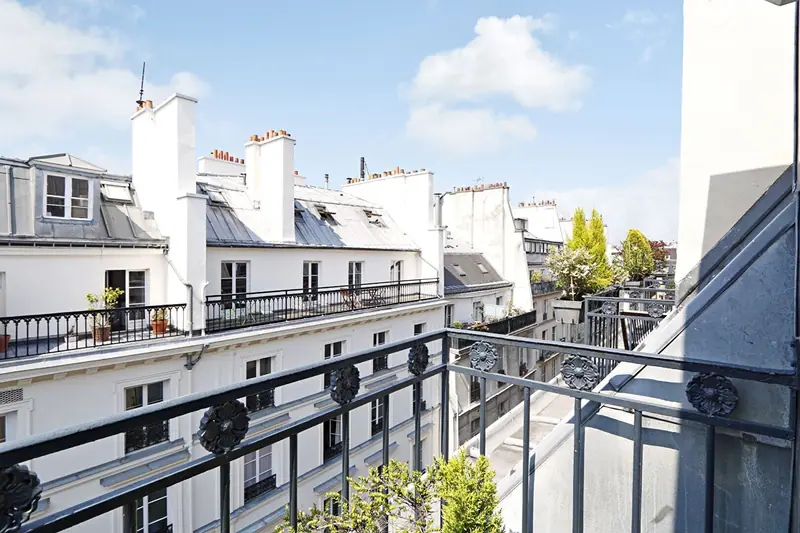
Property type. 17th and 18th century buildings, exposed beams, top-floor duplexes, small apartments of very high standing. Large floorplans are rare here, which is precisely what makes them expensive.
Buyer profile. A characterful pied-a-terre, an American or European buyer attached to a certain idea of Paris, a main residence for a couple without children. The Saint-Germain-des-Pres buying guide covers the area street by street.
What can be negotiated. The condition of the building and the cost of communal works, voted or pending. In period stock, a facade restoration or structural repair quickly runs to tens of thousands of euros per lot, and it is the strongest negotiating lever in the area.
Off-market access. Turnover is low, some property changes hands before any listing, and confidential mandates circulate within a small circle of intermediaries: the network counts all the more.
Faubourg Saint-Germain and Les Invalides (7th)
Streets and micro-areas. Rue de Varenne, Rue de Grenelle, Rue du Bac, Place Vauban, the Saint-Thomas-d’Aquin quarter, Quai Voltaire and the streets around the Champ-de-Mars.
Pricing. Top decile in the 7th: €22,600 per sqm, against a median of €14,200. The private mansions of the Faubourg sit outside that scale: they trade in the tens of millions and are no longer usefully measured per square metre.
Property type. This is the area of grand reception apartments and private mansions hidden behind carriage doors. Private gardens, outbuildings, attached service rooms: configurations found nowhere else in comparable density.
Buyer profile. Established French families, international buyers seeking absolute quiet, diplomatic profiles. The quarter is residential, highly secure, and deliberately understated.
What can be negotiated. The real quality of the outlook and the light, which varies enormously between floors and orientations. A courtyard-facing apartment on a prestigious street and a dual-aspect apartment with a view of Les Invalides are not the same market, even at the same address.
Off-market access. The network is decisive, above all on the private mansions, a market of a handful of sales a year where every opportunity counts.
Ile Saint-Louis and Ile de la Cite (4th)
Streets and micro-areas. Quai d’Orleans, Quai de Bethune, Quai d’Anjou, Rue Saint-Louis-en-l’Ile.
Pricing. Top decile in the 4th: €17,200 per sqm, against a median of €12,800. The figure surprises, because it places the island behind the 6th and the 7th when its reputation puts it above. Volume explains it: with a few hundred lots and a handful of sales a year, the arrondissement decile averages the island together with the more affordable southern Marais.
Property type. 17th century private mansions divided into apartments, original beams and stonework, river views. The number of existing units is finite and very small: a few hundred lots in total on Ile Saint-Louis.
Buyer profile. A buyer looking for a unique object rather than a floorplan. This is a collector’s market, where price per square metre loses part of its meaning.
What can be negotiated. Almost nothing on price when the property is first-rate. The technical constraints of listed period buildings, however, must be surveyed before any offer: insulation, damp, works permissions.
Off-market access. The network weighs more here than anywhere else. Stock is so rare and the buyer circle so well identified that every private sale is an opportunity an unrepresented buyer will never see.
Passy, La Muette and Trocadero (16th)
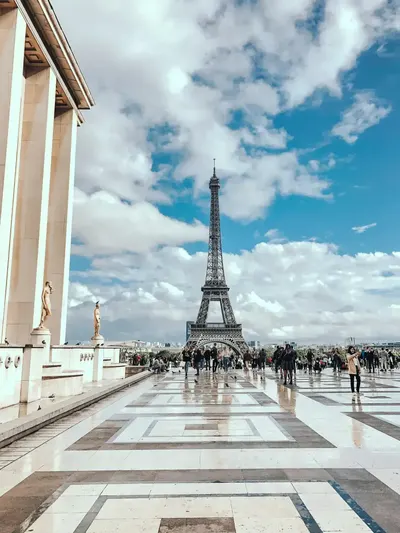
Streets and micro-areas. Avenue Foch, the La Muette quarter, Place du Trocadero, Avenue Victor Hugo, Villa Montmorency and the streets running down to the Seine.
Pricing. Top decile in the 16th: €15,500 per sqm, against a median of €10,900, both the lowest of the prime arrondissements. This is the most accessible prestige area, and by far the best floor space for the money. It is also the largest by volume: 2,658 transactions a year, against 895 in the 6th.
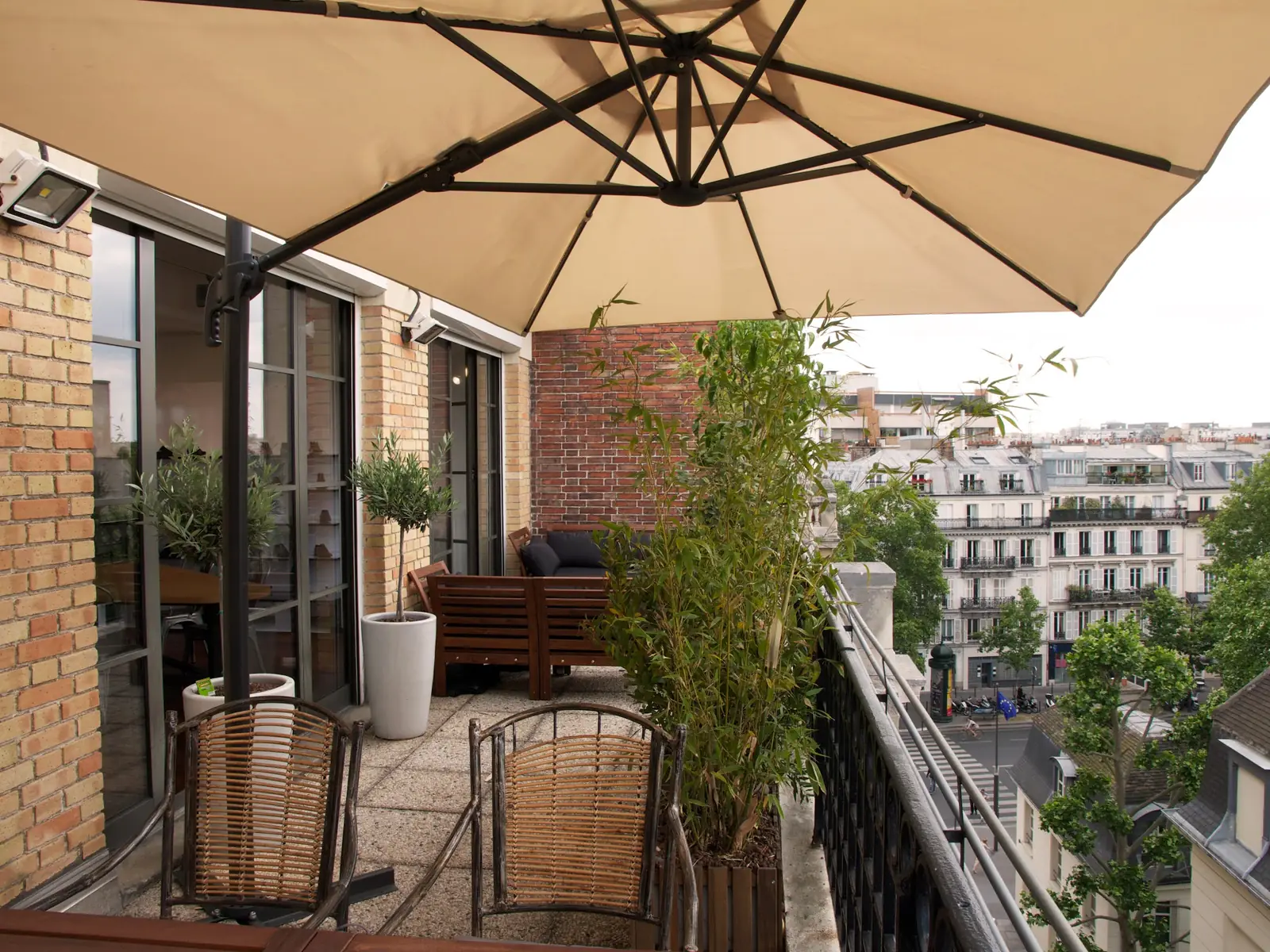
Property type. Very large Haussmann family apartments, running balconies, views of the Eiffel Tower and the Seine. On a prime property, €2 million buys about 86 sqm in the 6th and 129 sqm in the 16th: the same budget for half as much space again.
Buyer profile. Families, buyers looking for more than 200 sqm, expats drawn by the international schools and the Bois de Boulogne. It is the first choice for buyers with school-age children.
What can be negotiated. More than elsewhere. Stock is more plentiful, selling times longer, and an overpriced property genuinely moves. This is the prestige area where Home Select most often reaches, and sometimes exceeds, its 6% average negotiation.
Off-market access. The market is more liquid and more visible, which makes representation less decisive for finding the property, and more decisive for negotiating it well.
Palais-Royal, Place Vendome, Parc Monceau and the Haut-Marais
Four areas complete the map, each with its own logic.
Palais-Royal and Place Vendome (1st), decile at €18,300 per sqm. Discreet prestige and absolute centrality. Rare apartments overlooking the Palais-Royal gardens, for buyers who want the address without the exposure of the 8th.
Parc Monceau, in the northern 8th. The residential, family-oriented face of the 8th. Elegant buildings, quiet streets, greenery. A buyer profile close to that of the 16th, with a more central Right Bank address.
The Haut-Marais (3rd), decile at €16,000 per sqm. 17th century mansions, artists’ studios, loft conversions. Luxury here takes a contemporary, creative form rather than a heritage one. It is the area for buyers left cold by Haussmann classicism.
Ile de la Cite and the quays of the 1st. A confidential market of a few dozen properties, close in logic to Ile Saint-Louis: the network makes the difference.
How to choose between these neighborhoods
The choice comes down to three questions, in this order.
How much space do you need? This is the first and most discriminating filter. Above 200 sqm, the 16th and the 7th hold the supply. Below 120 sqm, the 6th and the 3rd offer the most choice. For the same budget on a prime property, the 16th delivers about 50% more floor area than the 6th.
What will the property be used for? A family main residence, a pied-a-terre occupied a few weeks a year and a wealth asset intended for succession do not call for the same trade-offs. A pied-a-terre favours location and ease of resale, so the 6th and the 7th. A family residence favours space and schools, so the 16th. A wealth asset favours scarcity, so the 4th and the 8th.
What is your real budget, all costs included? Notaire fees represent 7% to 8% of the price on period property, so €140,000 to €160,000 on a €2 million purchase. French wealth tax on property applies from €1.3 million of net property assets. Both items shift a budget from one bracket to another and must be settled before choosing an area, not after.
The guide to the neighbourhoods of Paris applies the same logic by buyer profile, across the whole city rather than the prime segment alone.
Why the best apartment is not in the most expensive neighborhood
This is the most common mistake in this segment. The address is the most visible criterion, so it is the one buyers focus on, and it is rarely the one that drives resale value.
Within a single building, a fifth-floor apartment with a lift is worth 15% to 25% more than an identical one on the second. Dual aspect, an open outlook, a noble floor, ceiling heights above 3 metres, original mouldings and parquet preserved: each of these weighs more at resale than moving from one prestige arrondissement to another.
The practical consequence is clear. A very fine apartment on a quiet street in the 16th is a better asset than a mediocre one at a famous address in the 8th, and usually costs less. The Paris luxury market is increasingly split between genuinely exceptional property, which sells quickly and well whatever the climate, and ordinary property priced as prestige, which sits in the window for months.
The real work is therefore comparing buildings and floors, not arrondissements. It is also why a ranking of the most expensive streets in Paris is more useful than a ranking of arrondissements.
What off-market changes, area by area
About 15% of transactions in Paris close without a published listing, in the premium arrondissements as everywhere else and whatever the budget. What changes from one area to the next is how much those off-market sales weigh in a search.
The rule is simple: the rarer the stock and the better identified the buyer circle, the more access to the network counts. Ile Saint-Louis, the Golden Triangle and the private mansions of Faubourg Saint-Germain sit at the top of that scale. The 16th and the Haut-Marais sit at the bottom, with more liquid and more visible markets.
That gap has a direct consequence for how you search. In the 16th, an attentive buyer sees most of the supply and the challenge is to value and negotiate well. On Ile Saint-Louis or Avenue Montaigne, where only a few properties change hands each year, missing an off-market sale means missing an opportunity that will not come round again, and no amount of personal diligence makes up for the absence of a network. These are two different problems, and they call for two different methods.
That is why Home Select built two ways of working. The Exclusive offer, on an exclusive mandate, covers the whole market, listed and unlisted, at a fee of 2.5% of the net purchase price with a €10,000 minimum including tax. The Confidential offer, reserved for projects from €2 million, presents off-market property only, with the same full service, at a fee of 1.5%. In both cases the fee is due only on completion. The detail sits on Home Select’s buying service page, and the guide to off-market in Paris explains how that market actually works.
FAQ
Which is the most expensive neighborhood in Paris for a luxury apartment?
On the measured entry threshold, the 6th: its top decile reaches €23,200 per sqm, ahead of the 7th at €22,600 and the 8th at €20,600 (DVF, 12 months to end of June 2026). On individual addresses, the Golden Triangle and Avenue Montaigne remain above everything else, but those sales are too rare to move their arrondissement’s decile.
What budget do you need for a luxury apartment in Paris?
The Paris luxury threshold sits at €2 million in 2026, which buys a large family apartment in the 16th or a characterful pied-a-terre in the 6th. Expect €3 to €5 million for an equivalent property in the 7th, and above €5 million to enter the ultra-prime segment of the Golden Triangle or Ile Saint-Louis.
Which luxury neighborhood suits a family in Paris?
The 16th arrondissement, around Passy, La Muette and Trocadero: its top decile is €15,500 per sqm, the lowest of the prime arrondissements, which makes it the largest floor area for a given budget. Family apartments of 200 sqm and above are far more common there than on the Left Bank, with the Bois de Boulogne and international schools nearby.
Should you buy on the Right Bank or the Left Bank for a prestige property?
The Left Bank, the 6th and 7th, offers period architecture, 17th and 18th century buildings and high resale liquidity. The Right Bank, the 8th and 16th, offers large Haussmann floorplans, open views and a more international buyer base. The choice follows the type of property you want, not a hierarchy of prestige between the two banks.
Which Paris neighborhood has the most off-market property?
The share is the same everywhere: about 15% of Paris transactions close without a published listing, whatever the arrondissement or the budget. The network matters more, however, where stock is rarest and sellers most attached to discretion: Ile Saint-Louis, the Golden Triangle and Faubourg Saint-Germain.
Looking for a luxury apartment in one of these neighborhoods? Home Select covers all eight prime areas of Paris with its 16 property hunters and reaches property that is never publicly listed. Contact Home Select for a first confidential conversation.
Frequently asked questions
01 Which is the most expensive neighborhood in Paris for a luxury apartment?
On the measured entry threshold, the 6th: its top decile reaches €23,200 per sqm, ahead of the 7th at €22,600 and the 8th at €20,600 (DVF, 12 months to end of June 2026). On individual addresses, the Golden Triangle and Avenue Montaigne remain above everything else, but those sales are too rare to move their arrondissement's decile.
02 What budget do you need for a luxury apartment in Paris?
The Paris luxury threshold sits at €2 million in 2026, which buys a large family apartment in the 16th or a characterful pied-a-terre in the 6th. Expect €3 to €5 million for an equivalent property in the 7th, and above €5 million to enter the ultra-prime segment of the Golden Triangle or Ile Saint-Louis.
03 Which luxury neighborhood suits a family in Paris?
The 16th arrondissement, around Passy, La Muette and Trocadero: its top decile is €15,500 per sqm, the lowest of the prime arrondissements, which makes it the largest floor area for a given budget. Family apartments of 200 sqm and above are far more common there than on the Left Bank, with the Bois de Boulogne and international schools nearby.
04 Should you buy on the Right Bank or the Left Bank for a prestige property?
The Left Bank, the 6th and 7th, offers period architecture, 17th and 18th century buildings and high resale liquidity. The Right Bank, the 8th and 16th, offers large Haussmann floorplans, open views and a more international buyer base. The choice follows the type of property you want, not a hierarchy of prestige between the two banks.
05 Which Paris neighborhood has the most off-market property?
The share is the same everywhere: about 15% of Paris transactions close without a published listing, whatever the arrondissement or the budget. The network matters more, however, where stock is rarest and sellers most attached to discretion: Ile Saint-Louis, the Golden Triangle and Faubourg Saint-Germain. The network of Home Select, a property hunter in Paris since 2011, counts 15,000 partners (agencies, notaries, managing agents, building concierges) and flags more than 100 properties a day before any listing is published.