












In brief
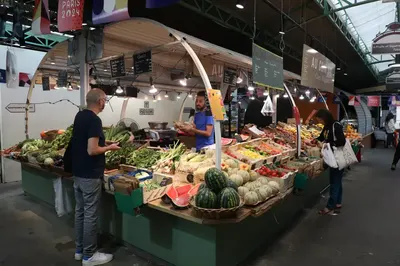
Parisian cuisine is expressed first in bistros and brasseries, through twelve classic dishes ranging from the butter croissant to the tarte Tatin. The croque-monsieur, invented around 1910 in a cafe on the boulevard des Capucines, is the most typically Parisian dish, and the jambon-beurre sandwich alone accounts for one-third of all sandwiches sold in France. In 2026, proximity to a food market, an artisan bakery and neighbourhood bistros remains a location criterion that Home Select buying agents factor into their searches.
Key takeaways
- The croque-monsieur, invented around 1910 on the boulevard des Capucines, is considered the most typically Parisian dish
- The jambon-beurre sandwich accounts for one-third of all sandwiches sold in France
- French onion soup is historically linked to the Les Halles neighbourhood where market workers ate it in the early morning
- Proximity to food markets, artisan bakeries and quality restaurants is a genuine location criterion for international property buyers
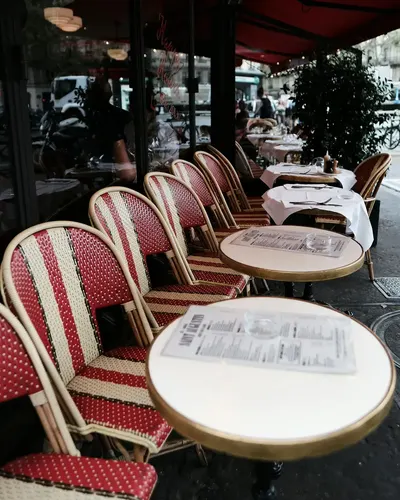
Parisian cuisine is not limited to starred haute cuisine. It expresses itself first and foremost in the bistros, brasseries and neighbourhood bakeries, through simple dishes that have not changed in decades. Here are the twelve classics that every Parisian, or future Parisian, should know.
How do you recognise a good butter croissant in Paris?
A good butter croissant is recognised by its regular lamination, its golden colour and its pronounced buttery taste, and it sells for between 1.20 and 1.80 euros in the best bakeries in Paris. The croissant is the hallmark of the Parisian breakfast, and the difference between an ordinary croissant and one made with AOP butter is immediate. It is eaten in the morning, by hand, preferably on a terrace.
What is the most typically Parisian dish?
The croque-monsieur is the most typically Parisian dish: invented around 1910 in a café on the boulevard des Capucines, it is a sliced bread sandwich filled with ham and gruyère, baked in the oven. Its variant with a fried egg on top is called the croque-madame. It is the quintessential quick lunch dish in Parisian brasseries. Simple, filling and available everywhere for between 8 and 14 euros.
Where does French onion soup come from?
French onion soup is historically linked to the Les Halles neighbourhood, where it was the meal of workers from the central Paris market in the early hours of the morning. It combines slowly caramelised onions, beef broth, stale bread and gruyère gratinated in the oven. It is a winter dish, robust and comforting, still served in traditional brasseries in earthenware bowls.
What is the most ordered dish in Parisian bistros?
Steak-frites is the most ordered dish in Parisian bistros: a cut of beef (rib steak, flank or hanger steak), cooked to order, served with homemade frites. The secret lies in the quality of the meat and the double-cooking of the frites. Le Relais de l’Entrecôte, with its single-formula offering of steak-frites-salad, illustrates the Parisian attachment to this classic all by itself.
What goes into a real Parisian jambon-beurre?
A real Parisian jambon-beurre consists of half a tradition baguette, slightly salted butter and quality cooked ham, with no salad and no gherkin: the Parisian version is minimalist. This sandwich alone accounts for one-third of all sandwiches sold in France. It is the on-the-go lunch of the busy Parisian, costing between 4 and 6 euros from a good bakery.
Is quiche Lorraine a Parisian dish?
Quiche Lorraine comes originally from Lorraine, but Parisian bakeries have adopted it to the point of making it a staple of lunch or aperitif time. Its classic recipe combines eggs, cream, smoked lardons and shortcrust pastry. Parisian versions sometimes include goat’s cheese, spinach or salmon, but the classic recipe remains the best seller.
What goes into a béarnaise sauce?
A béarnaise sauce combines clarified butter, shallots, tarragon, vinegar and egg yolk. Served with an entrecôte, it makes up the quintessential Parisian brasserie dish and requires a savoir-faire that the great brasseries (Lipp, La Rotonde, Le Dôme) have upheld for over a century.
Where does crêpe Suzette come from?
Legend has it that crêpe Suzette was created by accident at the Café de Paris in Monte Carlo, but it was Parisian restaurants that popularised it. Flambéed with Grand Marnier in front of the customer, it is a restaurant dessert that remains on the menu of classic Parisian brasseries.
Why is the Paris-Brest called that?
The Paris-Brest was created in 1910 by a pastry chef in Maisons-Laffitte to celebrate the Paris-Brest-Paris cycling race, and its bicycle-wheel shape recalls that origin. This cake of choux pastry filled with praline cream has become a classic of Parisian patisseries, reinterpreted by top chefs while remaining faithful to its original structure.
Why is crème brûlée a classic of Parisian bistros?
Crème brûlée, a vanilla custard caramelised with a blowtorch, appears on the menu of the majority of Parisian restaurants: it is the quintessential bistro dessert. Its international popularity owes much to the film Amélie, which made famous the version served at the Café des Deux Moulins in Montmartre.
Is œuf mayonnaise still served in Parisian bistros?
Yes: long considered old-fashioned, the œuf mayonnaise is enjoying a comeback in Parisian bistros. The Association de Sauvegarde de l’Œuf Mayo even awards a prize each year for the best œuf mayo in Paris. A hard-boiled egg, homemade mayonnaise: simplicity elevated to the status of gastronomic signature.
Who invented the tarte Tatin?
The tarte Tatin is said to have been invented by accident by the Tatin sisters at their inn in Sologne: it is an upside-down apple tart, caramelised with butter and sugar. In Paris, it features on the dessert menu of many brasseries and comes in pear, apricot or even endive versions in contemporary restaurants.
Gastronomy as a Parisian art of living
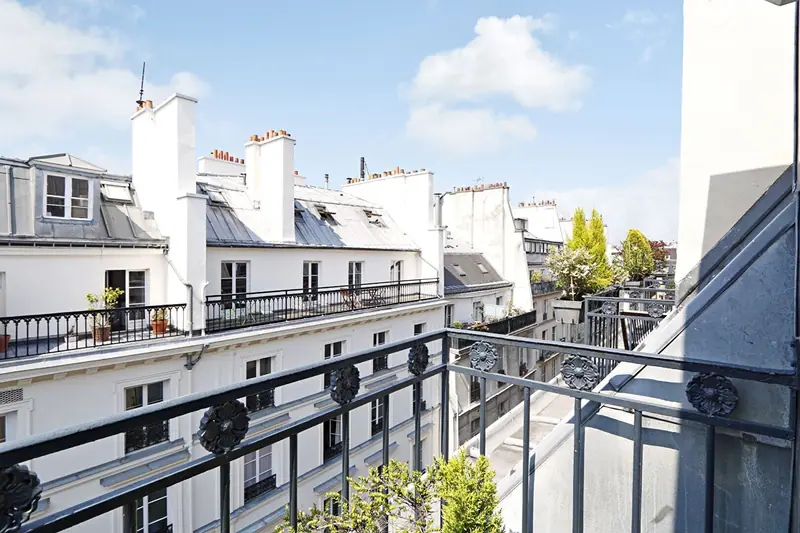
These dishes tell a story: that of a city where people take the time to eat, where lunch is a ritual and where the quality of ingredients matters as much as the recipe. For buyers settling in Paris, proximity to a good food market, an artisan bakery and neighbourhood bistros is an integral part of the quality of life they seek.
It is, in fact, a criterion Home Select’s property hunters in Paris take into account in their searches: the commercial and gastronomic environment of a neighbourhood is inseparable from the value of a property.
Looking to settle in a Parisian neighbourhood that combines quality of life and good food? Contact Home Select to discuss it.
Sources
Frequently asked questions
01 What are the culinary specialities of Paris?
Iconic Parisian specialities include the croque-monsieur, gratinated onion soup, the jambon-beurre sandwich, bistro steak-frites, Burgundy snails and the Paris-Brest. Born in the city's brasseries and bistros, these recipes embody traditional Parisian cooking, generous and convivial.
02 What is the most typically Parisian dish?
The croque-monsieur is considered the most typically Parisian dish. Invented around 1910 in a café on the boulevard des Capucines, it embodies the quick and indulgent bistro cuisine that has made Parisian brasseries famous.
03 Where can you eat a real French onion soup in Paris?
French onion soup is historically linked to the Les Halles neighbourhood, where market workers would eat it in the early morning. Today, traditional brasseries in the 1st and 2nd arrondissements carry on this tradition, notably Au Pied de Cochon, open 24 hours a day.
04 Is gastronomy a factor in choosing where to buy in Paris?
Yes, for many buyers, especially international ones, proximity to food markets, artisan bakeries and quality restaurants is a genuine location criterion. Neighbourhoods like the Marais, Saint-Germain or Montmartre combine a rich gastronomic offering with residential quality of life.